
Welcome to the Step Up Japanese blog archive!
Although I’m not currently adding new posts to the blog, you’ll find plenty of Japanese learning tips, study advice, and resources to explore here.
Browse the blog index to view a complete list of posts.
For the latest news, course updates, and Japanese learning tips from Step Up Japanese, sign up for my newsletter.
Search this blog:
I Tried to Speak Japanese Every Day for a Month (Without Being in Japan)
Many people believe you need to live abroad to get speaking practice in a foreign language, but this isn’t true.
Similarly, people often assume that if you in Japan, like I did, you’ll pick up the language easily. But that’s not necessarily true either.
If you speak English, it’s possible - indeed easy - to live in another country for years and not become fluent in the language.
I didn't make any year-long New Years’ Resolutions this year. Instead, I decided to set myself some monthly language-related challenges. I’ll decide them as the year goes on, and I’ll probably do one every other month.
In January, I decided to speak Japanese every day for a month.

Many people believe you need to live abroad to get speaking practice in a foreign language, but this isn’t true.
Similarly, people often assume that if you live in Japan, like I did, you’ll pick up the language easily. But that’s not necessarily true either.
If you speak English, it’s possible - indeed easy - to live in another country for years and not become fluent in the language.
I didn't make any year-long New Years’ Resolutions this year. Instead, I decided to set myself some monthly language-related challenges. I’ll decide them as the year goes on, and I’ll probably do one every other month.
In January, I decided to speak Japanese every day for a month.
For context: I live in the UK, I don’t speak Japanese at home, and although I work as a Japanese teacher, I don’t currently teach Japanese every day. So this was going to take some effort.
When I lived in Japan, I was using Japanese every day. My Japanese reading and writing is significantly better now than it was then (I have five years’ more practice under my belt). But I don’t speak Japanese every day like I used to. So I decided to try!
I set myself the following, slightly arbitrary, rules:
1) Speak in Japanese for a minimum of 15 minutes a day (ideally more)
2) Texting doesn't count
3) Talking to yourself doesn't count either*
*Incidentally, I am a big fan of talking to yourself as a method of practicing a language. But I decided it wouldn’t count for this challenge.
Day 1
Every year on January 1st the Brighton Japan Club has a New Year’s swim in the sea. A great opportunity to practice different words for “ohmygodit’sfreezing” .
I don't swim this year, just go along afterwards for a post-swim lunch and some Japanese- and English-language chat in a café.
Tip number 1: Find people to speak with. You can’t practice speaking by yourself. Could you join a group class or a social club?

Photo from last year’s New Year’s Day Swim (2018). Photo by Tom Orsman
Day 2
I get up an hour early and have a 30 minute italki lesson on Skype before work. Italki is a website and app where you can find online language teachers.
I plan to start teaching on Skype in 2019, possibly using italki, so I take the opportunity to ask the teacher all about italki and how she finds it. The teacher is friendly and I have fun talking with her. I’ve never met her before – I just found her on italki.
Day 3
I go to the weekly Japanese-English Language Exchange with Brighton Japan Club. It’s a good way to meet Japanese people, and people interested in Japan. There’s usually a good mix of old and new faces, which keeps things fresh.
Day 4
I have dinner with a Japanese friend I met last month at the end-of-year party of the Brighton & Hove Japanese Club (a similarly named but different group to the Brighton Japan Club). We go to Goemon, arguably Brighton’s best ramen bar. We talk in Japanese all night.
Day 5
I go to 書き初め kakizome (first calligraphy of the year) at Brighton Japan Club. I don't speak much Japanese at this event and on the way home I wonder if it ‘counts’… I have a lot of fun though.

Day 6
I Skype with a friend in Japan, who I met when I lived in Nagoya. This was probably the most fun thing I did all week. I saw her last spring, so catching up over video chat, there is a lot to talk about.
I reflect that being able to talk with friends in Japanese is really important to me.
Tip number 2: make friends who speak the language you’re learning
Day 7
I have a 30 min italki “instant lesson” with teacher S. She used to live in Canada where she ran language exchange events. She’s thinking about studying abroad in the UK, so we chat about that. She talks quickly, and so do I, happily and unthinkingly.
Day 8
I go to Café an-an in Portslade for lunch. I chat briefly with the owner, Noriko, while eating katsu curry. I take home some 花びら餅 hanabira mochi (“flower-petal mochi”) sweets.
After lunch I have a video meeting scheduled with Jess from Nihongo Connection. We chat in Japanese for the first half of the call - Jess is British, so I wasn't expecting to talk with her in Japanese, but its fun. We make plans to meet up the following month in Edinburgh.
Day 9
Skype lesson with Sugita-sensei. I met Sugita-sensei at Yamasa in Okazaki, where I studied on the Advanced Japanese Studies Program in 2014. Now, I consider myself lucky to call him a friend as well as 先輩 (senpai; senior colleague) and teacher. When I have time, I usually have a Skype lesson with him once a week. We read fiction and news articles, and sometimes I write stories or essays and we work together to correct them.
Day 10
I’m going to London for the day, to the video-games exhibition at the V&A and to see Macbeth. I have an italki lesson with teacher H in the morning. I ask her how I can improve my speaking. She says the goal “improve my speaking” is too broad, and I agree. She suggests I should think about what kind of speaking I want to get better at; and what I want to be able to talk about. Then, focus in on those topics, by reading about them. This seems like very good advice.
Tip number 3: find a good teacher
Day 11
I go out for dinner with a Japanese friend and a Spanish friend. We switch between speaking English and Japanese all night.
Day 12
I spend the day out with my boyfriend and some friends. My boyfriend can speak Japanese, but we don’t speak Japanese together, because - well, just because we don’t.
We get home at 11:45pm and I realise I haven’t spoken any Japanese yet today. Reluctantly, my boyfriend agrees to speak Japanese with me until midnight. We set a timer for 15 minutes and I pour him a beer.
Day 13
I go to Brighton Japan Club’s annual new-year mochi-making event. My favourite events are the ones involving food! I eat squishy rice cakes and chat with some new people.
Day 14
I have an italki lesson at 7am with a new teacher, T. This is the only italki lesson I had that wasn’t really for me. He suggests some resources that are way too low a level for me and a Japanese grammar website with picture explanations that I think are kind of unclear.
I take this as a useful lesson in how not to teach on Skype.
Day 15
Term starts today, which means I teach STEP 1 (beginner) and STEP 2 (upper beginner) Japanese classes on Tuesday nights. STEP 1 students are doing a quiz about which country well-known brands are from. STEP 2 students practice asking each other to do things, which is always fun.
On the way home I wonder if teaching beginner level classes counts as speaking practice for me. Probably not, but I decide to let it count for this experiment anyway. It’s still three hours of Japanese time.
Day 16
7am Skype class with Sugita-san. We read a section on “Friendship” from Tsurezuregusa (徒然草, Essays in Idleness), a collection of essays written by the Japanese monk Yoshida Kenkō in the 14th century, and talk about it.
Day 17
I teach two more Japanese classes, STEP 3 and STEP 4, at pre-intermediate and intermediate level.
My higher-level classes usually need a bit less structure than beginner classes. I still speak more slowly than natural speech, but I don't plan the wording of my instructions in the same way as I do with beginner classes. Especially in STEP 4, students like to chat and always have good questions, which they can ask in Japanese.
Tip number 4: ask questions!
Day 18
I’m going to my office job 9-5 today (no chance to speak Japanese there), and to a birthday party afterwards (no Japanese speakers). So I get up at 7am and have another italki lesson with M-sensei. We talk about Brexit…
Day 19
I go to a Heart Sutra writing workshop with the Brighton Japan Club. The workshop is in Japanese with English interpretation. I have fun listening along to both.

Day 20
I Skype with another Japanese friend in Japan. She had a baby recently, so a lot has changed for her. She fills me on her new life. After our conversation, I walk around all day with a huge smile on my face.
Day 21
Another italki lesson with M-sensei. She is an ex TV announcer, so I ask a bunch of questions about pitch accent. (Briefly: Japanese has high-low tones, and pronouncing a word with the wrong pitch accent pattern makes you sound unnatural).
She says that my pitch is mostly good but I make occasional pitch and stress mistakes which identify me as a non-native speaker.
Like many non-native speakers, I have never explicitly learned Japanese pitch accent, and I think this is probably something I should rectify. She has me read an article from NHK news, and corrects my pitch accent. It’s hard.
I also go to see a Japanese film with another of my students – 君の名は (kimi no na wa; ‘Your Name’). We see another former student of mine in the foyer and speak briefly in Japanese.
Day 22
I teach two beginner classes. STEP 1 students are practicing verbs like 行きます、来ます、帰ります (ikimasu, kimasu, kaerimasu; go / come / come back), so I have them read a short story about my trip to Disneyland last year.
I am reminded that reading helps with speaking. We need to be exposed to lots of language in order to eventually produce it.
STEP 2 students are learning about giving directions. Confession: I find teaching directions really hard. I used to practice this by playing video games (students shout out directions while one person is playing), but the flash game wont work on the classroom computer any more. I consider switching this up next year.
I think more about input/output. How useful is it for my students to learn to give directions in Japanese? Not very. How useful is it for them to understand verbal directions in Japanese? If they go to Japan, probably very useful.
Tip number 5: Read! There can be no meaningful output without input.
Day 23
I ask Sugita-san more about pitch accent. He is currently teaching on a course for people studying to become Japanese teachers in Okazaki, Japan. He says many Japanese people don’t explicitly understand pitch accent either.
My boyfriend shows me a video series on Japanese phonetics by Dogen, the Japanese teacher and YouTuber. I go on an internet deep dive into pitch accent. Maybe that will be my next challenge…?
Day 24
I teach two Japanese lessons. In STEP 3 (lower-intermediate) we cover short forms in casual speech. I love teaching this because it’s so ridiculously useful and common in everyday speech. It’s not in the textbook we use at all, so I made my own materials.
Day 25
I go to the pub again with my Spanish friend and Japanese friend. Japanese friend is going back to Japan the following day. He has also, excitingly, just become a father. Lots to talk about. As before, we probably talk about half in English and half in Japanese.
Day 26
I go to an 生け花 ikebana (flower arranging) workshop with the Brighton Japan Club. The workshop is in English, but I chat with the organisers in Japanese a bit.

I have to rush off as I am going to see the film 万引き家族 (Manbiki Kazoku; Shoplifters) with my student in Eastbourne. I love hanging out wth my adult students outside of class, and I’m always super pleased when they invite me to spend time with them, especially when it’s Japan-related!
Tip number 6: find fun things to do related to the language you’re learning
Day 27
I go to Kantenya, the Japanese supermarket, and buy sashimi-grade tuna to make まぐろたたき丼 (maguro tataki don; chopped tuna rice bowl). I ask the staff how long it will take to defrost the tuna. She explains you can just take it out the freezer, or there is a proper technique that’s should make it taste better. She produces a handout that shows how to do it! They have the handout in Japanese and in English. I take the Japanese one. We talk about the Manbiki Kazoku film too.
Day 28
I have a 30 minute italki lesson with N-sensei. We talk about her plans to study abroad in the UK and my time in Japan. It’s fun, but I don’t really learn anything.
I reflect that just talking is not very good practice for me personally. I think I need to talk about difficult topics and be corrected quite closely.
Italki makes a distinction between “community tutors” (unqualified) and “professional teachers”. N-sensei is a community tutor, and mostly does “free talk”. On reflection, this is not really what I need from a paid class.
Day 29
Before my group classes, I teach a private lesson in a cafe. We go over some grammar points my student has questions about, but mostly I just try and get her to speak Japanese, without using English.
Most students need more speaking practice. The experience of being totally lost in language, and not understanding most of what’s going on is something we may not have felt since childhood. As such, it can be really scary.
I believe it’s a feeling you need to get used to if you’re going to make progress. I tell my student I want her to be a little bit outside her comfort zone - not so far that it’s terrifying, but just enough that she’s pushing herself and learning new things.
Day 30
Skype lesson with Sugita-san. We read ネギを刻む (negi o kizamu; literally “Chopping Leeks”) a short story by 江國香織 (Kaori Ekuni). One of my favourite things about my lessons with Sugita-sensei is that he introduces me to stories and essays I wouldn’t necessarily find by myself.
Day 31
A Japanese volunteer, Aria, comes to class with me. My students ask her questions and talk with her in Japanese. We also make 四コマ漫画 (yon-koma manga), manga comic strips with four panels. Aria helps out a lot and my students enjoy speaking with her.
I get requests from local Japanese people to come and volunteer at class fairly frequently. I’m grateful for their help, and it’s good for my students to practice speaking in this way.
Speaking in Japanese every day for a month - my conclusions
1) Find a good teacher
You need a teacher who fits your needs. If you just want speaking practice, find someone who will “just talk” with you. If you want to be corrected, ask your teacher to correct you more. Chatting with friends is good, but your friends aren’t language teachers (probably)
2) Make friends
The absolute best things I did this month – not just in this challenge, but the most fun things I did this month overall – was talk with my friends in Japan.
I was reminded too that being able to talk with friends in Japanese is really important to me.
3) Connect offline as well as online
If you live in a country where Japanese isn’t widely spoken, you might need to go online to find people to talk with. But I did get a bit bored of having so many Skype lessons, especially as I started to feel I wasn’t getting much out of it.
Plus, italki is kind of expensive to take lessons so often. I plan to start teaching online late this year, so I told myself that taking Skype lessons was research…
Speaking to people offline was way more fun for me.
4) Be open to surprises!
Japanese popped up in some unexpected places this month. I knew that Jess runs a Japanese speaking club, but she’s English so I wasn't expecting us to talk in Japanese so much. That was a lot of fun.
5) Find work using your languages
I get to use Japanese in my work, because I teach Japanese. Arguably it’s not really speaking practice for me, but my students always ask me good questions and help me see things about the Japanese language from a new perspective.
If you want to get serious about having more chance to use your Japanese, consider looking for a job or a voluntary position where you can use it. Could you work in a Japanese restaurant, or for a Japanese travel agency?
And finally…
At an advanced level, speaking a lot is actually not a great way to get better at speaking.
One of the italki teachers told me: “You don't need speaking practice, because you can already speak. If you read more, you’l be become able to talk more fluently about complex topics.”
This fits with what I know about input-based methods of learning languages – essentially, that these two things happen in this order:
1. You get input — you read and listen to sentences in some language. If you understand these sentences, they are stored in your brain. More specifically, they are stored in the part of your brain responsible for language.
2. When you want to say or write something in that language (when you want to produce output), your brain can look for a sentence that you have heard or read before — a sentence that matches the meaning you want to express. Then, it imitates the sentence (produces the same sentence or a similar one) and you say your “own” sentence in the language. This process is unconscious: the brain does it automatically.
(quote from Antimoon)
There can be no good quality output (speaking the language; writing it well) without massive amounts of input (listening to and reading the language).
But if you’re a beginner or intermediate learner, you’re probably not getting enough speaking practice.
Speaking Japanese every day was really fun. As you can see, it didn’t quite have the result I was hoping for, but I definitely learned a lot. Why not give it a go?
Tuesdays, 12:00pm (UK time) | Online Group Course
Starts 15th Sept 2026 | 36 weeks
Who this course is for
This course is for true beginners or early beginners who already know a little Japanese (e.g. ~10-20 hiragana characters) and want to build a solid foundation.
If you are starting completely from zero, I recommend a few 1:1 lessons before joining.
You will already be able to:
Recognise a small number of hiragana characters (or are beginning to learn them)
Feel comfortable learning slowly and step-by-step
In this course you will learn to:
Introduce yourself and ask simple questions
Talk about family, friends, likes and dislikes
Order food and drinks in a restaurant
Ask and answer simple questions about places you are staying
Talk about where people and things are located
Build confidence reading hiragana and begin katakana
Start recognising a small number of common kanji
The focus is on practical, everyday Japanese for absolute communication basics.
Course details
Duration: 36 weeks (3 x 12-week terms)
Day/time: Tuesdays, 12pm (UK time), 55-minute lessons
Textbook: Irodori: Japanese for Life in Japan - Starter (starting from Lesson 3, free online)
Not sure if this is right for you?
Book a free 30-minute Zoom consultation or email me for advice.
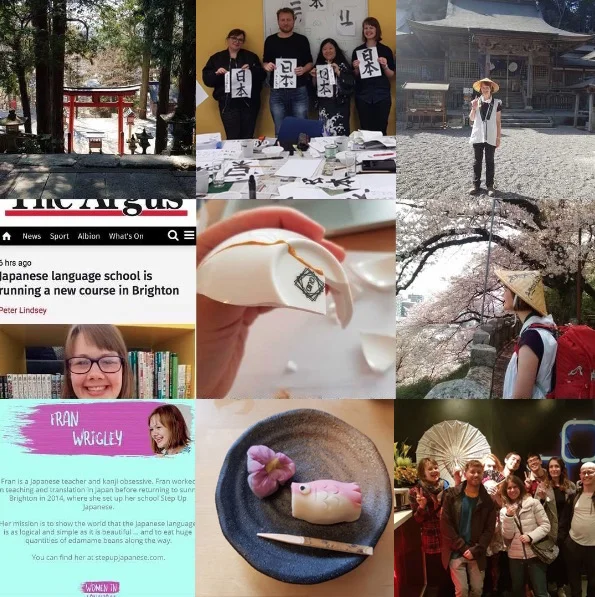
2018: A Round Up - Change, New Things, and Building a Community
Last year went super quickly. And we did a lot of new things at Step Up Japanese! Here’s what my students and I got up to in 2018.
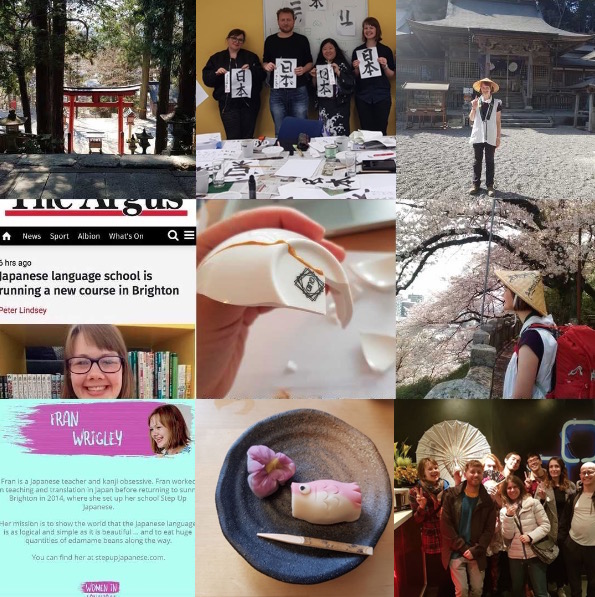
Last year went super quickly. And we did a lot of new things at Step Up Japanese! Here’s what my students and I got up to in 2018.
We started the year off in class by playing 福笑い fukuwarai, or “Lucky Laugh”. Blindfolded students have to listen to instructions given by their classmates (in Japanese, of course). The funnier the face is, the more laughter you’ll have throughout the year:
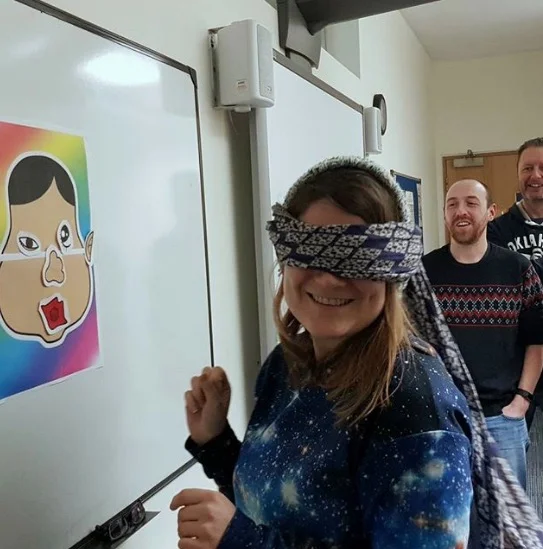
I liked this game so much we did it again at the start of 2019 too.
At the start of 2018, I also finished a long-standing project on instagram, sharing Japanese onomatopoeia words! Here’s one of my favourites, わくわく wakuwaku, the onomatopoeic sound for excitement:
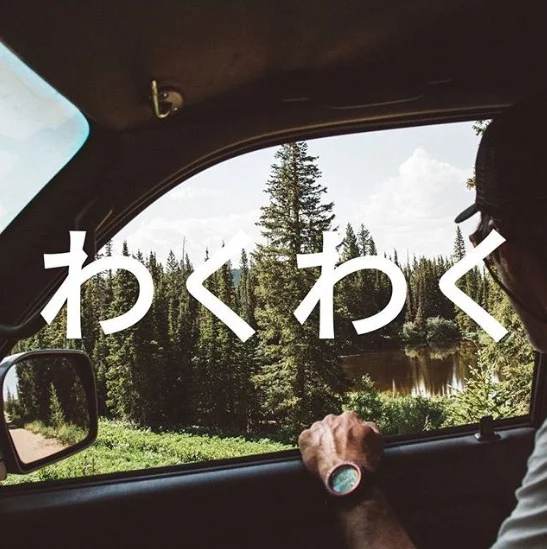
Find them on instagram with the hashtag #25incredible
Something big that changed just before 2018 was an increase in the amount of time and energy I had available to put into Step Up Japanese.
Up until the end of 2017, I was working full time and running Step Up Japanese on the side. In October 2017, I reduced my hours at my other job, giving me more time and energy to focus on making Step Up Japanese into the school I want it to be.
Looking back at 2018, I feel like I was able to focus on improving classes, offering more to students, and that I had more “headspace” to be creative and to improve the business.
Reducing my hours at my other job freed me up to say yes to more things this year. In March, I was invited to speak at Women in Language, an online conference run by and for women who work with and love languages. I was a bit terrified, but I said yes!
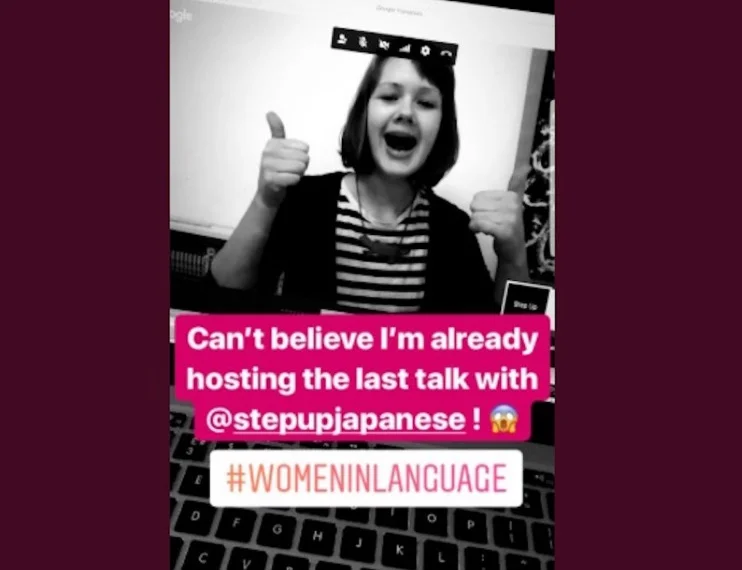
My presentation was about running a classroom-based language school in an increasingly online world. Giving a talk online was a new experience for me, and I learned a lot in the process.

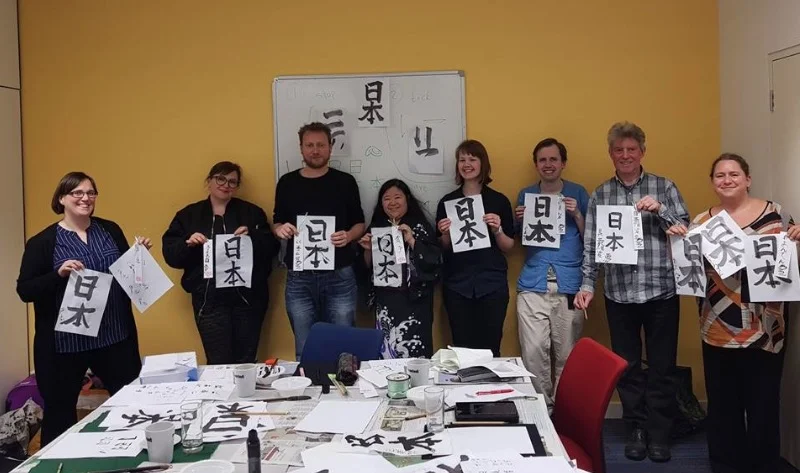
In March, my students and I went to the fantastic annual Open Day run by Brighton & Hove Japanese Club, where we practiced calligraphy and ate delicious Japanese food and snacks before sneaking off to the pub.
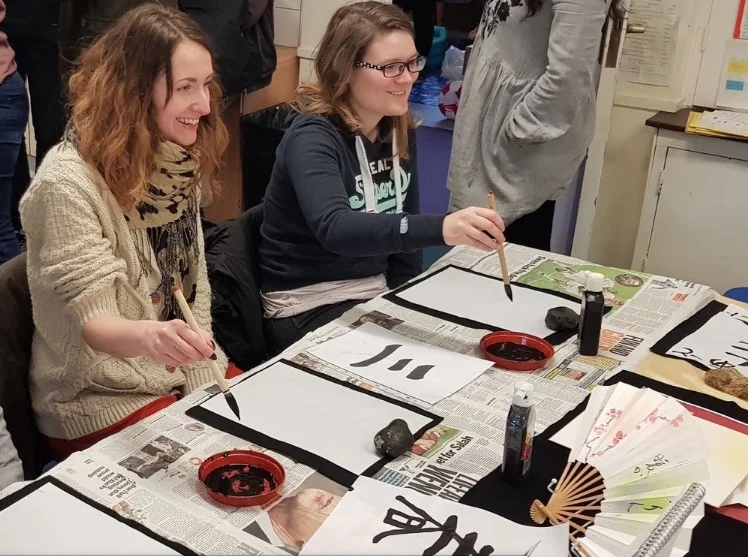
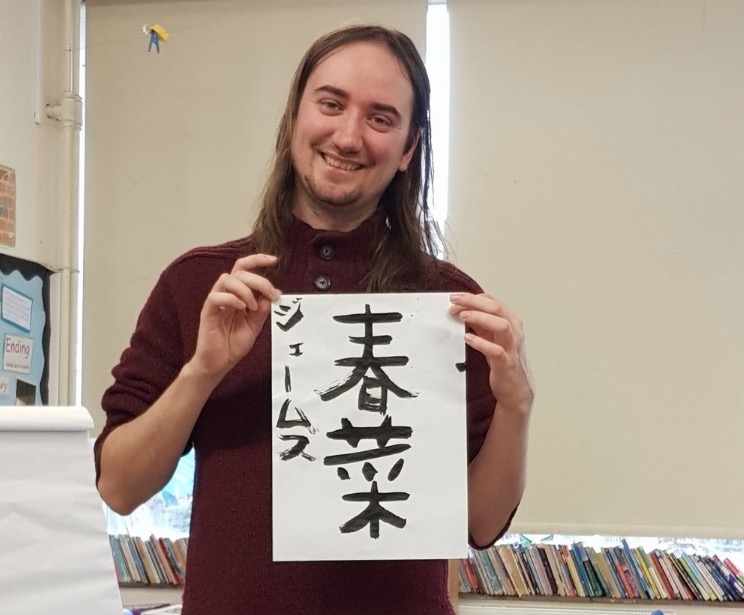
My Beginner students also had a special treat in March, with a calligraphy workshop in class by calligraphy artist Takako Higgs:
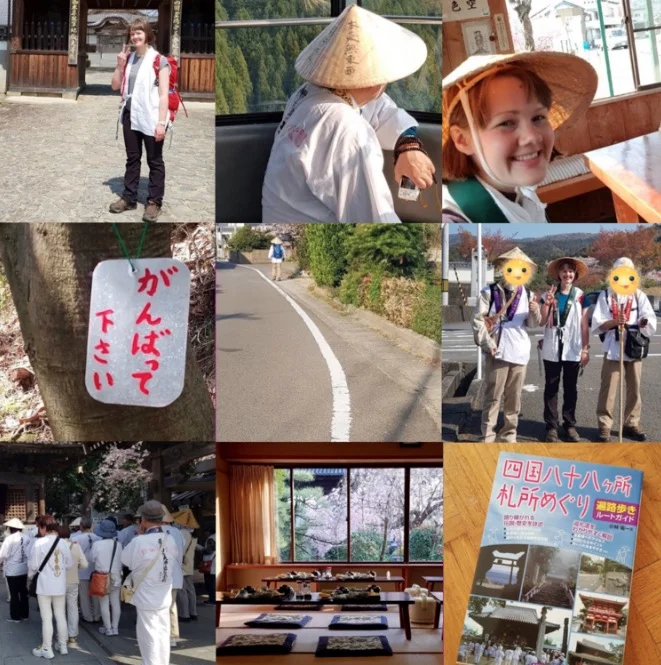
In March, I travelled to Shikoku, Japan, where I began to walk the Shikoku 88 pilgrimage trail, a long-distance walking route around the island. I walked from Temple 1 to Temple 21 on the trail. To say I had a good time would be an understatement! It was a fascinating and unexpectedly spiritual experience and I feel very fortunate to have had the opportunity.
Back in the UK, in April we celebrated the end of term with a sushi night!
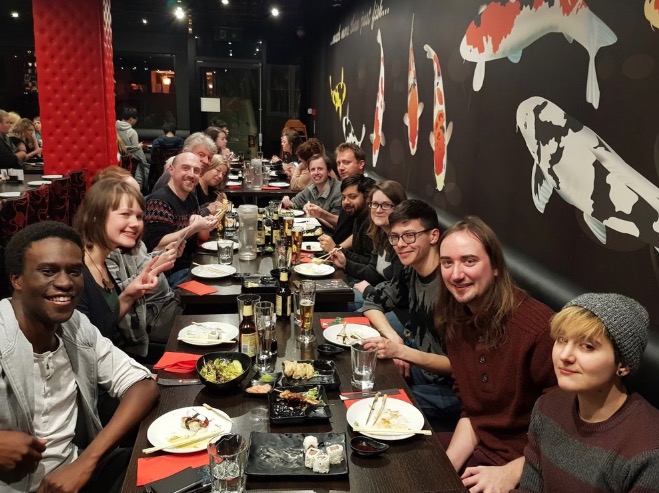
Spending time with my students outside of class is always a lot of fun.
We did something else new, and had our first Japanese Afternoon Tea at Cafe an-an in Portslade, where we enjoyed small dishes and sweets themed around 子供の日 kodomo no hi, the Japanese ”Children’s Day” festival:
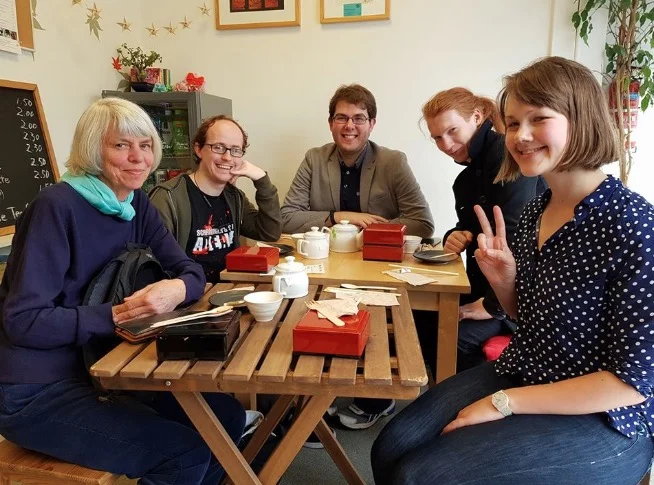
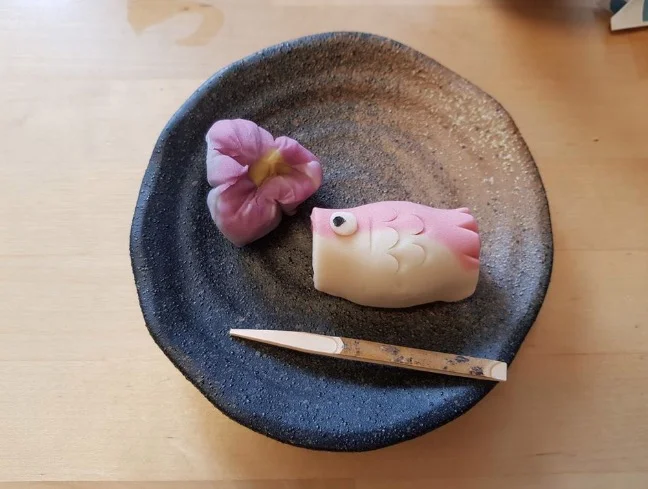
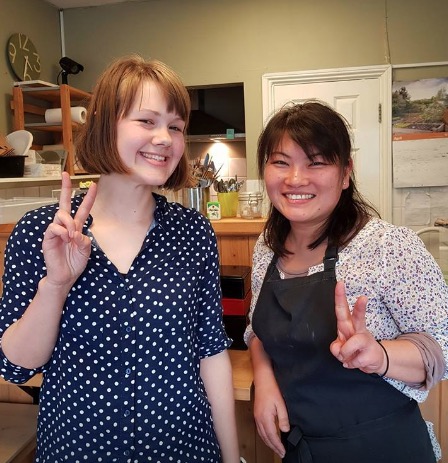
Thank you so much Noriko-san for hosting us!
In May, this blog had its first guest post - a great write-up all about Gachapon machines by Step Up Japanese student David Sharp.

I’d love for you to hear more from my students on this blog in 2019! If you’d like to write a guest post, please get in touch.
In Spring, STEP 1 and STEP 3 classes also practiced typing in Japanese, with many students trying it out for the first time. Beginners learned the basics, while the Pre-Intermediate class (STEP 3) put their typing skills to a test with a google treasure hunt.
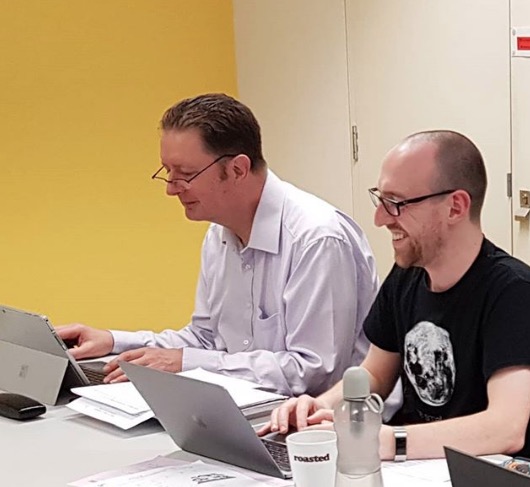
This was so much fun I’m doing it again this year with all classes
In June, we celebrated the end of the academic year with a mini classroom party (which meant I got to eat Japanese party food three days in a row!)
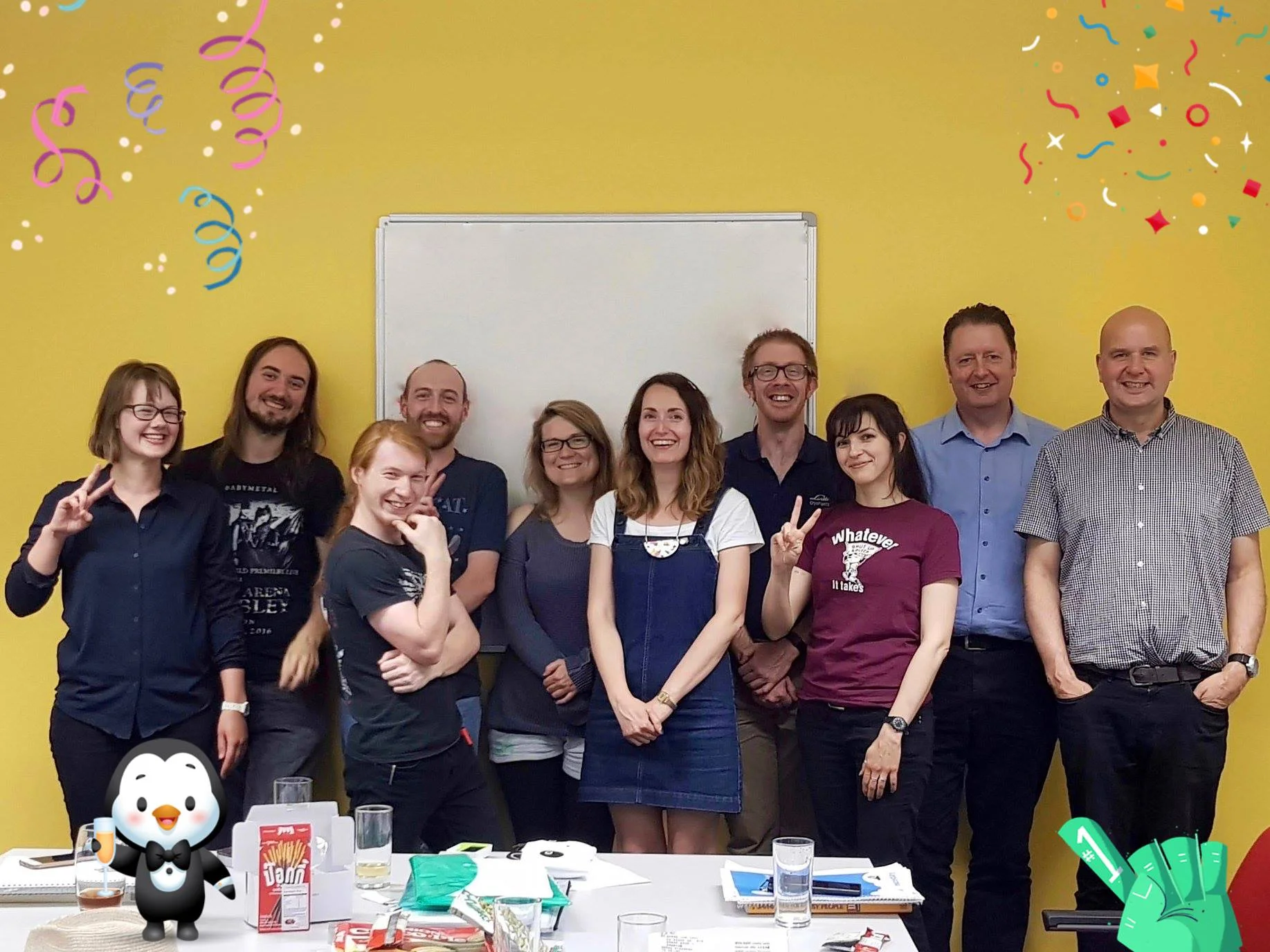
お疲れ様です! おつかれさまです! Thanks for all your hard work!
In July I went with some of my students to karaoke! Lucky Voice doesn’t have Japanese songs unfortunately, but they do have Japanese-style private karaoke boxes and a button that you press to order food and drinks.
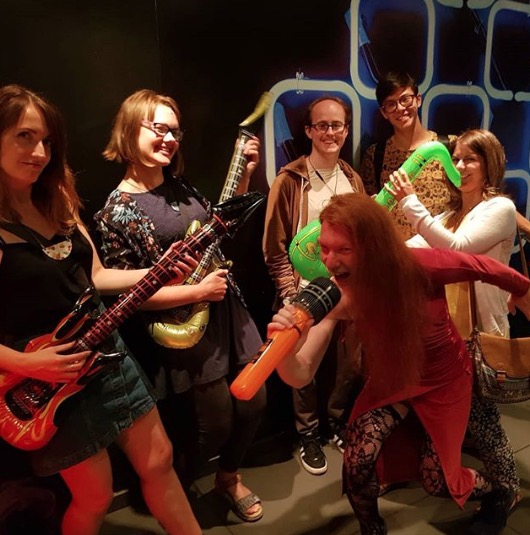
In previous years, I’ve taken the whole summer off from group classes, but in 2018 I ran six-week summer courses for the first time. The three courses were all new: Survival Japanese for Beginners, Tadoku - Let’s Read, and Mokuyoubi no Kaiwa - Japanese Conversations.
We were even in the Argus (Brighton’s local newspaper), with an article about my Tadoku reading course:

Summer courses are a bit different to my regular Japanese courses - there’s no textbook and no homework, for a start. I think my students got a lot out of the summer courses, and the chance to focus on one or more skill intensively.
I’m looking forward to opening them again in Summer 2019!
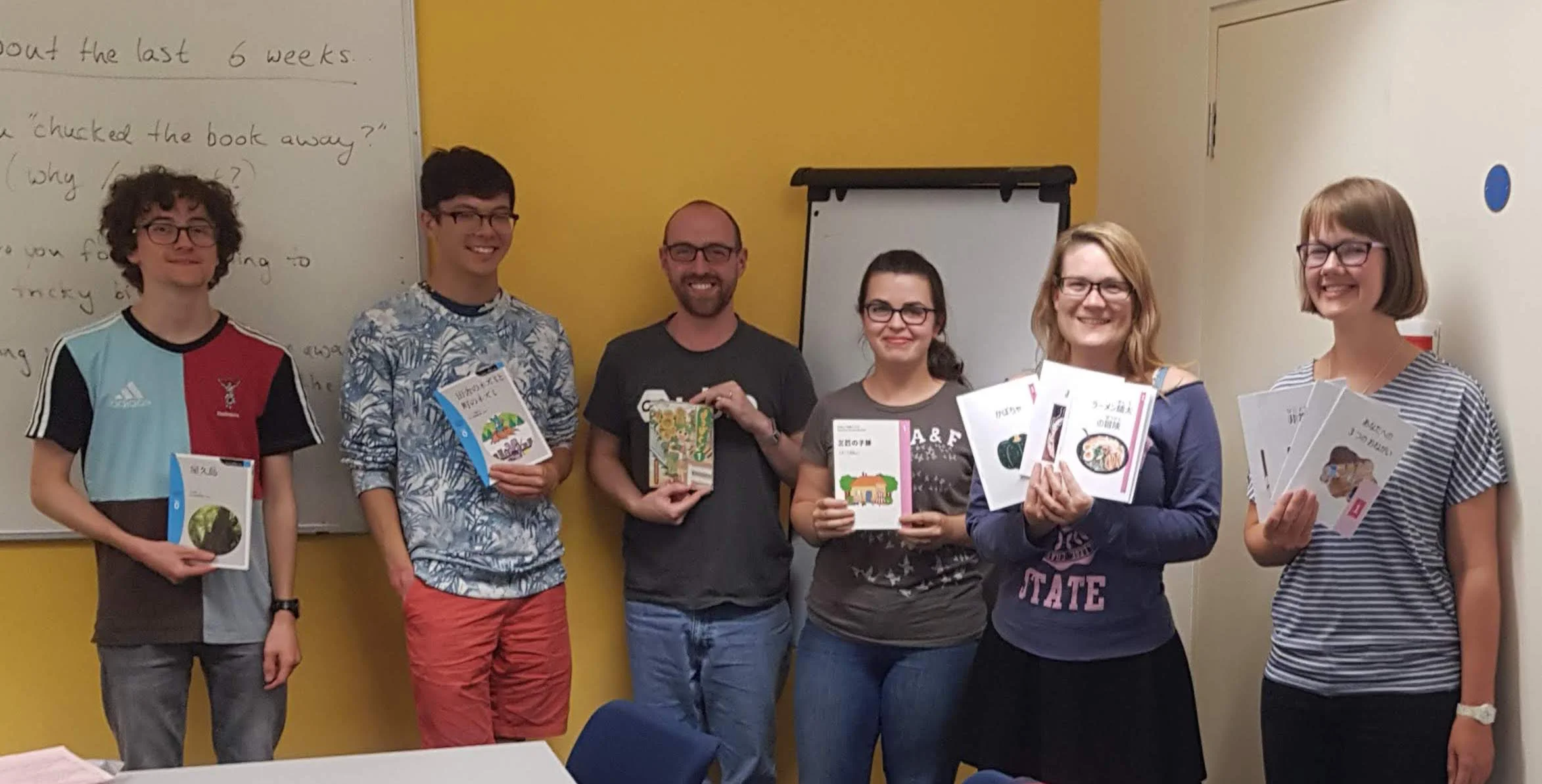
Me with some of my Tadoku learners
We also had another special guest in August, as Japanese volunteer Aria came to help out with classes. Aria-san, arigatou gozaimasu!
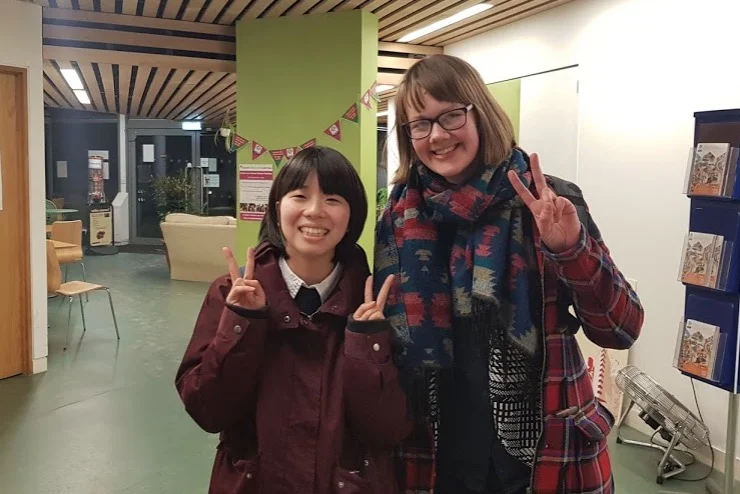
I forgot to take a photo in August, so here’s a photo from the following february when Aria came again to volunteer (hence the winter coats!)
We were also invited to a brilliant Japan-themed pub quiz organised by Ronnie Chapple who subsequently cycled across Japan to raise money for Sussex-based charity Survivors’ Network.
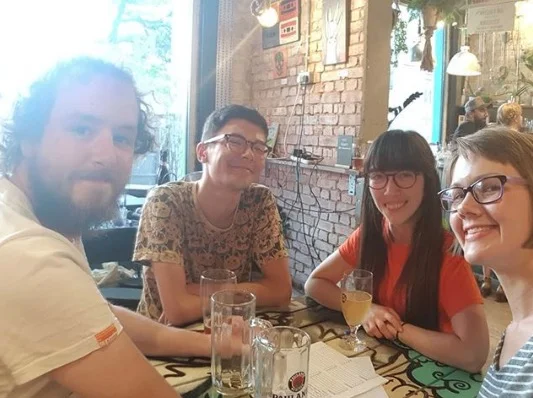
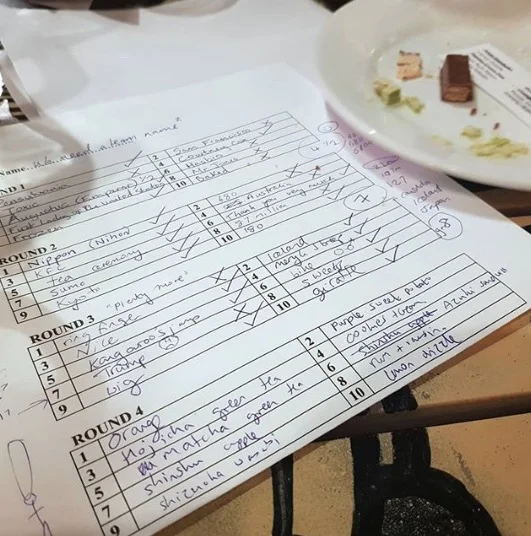
Like all good pub quizzes, this one had a Japanese kit-kat round, which we scored 100% in…
August also means our Summer Party! We had a sunny barbecue on the beach again on the bank holiday weekend. This year, my students brought not only homemade burgers, but home-brewed beer! I was very impressed.
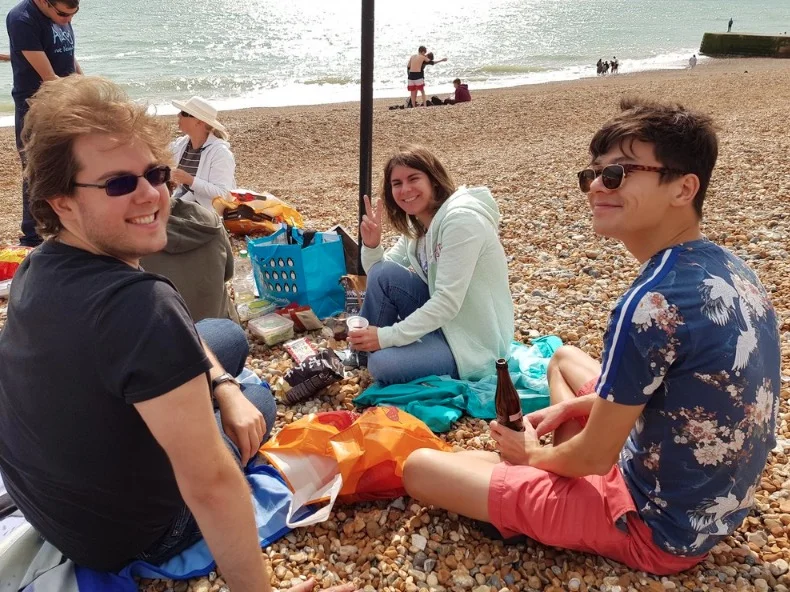
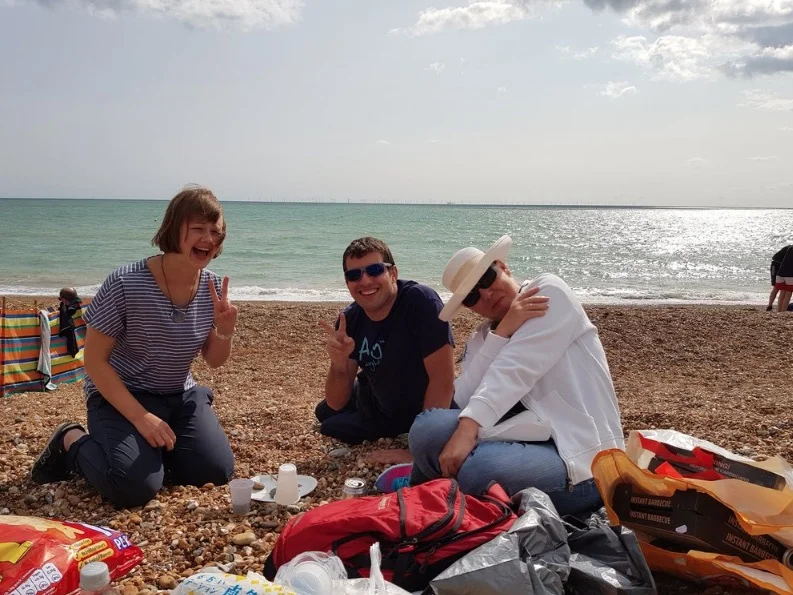
Thank you all for coming!
One of my aims for 2018 was to go to more teacher training and professional development events. I didn’t really achieve this - other things got in the way - with the notable exception of The Language Show (more on that later!)
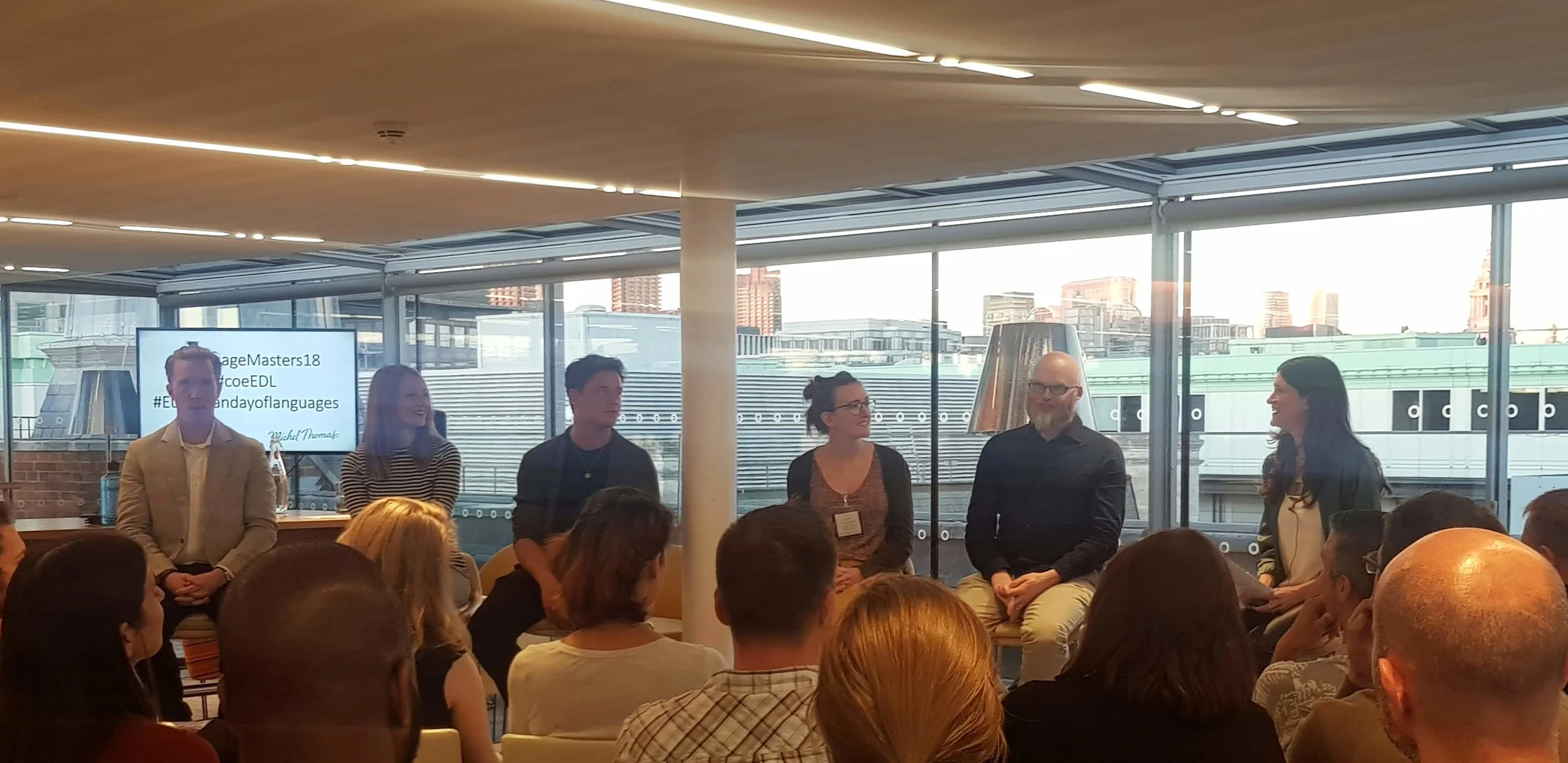
But in September I did also make it to The Language Masters, a panel discussion on different ways to learn foreign languages. This was an interesting and thought-provoking event tackling big questions: What is fluency? How can we inspire the next generation of language learners? Plus, the rooftop venue was very cool, and I got to meet some really interesting people.
In October, lessons started again for the new academic year - my courses run October to June - and I opened a new class too, STEP 4, which takes students from the pre-intermediate to the intermediate level in Japanese.
Before I knew it half-term had rolled around and my students and we went to karaoke again!
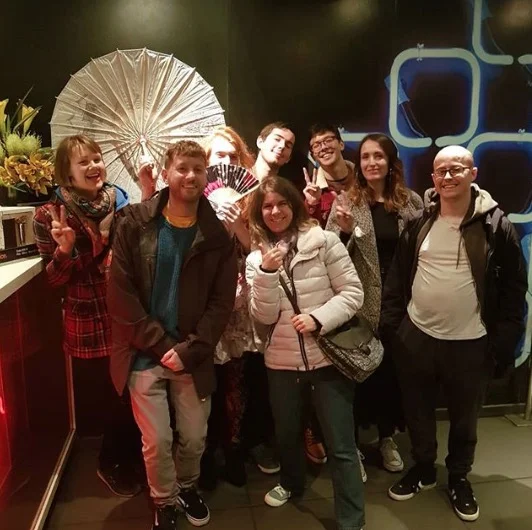
Group shot with about half the group - sorry to those who had to leave before we took this photo!
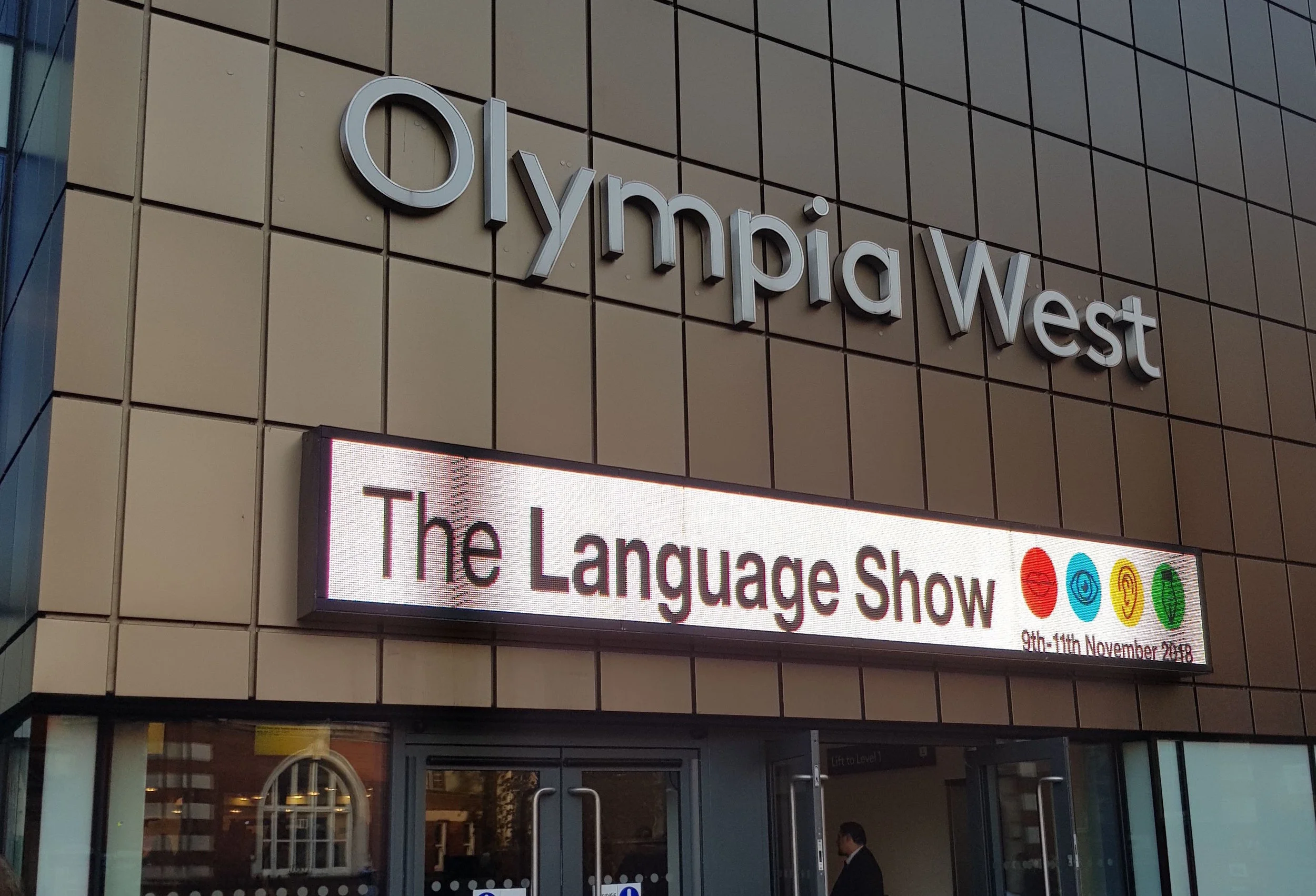
In November I went to The Language Show, where I spent two full days attending interesting and varied talks on language teaching.
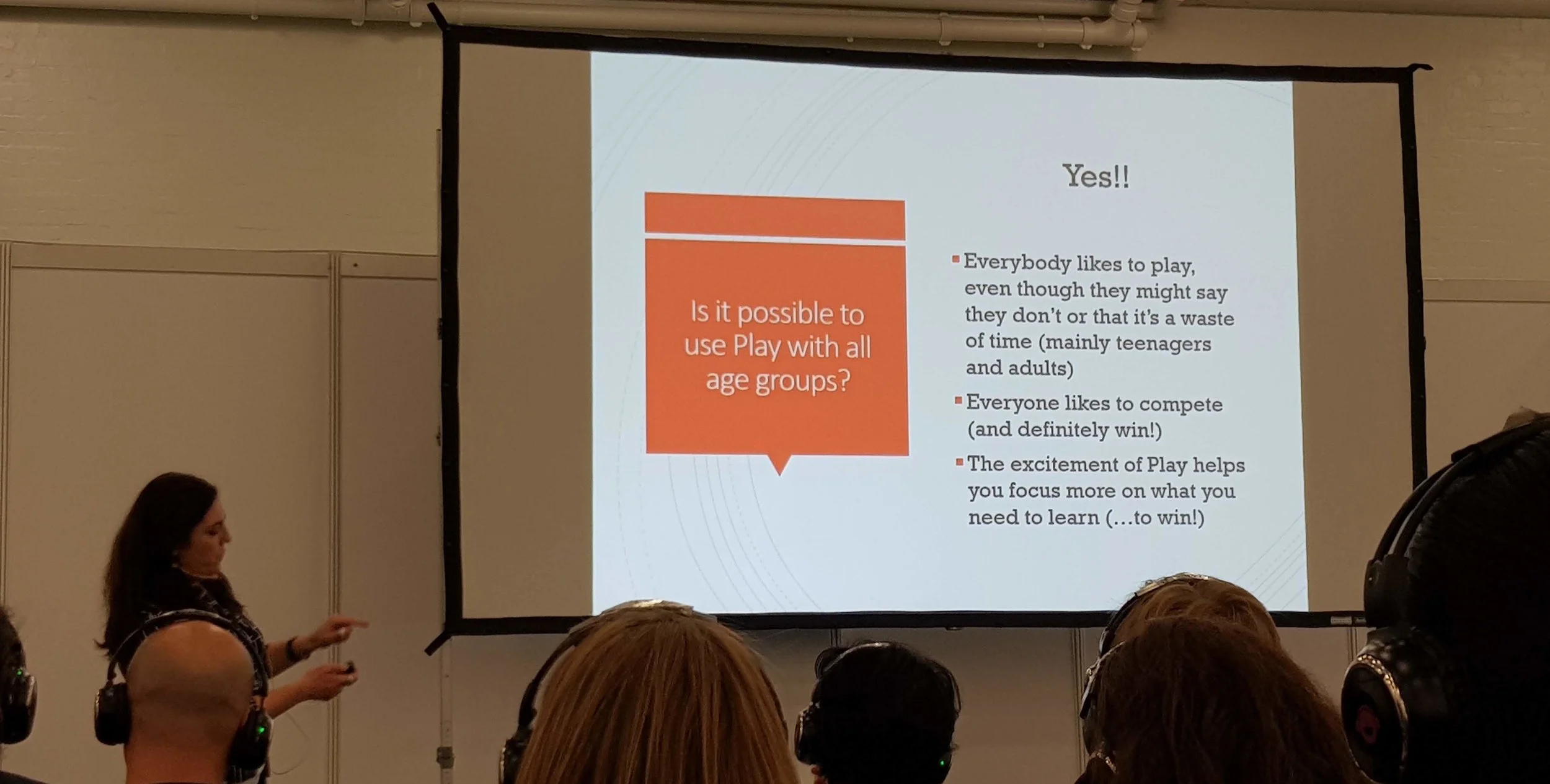
I learned so much from the weekend and have already put into practice a lot of practical teaching ideas I picked up at this show. Highlights for me included Dr M Florencia Nelli’s talk Playing languages: how to create and effectively use games in language lessons:
and Jennifer Wozniak’s talk Engagement in Language Learning, which was packed full of ideas for motivating students of all ages. I really liked Ms. Wozniak’s ideas for language learning outside the classroom (why not do a cooking class in the target language?)
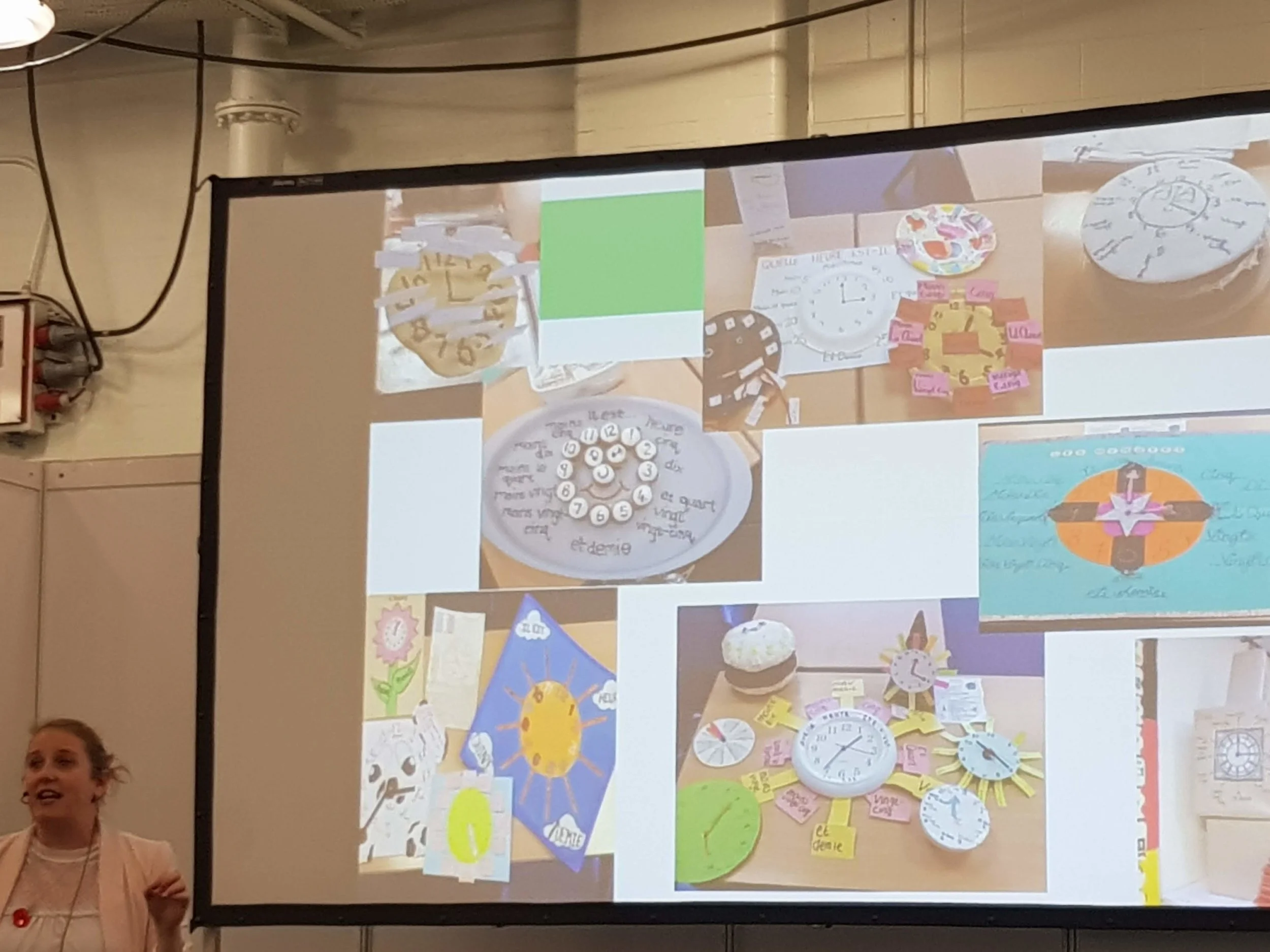
And I loved her approach to teaching time with this homework, giving students free rein to be creative with time-telling practice:
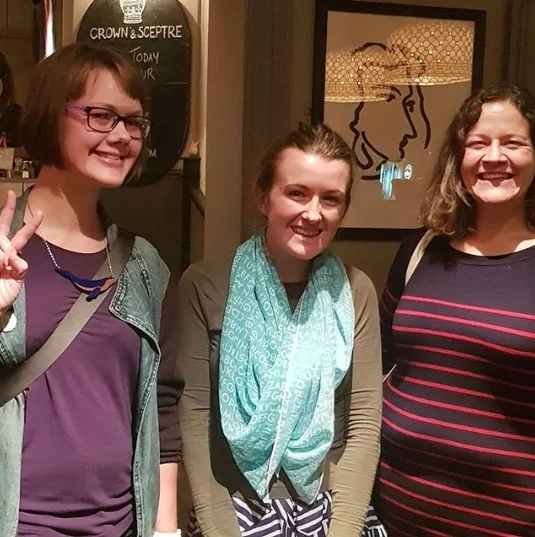
After The Language Show, I also got to meet up with two of Women in Language’s founders, the talented Lindsay Williams (of Lindsay Does Languages) and Kerstin Cable of Fluent Language.
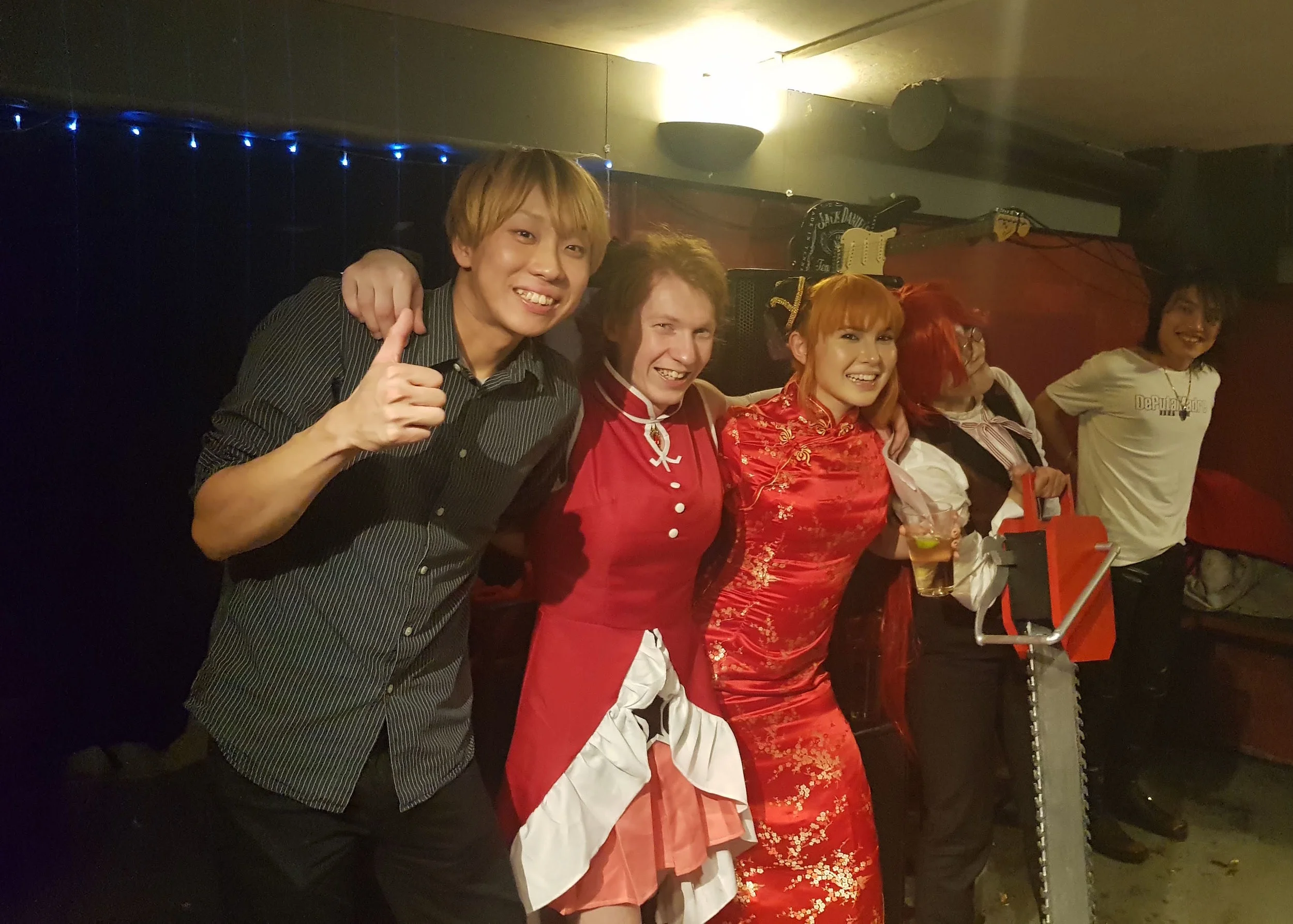
In December, we were invited to the 忘年会 (bounenkai) end-of-year party of the Brighton & Hove Japanese Club.
This was a lot of fun - and a chance to meet more local Japanese people too.

忘年会 (bounenkai) can also be translated as “forget-the-year party” - not that I want to forget this year!
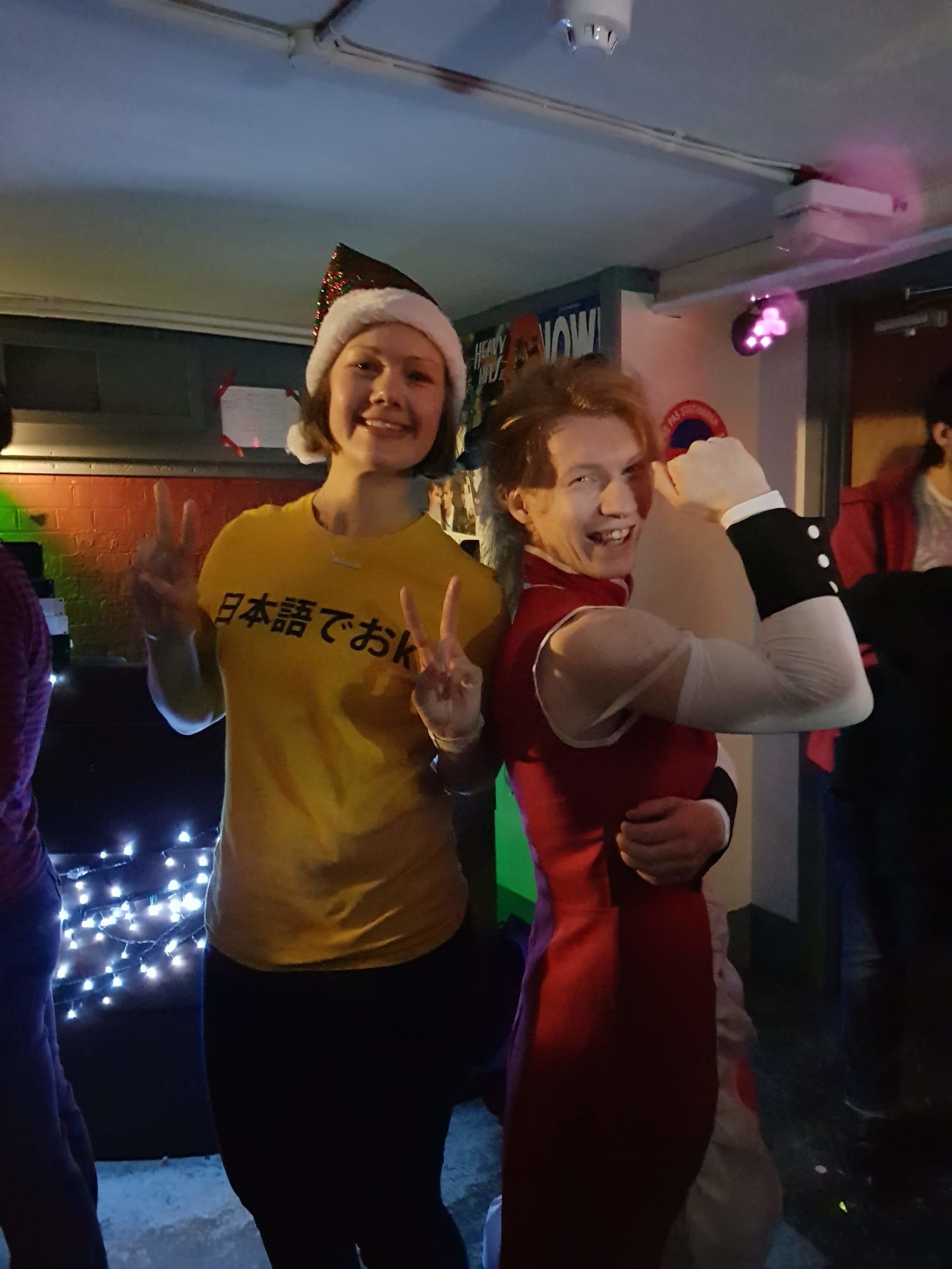
My student Sheen even won a prize in the cosplay competition!
And of course we had an end-of-year party of our own - finishing up 2018 with a trip to Moshimo, Brighton’s ethical and sustainable sushi restaurant.
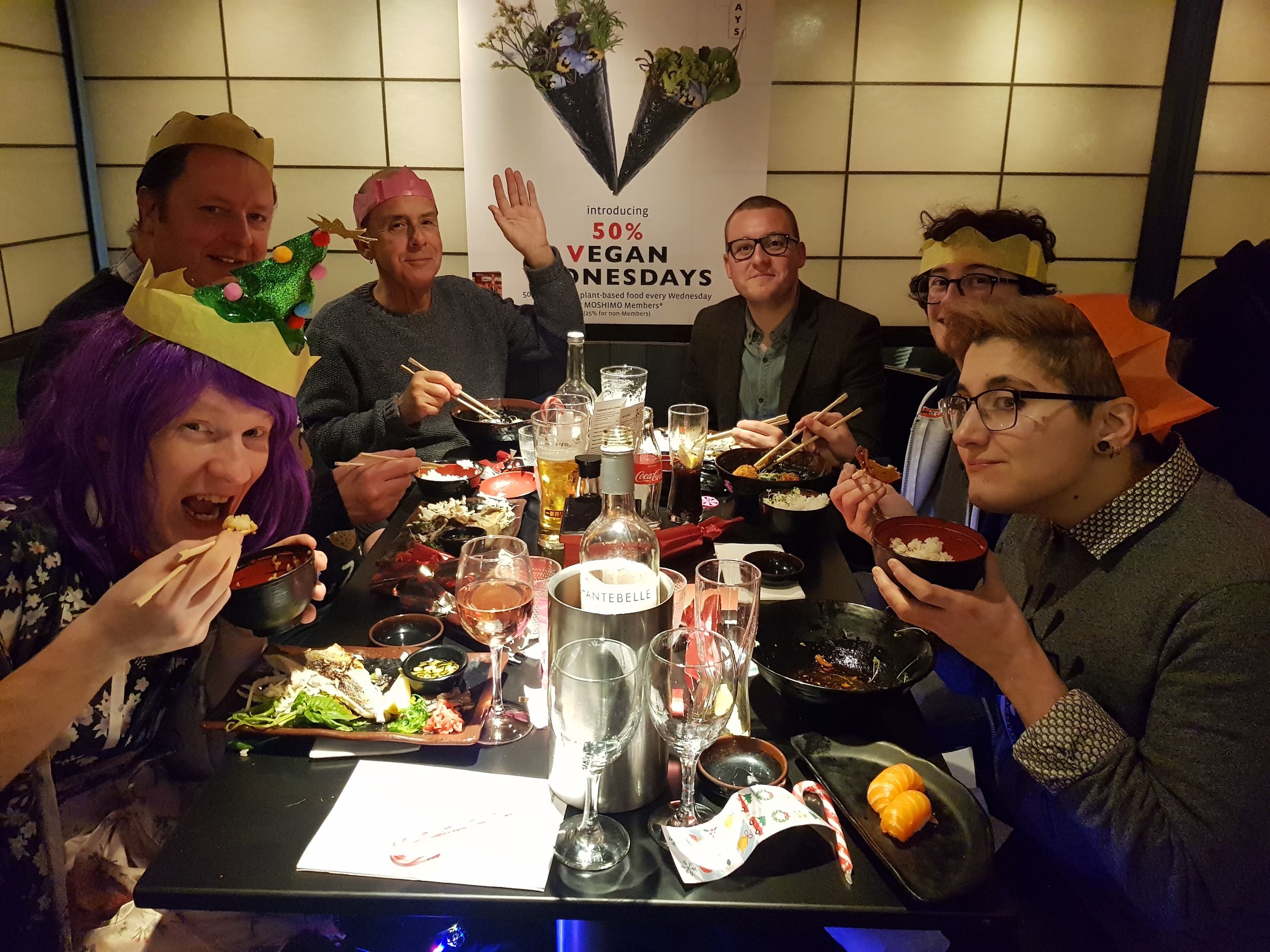
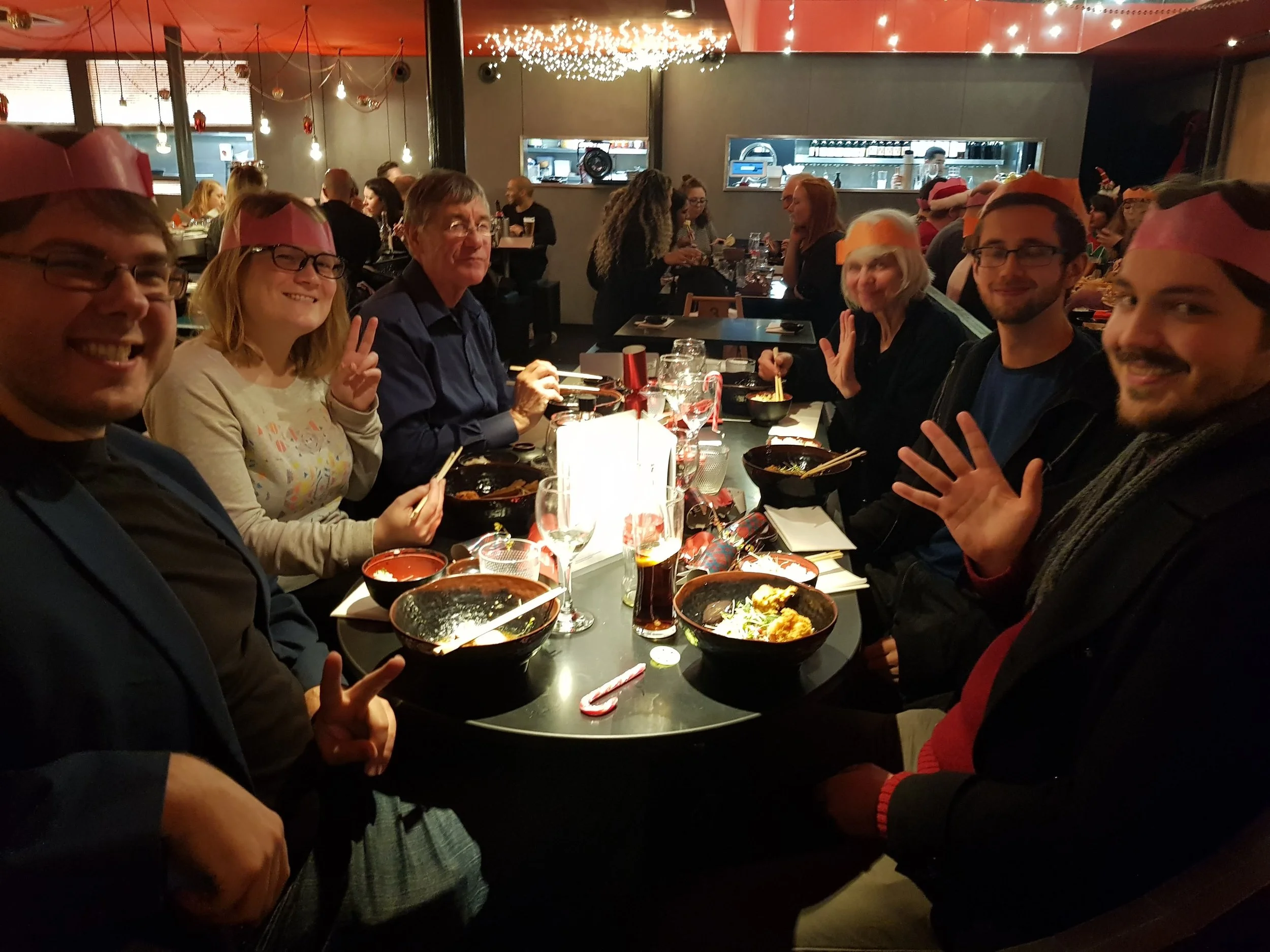
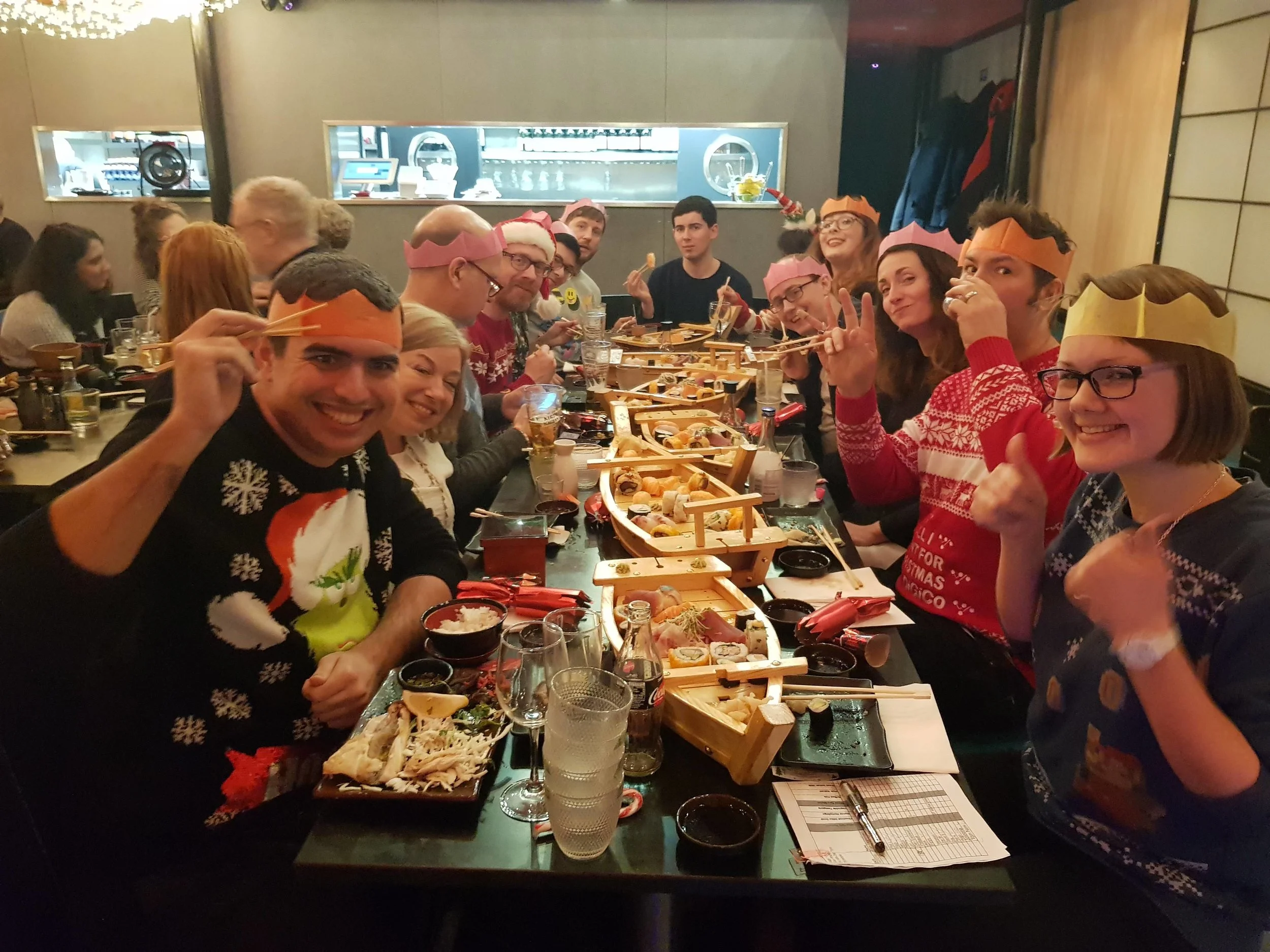
We were a big group, and the staff really looked after us - arigatou gozaimashita!
I run Step Up Japanese by myself, but I’m not really alone. I’m helped along by local business owners who host our events and look after us; members of other local groups who kindly invite us to events; and by Japanese volunteers who come to class and help out.
And most of all I am helped enormously by my students, who offer their support, good ideas, home-brewed beer, and endless souvenir Japanese kit-kats. いつもありがとうございます! Itsumo arigatou gozaimasu! Thank you, as ever.
Let’s make the rest of 2019 awesome too :-)
Fran x
Fun and games at the Brighton & Hove Japanese Club Open Day
If you have children while living abroad, or you move with your kids to a country where a different language is spoken, how do you expose them to your native language?
One option is to join a club of people in the same situation. (Or, if there isn't a club, to start one!)
The Brighton & Hove Japanese Club runs a Saturday school for children from Japanese-speaking and bilingual families. The club exists to promote cultural exchange between Japan and the UK.
Every year they have a well-attended Open Day to celebrate the school's successes, and welcome visitors in to see what the club has to offer. And there's a LOT on offer.
I went along this year with my students again. Here's what we got up to!
The open day has two parts - workshops in the classrooms, and demonstrations and performances on the stage. The club makes really good use of the space, with lots to see and do.
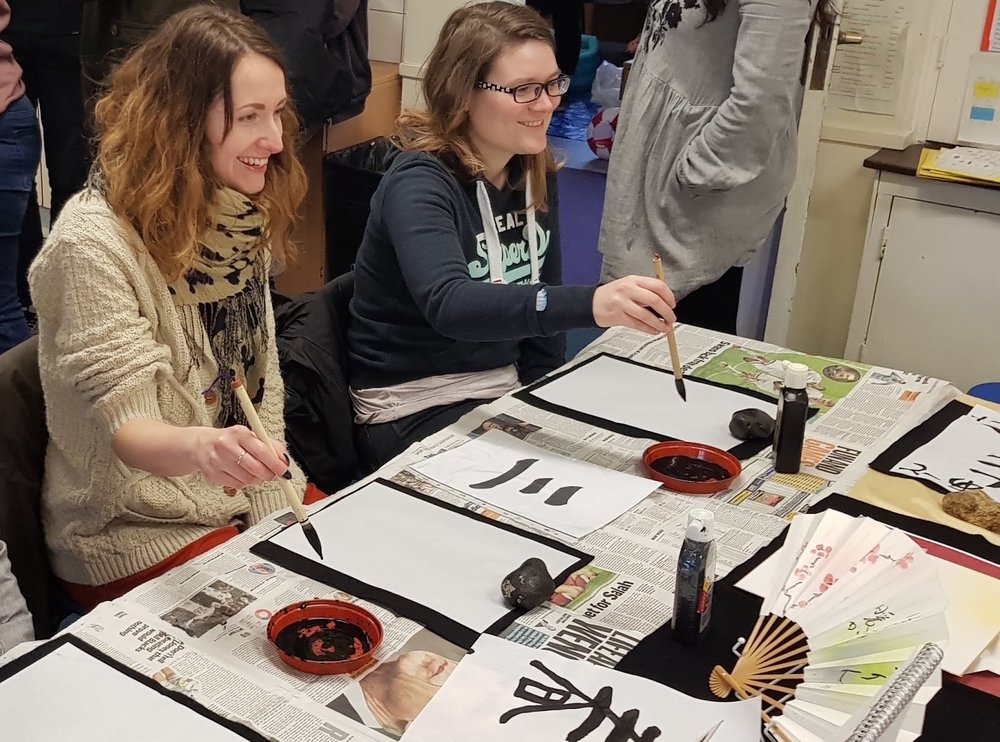
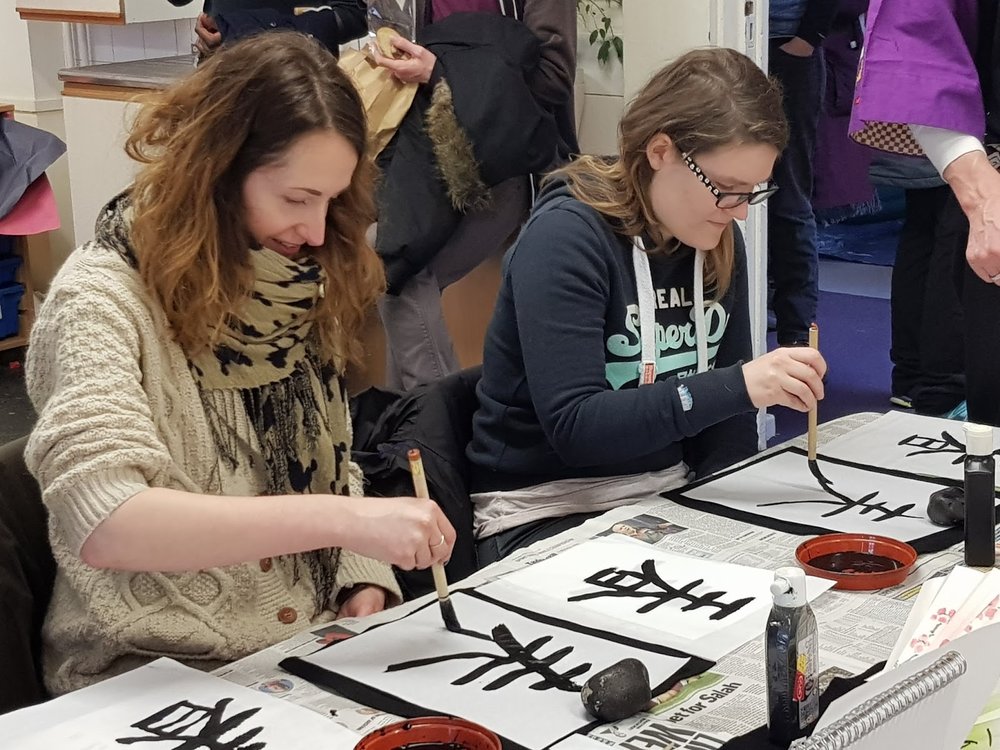
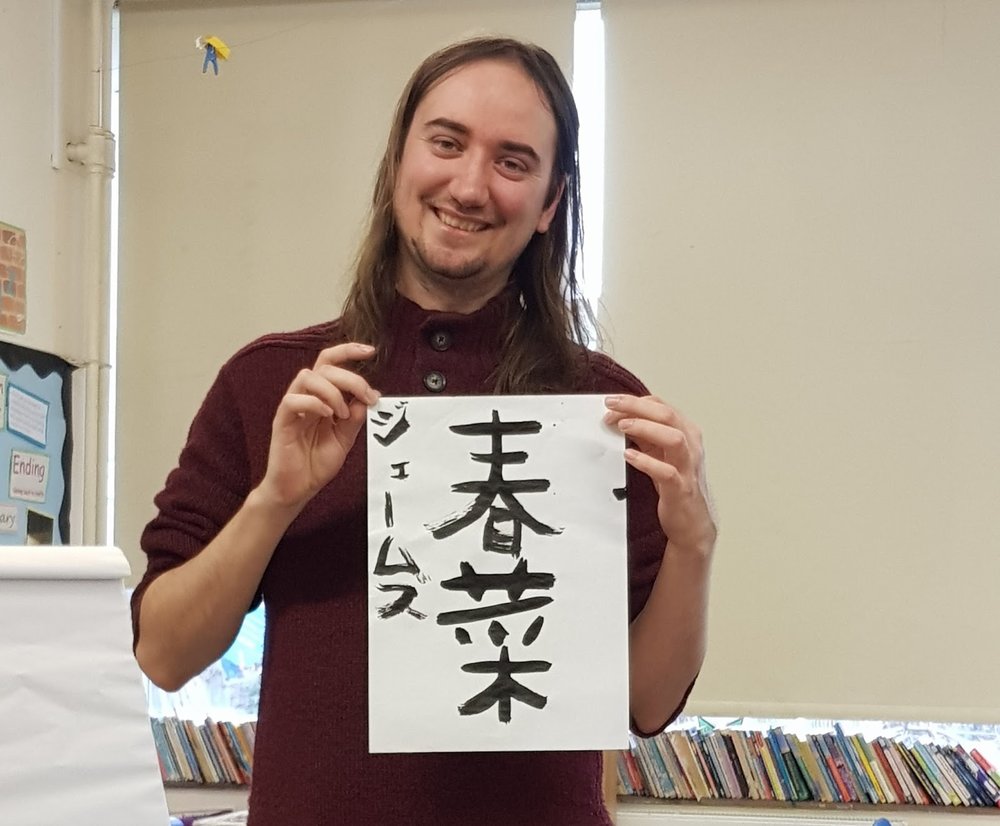
We started with a calligraphy lesson, having a go at writing 春 (haru), the kanji for Spring:
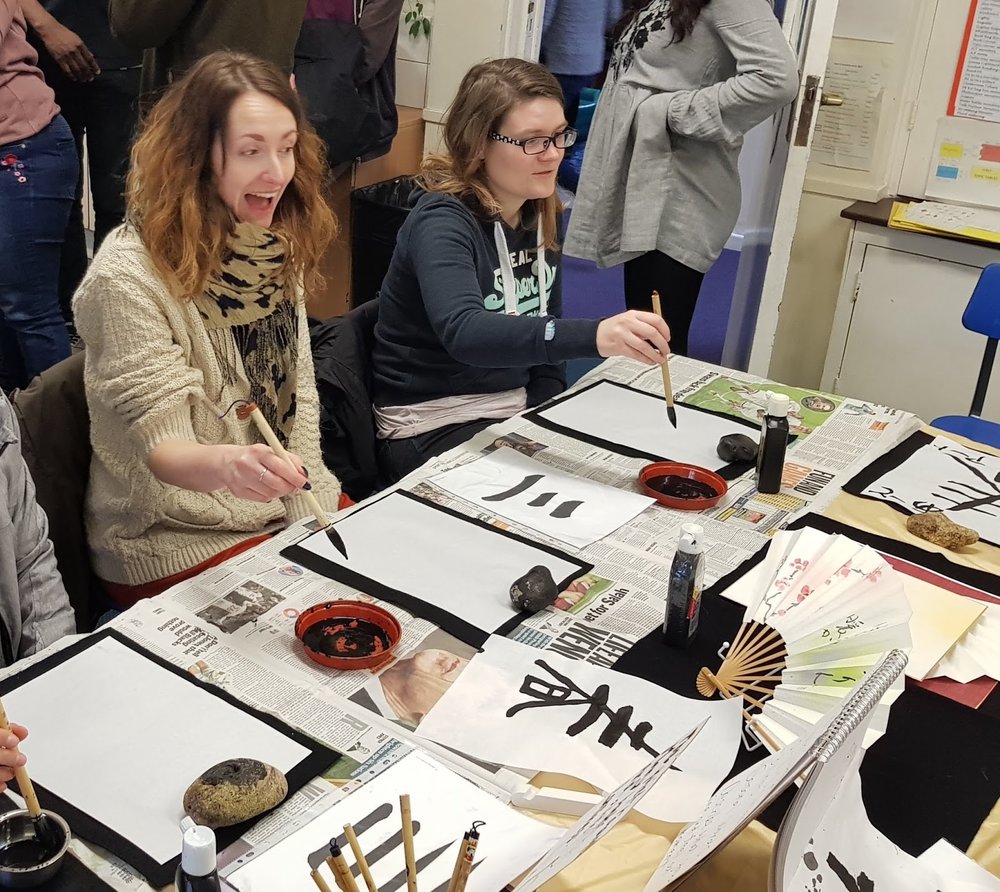
Diligent students!
Dan likes a challenge, so he wrote the most difficult kanji he could think of: 鬱 (utsu).
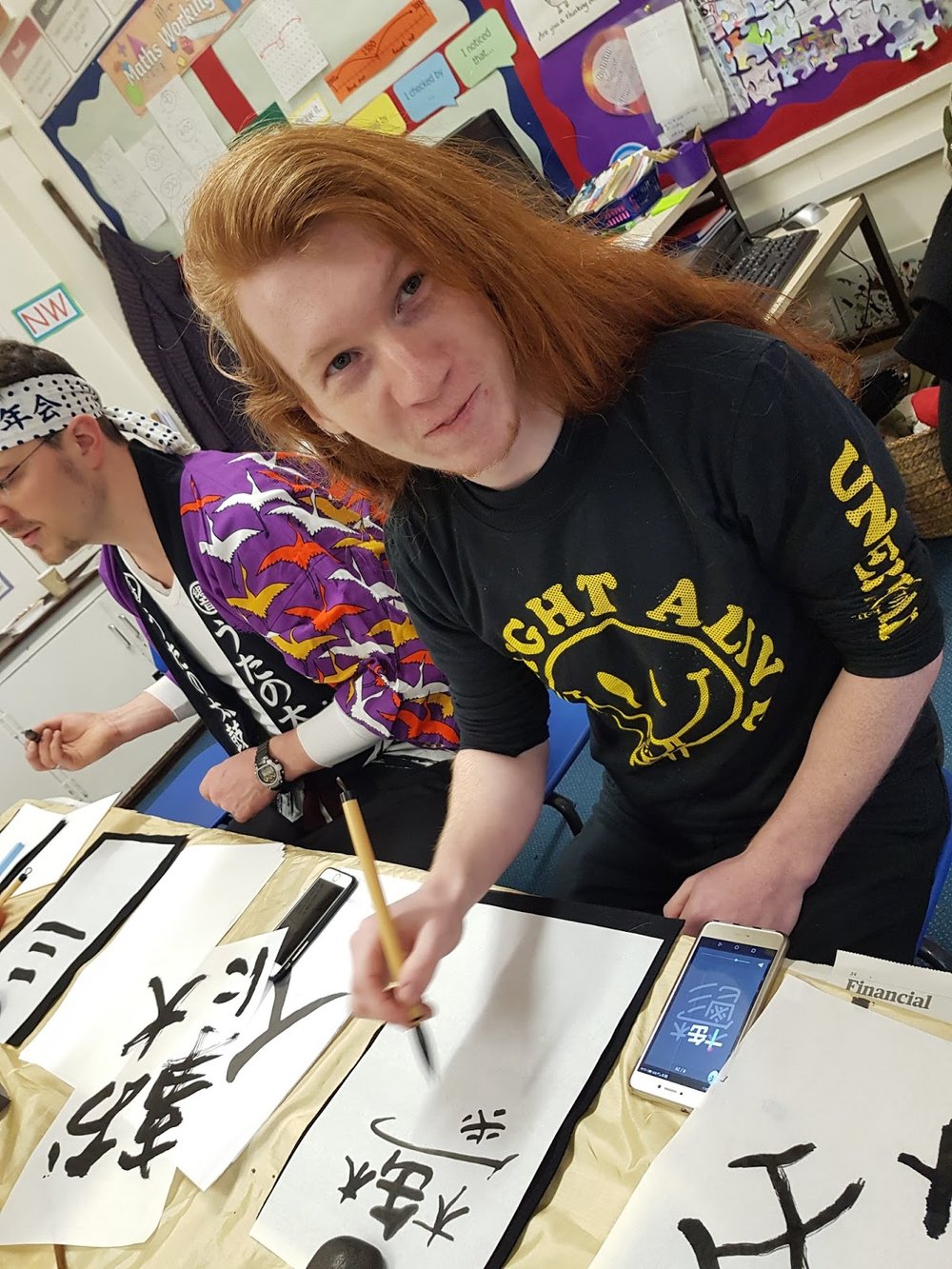
This character means depression, or "low spirits", which is also how you might feel after trying to write a kanji with 29 strokes!
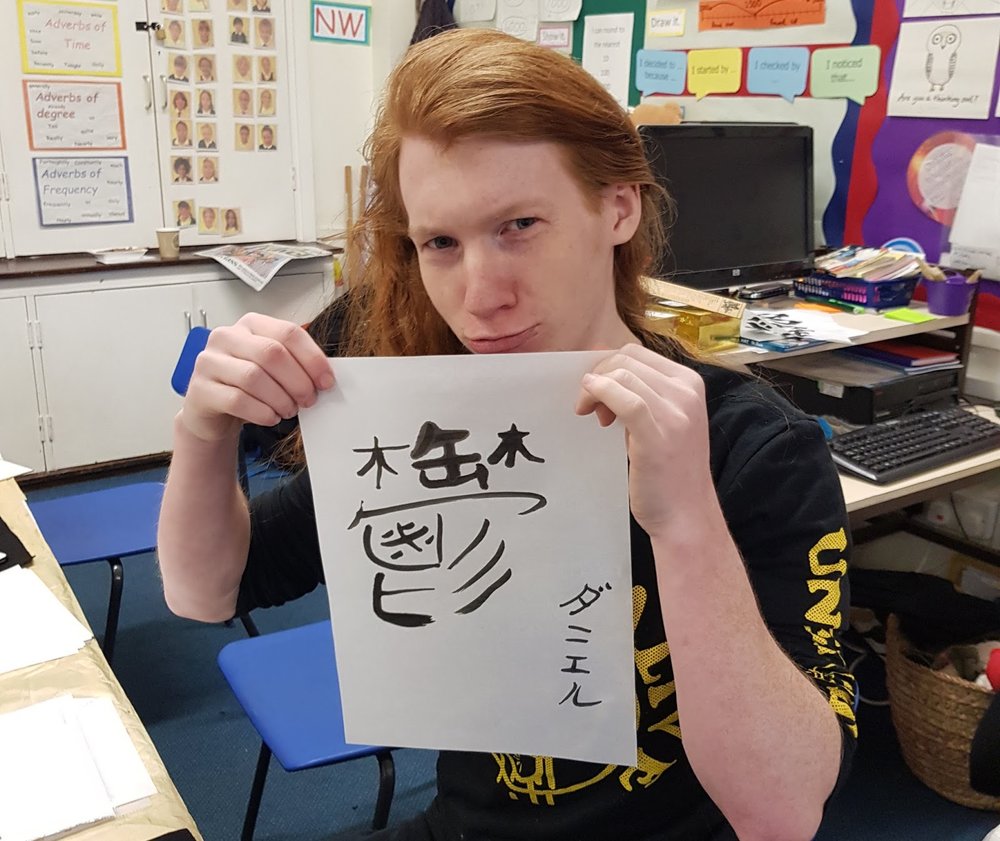
James showing off his handiwork:
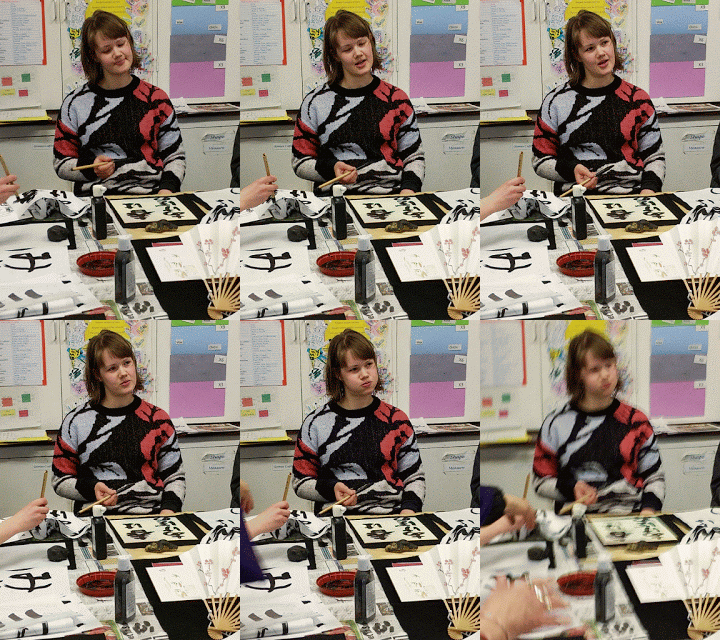
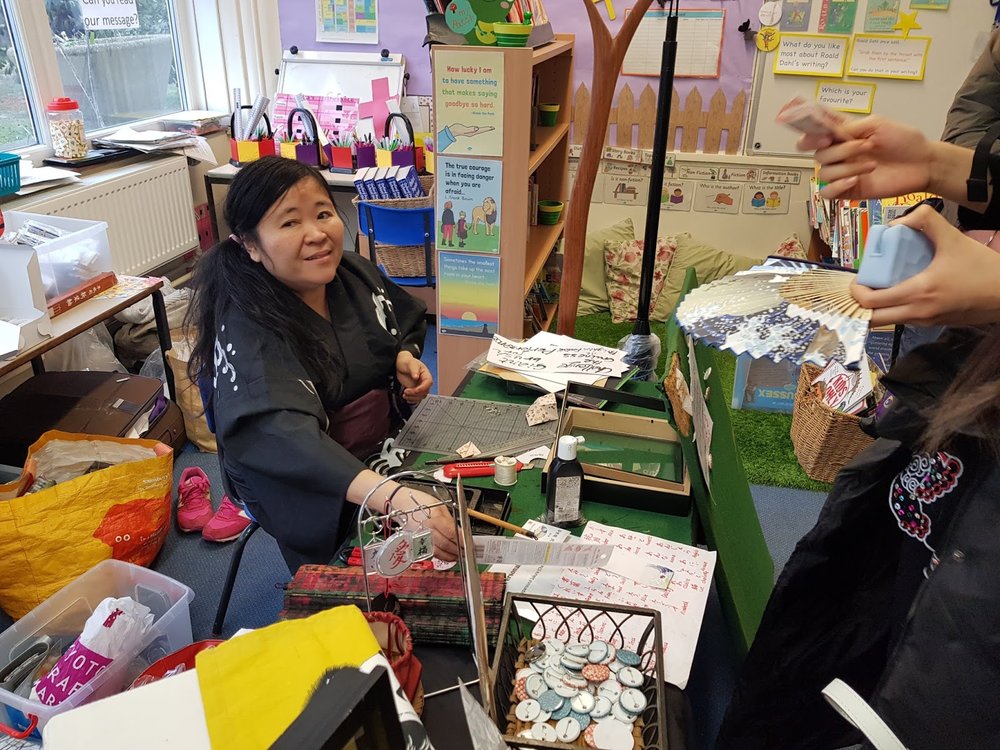
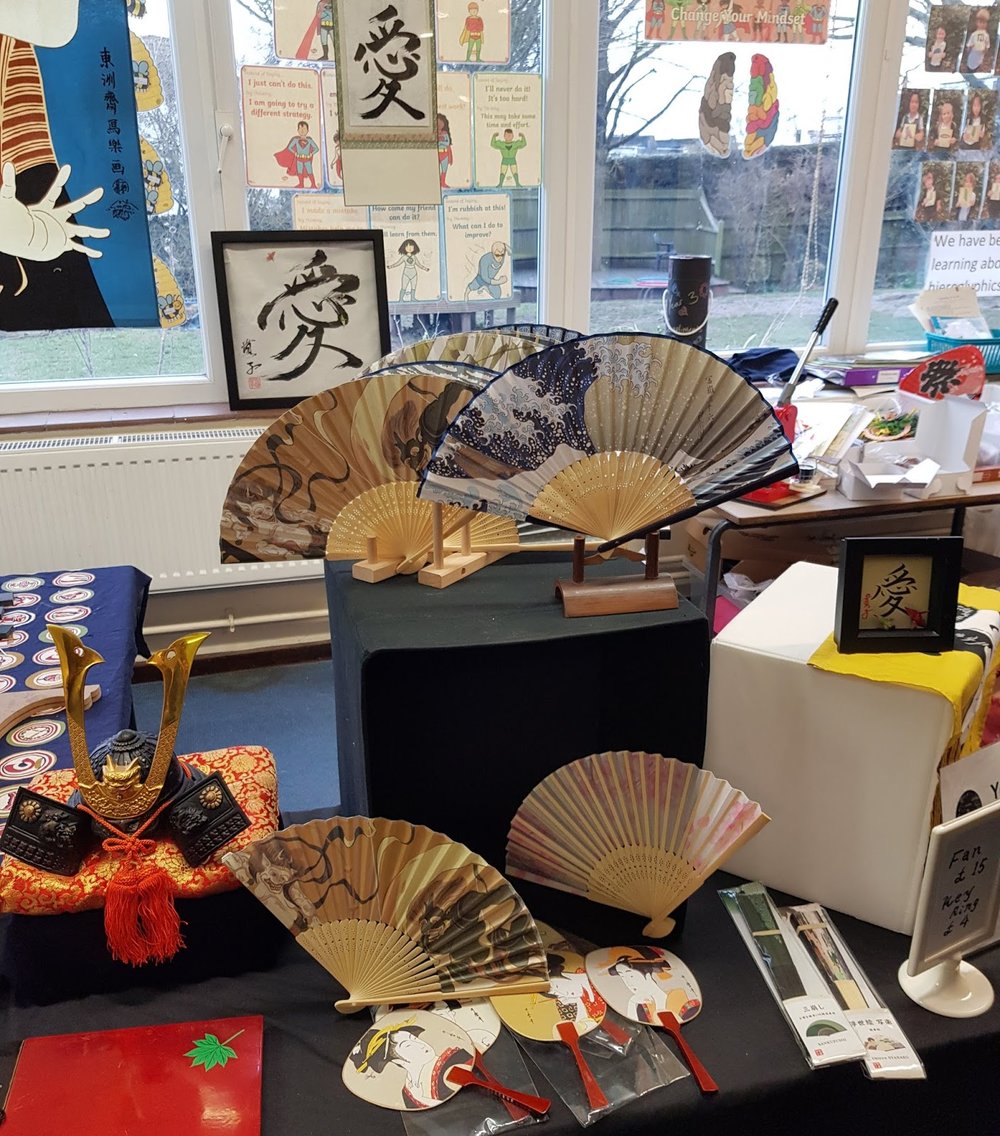
When she's not doing large-scale calligraphy demonstrations or teaching calligraphy, Takako sells beautiful Japanese goods, personalised with your name in Japanese.
Next, we headed into the main hall to see some of the shows.
It was jam packed!
The organisers had to get an extra pole so their video camera could see over the crowd.
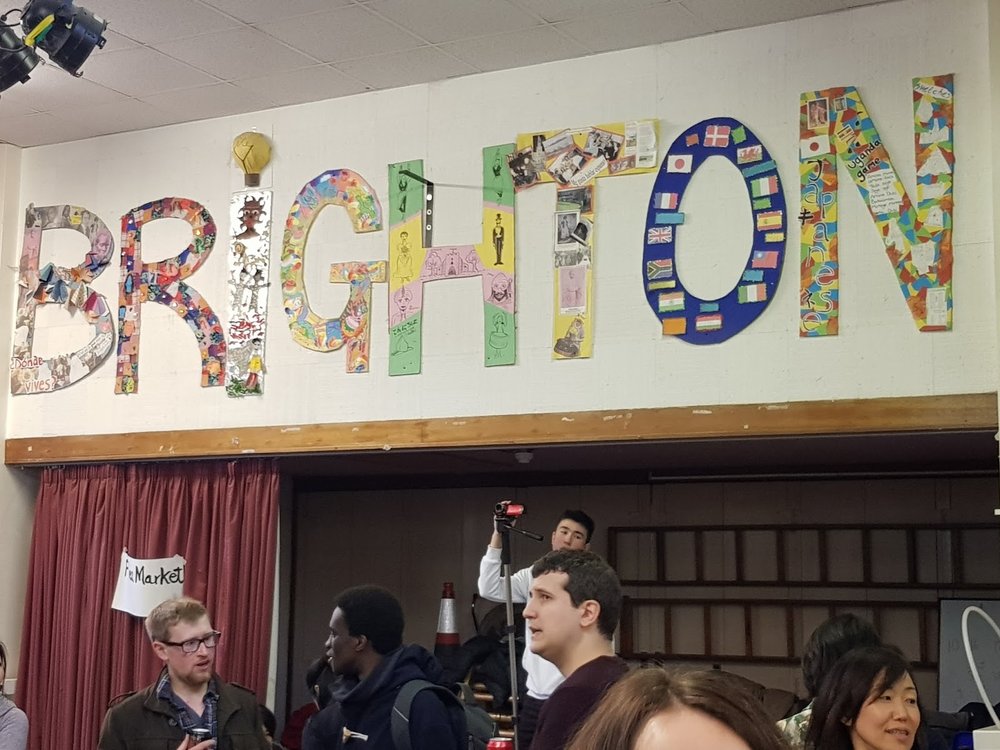
Usually my favourite bit is the second-hand book stall where I pick up something I want to read (often pretending to myself I'll use it in class...)
But I was knew I was going to Japan the following week so I didn't buy any books this year.
I did however get this adorable Anpanman cookie!

I sat on him later and squashed him, but he still tasted great.
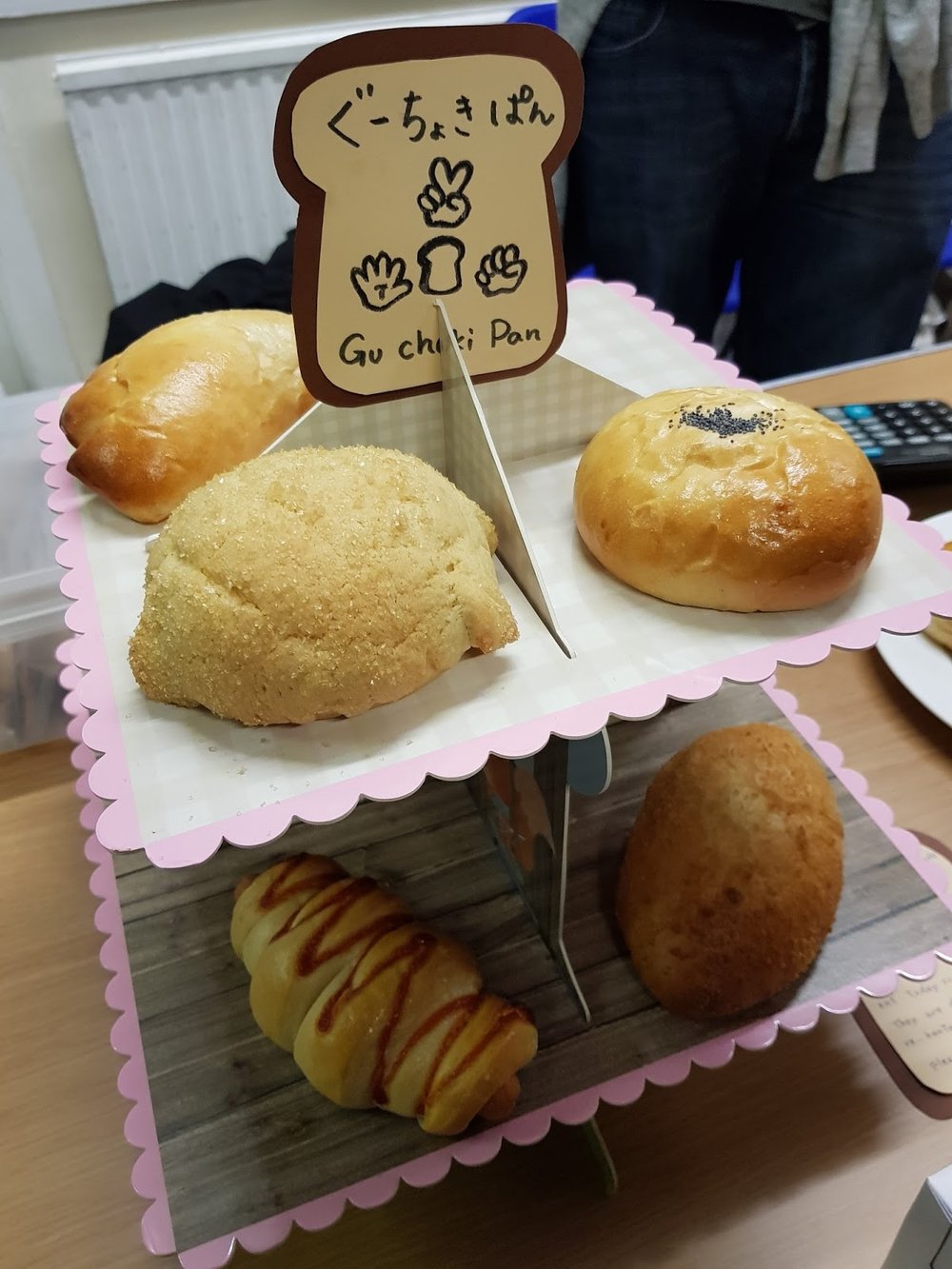
I also got some melon pan from this cute bakery stand.
("Gu choki pan ya" is the name of the bakery from the Ghibli film Kiki's Delivery Service).
(No photo of An-an's stall I'm afraid, I was too busy chatting to Noriko, the owner, to remember to take a picture).
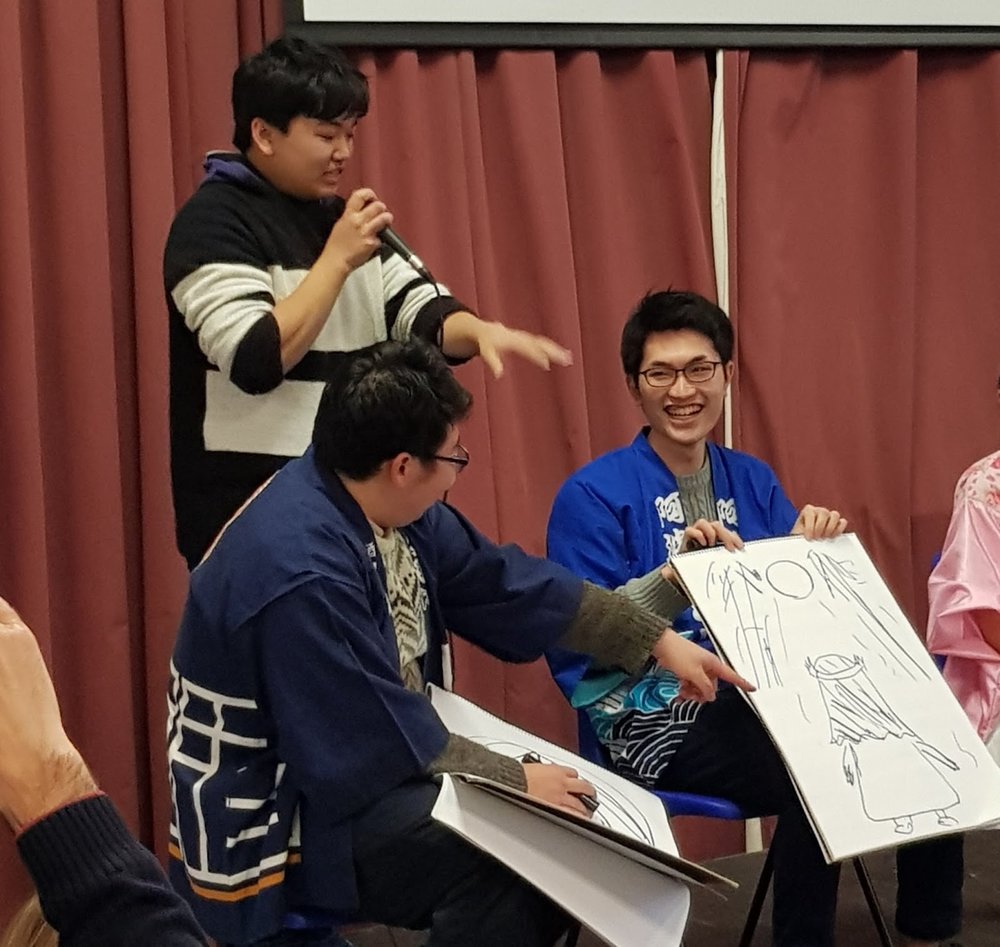
While eating some of the sweet Japanese treats I'd bought, we watched the manga drawing contest.
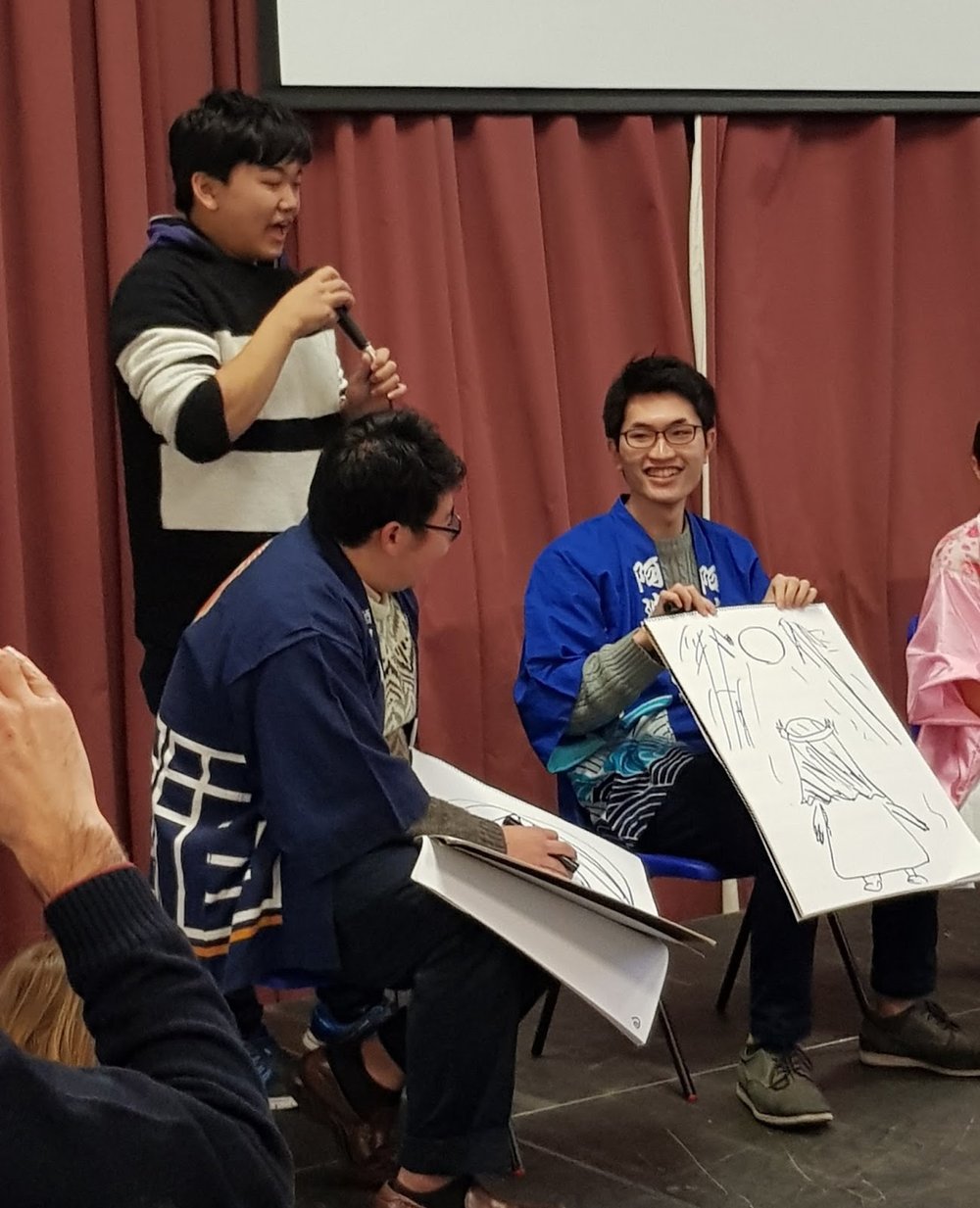
The contestants were given the name of a manga character and had to draw them. The kids could peek at the screen, but the adults had to draw from memory.
Two of the adults participating are professional manga artists, so that was fun too.
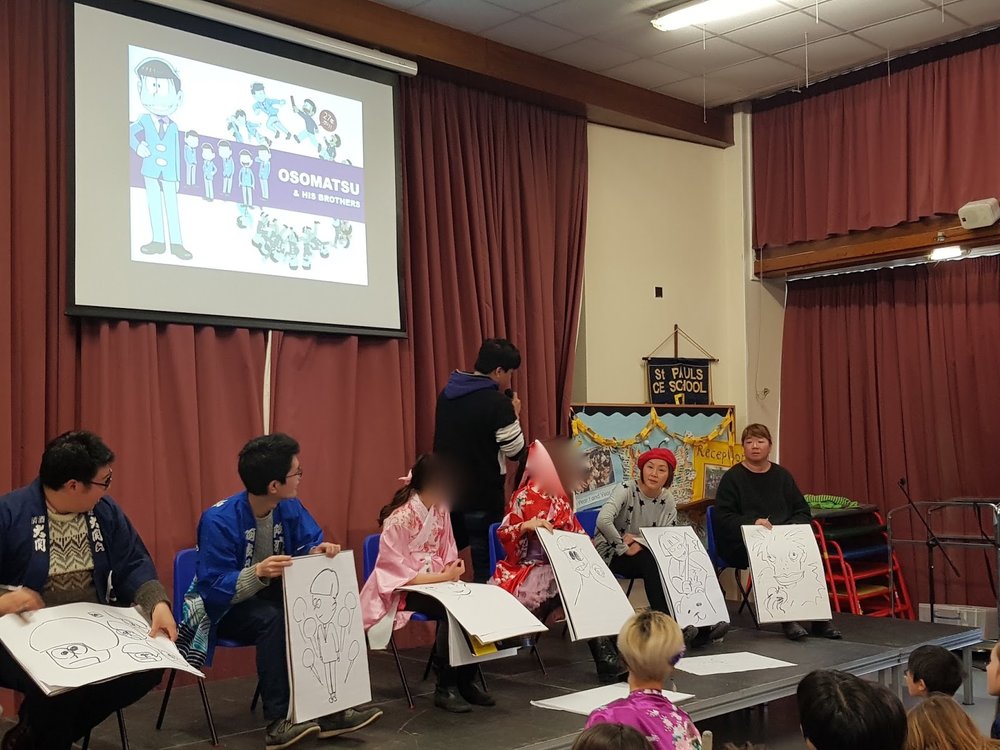
The event is presented in English and in Japanese, with speakers switching between languages.
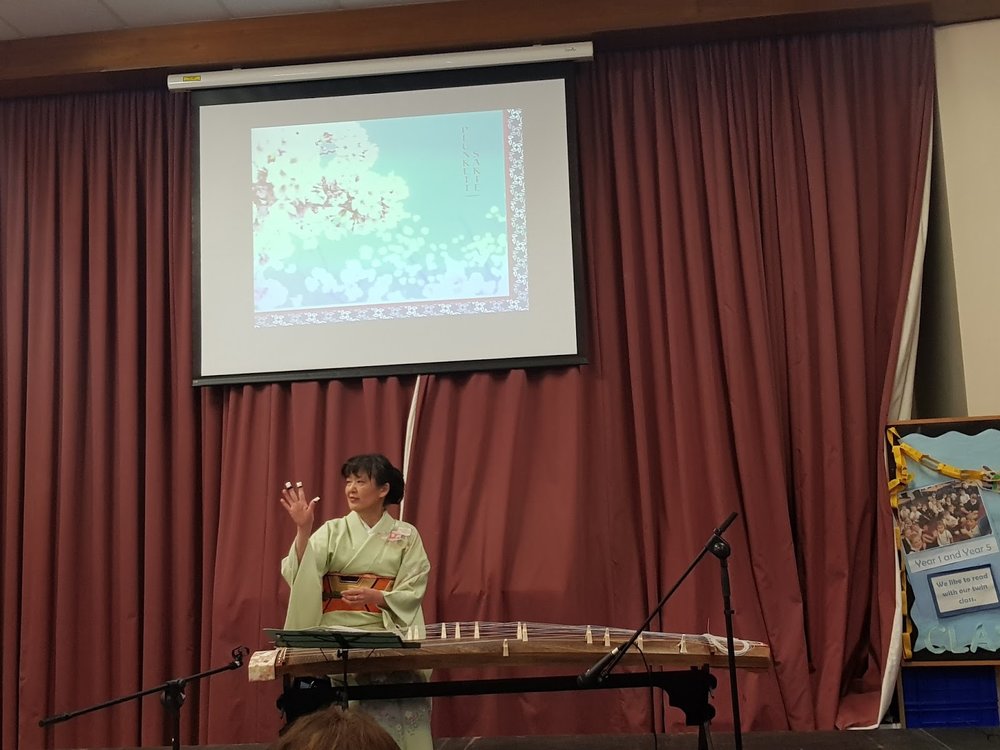
We also watched a koto (Japanese harp) performance by Sakie Plunkett.
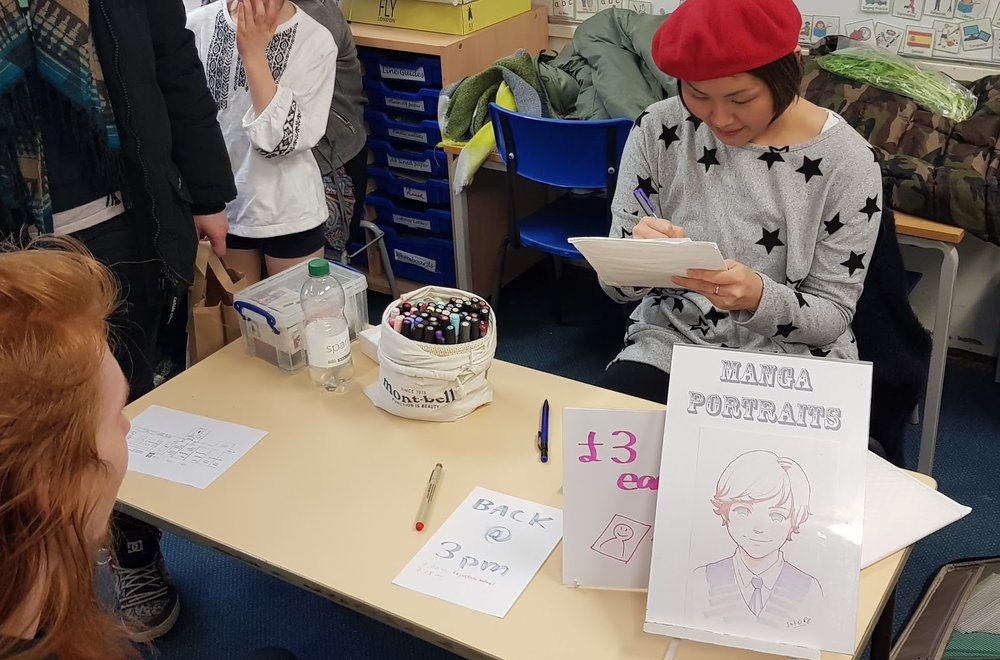
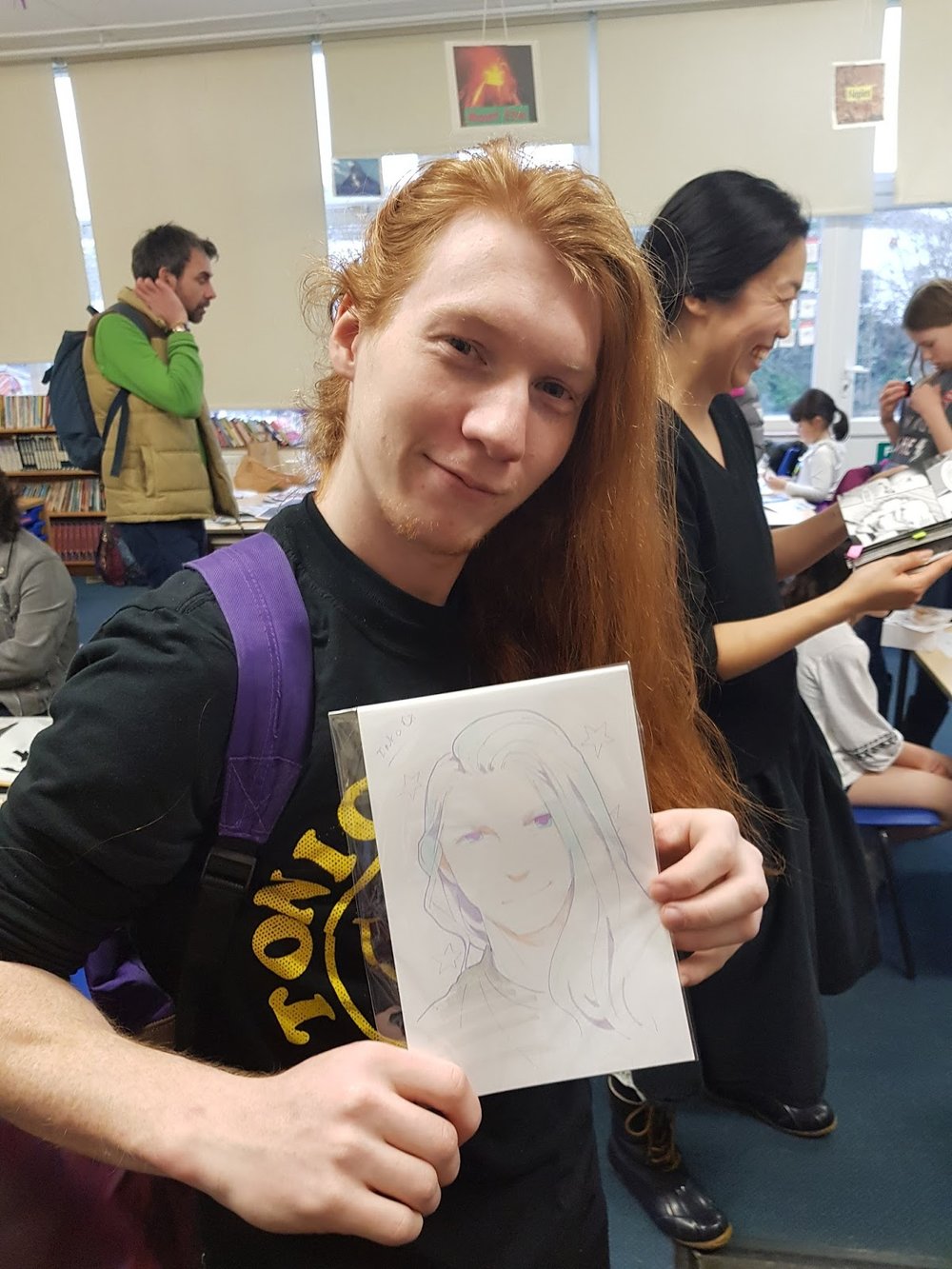
And some students had their portraits drawn by manga artists Inko and Chie Kutsuwada.
Here Inko hard at work:
And the finished result!

I always meet someone new and interesting at the Open Day, and the organisers are very friendly and welcoming.
Why don't you come along next year?
Find out more about the Brighton & Hove Japanese Club on their website (click here).
More links:
- Brighton-based manga artist Inko (Ai Takita-Lucas)
- Manga artist Chie Kutsuwada - also Brighton-based
- Takako Higgs, calligraphy artist and teacher in (you guessed it) Brighton
- Cafe an-an, Japanese cafe and wagashi (Japanese sweets) shop in Portslade















Like many people in the UK, I studied French in school. I liked French. I thought it was really fun to speak another language, to talk with people, and to try and listen to what was going on in a new country. (Still do!)
When I was 14 we went on a school exchange to the city of Reims, in northeastern France. I was paired with a boy, which I’m sure some 14-year-olds would find very exciting but which I found unbearably awkward. He was very sweet and we completely ignored each other.
That was nearly 20 years ago, and I didn’t learn or use any more French until, at some point in lockdown, I decided on a whim to take some one-to-one lessons with online teachers. Here are some things I learned about French, about language learning, and about myself.