
Welcome to the Step Up Japanese blog archive!
Although I’m not currently adding new posts to the blog, you’ll find plenty of Japanese learning tips, study advice, and resources to explore here.
Browse the blog index to view a complete list of posts.
For the latest news, course updates, and Japanese learning tips from Step Up Japanese, sign up for my newsletter.
Search this blog:

What's The Difference Between お and ご in Japanese Honorifics? (Part 2)
Previously we’ve talked about the polite little 'o' that appears in phrases such as o-genki desu ka?'
But when do we use お ‘o', and when is it ご 'go'? And why?
There are a few simple rules…

Previously we’ve talked about the polite little 'o' that appears in phrases such as o-genki desu ka?'
Click here to read Part 1 first - Three Ways You Should Be Using The Japanese Honorific お.
But when do we use お (o), and when is it ご (go)? And why?
There are a few simple rules:
1) ‘O’ for Japanese origin, ‘go’ for Chinese origin

The general rule is: お (o) is used with native Japanese words:
o-haka お墓 grave
o-kome お米 rice
o-sushi お寿司 sushi
o-shirase お知らせ notice
ご (go) is added to words of Chinese origin:
go-ryoushin ご両親 parents
go-renraku ご連絡 contact, get in touch
go-kyouryoku ご協力 cooperation
Why?
O and go are actually two readings of the same kanji (御) - ‘o’ is the kunyomi (also called the Japanese reading); ‘go’ is the onyomi (Chinese reading).
That's why we read it o with native Japanese words and go with words from Chinese.

2) Foreign loanwords only get ‘o’
Foreign words don’t usually get this prefix, but when they do, it’s an ‘o’:
o-tabako おタバコ tobacco
o-toire おトイレ toilet
3) Notable exceptions
Most native Japanese words get o, and most Chinese-origin words get go. But there are exceptions. Here are a few:
o-denwa お電話 (telephone)
o-shougatsu お正月 (New Year)
o-genki お元気 (well, healthy)
go-yukkuri ごゆっくり (take your time)

A final word of warning: only certain words get beautified with 'o' and 'go'. It’s best to stick with words that commonly have ‘o’ or ‘go’ added. If you start adding them all over the place, you'll sound a bit odd.
Now, go have fun being marginally more polite than you were previously!

Three Ways You Should Be Using The Japanese Honorific お (Part 1)
Fairly early on in your Japanese-learning journey, you'll learn some set phrases like:
o-genki desu ka? (How are you?)
o-shigoto wa nan desu ka? (What's your job?)
Usually I teach that the “o” in o-genki desu ka makes the question more polite. This is true, but it’s not the whole story.

Fairly early on in your Japanese-learning journey, you'll learn some set phrases like:
o-genki desu ka? (How are you?)
o-shigoto wa nan desu ka? (What's your job?)
Usually I teach that the “o” in o-genki desu ka makes the question more polite. This is true, but it’s not the whole story.
Honorific o (or sometimes go) is basically used for three things:
1) Being polite about someone else
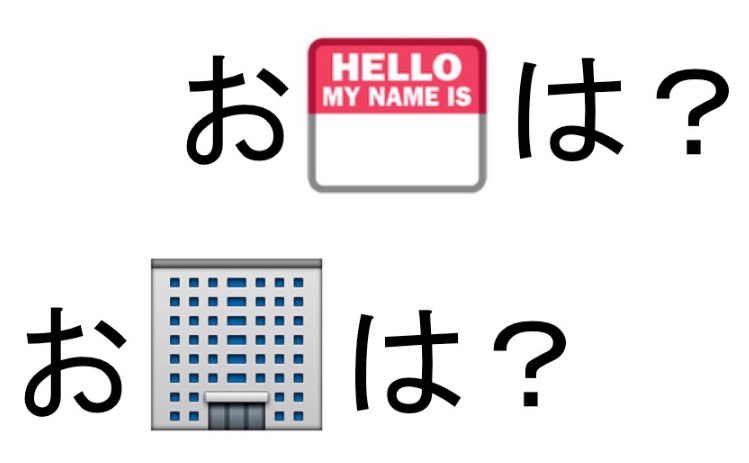
It's good to be more polite about other people than you are about yourself, right?
So when you're speaking about someone else, there are certain words that get an o (or go) on the front:
o-shigoto お仕事 (your honourable job)
o-sumai お住まい (your respected abode)
Like in these common Japanese questions:
o-namae wa? お名前は? (What is your esteemed name?)
o-genki desu ka お元気ですか。 (Are you [person I respect] well?)
When you talk about yourself, however, don't use o or go: just namae, genki, kazoku, shigoto. You can't talk about your own o-namae or go-kazoku!
2) Sounding more polite generally
Adding o to a word can make your speech sound more polished. Words that don’t necessarily need o, but often get it, include:
sushi / o-sushi (sushi)
kome / o-kome (rice)
sake / o-sake (rice wine)
With these words, either way is fine. If you're trying to speak politely you might want to use the 'o' version.
Unlike the first group, this kind of o isn’t anything to do with whose sushi or sake it is. It just sounds a bit nicer if you stick the o on there. Like you’re respecting the rice.

3) Some words just always have it
So, some words need o/go only when you're talking about someone else. Others can either have it or not.
There's a third category, too - words where the o/go has been subsumed into the word completely, and can't really be detached:
Gohan (ご飯, meal/cooked rice) always needs go - there's no unadorned word "han" for rice (although there presumably was at some point.)
O-cha (お茶, tea) pretty much always gets o, as does o-kane (お金, money). Just cha or kane sounds quite rough.
Words like this don't really belong to the "o/go is polite" rule of thumb. It's best just to learn them as whole words.

O or go?
Generally, words of Chinese origin take the prefix go, instead of o:
go-kazoku (your esteemed family)
go-kyouryoku (your noble cooperation)
go-ryoushin (your respected parents)
There are some exceptions, though… but more on that next time.
First published (as “Hey! What’s That お Doing There?”) in December 2015
Updated 21 December, 2018















Like many people in the UK, I studied French in school. I liked French. I thought it was really fun to speak another language, to talk with people, and to try and listen to what was going on in a new country. (Still do!)
When I was 14 we went on a school exchange to the city of Reims, in northeastern France. I was paired with a boy, which I’m sure some 14-year-olds would find very exciting but which I found unbearably awkward. He was very sweet and we completely ignored each other.
That was nearly 20 years ago, and I didn’t learn or use any more French until, at some point in lockdown, I decided on a whim to take some one-to-one lessons with online teachers. Here are some things I learned about French, about language learning, and about myself.