
Welcome to the Step Up Japanese blog!
Browse the blog index to view a complete list of posts.
For the latest news, course updates, and Japanese learning tips from Step Up Japanese, sign up for my newsletter.
Search this blog:

Gachapon: Capsules of Joy, ¥300 a pop (GUEST POST!)
This week - a guest post from Step Up Japanese student David Sharp!
I have a bit of a gachapon obsession. There are so many things I love about Japan, but my eyes light up when I see a gachapon machine. I’ve got a sixth sense specifically dedicated to locating gachapon machines and you can guarantee I’ll make a beeline for it, or forever regret not seeing what mysteries they might hold. There’s something very Japanese about gachapon: compact, transient, novel and convenient.
But let’s back up for a second – what is gachapon?

This week - a guest post from Step Up Japanese student David Sharp!
I have a bit of a gachapon obsession. There are so many things I love about Japan, but my eyes light up when I see a gachapon machine. I’ve got a sixth sense specifically dedicated to locating gachapon machines and you can guarantee I’ll make a beeline for it, or forever regret not seeing what mysteries they might hold. There’s something very Japanese about gachapon: compact, transient, novel and convenient.
But let’s back up for a second – what is gachapon?
A gachapon machine is a small box, with a mechanism a bit like a gumball machine that dispenses little plastic capsules with some sort of ‘prize’ in them. You’ll usually see them stacked two or three high and accompanied by some either side. You may even find them stretching out across an entire wall, or filling up what might otherwise be wasted space.
To operate them is pretty simple: drop the correct coins into the coin slot and then turn the crank on the front, after a few turns your prize will drop out!
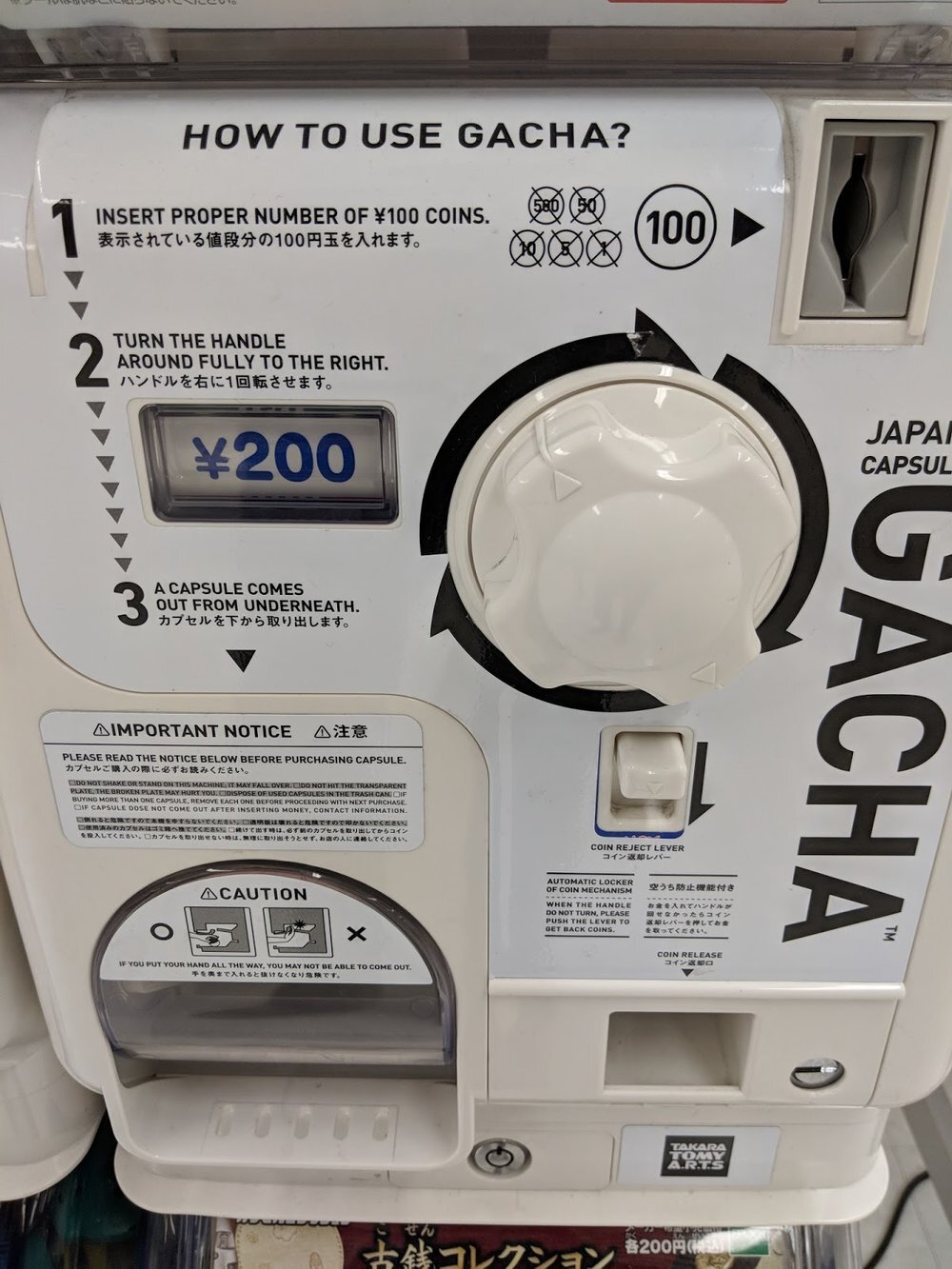
Gachapon 「ガチャポン」as a word comes from the “gacha gacha” 「ガチャガチャ」sound the machine makes as you turn the crank to release your prize. What people actually call them tends to differ.
From my experience "gachapon" is pretty common, however you’re also likely to see “gashapon"「ガシャポン」 or simply “gacha”「ガチャ」 (which are Bandai and Tomy trademarks, respectively), both of which derive from the same onomatopoeia.
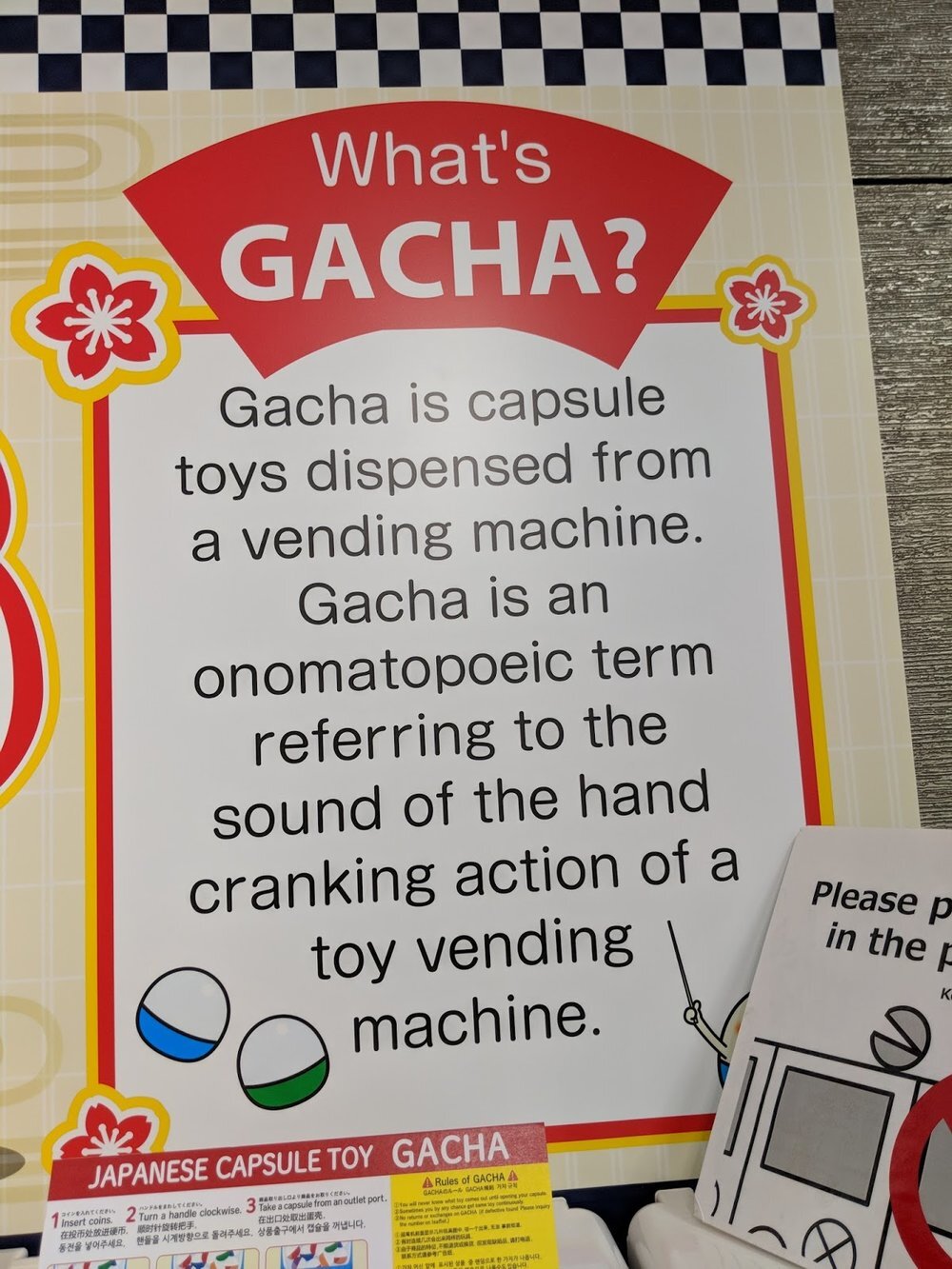
Typically, a gachapon prize comprises of three components: the capsule, a little scrap of paper with all the prizes you could have won and your prize itself!
Here's what to expect from your average gachapon machine: a capsule, your prize (in this case a Pokémon pin) and the "here's what you could have won" scrap of paper:

So now we know what gachapon is, let's have a look at some of the prizes on offer!
Phone danglers are quite a common find:


Those on the left are actually designed to fit onto a bottle cap, which is a trend I'm not sure I understand ↓


Sometimes you'll find something a little more traditional ↓

Souvenir gacha aimed at tourists, which look a bit more like gumball machines ↓

Turns out you can even get watches in gachapon ↓

Deep down I regret not getting a Gudetama watch for 300¥ ↓

Magic sand and pots of slime are pretty common in kid-friendly places ↓

If you're happy to pay a bit more, you might find some of these sofubi (ソフビ "soft plastic") designer toys ↓

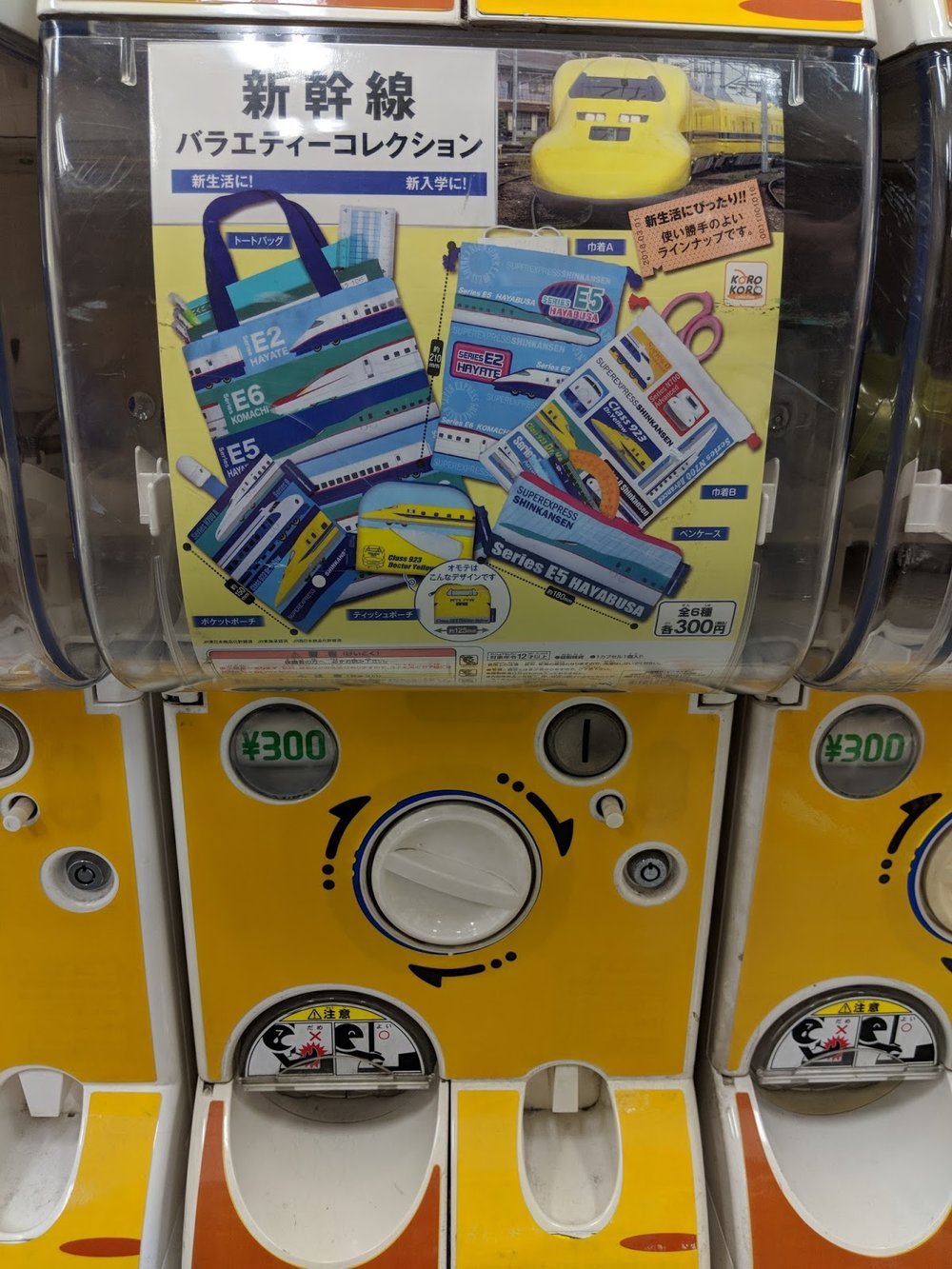
Shinkansen themed bags, purses and pouches ↓
Hopefully you'll find some cat hats ↓

...and more cat hats...

...and dog hats...

...and yet more cat hats...

...and cat wings...

...and somehow still find more cat hats!

In the contents of gachapon machines, there is a spectrum of target audiences and of usefulness, but one thing all the prizes have in common is the capsule they come in (hence sometimes being referred to as “capsule toys” 「カプセルトイ」)
“But, David”, I hear you say, “if you’re buying so many gachapon, what happens to all the empty capsules?”
Well, while not entirely universal, most places you’ll be able to get gachapon will also have a little basket or bin to dispose of your unwanted capsules.

But if you do find yourself taking them away with you, Bandai’s capsules are all recyclable, and most others will at least be half recyclable. Occasionally though you’ll find a capsule toy where you should keep hold of the capsule, because the capsule is the toy!
The capsule of these gachapon are maneki neko (招き猫; Lucky Cat) torsos! ↓

“I’m sold”, you say, metaphorically, “how much do will these fancy-schmancy capsules set me back?”
Gachapon machines (almost) always only accept 100¥ coins, so will cost a multiple of 100¥. A price tag of 300¥ is most common (approx. £2, at the time of writing) but you’ll likely see a lot of 200¥ and 400¥ machines too.
You might also stumble across a 500¥ gachapon machine, in which case don’t be surprised if it’s bordering on risque!
The only 500¥ gachapon here are these swimsuit-clad women ↓

While it’s certainly a matter of opinion, individual gachapon prizes tend to be good value for money. No matter how goofy a gachapon purchase may be, I find it difficult to be disappointed in the prize! Say you find a machine full of cute phone danglers; the quality will be comparable to one you might buy in a souvenir shop, but for cheaper!
However, if there’s one you’re really keen to own, or you want to collect the whole set, you run the risk of ending up with a lot of duplicates! (Although I’m sure you’ll be able to find an unsuspecting friend to offload them onto as “thoughtful gifts” from your travels.)
If you see a machine full of trinkets that you must have in your life and are keen on collecting a whole set– or there’s only one in a set you like the look of and don’t want to risk winning a dud– you may be able to buy it elsewhere. Akihabara, for example, has a number of shops that sell rows and rows of loose figures usually with very little markup (sometimes you’ll practically just be paying the tax). However, something truly sought after might set you back up to double what you would’ve paid for from the machine!
But now you've booked your flights to Japan and you're wondering “Where can I even find gachapon?”
Everywhere! Although they’re not as common as vending machines, you’ll find gachapon at tourist attractions, train stations, airports, convenience stores, arcades, shopping areas, department stores, sometimes even in temples. The beauty of gachapon is that you don’t need to dedicate a chunk of your day searching for them, or venture too far out of your way to find them. While there are dedicated stores you could keep an eye out for, the truth is there’s such a variety that over your trip you’ll hopefully stumble upon a wide range of potential prizes. (That said– if, at the end of your trip, you find yourself at Narita Airport’s Terminal 2 with pockets full of leftover coins, they have a huge selection just outside the 7-Eleven).
Narita Airport's terminal 2 wants your coins! (Fun fact: I had to get money out so I could get a few more gacha before heading home) ↓

The gachapon on offer are constantly changing and vary from place to place, so I wouldn’t get your hopes up about finding anything in particular, but there’s so much choice you’re bound to find something cool, cute, weird or that makes you chuckle!
Happy hunting!
Find David and tell him what your favourite gachapon prize is at davidsharp.codes. Or check out more of his Japan pics (including even more gachapon photos!) on his instagram.
P.S. Would you like to write a guest blog post for Step Up Japanese? Get in touch! :)
Fun and games at the Brighton & Hove Japanese Club Open Day
If you have children while living abroad, or you move with your kids to a country where a different language is spoken, how do you expose them to your native language?
One option is to join a club of people in the same situation. (Or, if there isn't a club, to start one!)
The Brighton & Hove Japanese Club runs a Saturday school for children from Japanese-speaking and bilingual families. The club exists to promote cultural exchange between Japan and the UK.
Every year they have a well-attended Open Day to celebrate the school's successes, and welcome visitors in to see what the club has to offer. And there's a LOT on offer.
I went along this year with my students again. Here's what we got up to!
The open day has two parts - workshops in the classrooms, and demonstrations and performances on the stage. The club makes really good use of the space, with lots to see and do.
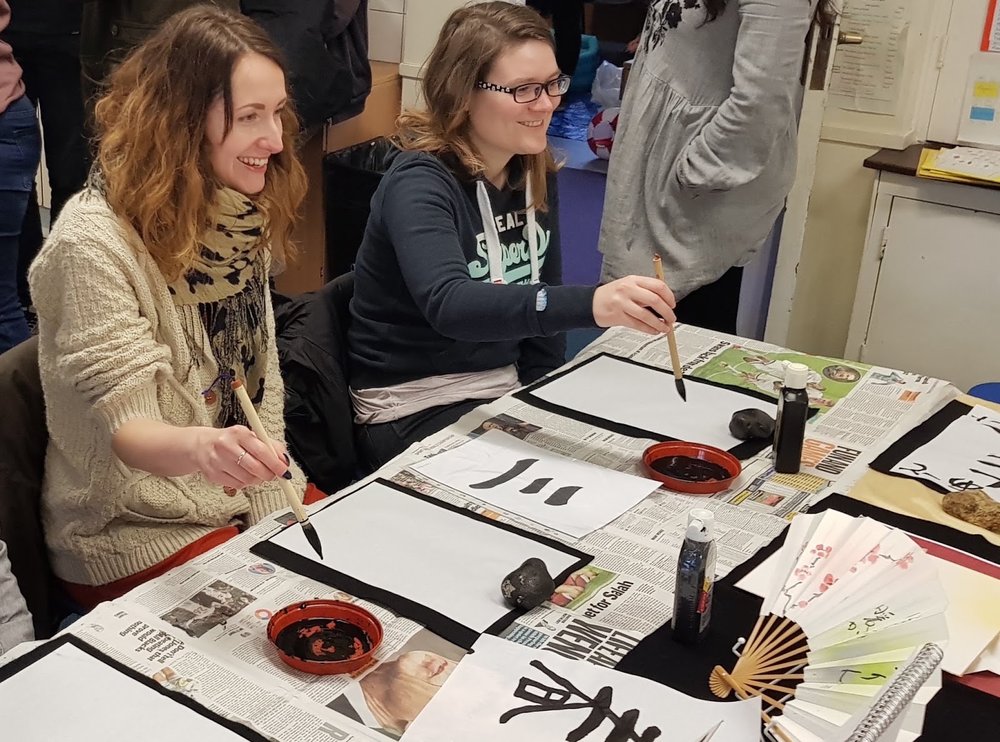
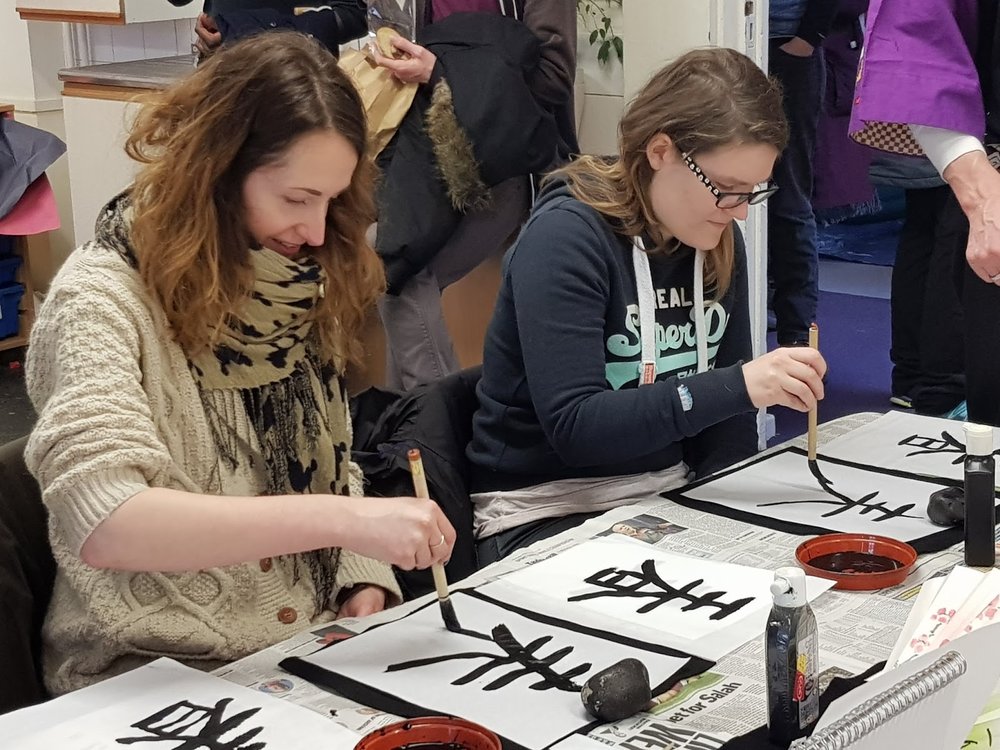
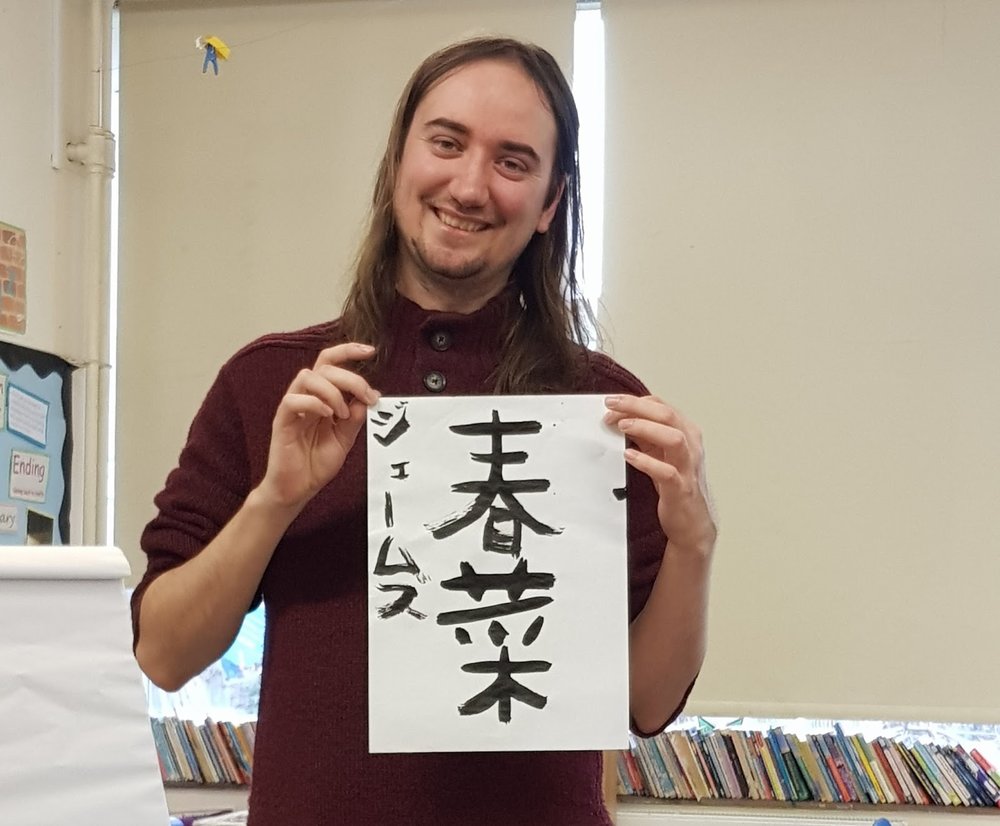
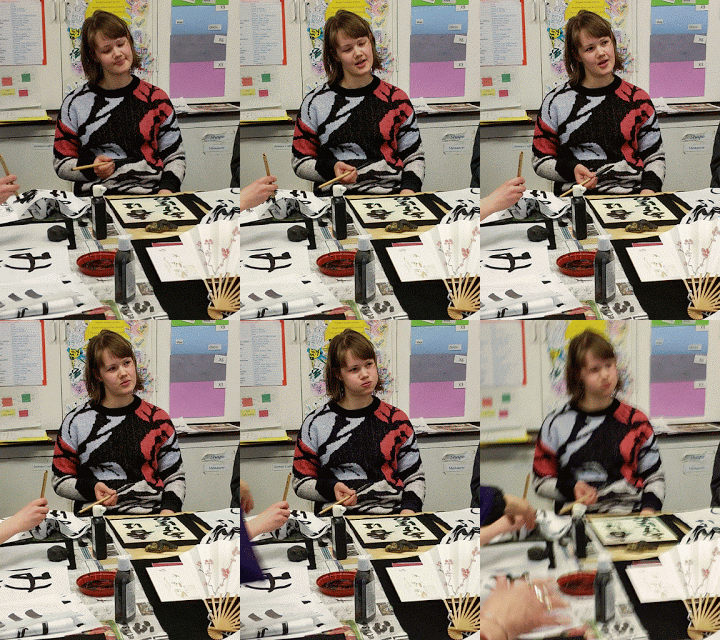
We started with a calligraphy lesson, having a go at writing 春 (haru), the kanji for Spring:
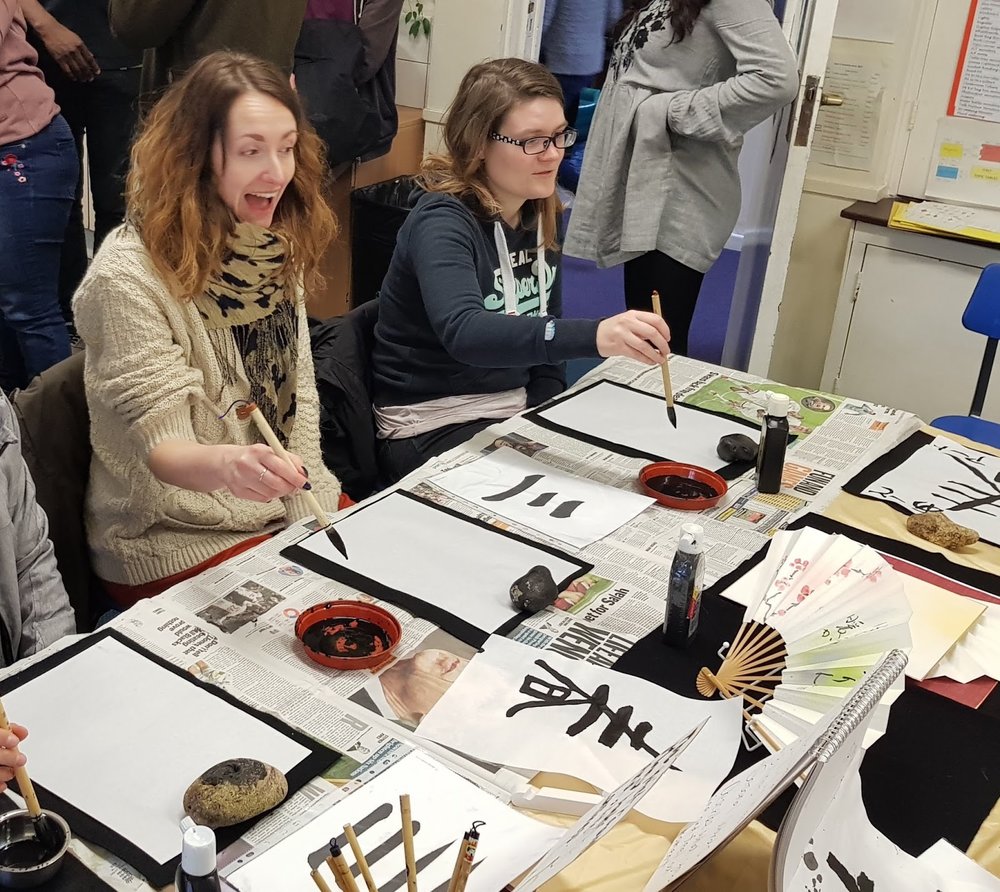
Diligent students!
Dan likes a challenge, so he wrote the most difficult kanji he could think of: 鬱 (utsu).
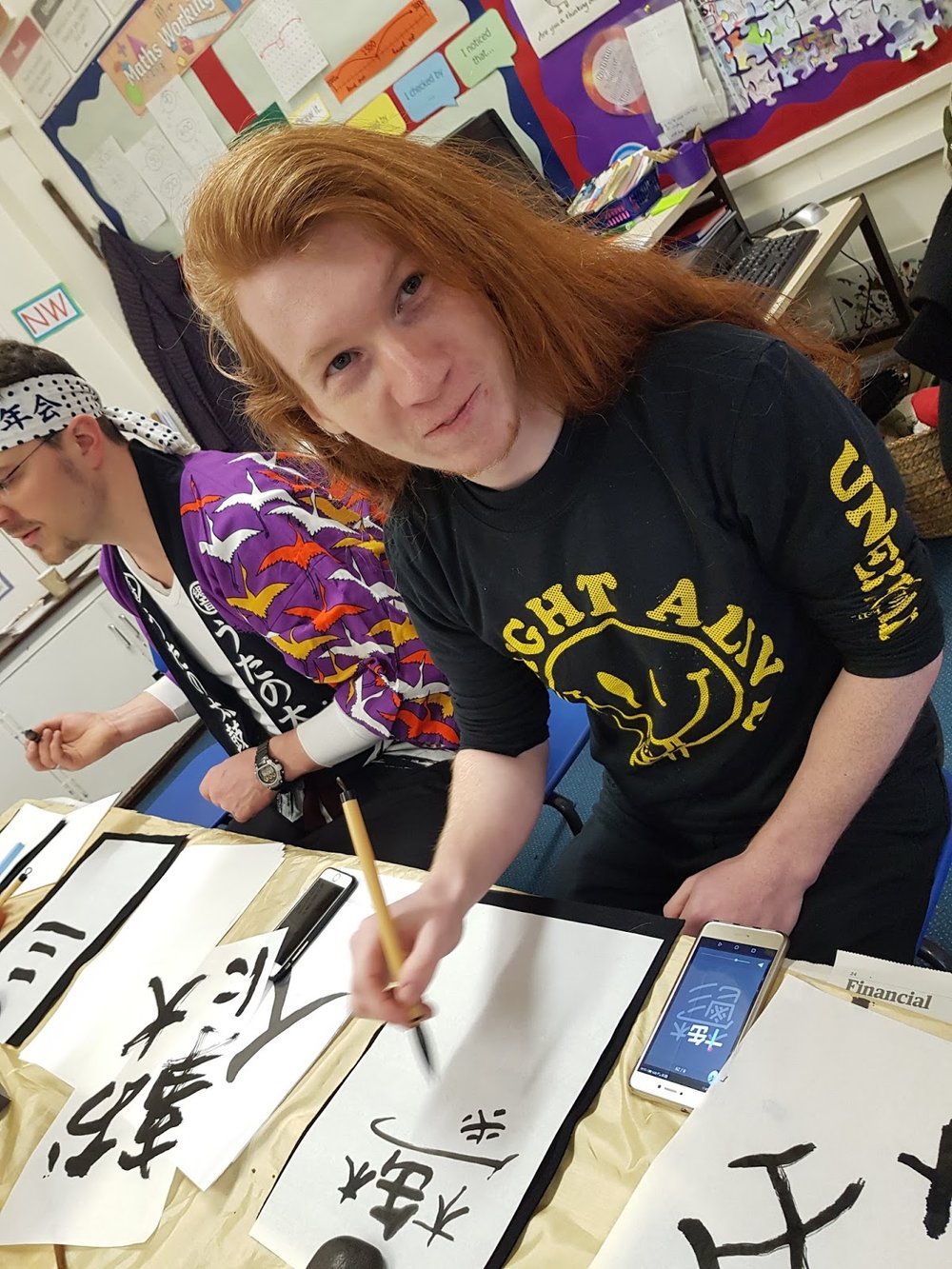
This character means depression, or "low spirits", which is also how you might feel after trying to write a kanji with 29 strokes!
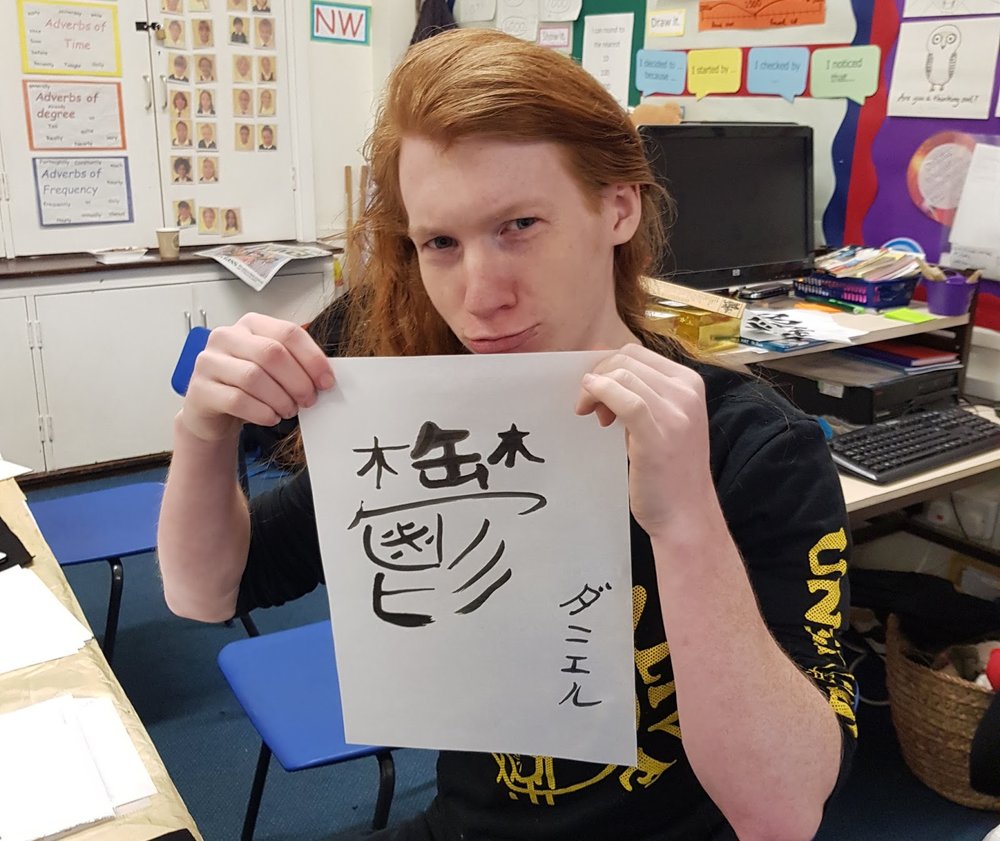
James showing off his handiwork:
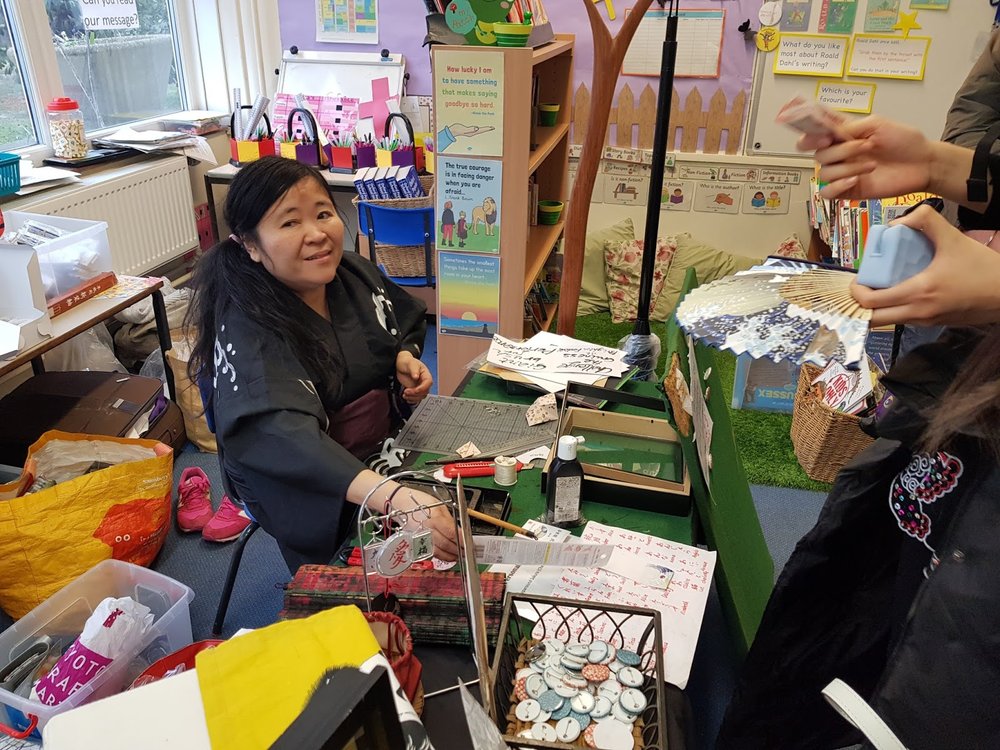
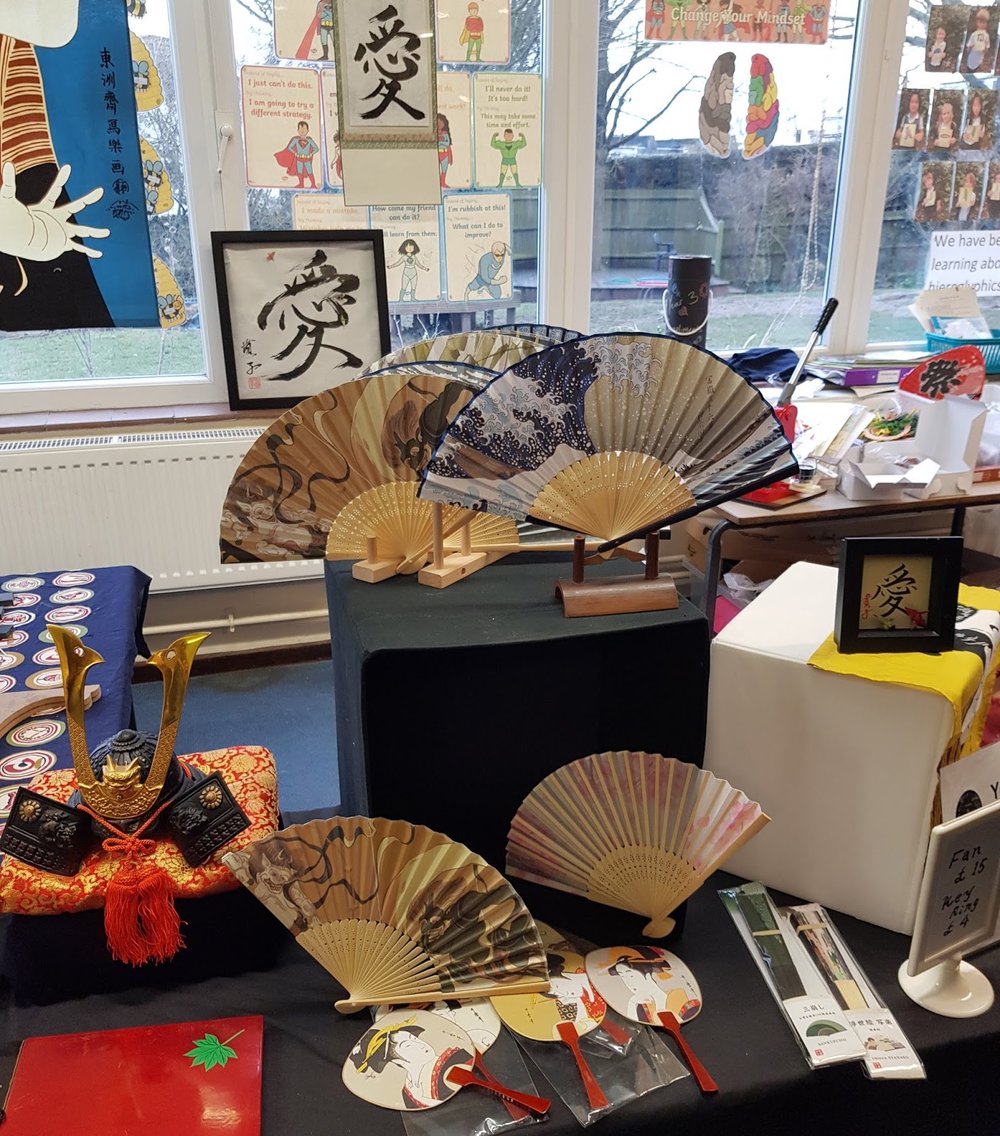
When she's not doing large-scale calligraphy demonstrations or teaching calligraphy, Takako sells beautiful Japanese goods, personalised with your name in Japanese.
Next, we headed into the main hall to see some of the shows.
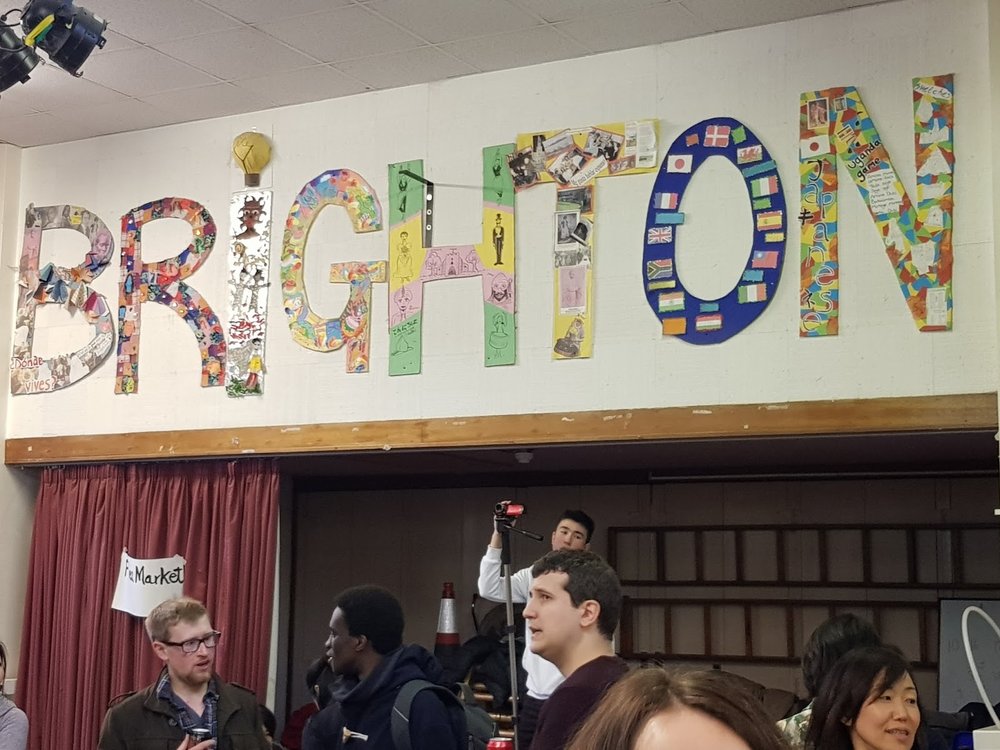
It was jam packed!
The organisers had to get an extra pole so their video camera could see over the crowd.
Usually my favourite bit is the second-hand book stall where I pick up something I want to read (often pretending to myself I'll use it in class...)
But I was knew I was going to Japan the following week so I didn't buy any books this year.
I did however get this adorable Anpanman cookie!
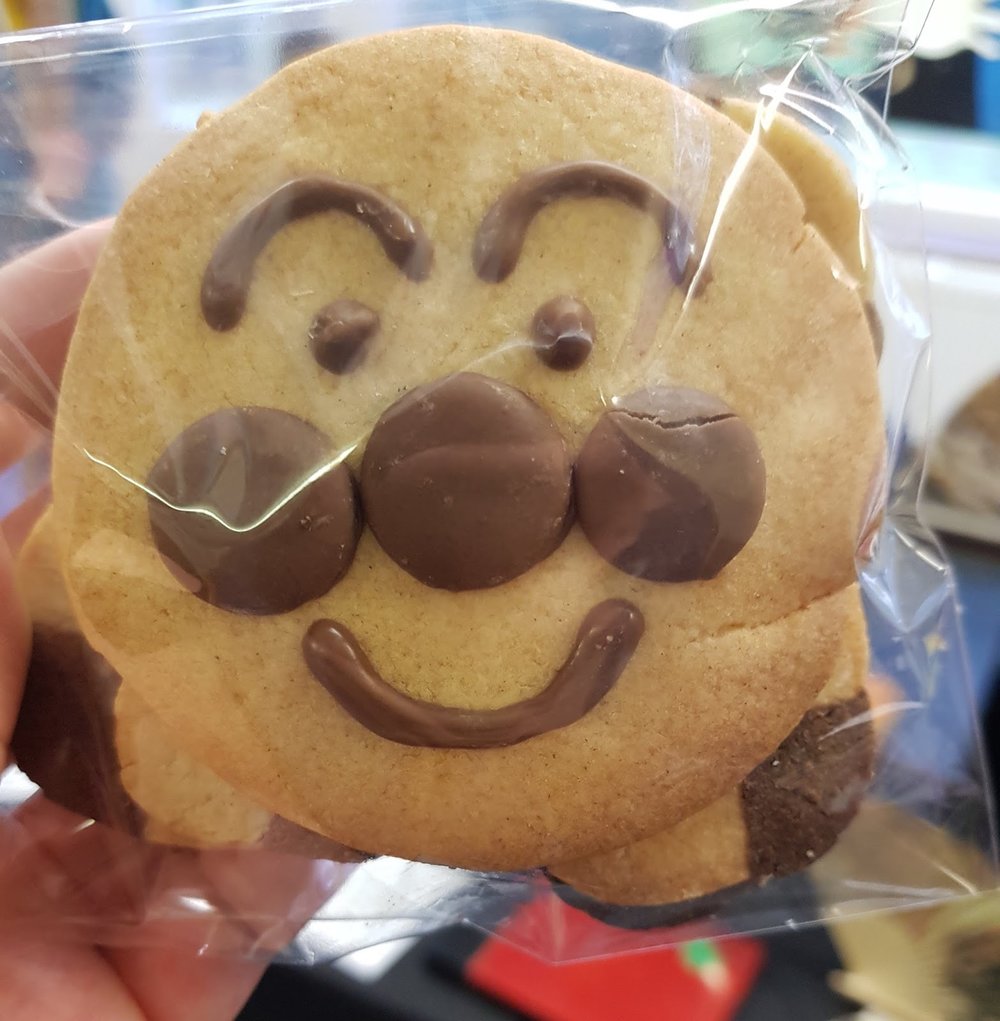
I sat on him later and squashed him, but he still tasted great.
I also got some melon pan from this cute bakery stand.
("Gu choki pan ya" is the name of the bakery from the Ghibli film Kiki's Delivery Service).
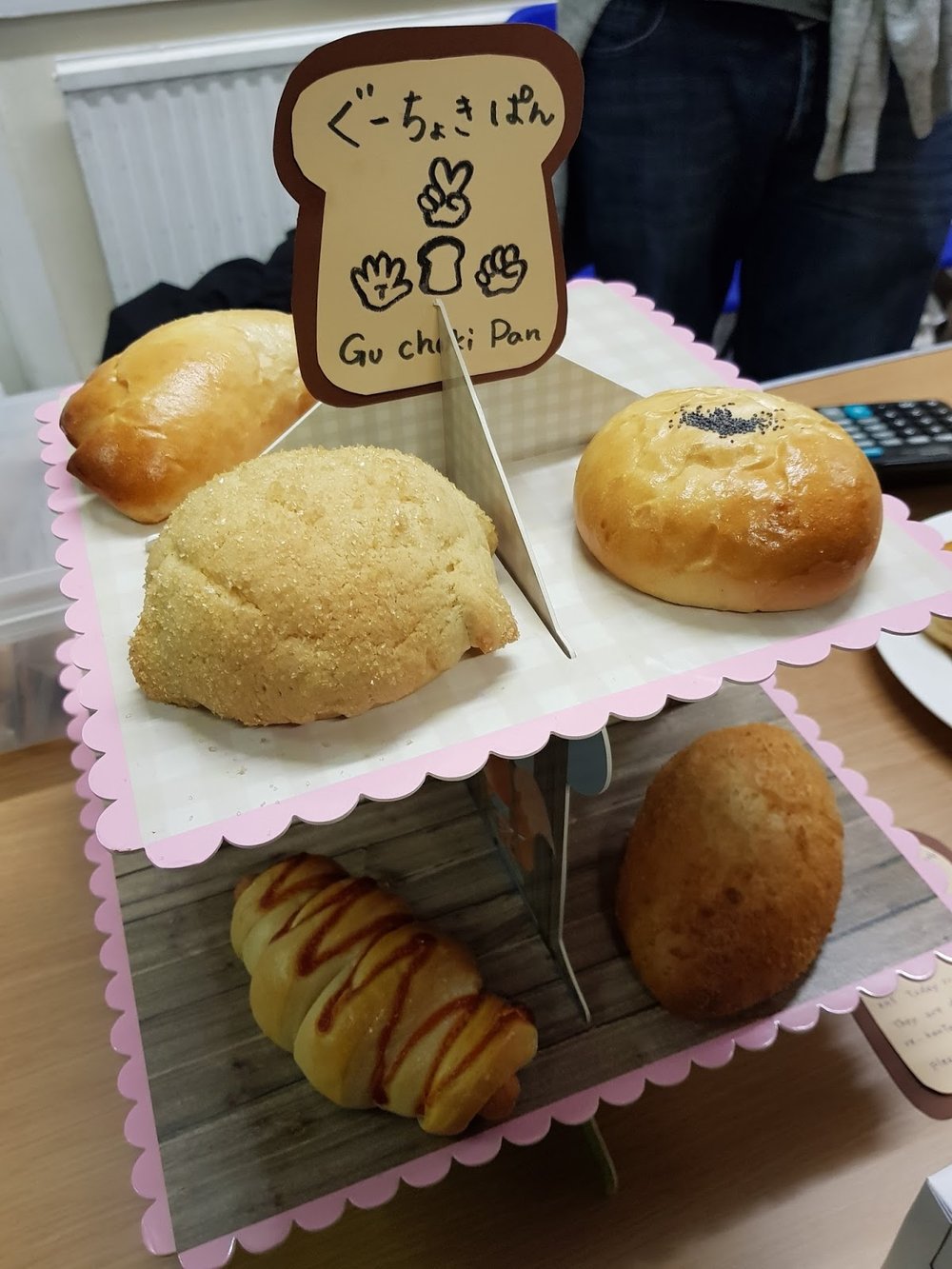
(No photo of An-an's stall I'm afraid, I was too busy chatting to Noriko, the owner, to remember to take a picture).
While eating some of the sweet Japanese treats I'd bought, we watched the manga drawing contest.
The contestants were given the name of a manga character and had to draw them. The kids could peek at the screen, but the adults had to draw from memory.
Two of the adults participating are professional manga artists, so that was fun too.
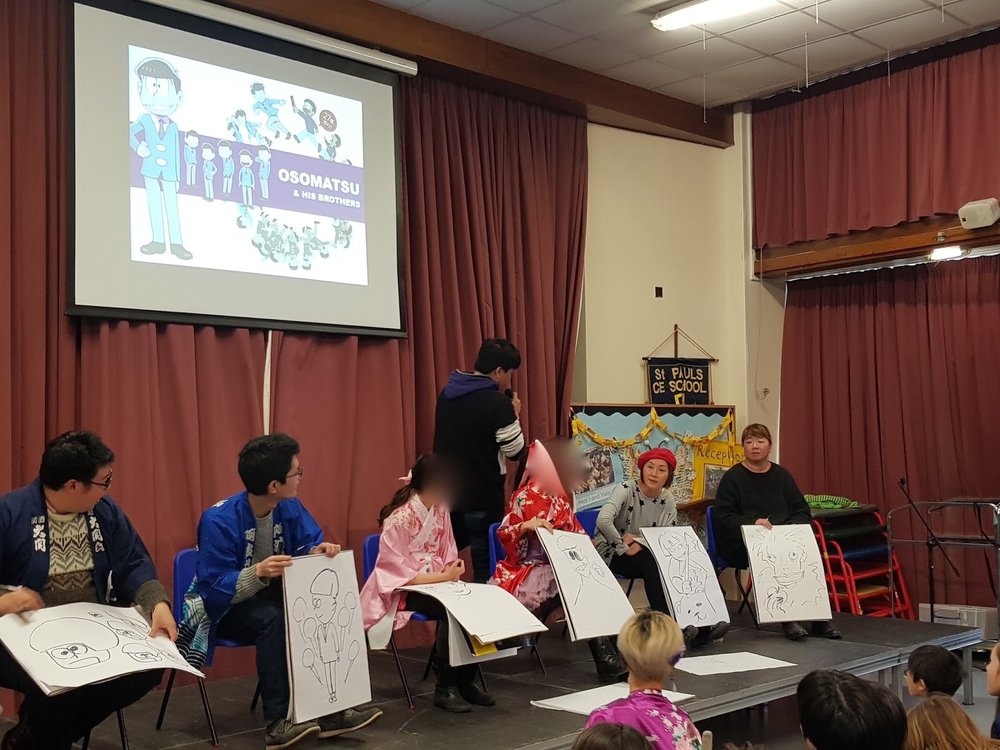
The event is presented in English and in Japanese, with speakers switching between languages.
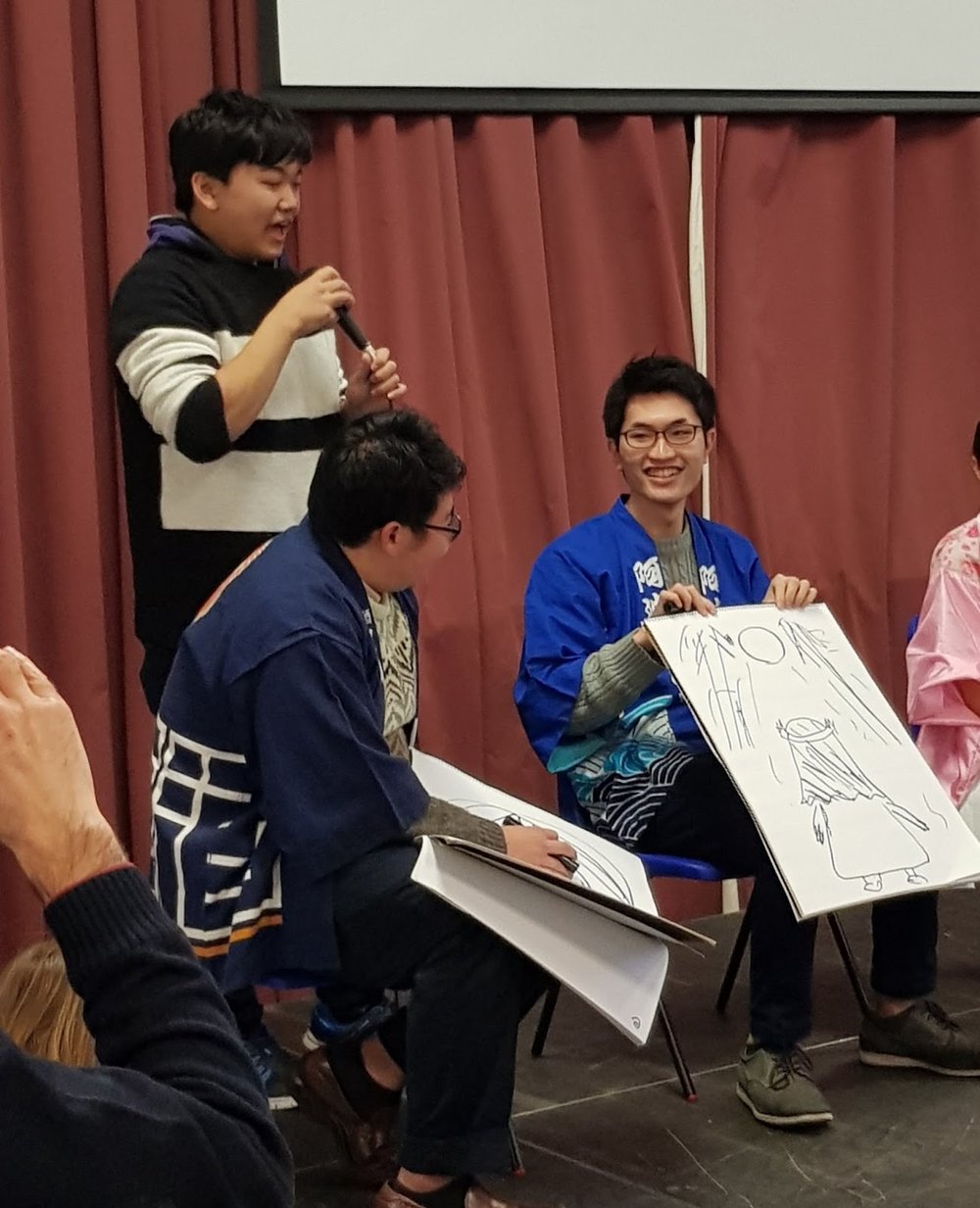
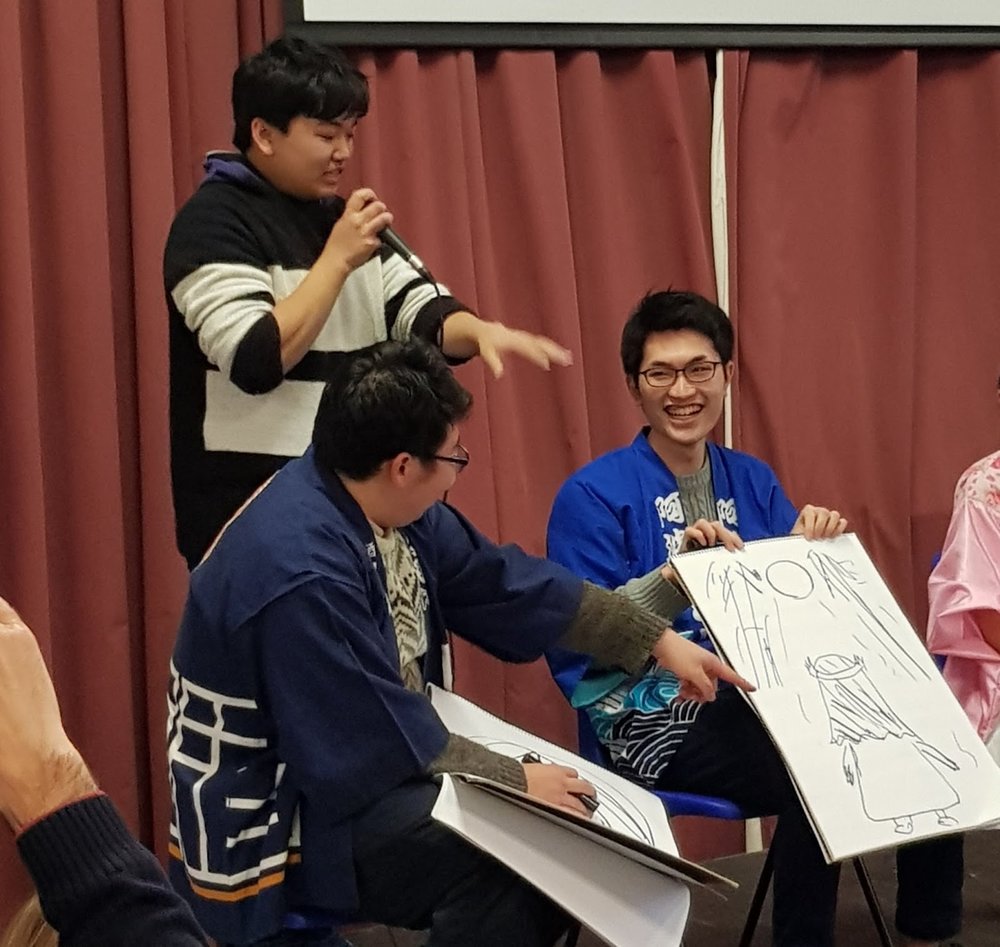
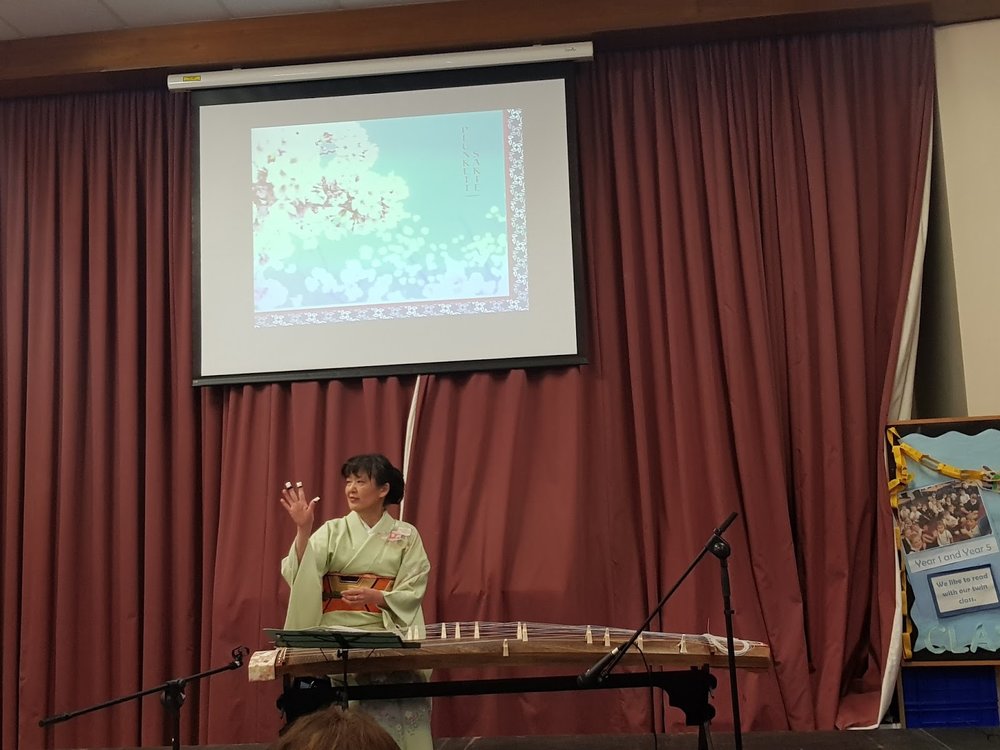
We also watched a koto (Japanese harp) performance by Sakie Plunkett.
And some students had their portraits drawn by manga artists Inko and Chie Kutsuwada.
Here Inko hard at work:
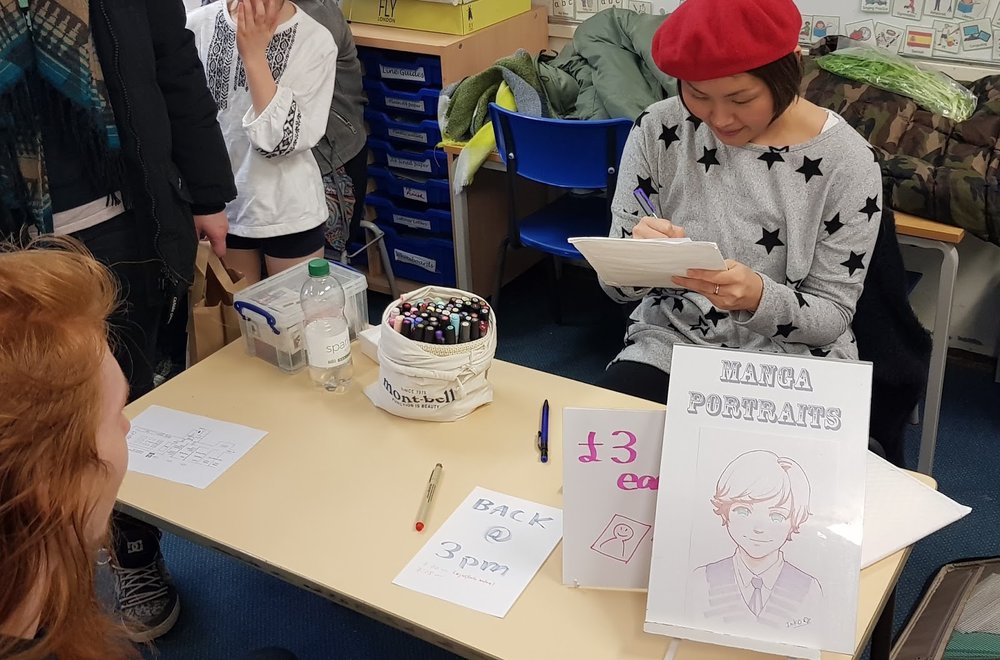
And the finished result!
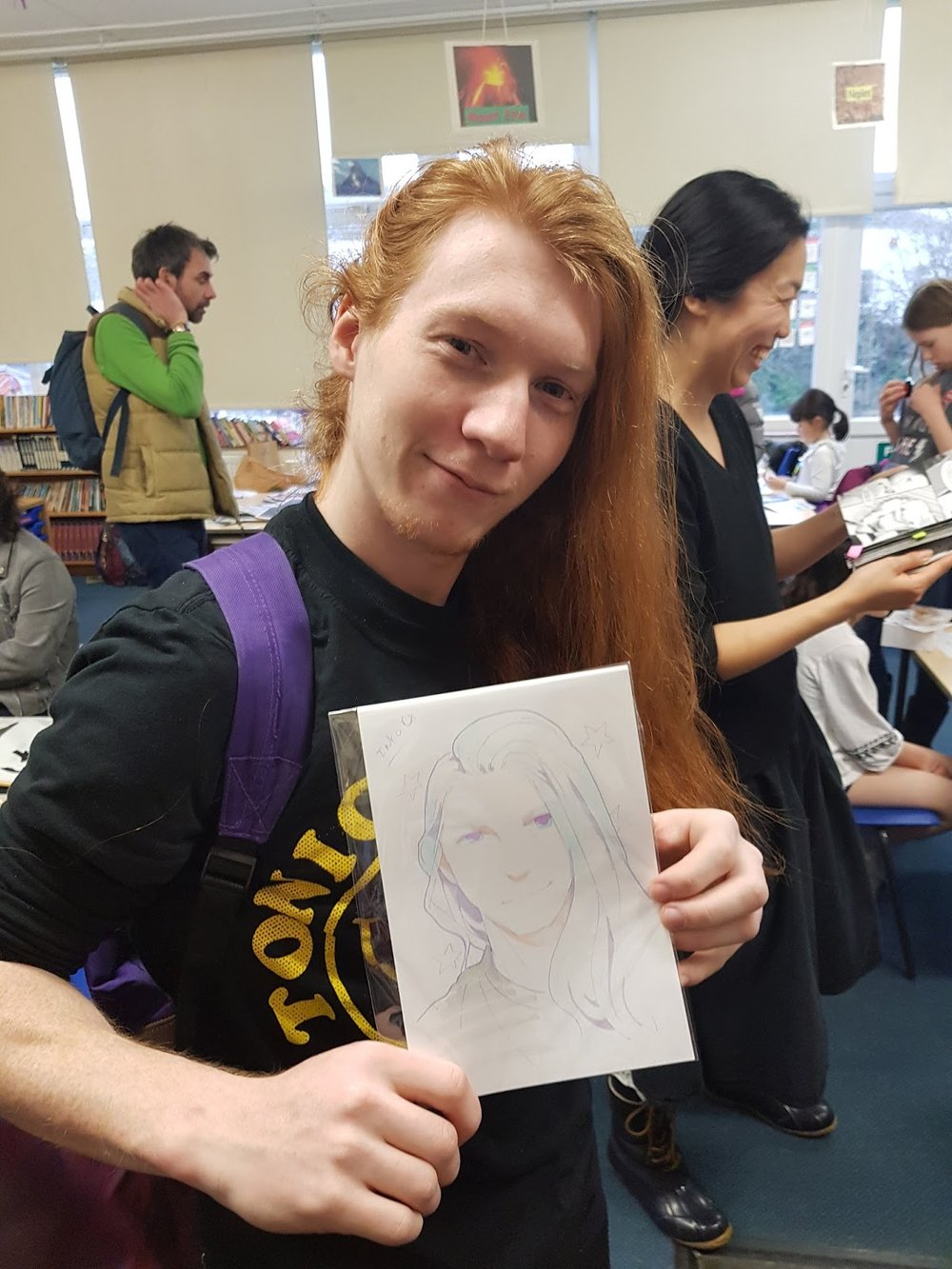
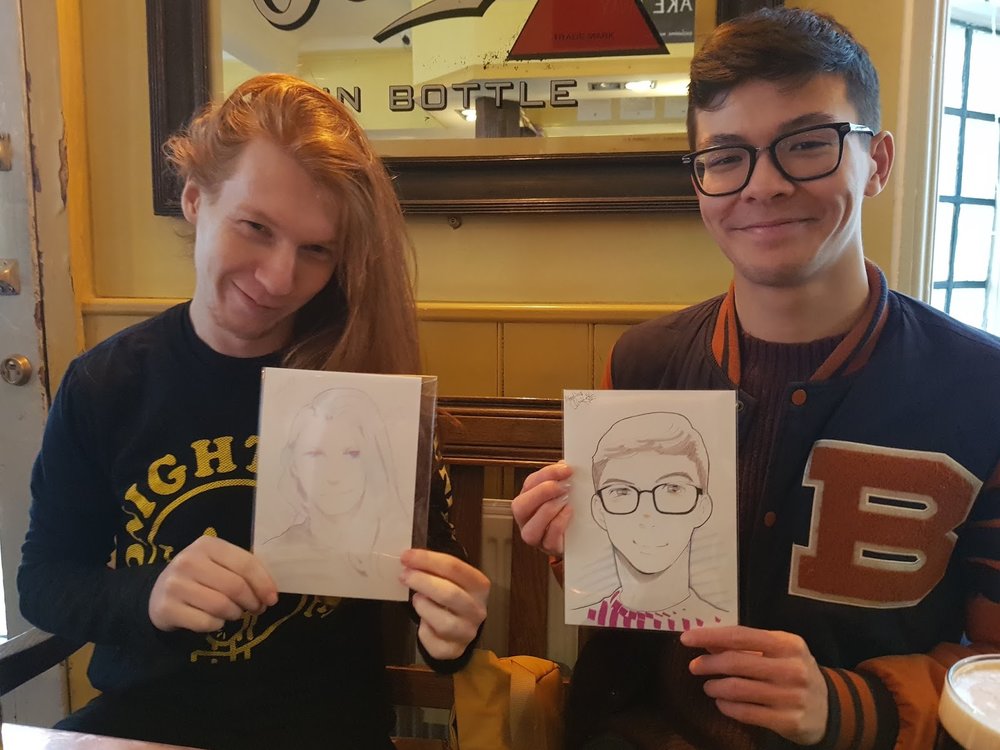
I always meet someone new and interesting at the Open Day, and the organisers are very friendly and welcoming.
Why don't you come along next year?
Find out more about the Brighton & Hove Japanese Club on their website (click here).
More links:
- Brighton-based manga artist Inko (Ai Takita-Lucas)
- Manga artist Chie Kutsuwada - also Brighton-based
- Takako Higgs, calligraphy artist and teacher in (you guessed it) Brighton
- Cafe an-an, Japanese cafe and wagashi (Japanese sweets) shop in Portslade
End-of-term Sushi Night! Easter 2018
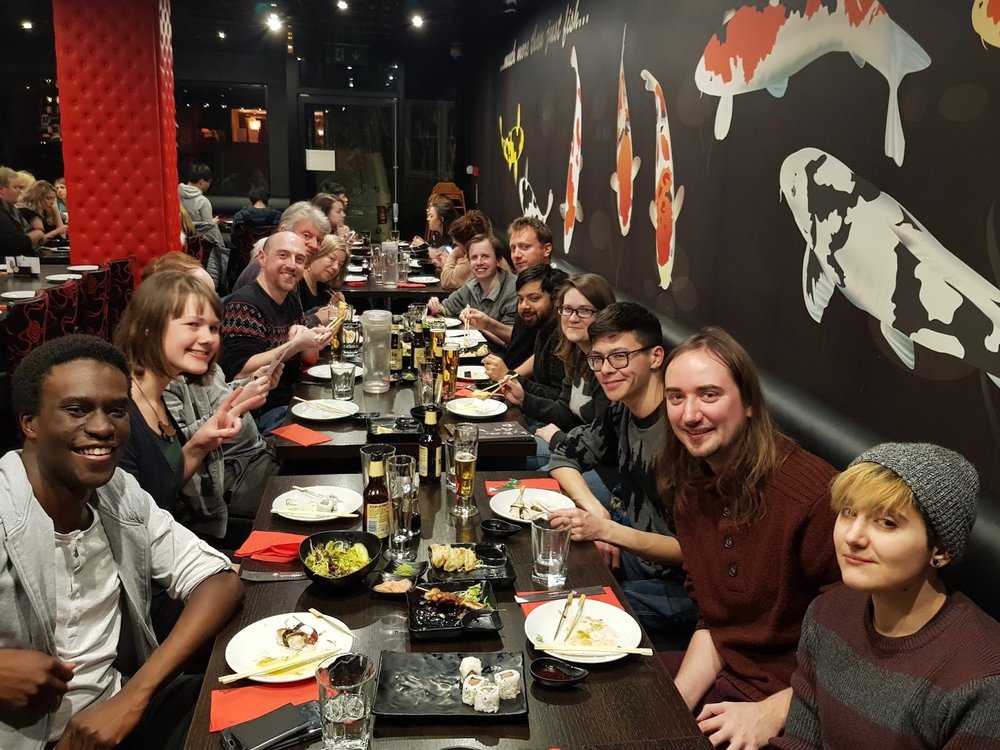
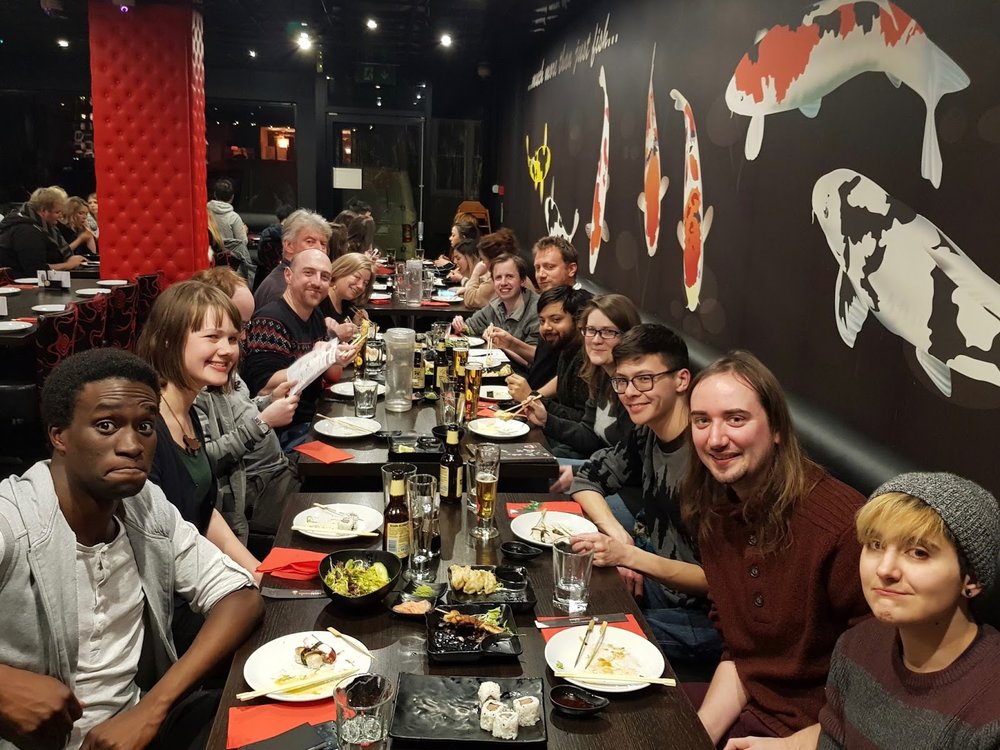
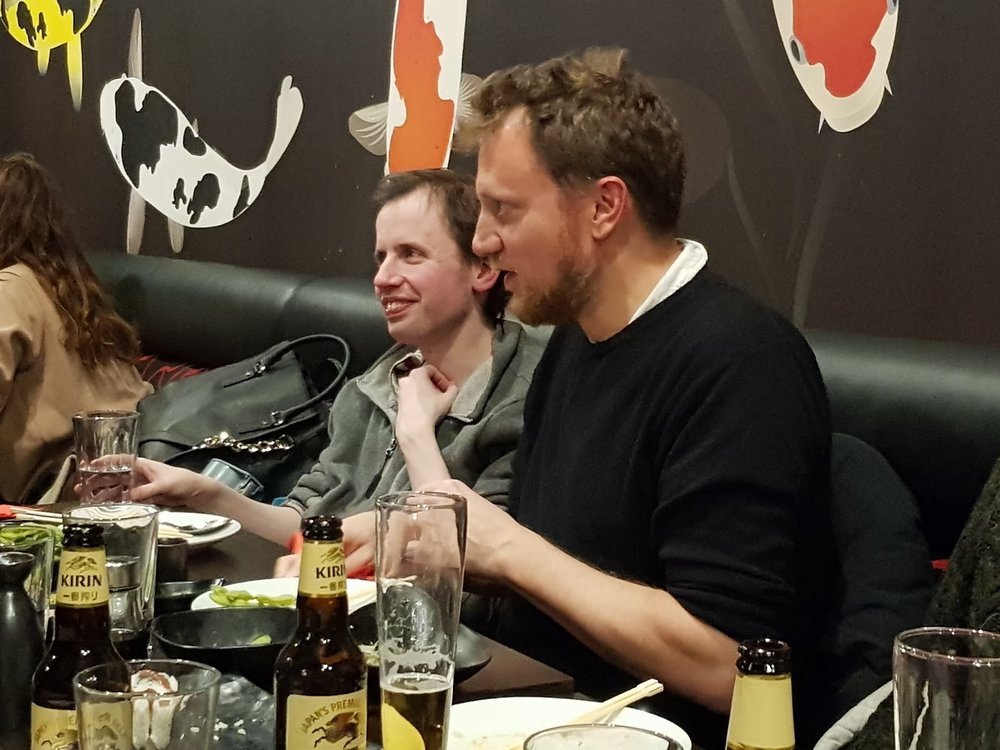

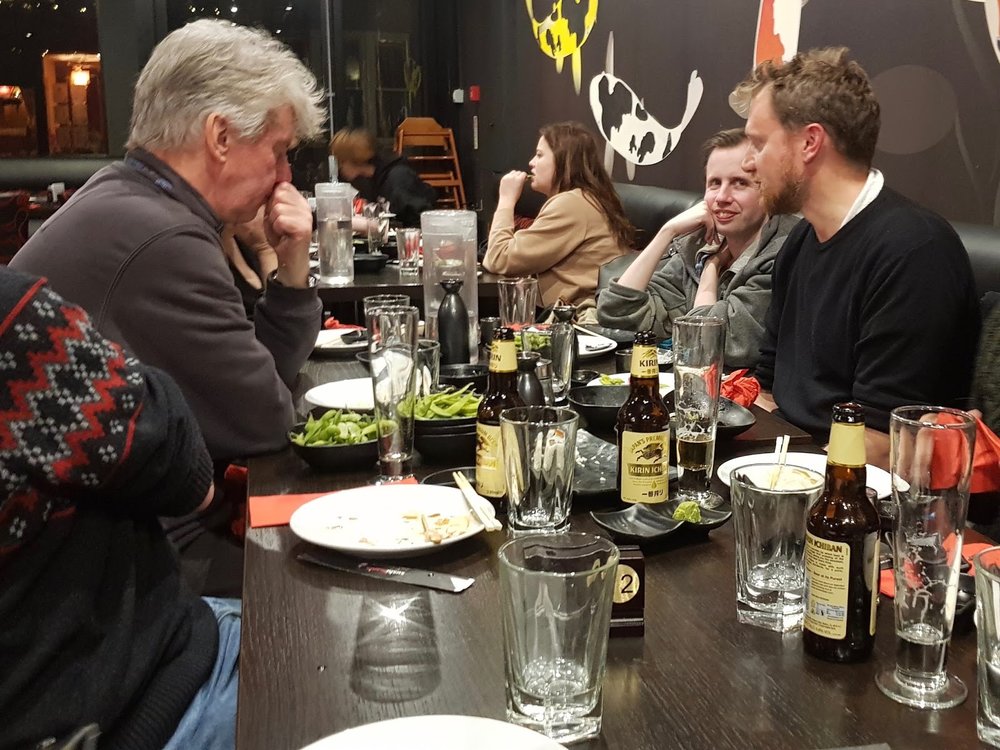
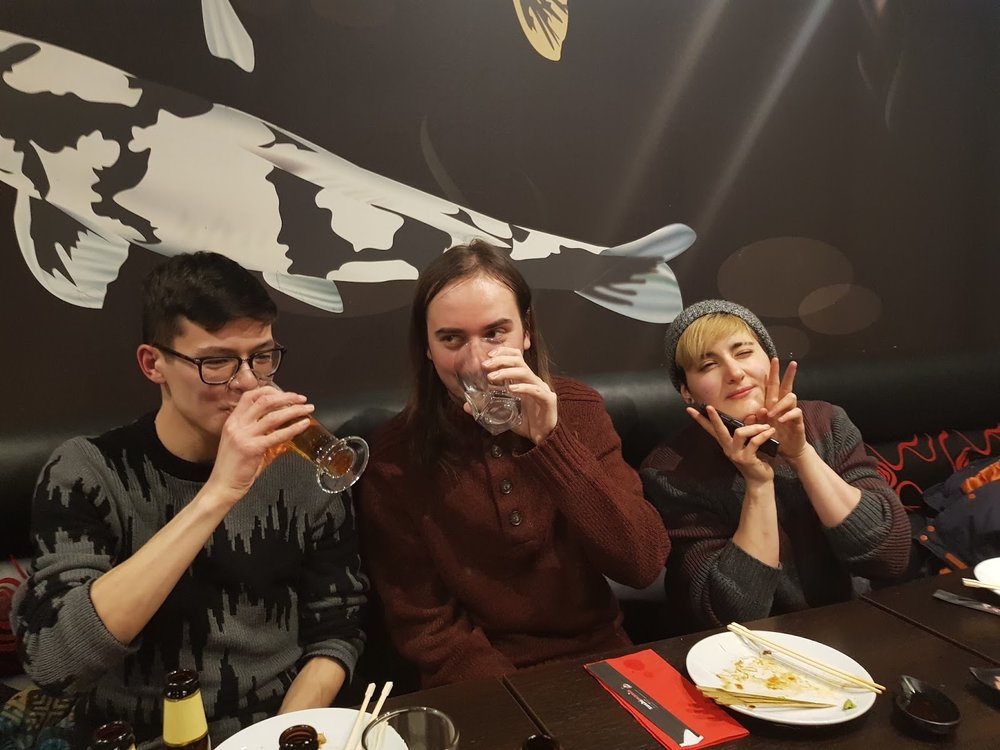
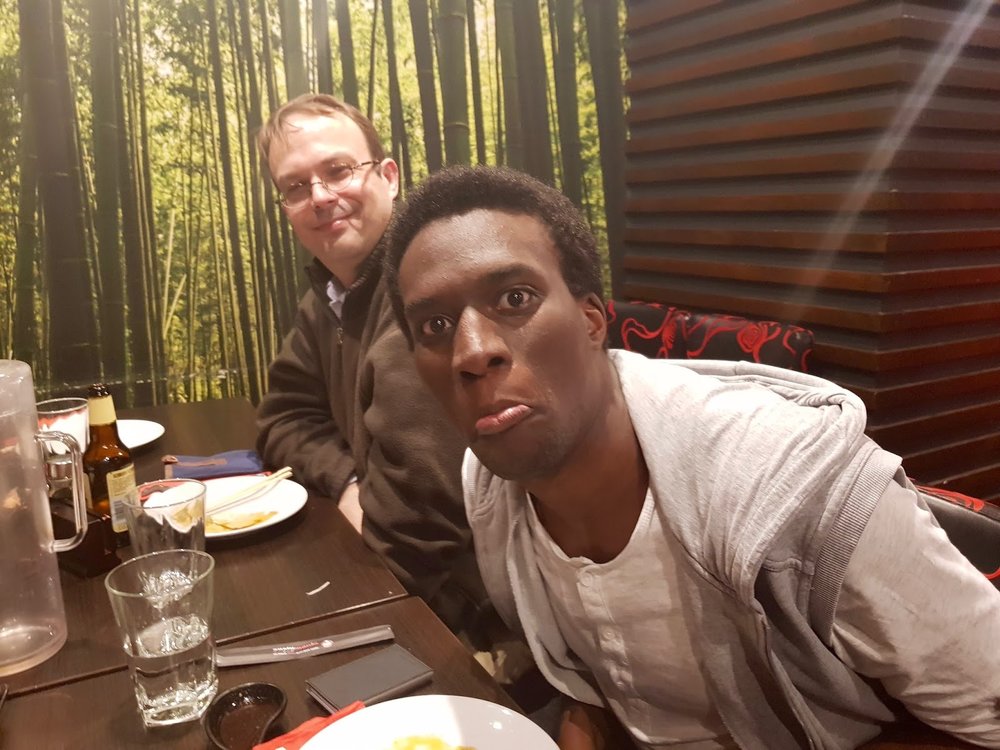
Thanks for coming!
Where shall we go for our next (non-academic) event?

Say yes!
A couple of months ago I was invited to speak online at a new event all about languages. My first thought was, heck no! That sounds utterly terrifying.
My second thought was, what would Karli Dendy do?
Karli co-runs designosaur and YEAH laser here in Brighton. We've been friends since uni, when we watched enormous amounts of bad TV, and went to every nightclub in the city in one year.

A couple of months ago I was invited to speak online at a new event all about languages. My first thought was, heck no! That sounds utterly terrifying.
My second thought was, what would Karli Dendy do?
Karli co-runs designosaur and YEAH laser here in Brighton. We've been friends since uni,when we watched enormous amounts of bad TV, and went to every nightclub in the city in one year.
Now that we are grown-ups (apparently), I proofread her copy, and she gives me great business advice.
Anyway, I knew what Karli would say. Say yes.
"I know the new mantra is to learn to say no to things, but I'm very much still in the say YES to everything phase, check your inbox every five minutes and reply to every strange direct message you get."
- Karli on the designosaur blog
Isn't that awesome advice?
I've seen what amazing exciting opportunities Karli, and her boyfriend and business partner Jacques Keogh, have had by saying yes to things.
So I said yes.
And I did it! And it was great!
My talk was titled "The Classroom is Not Dead", and I spoke about my experiences setting up an offline language school, in an increasingly online world.
This was the first ever Women in Language event, put together by Kerstin Cable, Lindsay Williams, and Shannon Kennedy. There were 25 speakers - all women - and the online event ran from International Women's Day on March 8th to (UK) Mother's Day on March 11th.
The talks were divided up into four categories: Starting Language, Mastering Language, Living With Language, and Working With Language (that's me!)
I really enjoyed all the sessions I watched. There was a great mix of practical language learning advice, and more academic perspectives.
I missed a lot, but the talks are available online to ticket holders, so I can play catch-up over the next few weeks.
Speaking online was a new experience for me, but it was a lot of fun. I got some great questions in the Q&A too - about my experiences as a non-native teacher, and how to find a language class near you.
I also got to "meet" a bunch of new people online, and find other language teachers and learner to share experiences with.
And to think I wanted to say "heck no". It's a good thing I didn't.
So...what are you going to say yes to next?
Top photo: Lindsay Does Languages
More links: Women in Language homepage / designosaur / YEAH laser

Three Reasons Why Language Learning is Just Like Skateboarding
I bought a skateboard. And not just so I can start calling myself "the skateboarding Japanese teacher".
I've wanted to learn to skate for a long time. I'm turning 30 this year and I thought I should probably get on with it.
You know that Chinese proverb, "The best time to plant a tree was 20 years ago. The second best time is now"?
Well, I should probably have started skateboarding 20 years ago, because it turns out skateboarding is really hard. I didn't start when I was nine though, so now will have to do.

I bought a skateboard. And not just so I can start calling myself "the skateboarding Japanese teacher".
I've wanted to learn to skate for a long time. I'm turning 30 this year and I thought I should probably get on with it.
You know that Chinese proverb, "The best time to plant a tree was 20 years ago. The second best time is now"?
Well, I should probably have started skateboarding 20 years ago, because it turns out skateboarding is really hard. I didn't start when I was nine though, so now will have to do.
I'm not very good yet. In fact, I'm very bad.
I know I can do it though. It's just like learning Japanese! (Hear me out, ok...?)
1. You need to fall over a lot
You're going to fall off a skateboard, and make mistakes, and mess things up. It's going to hurt.
Sound familiar? Learning to speak a language is a process of making constant mistakes, and gradually getting better. If you don't make any mistakes when you're speaking a foreign language, you're not learning anything.
The only way to learn how to be good at something, is to first be very bad at it.
(I tell myself this constantly as I wobble around town on my little skateboard).
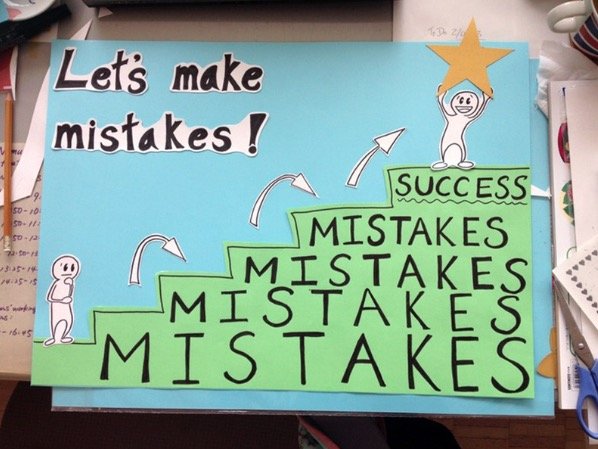
Image source: Verity Lane / Tofugu
2. It takes discipline
Learning any new skill takes considerable time and effort. You have to practice, even when you don't feel like it or when something else seems more appealing.
In a way, it's easy to be motivated, i.e. to want to do something. It's much more difficult to be disciplined - to do something even when you don't want to.
Taking your skateboard out on Saturday, even when it looks a bit windy, and you're not any good yet, and there are builders on the corner of the street who might laugh at you - that's discipline.
Studying a little bit of Japanese every day, even when you just feel like watching TV instead - that's discipline too.
Nothing that's worth doing can be learned overnight. (Unfortunately.)
3. You might feel silly
One of my students wrote this on his class feedback form last year:
"...while I feel terrible and clumsy while doing it, the speaking practice afforded by the class is something that is very difficult to get anywhere else."
I was a bit taken aback by this, because he doesn't sound terrible or clumsy when he speaks Japanese.
But a lot of people feel this way about doing something new, especially in front of other people. I certainly do.
Making mistakes can make us feel embarrassed or awkward.
(As a teacher, there's an added dynamic: I don't want my students to feel uncomfortable. But I do want to stretch them, and help them to push out of their comfort zone. It's a difficult balance, sometimes.)
I feel like very silly on my skateboard. Sometimes you've just got to push through it, I think, and focus on the goal.
"Think how good you'll feel when you can casually skateboard to work",
I tell myself. For me, it's the same feeling as:
"Think how good you'll feel when you can read a whole book in Japanese. Or have a ten-minute conversation. Or 30 minutes. Or a whole day!"
What do you think?

What is Community Interpreting and Why Does it Matter?
The dentist talked for a long time, in Japanese I didn't understand, pointing and waving his hands at the X-ray on the wall. I was completely lost.
After he'd talked for about five minutes, my Japanese boss translated for me: "He says you need to fix this tooth."
That's it? I thought. The dentist had been talking for ages. He can't possibly have only said "you need to fix this tooth".
The first year I was in Japan I had a lot of dental work done.
I broke a tooth (ouch!) and then it kept breaking. It was unpleasant.
I'm very grateful that my Japanese boss came to these appointments with me. And when he couldn't come, his mum would come with me. It was really kind of them.
But I usually didn't really understand what was going on. Imagine if I'd had access to a professional interpreter instead?
I often have interpreting on the brain. My "other job" (i.e. what I do when I don't have my Step Up Japanese hat on) is working in the offices of a community interpreting service here in Brighton.
So what is Community Interpreting?
Interpreting is listening to what is said in one language, and communicating the meaning in another language. And Community Interpreting (as opposed to conference interpreting, or interpreting in business meetings etc) basically exists to enable people to access public services.
Community Interpreters attend medical, legal and housing appointments with people who have limited English, helping them to understand fully what's going on.
Using a professional interpreter guarantees that interpreting is accurate and unbiased.
The interpreter's job is to remain impartial in a three-way conversation between the person with the language need (in Japan, that was me), and the professional they're seeing (the dentist).
Ah yes, my Japanese dentist.
After a while I could understand enough to attend the appointments by myself. Sometimes, I could tell the dentist was using simple language, to ensure I understood. That was kind of him.
But some medical messages are too important to be said in simple language.
So how would my experiences in Japan have been different if I'd had access to a professional interpreter?
It would have been empowering to make decisions about my medical care, without having to ask my boss's mum. I'm sure I would have felt a little less scared of the dentist waving his hands around, too.
If you'd like to learn more about Community Interpreting from a global perspective, you should check out Madeline Vadkerty's talk "Making the World a Better Place As an Interpreter" at next week's Women in Language event.
I'm really looking forward to hearing Madeline speak about her experiences as a Community Interpreter, helping asylum seekers and survivors of torture to rebuild their lives.
(I'll be speaking too - eek!)
Your ticket for Women in Language gets you access to the entire 4-day event with over 25 awesome women speaking.
Click here to get your ticket before the event begins on Thursday 8th March 2018.


I quit my day job! (sort of...)
Don't worry mum - I haven't quit my day job. Not as such. I recently went from full time to 3 days a week though.
It's great.
One of my students mentioned this week in passing that I must be busy, working full time somewhere else, and also running Japanese courses. I realised that I haven't told a lot of my students that I no longer have a full time day job.
I now work three days a week in the offices of a community interpreting agency, here in sunny Brighton.
And I teach Japanese three nights a week, to lovely people with language-related goals and dreams. I get to share in my students' successes and triumphs, and hopefully help them through the tough bits too.
Life is more balanced now that I don't work elsewhere full time. I'm less "bad-busy" and more "good-busy".
And I get to feel part of two things - the interpreting charity, and my own little language school. That sense of community is really important to me.
Do you have a day job, and do something else on the side? If you have more than one job, how do you balance your time? I'd love to know what tips you can share. Let me know in the comments 😃













Like many people in the UK, I studied French in school. I liked French. I thought it was really fun to speak another language, to talk with people, and to try and listen to what was going on in a new country. (Still do!)
When I was 14 we went on a school exchange to the city of Reims, in northeastern France. I was paired with a boy, which I’m sure some 14-year-olds would find very exciting but which I found unbearably awkward. He was very sweet and we completely ignored each other.
That was nearly 20 years ago, and I didn’t learn or use any more French until, at some point in lockdown, I decided on a whim to take some one-to-one lessons with online teachers. Here are some things I learned about French, about language learning, and about myself.