
Welcome to the Step Up Japanese blog archive!
Although I’m not currently adding new posts to the blog, you’ll find plenty of Japanese learning tips, study advice, and resources to explore here.
Browse the blog index to view a complete list of posts.
For the latest news, course updates, and Japanese learning tips from Step Up Japanese, sign up for my newsletter.
Search this blog:

2021 Student Summer Picnic!
Thank you to everyone (including those not pictured) who came to our student picnic at the weekend!
We had fun meeting up outdoors, drinking tea, eating Japanese snacks and talking about Japan-related (and non-Japan-related) things.
It was so good to see students in person after such a long time!
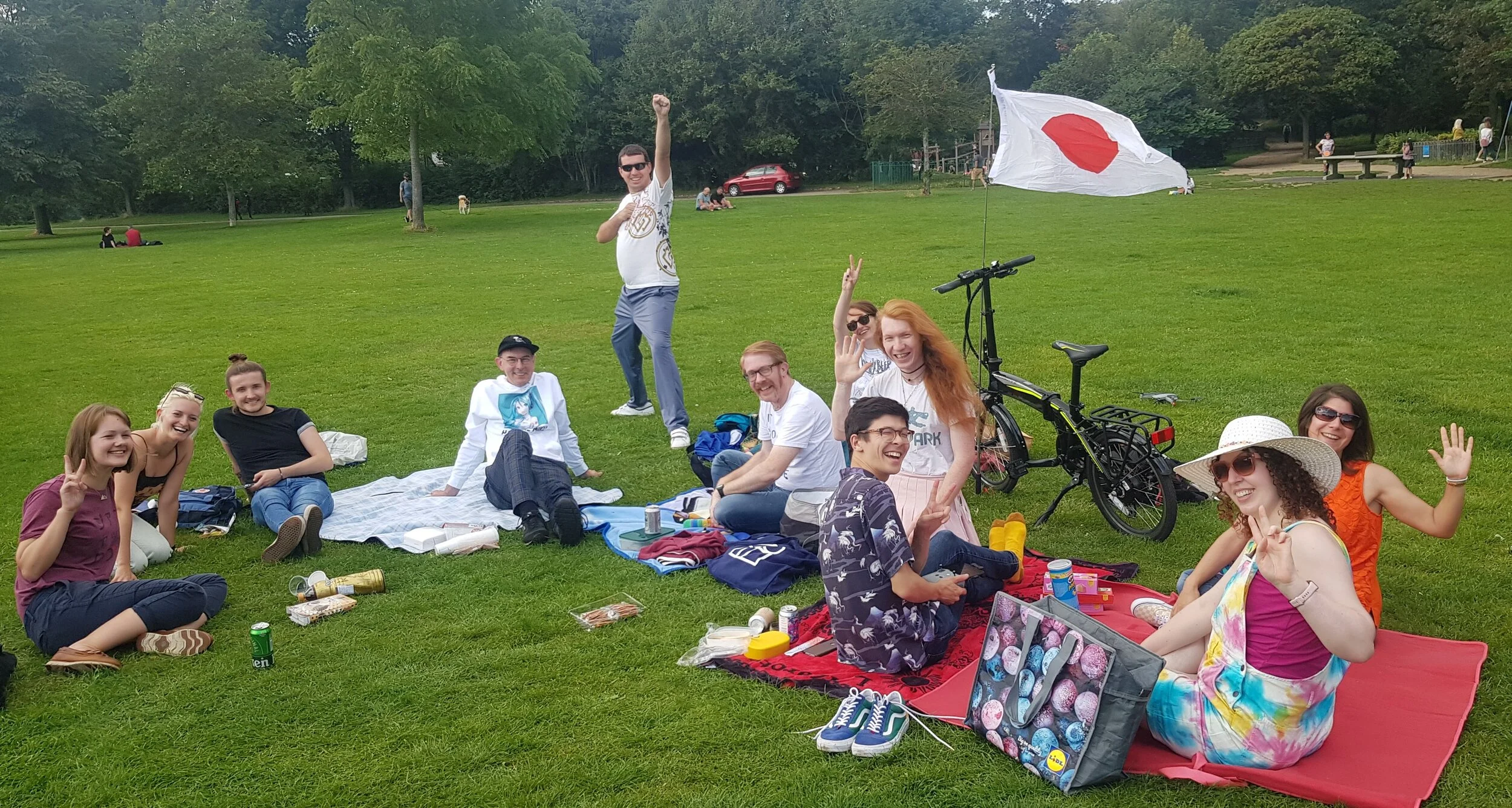
Thank you to everyone (including those not pictured) who came to our student picnic at the weekend!
We had fun meeting up outdoors, drinking tea, eating Japanese snacks and talking about Japan-related (and non-Japan-related) things.
It was so good to see students in person after such a long time!
Although all my teaching is online now, I still plan to run occasional social events in Brighton for students. I’m looking forward to seeing you all again soon.

Say yes!
A couple of months ago I was invited to speak online at a new event all about languages. My first thought was, heck no! That sounds utterly terrifying.
My second thought was, what would Karli Dendy do?
Karli co-runs designosaur and YEAH laser here in Brighton. We've been friends since uni, when we watched enormous amounts of bad TV, and went to every nightclub in the city in one year.

A couple of months ago I was invited to speak online at a new event all about languages. My first thought was, heck no! That sounds utterly terrifying.
My second thought was, what would Karli Dendy do?
Karli co-runs designosaur and YEAH laser here in Brighton. We've been friends since uni,when we watched enormous amounts of bad TV, and went to every nightclub in the city in one year.
Now that we are grown-ups (apparently), I proofread her copy, and she gives me great business advice.
Anyway, I knew what Karli would say. Say yes.
"I know the new mantra is to learn to say no to things, but I'm very much still in the say YES to everything phase, check your inbox every five minutes and reply to every strange direct message you get."
- Karli on the designosaur blog
Isn't that awesome advice?
I've seen what amazing exciting opportunities Karli, and her boyfriend and business partner Jacques Keogh, have had by saying yes to things.
So I said yes.
And I did it! And it was great!
My talk was titled "The Classroom is Not Dead", and I spoke about my experiences setting up an offline language school, in an increasingly online world.
This was the first ever Women in Language event, put together by Kerstin Cable, Lindsay Williams, and Shannon Kennedy. There were 25 speakers - all women - and the online event ran from International Women's Day on March 8th to (UK) Mother's Day on March 11th.
The talks were divided up into four categories: Starting Language, Mastering Language, Living With Language, and Working With Language (that's me!)
I really enjoyed all the sessions I watched. There was a great mix of practical language learning advice, and more academic perspectives.
I missed a lot, but the talks are available online to ticket holders, so I can play catch-up over the next few weeks.
Speaking online was a new experience for me, but it was a lot of fun. I got some great questions in the Q&A too - about my experiences as a non-native teacher, and how to find a language class near you.
I also got to "meet" a bunch of new people online, and find other language teachers and learner to share experiences with.
And to think I wanted to say "heck no". It's a good thing I didn't.
So...what are you going to say yes to next?
Top photo: Lindsay Does Languages
More links: Women in Language homepage / designosaur / YEAH laser

Three Reasons Why Language Learning is Just Like Skateboarding
I bought a skateboard. And not just so I can start calling myself "the skateboarding Japanese teacher".
I've wanted to learn to skate for a long time. I'm turning 30 this year and I thought I should probably get on with it.
You know that Chinese proverb, "The best time to plant a tree was 20 years ago. The second best time is now"?
Well, I should probably have started skateboarding 20 years ago, because it turns out skateboarding is really hard. I didn't start when I was nine though, so now will have to do.

I bought a skateboard. And not just so I can start calling myself "the skateboarding Japanese teacher".
I've wanted to learn to skate for a long time. I'm turning 30 this year and I thought I should probably get on with it.
You know that Chinese proverb, "The best time to plant a tree was 20 years ago. The second best time is now"?
Well, I should probably have started skateboarding 20 years ago, because it turns out skateboarding is really hard. I didn't start when I was nine though, so now will have to do.
I'm not very good yet. In fact, I'm very bad.
I know I can do it though. It's just like learning Japanese! (Hear me out, ok...?)
1. You need to fall over a lot
You're going to fall off a skateboard, and make mistakes, and mess things up. It's going to hurt.
Sound familiar? Learning to speak a language is a process of making constant mistakes, and gradually getting better. If you don't make any mistakes when you're speaking a foreign language, you're not learning anything.
The only way to learn how to be good at something, is to first be very bad at it.
(I tell myself this constantly as I wobble around town on my little skateboard).
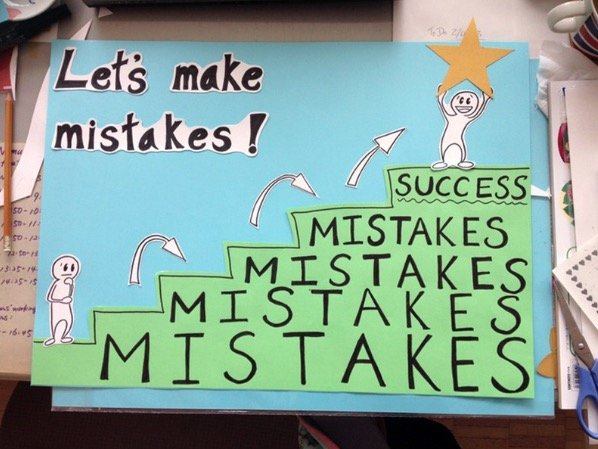
Image source: Verity Lane / Tofugu
2. It takes discipline
Learning any new skill takes considerable time and effort. You have to practice, even when you don't feel like it or when something else seems more appealing.
In a way, it's easy to be motivated, i.e. to want to do something. It's much more difficult to be disciplined - to do something even when you don't want to.
Taking your skateboard out on Saturday, even when it looks a bit windy, and you're not any good yet, and there are builders on the corner of the street who might laugh at you - that's discipline.
Studying a little bit of Japanese every day, even when you just feel like watching TV instead - that's discipline too.
Nothing that's worth doing can be learned overnight. (Unfortunately.)
3. You might feel silly
One of my students wrote this on his class feedback form last year:
"...while I feel terrible and clumsy while doing it, the speaking practice afforded by the class is something that is very difficult to get anywhere else."
I was a bit taken aback by this, because he doesn't sound terrible or clumsy when he speaks Japanese.
But a lot of people feel this way about doing something new, especially in front of other people. I certainly do.
Making mistakes can make us feel embarrassed or awkward.
(As a teacher, there's an added dynamic: I don't want my students to feel uncomfortable. But I do want to stretch them, and help them to push out of their comfort zone. It's a difficult balance, sometimes.)
I feel like very silly on my skateboard. Sometimes you've just got to push through it, I think, and focus on the goal.
"Think how good you'll feel when you can casually skateboard to work",
I tell myself. For me, it's the same feeling as:
"Think how good you'll feel when you can read a whole book in Japanese. Or have a ten-minute conversation. Or 30 minutes. Or a whole day!"
What do you think?

What is Community Interpreting and Why Does it Matter?
The dentist talked for a long time, in Japanese I didn't understand, pointing and waving his hands at the X-ray on the wall. I was completely lost.
After he'd talked for about five minutes, my Japanese boss translated for me: "He says you need to fix this tooth."
That's it? I thought. The dentist had been talking for ages. He can't possibly have only said "you need to fix this tooth".

The dentist talked for a long time, in Japanese I didn't understand, pointing and waving his hands at the X-ray on the wall. I was completely lost.
After he'd talked for about five minutes, my Japanese boss translated for me: "He says you need to fix this tooth."
That's it? I thought. The dentist had been talking for ages. He can't possibly have only said "you need to fix this tooth".
The first year I was in Japan I had a lot of dental work done.
I broke a tooth (ouch!) and then it kept breaking. It was unpleasant.
I'm very grateful that my Japanese boss came to these appointments with me. And when he couldn't come, his mum would come with me. It was really kind of them.
But I usually didn't really understand what was going on. Imagine if I'd had access to a professional interpreter instead?
I often have interpreting on the brain. My "other job" (i.e. what I do when I don't have my Step Up Japanese hat on) is working in the offices of a community interpreting service here in Brighton.
So what is Community Interpreting?
Interpreting is listening to what is said in one language, and communicating the meaning in another language. And Community Interpreting (as opposed to conference interpreting, or interpreting in business meetings etc) basically exists to enable people to access public services.
Community Interpreters attend medical, legal and housing appointments with people who have limited English, helping them to understand fully what's going on.
Using a professional interpreter guarantees that interpreting is accurate and unbiased.
The interpreter's job is to remain impartial in a three-way conversation between the person with the language need (in Japan, that was me), and the professional they're seeing (the dentist).
Ah yes, my Japanese dentist.
After a while I could understand enough to attend the appointments by myself. Sometimes, I could tell the dentist was using simple language, to ensure I understood. That was kind of him.
But some medical messages are too important to be said in simple language.
So how would my experiences in Japan have been different if I'd had access to a professional interpreter?
It would have been empowering to make decisions about my medical care, without having to ask my boss's mum. I'm sure I would have felt a little less scared of the dentist waving his hands around, too.
If you'd like to learn more about Community Interpreting from a global perspective, you should check out Madeline Vadkerty's talk "Making the World a Better Place As an Interpreter" at next week's Women in Language event.
I'm really looking forward to hearing Madeline speak about her experiences as a Community Interpreter, helping asylum seekers and survivors of torture to rebuild their lives.
(I'll be speaking too - eek!)
Your ticket for Women in Language gets you access to the entire 4-day event with over 25 awesome women speaking.
Click here to get your ticket before the event begins on Thursday 8th March 2018.

I quit my day job! (sort of...)
Don't worry mum - I haven't quit my day job. Not as such. I recently went from full time to 3 days a week though.
It's great.
One of my students mentioned this week in passing that I must be busy, working full time somewhere else, and also running Japanese courses. I realised that I haven't told a lot of my students that I no longer have a full time day job.

Don't worry mum - I haven't quit my day job. Not as such. I recently went from full time to 3 days a week though.
It's great.
One of my students mentioned this week in passing that I must be busy, working full time somewhere else, and also running Japanese courses. I realised that I haven't told a lot of my students that I no longer have a full time day job.
I now work three days a week in the offices of a community interpreting agency, here in sunny Brighton.
And I teach Japanese three nights a week, to lovely people with language-related goals and dreams. I get to share in my students' successes and triumphs, and hopefully help them through the tough bits too.
Life is more balanced now that I don't work elsewhere full time. I'm less "bad-busy" and more "good-busy".
And I get to feel part of two things - the interpreting charity, and my own little language school. That sense of community is really important to me.
Do you have a day job, and do something else on the side? If you have more than one job, how do you balance your time? I'd love to know what tips you can share. Let me know in the comments 😃

How did I do? A look back at 2017's goals
It's no use just making goals. You need to assess them.
How did I do with last year's New Year's Resolutions? Let's find out.
I scored myself a pass or fail for each one...

It's no use just making goals. You need to assess them.
How did I do with last year's New Year's Resolutions? Let's find out.
I scored myself a pass or fail for each one...
2017's goals were:
1. Blog more
I published 26 blog posts in 2017, up from 11 in 2016.
That's not the one a week I planned (it's literally half that!) but I'm still pretty happy.
I was helped along the way by an adorable twitter bot created by my student @EliteFreq which tweeted at me when I didn't blog that week:
@stepupjapanese What am I meant to read today?! You've not posted a blog post! 😱 (❤️🤖) — David Sharp (@EliteFreq) August 25, 2017
@stepupjapanese Cats in exchange for blog posts? 🐈 (❤️🤖) — David Sharp (@EliteFreq) September 22, 2017
This was genuinely very motivating.
Conclusion: PASS.
Tell your friends your goals, so they can support you along the way.
2. Finish some books
My plan was to read more fiction and to actually finish a book instead of getting excited and moving on to the next one. This didn't exactly go to plan. However, I reckon I read Japanese news every single day in 2017. I'm pretty proud of that. I also completed Zero Escape Nine Hours, Nine Persons, Nine Doors, and two (nearly three) Ace Attorney games. Visual novels are reading too...
Conclusion: FAIL…but maybe that's fine

3. Watch more drama with my students
This goal didn't come to fruition either. I was on the lookout for things to watch but never found anything "just right".
I planned to use Terrace House (Netflix's Japanese reality TV show - think Big Brother circa 2003), but the logistics of showing Netflix in class got the better of me...
We did watch some Japanese TV ads in class though. That was a lot of fun.
Conclusion: もうちょっと! (KEEP TRYING!)
4. Have more parties
From Origami Night, to the Summer Barbecue, to the end-of-year Christmas Party, this year has been really busy. Good busy!
We definitely had more parties and attended more events this year. Onwards and upwards!
Conclusion: PASS

And in case you missed it, here's a link to my round-up of 2017, featuring lots of event photos.
5. Be reflective
I think I have actually spent less time reflecting in 2017 than in previous years, and more time actively doing things. This is probably a good thing.
Conclusion: いいじゃないですか? (That's ok, isn't it?)
How did you get on with your New Year's resolutions in 2017?
And have you made this year's yet? I'm still whittling down my list...

2017: A Round Up
I'll let you into a secret.
I wanted to write an end-of-year "round-up" post last year, but I didn't think I had enough to talk about.
This year there's too much! It's been a busy, brilliant year.
Here's what my students and I got up to in 2017.

I'll let you into a secret.
I wanted to write an end-of-year "round-up" post last year, but I didn't think I had enough to talk about.
This year there's too much! It's been a busy, brilliant year.
Here's what my students and I got up to in 2017.
I started the year off with a chilly trip to Namayasai, Sussex's very own organic Japanese vegetable farm.
↓ Photo by Shino. Daikon radish by Namayasai.

In March, students and I were invited to the Brighton & Hove Japanese Club Open Day.
We tried calligraphy, made kanji name badges, and ate a lot of Japanese sweets.

The first term of 2017 flew by. In the Easter break we had an impromptu school outing to Hove Park for hanami (cherry-blossoming viewing)...

...and to E-Kagen for noodles and Japanese beer.

May in Brighton brings the Brighton Festival and Fringe Festival. And this year there were a few Japanese events on!
We saw a show by the incredible Rakugo (traditional Japanese comic storytelling) performer Katsura Sunshine...

...and enjoyed the sunshine with a trip to the beach.
Students in my new Pre Intermediate class had an end-of-year visit from a special guest.
Haruna came to chat Japanese with students during the Free Talk section of class.
↓ Haruna-san, arigatou gozaimashita!

In July I also went to the Hyper Japan festival in London for the first time.
That was a frantic day full of shopping, different performances, and Japanese street food.
↓ Domo-kun (NHK mascot) and me at Hyper Japan.

Over the summer I also attended a number of brilliant workshops, as part of Ride the Wave, a business support programme run by the council and the Brighton & Hove Chamber of Commerce.
It was a great opportunity to meet like-minded small business owners!
↓ And I got to wear this red and white badge.

Students and I also went to the Japanese Summer Festival organised by Ohisama Ahaha, a Japanese kids group in Brighton and Hove.
We watched Japanese storytelling, made wishes for the Tanabata festival, and ate even more Japanese sweets.

Summer rolled by and I rolled off to Berlin on holiday.
This holiday is significant because its the first trip I've taken (since starting Step Up Japanese) where I put the "out of office" on and didn't check my emails while I was away.
Working hard is important, but we all need time off too.
Many of my students were off on holiday too, including Step Up Japanese student Daniel who spent the whole month of August in Japan. He documented his travels by taking over my Instagram with the hashtag #DanStepsUp.

In August we also had the first Step Up Japanese barbecue! Students brought lots of tasty food to share.

In October I attended the Language Show London for the first time, including language teaching seminars...

...and Japan Foundation events including a talk from Paralympic Gold Medallist (and fluent Japanese speaker!) Noel Thatcher.

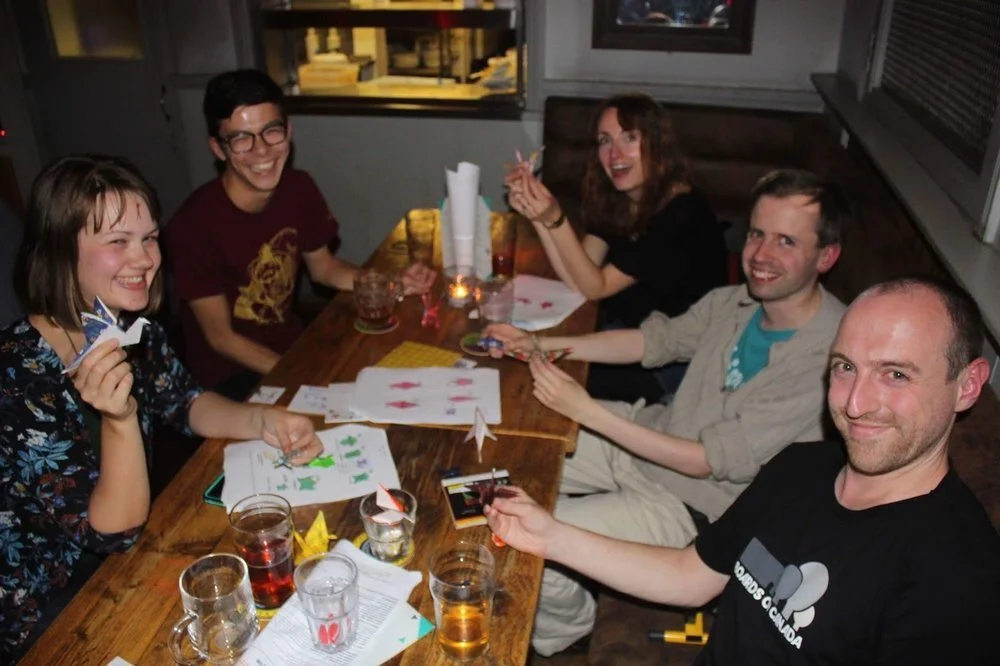
In October half term we had the first Step Up Japanese Origami Night, a relaxed affair in one of my favourite pubs.

In November I went for Japanese Afternoon Tea at Portslade's Café an-an. This was a special event for World Vegan Day.

And before you know it, it's nearly the end of the year!
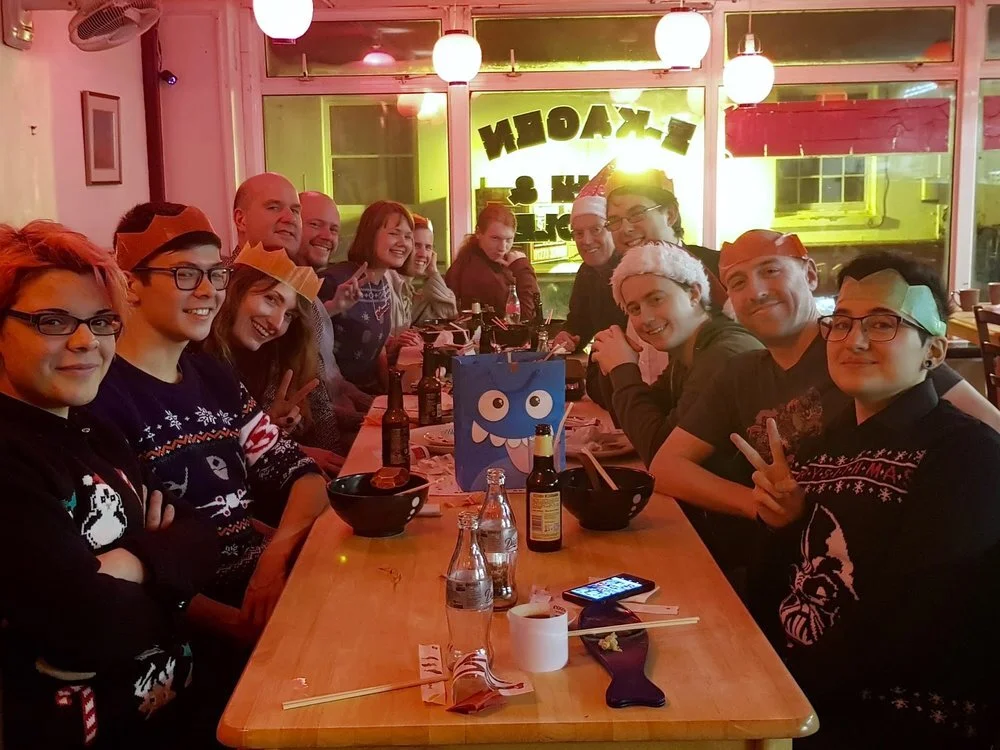
Students met for noodles and festive fun at the Christmas Party.
Like I said, it's been busy.
I'm really, really looking forward to see what 2018 brings!
Thank you so much to everyone who came to classes, took part in events, and supported me at Step Up Japanese this year.
良いお年を!
Have a good new year!













Like many people in the UK, I studied French in school. I liked French. I thought it was really fun to speak another language, to talk with people, and to try and listen to what was going on in a new country. (Still do!)
When I was 14 we went on a school exchange to the city of Reims, in northeastern France. I was paired with a boy, which I’m sure some 14-year-olds would find very exciting but which I found unbearably awkward. He was very sweet and we completely ignored each other.
That was nearly 20 years ago, and I didn’t learn or use any more French until, at some point in lockdown, I decided on a whim to take some one-to-one lessons with online teachers. Here are some things I learned about French, about language learning, and about myself.