
Welcome to the Step Up Japanese blog archive!
Although I’m not currently adding new posts to the blog, you’ll find plenty of Japanese learning tips, study advice, and resources to explore here.
Browse the blog index to view a complete list of posts.
For the latest news, course updates, and Japanese learning tips from Step Up Japanese, sign up for my newsletter.
Search this blog:

One Year of (Sort of) Learning French
Like many people in the UK, I studied French in school. I liked French. I thought it was really fun to speak another language, to talk with people, and to try and listen to what was going on in a new country. (Still do!)
When I was 14 we went on a school exchange to the city of Reims, in northeastern France. I was paired with a boy, which I’m sure some 14-year-olds would find very exciting but which I found unbearably awkward. He was very sweet and we completely ignored each other.
That was nearly 20 years ago, and I didn’t learn or use any more French until, at some point in lockdown, I decided on a whim to take some one-to-one lessons with online teachers. Here are some things I learned about French, about language learning, and about myself.
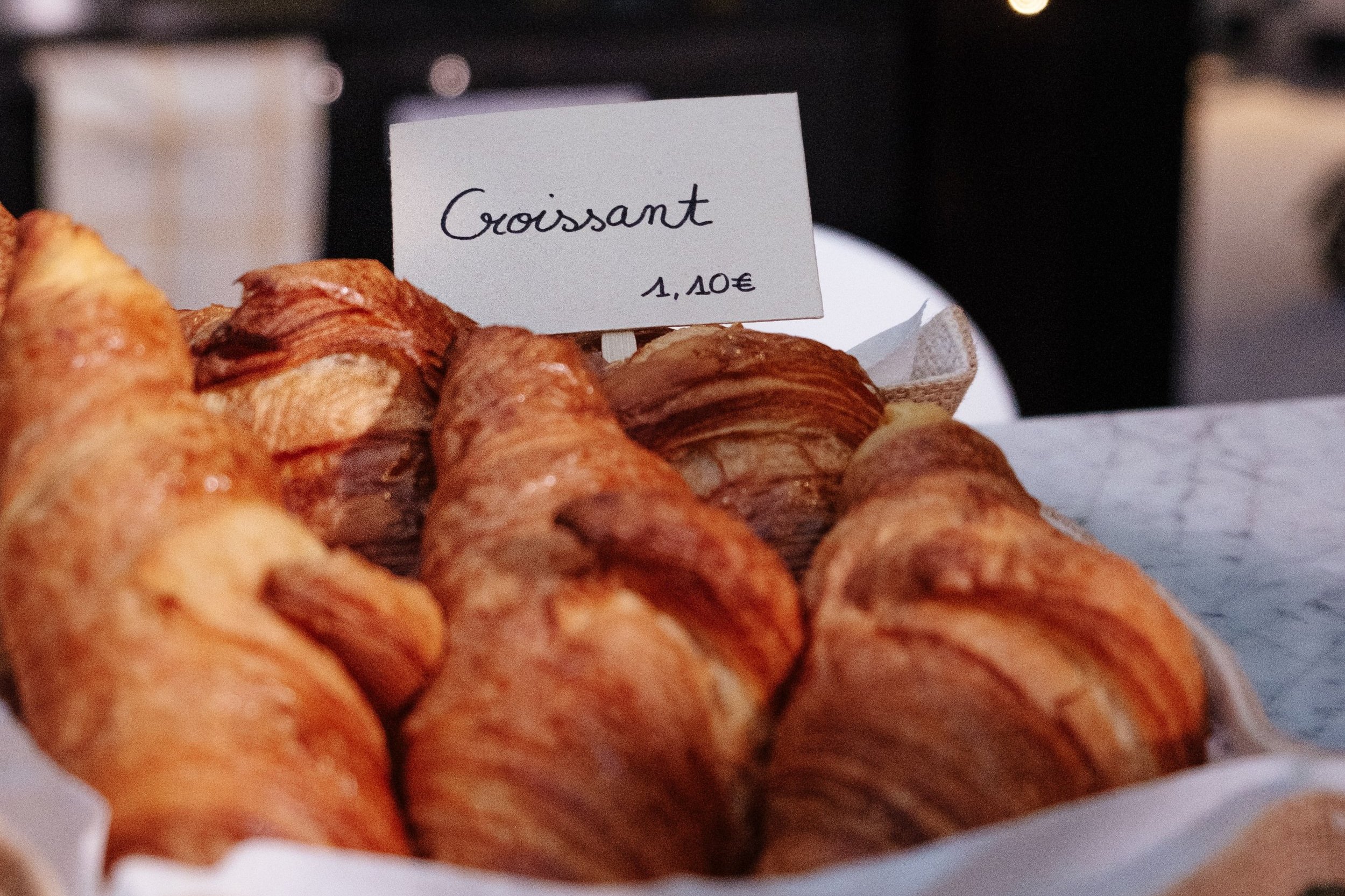
Like many people in the UK, I studied French in school. I liked French. I thought it was really fun to speak another language, to talk with people, and to try and listen to what was going on in a new country. (Still do!)
When I was 14 we went on a school exchange to the city of Reims, in northeastern France. I was paired with a boy, which I’m sure some 14-year-olds would find very exciting but which I found unbearably awkward. He was very sweet and we completely ignored each other.
I also realised immediately that I didn’t need to speak any French with him, because he spoke fluent English, having lived in the UK until the age of 8. I did, however, get to speak some French with his mum.
Here are some examples of my French ability at the age of 14, to give you an idea.
We visited Riems cathedral and, in the car on the way home, I said “ç'était grand et belle” (it was big and beautiful). My exchange partner’s mum heard and understood me, which was very exciting.
I also remember that her other son called the house, and I asked “Pierre téléphone souvent?” (“does Pierre phone you often?”) and the mum laughed and said no, not really.
So, I guess we could say that my French was basic but enthusiastic. Probably, “Pierre téléphone souvent?” is not a grammatically correct sentence, but I didn’t care then and I don’t care now. She understood me! She laughed!
That was nearly 20 years ago, and I didn’t learn any more French until, at some point in lockdown, I decided on a whim to take some one-to-one lessons with online teachers. Here are some things I learned about French, about language learning, and about myself.
Holy merde, some textbooks are boring
I bought some French textbooks, but I didn’t use them very much because I found them really deathly boring. I also found that French grammar didn’t stick in my head from trying to do textbook exercises. So, I mostly ignored them and just tried to read other things in French. This was surprising to me, because as a student I quite like Japanese textbooks.
…but other books are fun!
There are lots of easy short stories out there:
*Links with an asterisk are affiliate links, which means I may earn a small commission when you click through and buy the book. Thanks for your support!
If you’re interested in Japanese short stories, there are lots of similar books of short stories available. Or you could read Tadoku books!
Routine is my friend (it might be yours too?)
During various national lockdowns, I had a regular Sunday morning zoom call with my brother where we’d sit and “do productive things” together. I used this time to read French books and watch French TV. It was a standing weekly appointment, so I didn’t have to plan it in. It was just what I did on Sunday mornings.
Making regular time to practise is one of the best things you can do to learn a language.
TV, TV, TV
I watched loads of French TV last year. If you have a basic knowledge of a language, you can probably watch TV in your target language, with the subtitles in that target language too. Netflix is great for this, because there are so many languages available! I watched all of Call My Agent (Dix pour cent) and Lupin in French, with French subtitles. I didn’t understand everything, but I got the gist of what was going on.
I know what you might be thinking. “But reading French is easier than reading Japanese!” You’re not wrong. If watching Japanese TV with Japanese subtitles is too hard at the moment, you could watch with subtitles in your native language.
I also watched a lot of Spiral (Engrenages), although that’s on BBC so it’s hard-subbed (i.e. you can’t turn the subtitles off, or change the language) with English subtitles. Spiral is a police and legal procedural, so I think it would be too hard for me to watch with French subtitles anyway.
Importantly, these are all TV shows I would happily watch, even if I wasn’t trying to get listening practice. Find something you enjoy, and keep at it.
The power of input
What do reading French books and watching French TV have in common? They’re input activities.
Listening and reading are input activities - you take in the language and (hopefully) learn some of it.
Speaking and writing, on the other hand, are output activities - you produce (i.e. use) the language you have.
Although it’s important to practise speaking, without large amounts of input, you can’t produce good-quality output.
Try different types of lessons and teachers
I had lessons on italki with various different teachers. Most were very good. Some weren’t such a good fit.
I’m a language teacher, and I have quite specific expectations from teachers I work with. I don’t like it when they’re late, or don’t come at all with no explanation. I don’t like it when they set me homework and then don’t check it. Maybe you wouldn’t mind that, but I found this annoying and unprofessional, and didn’t book with those teachers again.
The most successful lessons were the ones where I felt relaxed. Sometimes we’d chat for 25 minutes, then do a bit of hasty grammar for 5 minutes. I’m on board with that.
Progress will happen, but it takes time
At first, I couldn’t use any past tenses in French at all. I didn’t really care, but my teachers seemed to.
It can be tempting to think that if you go away and practise something, you’ll have mastered it by the next lesson, but ideas take time to “bed in”.
Overall, I felt fairly relaxed about the whole thing. If I keep plugging away at French, and practising, I’ll get better. If I only practise a bit, then progress will be slow. That’s ok too.
Speak and be heard
As a teacher, I’m so pleased when my students want to share their lives with me: to tell me about their day, their dreams, their fears, how their cat always eats the butter off their breakfast in the morning.
I really enjoyed re-learning some French, and it made me think about my teaching a lot - how it feels to be corrected; to not understand an explanation; to falteringly, finally, speak and be heard.
Isn’t that what we all want - to be heard and understood?

Dr. Anki or, How I Learned to Stop Worrying and Embrace Multiple Decks (GUEST POST!)
A special guest post from Step Up Japanese student Phil Kinchington!
Anki is a flashcard app that uses a Spaced Repetition System (SRS) to help you learn and memorise information by creating strong, long-lasting memories. It does this by aiming to present you with a flashcard exactly at the point you were about to forget it.
You should be able to recall the information, but at a slight stretch. If you remember the card correctly, it will increase the length of time before it shows it to you again. If you can’t remember (or remember incorrectly) it will show it to you again sooner. It was originally developed for language learning (being named after the Japanese word for ‘memorisation’) but has since been applied to many subjects, including medical studies…
A special guest post from Step Up Japanese student Phil Kinchington!
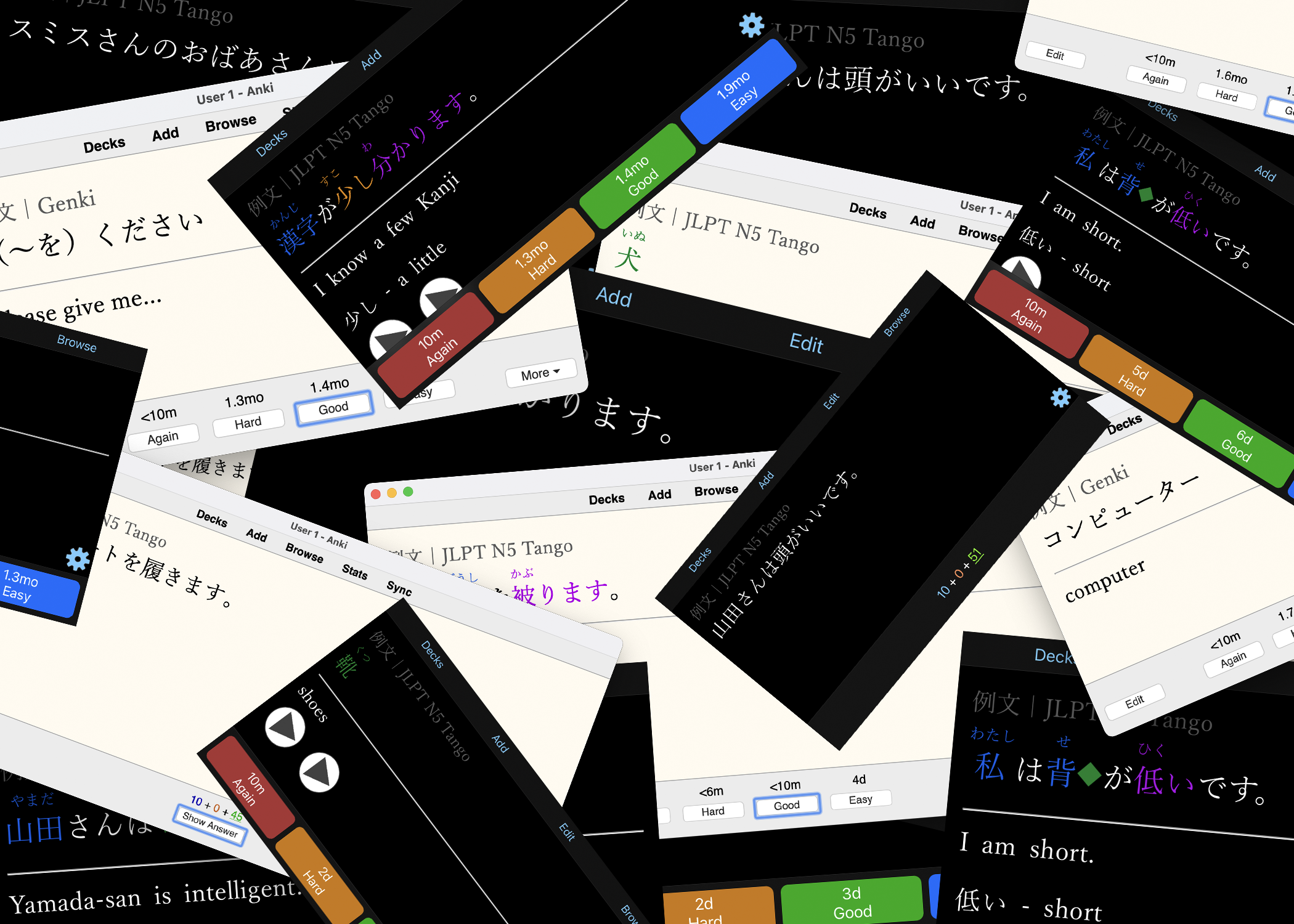
Anki is a flashcard app that uses a Spaced Repetition System (SRS) to help you learn and memorise information by creating strong, long-lasting memories. It does this by aiming to present you with a flashcard exactly at the point you were about to forget it.
You should be able to recall the information, but at a slight stretch. If you remember the card correctly, it will increase the length of time before it shows it to you again. If you can’t remember (or remember incorrectly) it will show it to you again sooner. It was originally developed for language learning (being named after the Japanese word for ‘memorisation’) but has since been applied to many subjects, including medical studies.
While I saw Anki mentioned and recommended everywhere, I could never figure out a way to use it that really worked for me. Some people recommended that you should download a pre-made deck to match the textbook you are using (there is a huge library of decks submitted by users accessible from within Anki.) But I felt this would mean that it would start automatically adding vocabulary past the point I’d got to in the book.
(Note from Fran - you can “suspend” all the cards and manually “unsuspend” them as you work your way through a textbook, although I appreciate this is a bit fiddly!)
A lot of people recommended that you should use a single deck, and dump everything you came across into it, which seems a bit too messy for my liking. Also, I'd then be constantly having the dilemma of "do I put this in, or is it not worth it, or how can I add this in a meaningful way, that I'd understand why it was there when I came back to it?"
A big part of the problem is how open and flexible the system is. Anki doesn’t guide you or force you to work with it in a specific way, and the design of the cards is almost infinitely configurable. Of course, this is also the reason it has been possible to adapt it for so many different subjects.
I’d pretty much given up trying, and then I discovered the Alivia’s Japanese Nook YouTube channel. On that channel Alivia has a video specifically about using Anki to study Japanese that has been very useful to me. It's a bit long, as it covers every detail of how to use it, and exactly how she has all the settings configured. But if you’ve never used Anki at all, it’s a very good guide to getting it set up and starting to use it.
As a result of watching this video, I have developed a way of using Anki that seems to be working for me. I have multiple decks. Firstly I have a 'Genki' deck, which I'm manually populating with the vocabulary from the vocab pages in each chapter. This way, I can control how far ahead it goes. The other deck is the one recommended in this video called 'JLPT Tango N5 MIA Japanese' (it is a deck that has been built to go along with the JLPT Tango N5 study book*.) Over a month later and it still seems to be working for me, which is better than I've ever managed with it - every time I've tried, I've bounced off pretty hard and pretty fast.
The JLPT deck mostly uses the vocabulary in phrases, which is more useful for remembering and understanding the usage (although, I've just been through a batch where it felt it was essential to go through every month of the year, and also a whole load of one person, two people, three people, six people, etc.)
It also uses kanji from the start, and you don't get the furigana until you click through to the answer, which could be a bit harsh depending on how many kanji you‘ve already been exposed to. But so far they've all been pretty common kanji that I was already comfortable with. Each card also has full voice recordings that automatically play when you click to show the answer. Sometimes several versions with different voices.
So now my method is: look at the card, read the phrase aloud, then say aloud "that means" followed by saying my translation aloud. When I click through to the answer, depending on whether I've got it right or not I'll click either 'Good' or ‘Again’. I don't use the ‘Easy’ or 'Hard' options at all. As far as I'm concerned it was either Good/Satisfactory or Again/Wrong.
I give myself a bit more leeway on the translation of, for example, words like 'international/foreign student' or 'nice/pleased to meet you, how do you do, etc.' But when it comes to the Japanese, I try to be pretty hard on myself regarding kanji recognition, pronunciation, etc. Better to practice something a little more than you needed to, rather than less than you required.
Now that I’ve found that there’s no need to worry about getting overwhelmed by having multiple decks, I’m thinking of adding more. First candidate is all of the sentences from the first book or two in the Unko Sensei series. This will have the advantage that it will force me to develop my own English translations, adding an extra layer of study.
How do you study Japanese with Anki? How are your decks set up? Let us know in the comments!
Links with an asterisk* are affiliate links, which means I (Fran) may earn a small commission, at no extra cost to you, when you click through and buy the book. Thanks for your support!
Click here for more guest posts from Step Up Japanese students!

Mini-interview with Elly Darrah of Ippo Ippo Japanese
Elly is the Edinburgh-based Japanese teacher behind Ippo Ippo Japanese. Did you know, Ippo Ippo means “step by step” in Japanese? I think that’s a great approach to learning Japanese - one step at a time.
In this mini interview I asked Elly some questions about the Japanese language, and we talked about tips for learners who are just getting started.

Elly is the Edinburgh-based Japanese teacher behind Ippo Ippo Japanese. Did you know, Ippo Ippo means “step by step” in Japanese? I think that’s a great approach to learning Japanese - one step at a time.
In this mini interview I asked Elly some questions about the Japanese language, and we talked about tips for learners who are just getting started.
Have you lived in Japan before? Do you have any favourite memories you think of at this time of year?
Yes, I previously lived in Hyogo (near Kobe) and Osaka, and this time of year brings back a lot of memories of Japanese spring. In particular, I remember getting the train from Hyogo to Osaka and seeing cherry blossoms all along the river when I was on my way to a hanami (cherry blossom viewing) picnic with friends. I actually miss riding the train in Japan quite a lot - at least out of rush hour!
Do you have a favourite kanji?
There are so many kanji I love for so many different reasons! However, one I’ve recently been reminded of is 傘 (umbrella) because it visually reminds me of what it means: people (人) being protected from the rain.
What tips do you have for anyone thinking of starting to learn Japanese?
My biggest tip is to not worry about doing things the “right” way. You can spend hours and hours looking for the perfect textbook or perfect study method, but the main factor in improving in a language is simply spending time on it. That said, if your study method of choice turns out not to motivate you, don’t be afraid to change things up and find something you enjoy. For me, I (unexpectedly) got really into Japanese dramas and music. Keep exploring and you’ll find something that grabs your interest too!
Elly and I are co-hosting Explore Japanese, an online event all about getting started in Japanese. Click here to find out more -29th March or 6th April.
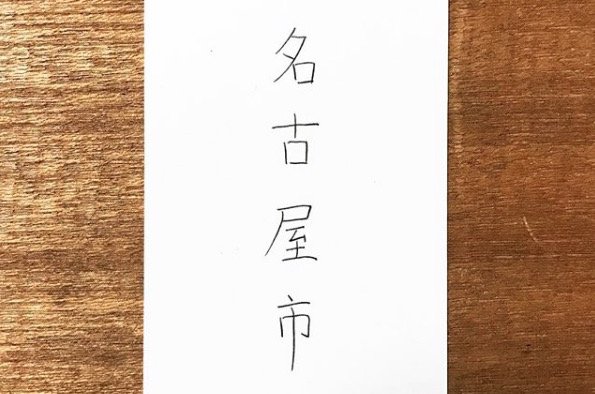
Amazing Japanese Calligraphers on Instagram (Part 4) - Uchiyama Kenichi
Uchiyama is a designer from Yokohama, Japan.
He posts clean, minimalist Japanese handwriting on a separate handwriting Instagram account.
I'm not even sure if you can call it calligraphy, it's so gloriously simple. But he's got nice handwriting, and I love having it in my feed.
Welcome to Part 4 of Amazing Calligraphers on Instagram, and this week we're keeping things super simple with Uchiyama Kenichi.
The Japanese way of giving names is to put the family name (Uchiyama) first, and then the given name (Kenichi).
That's the Japanese way, so I'll keep it that way too.
Also, I have a friend with exactly the same name, so I'll call my friend Kenichi Uchiyama and the calligrapher Uchiyama Kenichi. It keeps things simple.
Uchiyama is a designer from Yokohama, Japan.
He posts clean, minimalist Japanese handwriting on a separate handwriting Instagram account.
I'm not even sure if you can call it calligraphy, it's so gloriously simple. But he's got nice handwriting, and I love having it in my feed.
↓ こんにちは konnichiwa ("hello!")
Challenge time!
Can you read these next three?
Did you get it? These are the three Japanese "alphabets": ひらがな hiragana, カタカナ katakana, and 漢字 kanji. Each is written in its own alphabet, of course.
What I love most though is Uchiyama's series of Japanese placenames:
↓ 北海道 Hokkaido
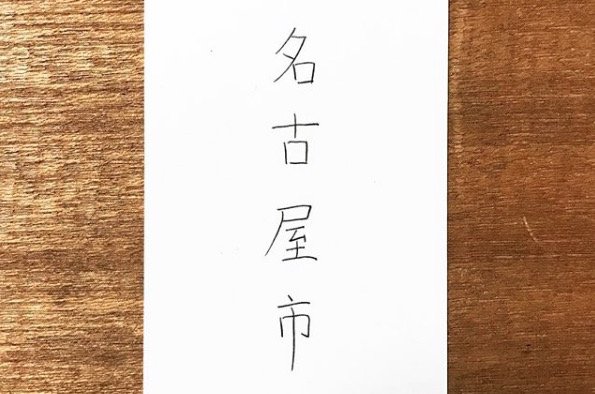
↓ 名古屋市 Nagoya-shi (Nagoya city)
I love the balance and simplicity in Uchiyama’s writing. It's not big or ostentatious. It has a quiet confidence, I think.
Follow Uchiyama Kenichi here on his writing-only Instagram account at @u.handwriting.
Read more in this series:
Amazing Japanese Calligraphers on Instagram (Part 1) - Emi Yogai 恵美・曄涯
Amazing Japanese Calligraphers on Instagram (Part 1.5 bonus!) - Emi Yogai 恵美・曄涯
Amazing Japanese Calligraphers on Instagram (Part 2) - Mitsuru Nagata
Amazing Calligraphers on Instagram (Part 3) - Isawo Murayama
First published 30th Mar 2018; updated 30th Nov 2021
Amazing Japanese Calligraphers on Instagram (part 1.5 bonus!) - Emi Yogai 恵美・曄涯
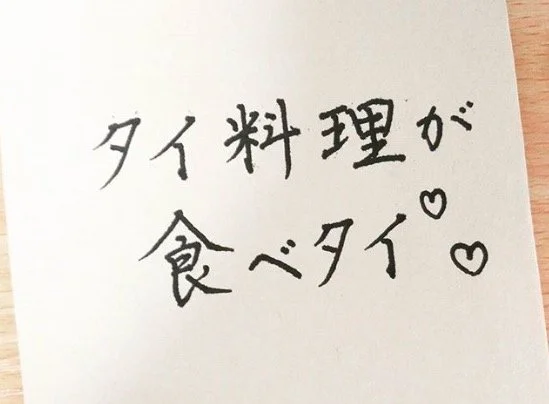
I can't believe I wrote an entire blog post about calligrapher Emi Yogai and forgot to include this amazing pun…

I can't believe I wrote an entire blog post about calligrapher @yogai888emi and forgot to include this amazing pun.
タイ料理が食べタイ
tai ryouri ga tabe-tai
"I want to eat Thai food."
What's the Japanese word for "Thai?" it's タイ (tai). And how do you say "want to eat" in Japanese? You stick -tai on the end of the verb.
It's funny, right?
Cute, too ♡
Read more in this series:
Amazing Japanese Calligraphers on Instagram (Part 1) - Emi Yogai 恵美・曄涯
Amazing Japanese Calligraphers on Instagram (Part 2) - Mitsuru Nagata
Amazing Calligraphers on Instagram (Part 3) - Isawo Murayama
Amazing Calligraphers on Instagram (Part 4) - Uchiyama Kenichi
First published 25th Jan 2018; updated 30th Nov 2021
Amazing Japanese Calligraphers on Instagram (Part 1) - Emi Yogai 恵美・曄涯
I absolutely love kanji - Chinese characters that are also used in Japanese writing.
But calligraphy is not my strong point. My writing is good, but not particularly beautiful.
I have, however, recently become slightly obsessed with instagrammers who post Japanese calligraphy photos.
So I thought it might be fun to share some with you!
I first discovered @yogai888emi via this adorable story about falling asleep on the train…

I absolutely love kanji - Chinese characters that are also used in Japanese writing.
But calligraphy is not my strong point. My writing is good, but not particularly beautiful.
I have, however, recently become slightly obsessed with instagrammers who post Japanese calligraphy photos.
So I thought it might be fun to share some with you!
I first discovered @yogai888emi via this adorable story about falling asleep on the train.
↓ Look at those lovely clean lines. I immediately had serious handwriting envy.
If kanji's not your thing, you can find beautiful hiragana and katakana on her page too.
↓ ハナゲ (hanage) "nose hair"
There are videos, too, if you like watching calligraphy. I do - I find it super relaxing.
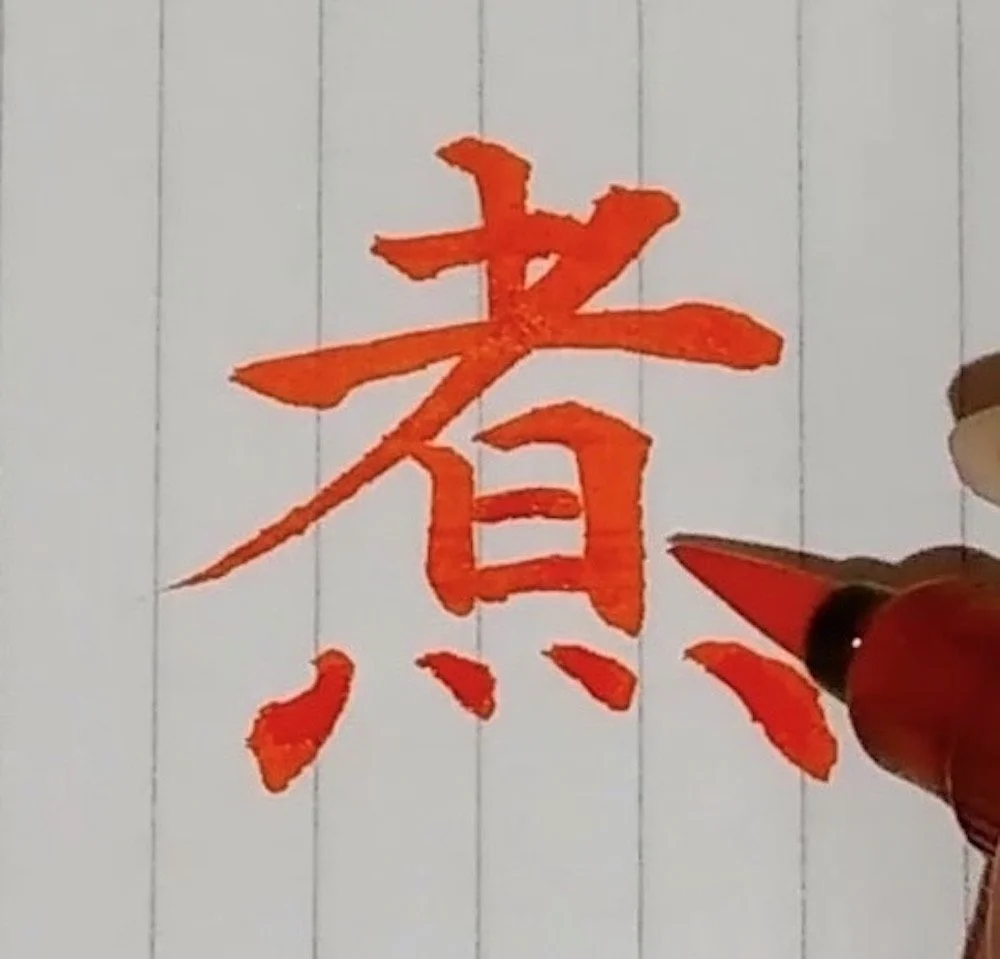
↓ 煮える (nieru) to boil, to be cooked. This one's from the height of summer!
You can find heaps more of her work at @yogai888emi's instagram page. I hope you enjoy exploring it as much as I do.
Just looking at calligraphy won't make your handwriting more beautiful though - unfortunately!
Read more in this series:
Amazing Japanese Calligraphers on Instagram (Part 1.5 bonus!) - Emi Yogai 恵美・曄涯
Amazing Japanese Calligraphers on Instagram (Part 2) - Mitsuru Nagata
Amazing Calligraphers on Instagram (Part 3) - Isawo Murayama
Amazing Calligraphers on Instagram (Part 4) - Uchiyama Kenichi
First published 25th Jan 2018; updated 30th Nov 2021

Is it "douzo" or "dozo"?
"Wait, is it douzo? In the book it says dōzo..."
It's both. And it's neither!
In beginner classes I use often rōmaji (English letters) to write Japanese in class. This is to give you a head start in learning to speak.
Some people think you shouldn't use rōmaji at all, because it will give you bad pronunciation.
That might be true if you're studying by yourself…

"Wait, is it douzo? In the book it says dōzo..."
It's both. And it's neither!
In beginner classes I use often rōmaji (English letters) to write Japanese in class. This is to give you a head start in learning to speak.
Some people think you shouldn't use rōmaji at all, because it will give you bad pronunciation.
That might be true if you're studying by yourself.
But if you have a teacher to teach you how to pronounce Japanese words correctly, and correct your mistakes, you can learn Japanese correctly using rōmaji.
There are different systems for writing Japanese in the English alphabet. Depending on which system is being used, a word could be spelled differently.
どうぞ (do-u-zo) means "here you are" / "go ahead".
Some romanisation systems use a macron (that’s a horizontal bar over the letter) to write the long vowel sound: ā ī ū ē ō. Using the macron, the word would be written "dōzo".
Another method is to spell out the long vowel sound using double letters: aa, ii, uu, ei, ou. That gives us "douzo".
Both "dōzo" and "douzo" are correct.
Sometimes, the long vowel isn't written in: "dozo". Technically, this is wrong!
You might also see ee and oo used instead of ei and ou: "doozo".
Personally I think "doozo" is just asking for trouble. That's not how the word is spelled in Japanese (it's どうぞ do-u-zo).
Of course, the truly correct way to spell the word is to write it in Japanese characters: どうぞ.
But if you’re writing in rōmaji, both "dōzo" and "douzo" are fine too. Just don't forget the long vowel!

First published Nov 2017; updated Sept 2021











Like many people in the UK, I studied French in school. I liked French. I thought it was really fun to speak another language, to talk with people, and to try and listen to what was going on in a new country. (Still do!)
When I was 14 we went on a school exchange to the city of Reims, in northeastern France. I was paired with a boy, which I’m sure some 14-year-olds would find very exciting but which I found unbearably awkward. He was very sweet and we completely ignored each other.
That was nearly 20 years ago, and I didn’t learn or use any more French until, at some point in lockdown, I decided on a whim to take some one-to-one lessons with online teachers. Here are some things I learned about French, about language learning, and about myself.