
Welcome to the Step Up Japanese blog!
Browse the blog index to view a complete list of posts.
For the latest news, course updates, and Japanese learning tips from Step Up Japanese, sign up for my newsletter.
Search this blog:

Amazing Japanese Calligraphers on Instagram (Part 2) - Mitsuru Nagata
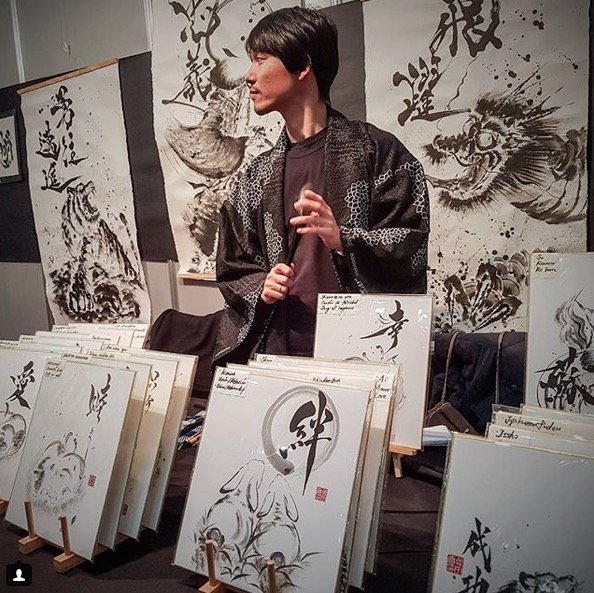
Mitsuru Nagata was born in Kyoto, and works extensively in Spain. His work combines elements of calligraphy with sumi-e (Japanese ink painting) techniques.
He performs at "live-painting" events, where he produces huge calligraphy paintings in front of a live audience.
These large-scale performances are often at festivals…

Mitsuru Nagata was born in Kyoto, and works extensively in Spain. His work combines elements of calligraphy with sumi-e (Japanese ink painting) techniques.
He performs at "live-painting" events, where he produces huge calligraphy paintings in front of a live audience.
These large-scale performances are often at festivals:
I love the simplicity of Nagata's work, like this stunning commission, with the traditional thatched roof home in the background:
おかえりなさい (o kaeri nasai) "Welcome home"
(Calligraphy is a good opportunity to get your eyes used to vertical writing, too!)
If hiragana's not your thing, there's plenty of complex kanji to get your teeth into too.
Like this new year's post, with a pug for the year of the dog (2018):
謹賀新年 (kinga shinnen) "Happy New Year"
I love the movement in these videos, and the combination of precision brushwork and watery ink.
This one's a promo for one of Nagata's live performances in Spain - a beckoning cat saying おいでね! (oide ne!) "Please come!"
Follow Mitsuru Nagata (@nagatayakyoto) on Instagram, or find out more on his website.
Read more in this series:
Amazing Japanese Calligraphers on Instagram (Part 1) - Emi Yogai 恵美・曄涯
Amazing Japanese Calligraphers on Instagram (part 1.5 bonus!) - Emi Yogai 恵美・曄涯
Amazing Japanese Calligraphers on Instagram (Part 3) - Isawo Murayama
Amazing Japanese Calligraphers on Instagram (Part 4) - Uchiyama Kenichi
First published 13th Feb 2018; updated 30th Nov 2021

Amazing Japanese Calligraphers on Instagram (part 1.5 bonus!) - Emi Yogai 恵美・曄涯
I can't believe I wrote an entire blog post about calligrapher Emi Yogai and forgot to include this amazing pun…

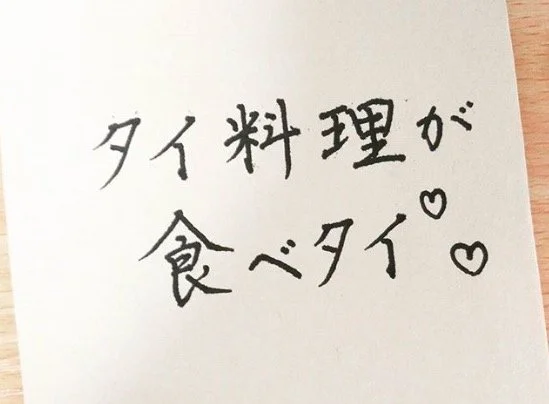
I can't believe I wrote an entire blog post about calligrapher @yogai888emi and forgot to include this amazing pun.
タイ料理が食べタイ
tai ryouri ga tabe-tai
"I want to eat Thai food."
What's the Japanese word for "Thai?" it's タイ (tai). And how do you say "want to eat" in Japanese? You stick -tai on the end of the verb.
It's funny, right?
Cute, too ♡
Read more in this series:
Amazing Japanese Calligraphers on Instagram (Part 1) - Emi Yogai 恵美・曄涯
Amazing Japanese Calligraphers on Instagram (Part 2) - Mitsuru Nagata
Amazing Calligraphers on Instagram (Part 3) - Isawo Murayama
Amazing Calligraphers on Instagram (Part 4) - Uchiyama Kenichi
First published 25th Jan 2018; updated 30th Nov 2021

Amazing Japanese Calligraphers on Instagram (Part 1) - Emi Yogai 恵美・曄涯
I absolutely love kanji - Chinese characters that are also used in Japanese writing.
But calligraphy is not my strong point. My writing is good, but not particularly beautiful.
I have, however, recently become slightly obsessed with instagrammers who post Japanese calligraphy photos.
So I thought it might be fun to share some with you!
I first discovered @yogai888emi via this adorable story about falling asleep on the train…

I absolutely love kanji - Chinese characters that are also used in Japanese writing.
But calligraphy is not my strong point. My writing is good, but not particularly beautiful.
I have, however, recently become slightly obsessed with instagrammers who post Japanese calligraphy photos.
So I thought it might be fun to share some with you!
I first discovered @yogai888emi via this adorable story about falling asleep on the train.
↓ Look at those lovely clean lines. I immediately had serious handwriting envy.
If kanji's not your thing, you can find beautiful hiragana and katakana on her page too.
↓ ハナゲ (hanage) "nose hair"
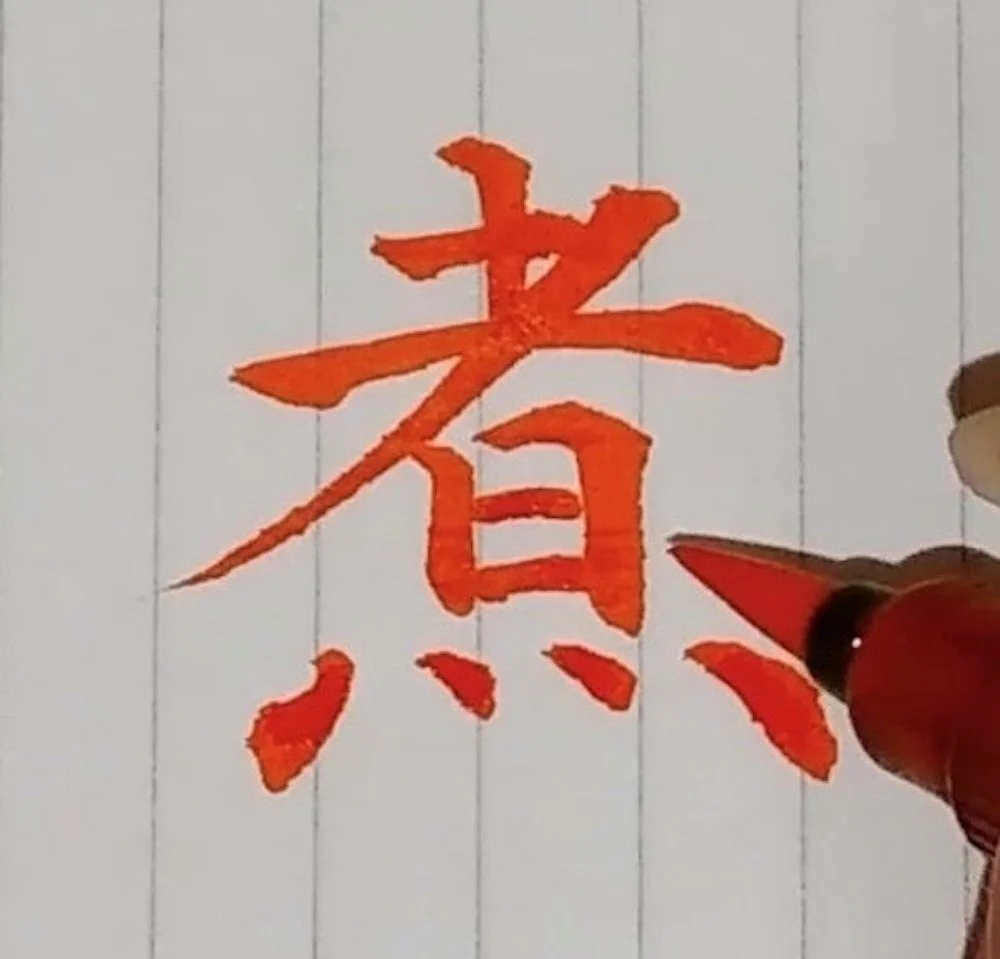
There are videos, too, if you like watching calligraphy. I do - I find it super relaxing.
↓ 煮える (nieru) to boil, to be cooked. This one's from the height of summer!
You can find heaps more of her work at @yogai888emi's instagram page. I hope you enjoy exploring it as much as I do.
Just looking at calligraphy won't make your handwriting more beautiful though - unfortunately!
Read more in this series:
Amazing Japanese Calligraphers on Instagram (Part 1.5 bonus!) - Emi Yogai 恵美・曄涯
Amazing Japanese Calligraphers on Instagram (Part 2) - Mitsuru Nagata
Amazing Calligraphers on Instagram (Part 3) - Isawo Murayama
Amazing Calligraphers on Instagram (Part 4) - Uchiyama Kenichi
First published 25th Jan 2018; updated 30th Nov 2021

A Brief Guide to Japanese Emoji: Food
Do you remember the first time you used an emoji?
I do. It was kind of overwhelming. I scrolled and scrolled through my new Japanese phone, and wondered what all these little pictures could possibly be for.
Because emoji originated in Japan, some of them are quite specific to Japanese culture.
Some are obvious - but others might not mean what you think! Let’s take a look at some specifically Japanese emoji.
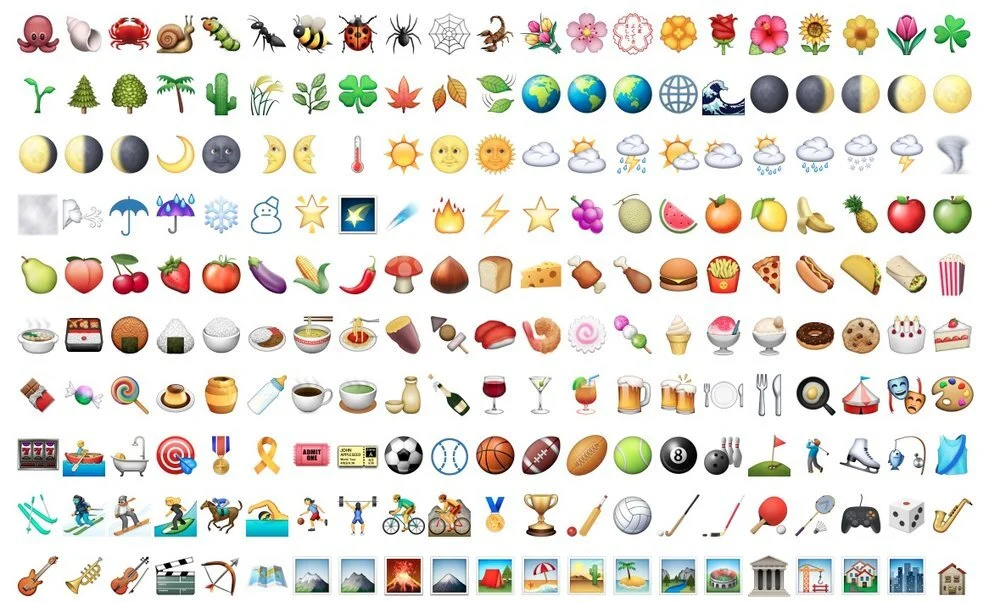
Do you remember the first time you used an emoji?
I do. It was kind of overwhelming. I scrolled and scrolled through my new Japanese phone, and wondered what all these little pictures could possibly be for.
Because emoji originated in Japan, some of them are quite specific to Japanese culture.
Some are obvious - but others might not mean what you think! Let’s take a look at some specifically Japanese emoji.
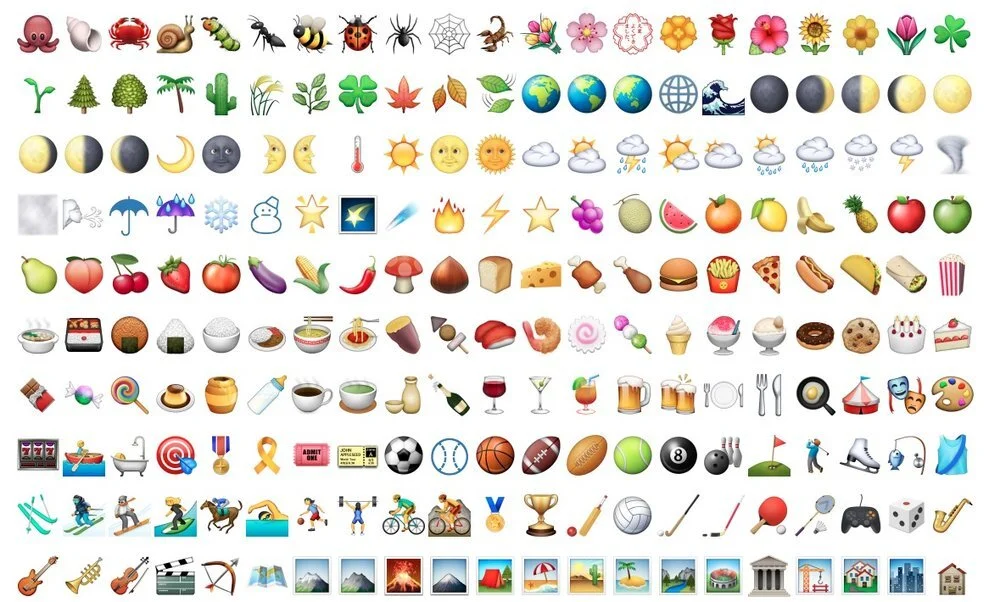
せんべい Rice Cracker

(Emoji images from emoji.ichinoku.com)
"What's that brown circle with the square on it?" せんべい (senbei, or sembei) are crispy, crunchy rice crackers. Usually savoury, they're made from Japan's staple crop - rice.
This one in the emoji picture is partly wrapped in a sheet of dried のり (nori) seaweed. Yum!
弁当 Bento Box
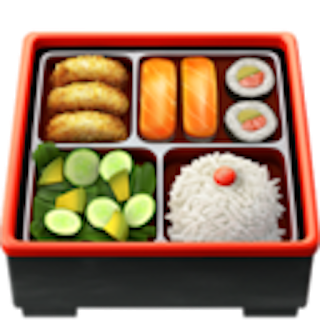
A 弁当 (bentō or bentou) is a boxed lunch containing rice, usually with fish or meat, and often with pickled vegetables.
Look closely - this bentō box has sushi in it too!
団子 Dango
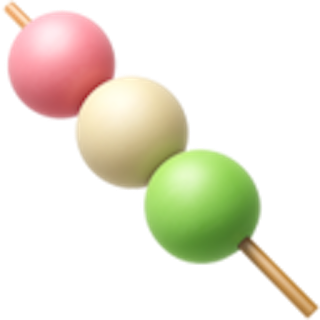
Dango are Japanese sweets made from sticky rice and sugar. They're chewy and squishy. I'm a big fan!
Dango are served on a stick to make it easier to eat.
These coloured ones are also called 三色 (sanshoku or "three-coloured") dango, or 花見 (hanami or "flower-viewing") dango.
エビフライ Fried Prawn
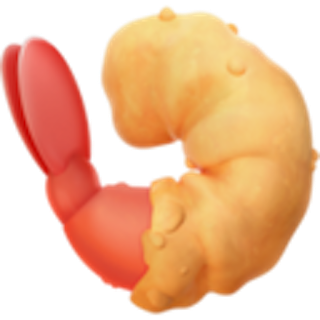
エビフライ (ebi-furai) or "fried prawn" is a specialty food of Nagoya, where I lived from 2011-2014.
I can't eat prawns though, so it's not my favourite food. You can have mine.
マンガ肉 Manga Meat
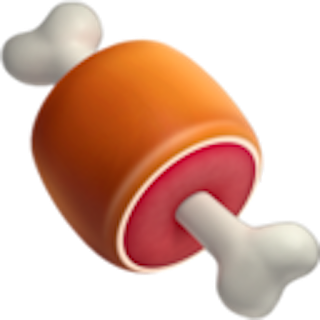
マンガ肉 (manga niku) is meat on the bone stylised like the cartoon meat you see in anime and manga.
Also known as あの肉 (ano niku) "that meat".
In a glorious case of life imitating art, you can actually get manga niku some places. We had it in the Capcom bar in Shinjuku, Tokyo a few years ago:

おでん Oden

A classic winter comfort food, おでん (oden) is a hot-pot made by simmering various ingredients in
dashi fish broth.
Some of the ingredients are skewered - again, to make them easier to eat.
The triangle on the top of the skewer in this emoji is こんにゃく (konnyaku), a gelatinous speckled grey food that tastes better than it looks.
Next time you're scrolling through the emoji on your phone, see if there are any Japanese food emoji that are new to you!
First published Dec 2017
Updated Sept 2021

Is it "douzo" or "dozo"?
"Wait, is it douzo? In the book it says dōzo..."
It's both. And it's neither!
In beginner classes I use often rōmaji (English letters) to write Japanese in class. This is to give you a head start in learning to speak.
Some people think you shouldn't use rōmaji at all, because it will give you bad pronunciation.
That might be true if you're studying by yourself…

"Wait, is it douzo? In the book it says dōzo..."
It's both. And it's neither!
In beginner classes I use often rōmaji (English letters) to write Japanese in class. This is to give you a head start in learning to speak.
Some people think you shouldn't use rōmaji at all, because it will give you bad pronunciation.
That might be true if you're studying by yourself.
But if you have a teacher to teach you how to pronounce Japanese words correctly, and correct your mistakes, you can learn Japanese correctly using rōmaji.
There are different systems for writing Japanese in the English alphabet. Depending on which system is being used, a word could be spelled differently.
どうぞ (do-u-zo) means "here you are" / "go ahead".
Some romanisation systems use a macron (that’s a horizontal bar over the letter) to write the long vowel sound: ā ī ū ē ō. Using the macron, the word would be written "dōzo".
Another method is to spell out the long vowel sound using double letters: aa, ii, uu, ei, ou. That gives us "douzo".
Both "dōzo" and "douzo" are correct.
Sometimes, the long vowel isn't written in: "dozo". Technically, this is wrong!
You might also see ee and oo used instead of ei and ou: "doozo".
Personally I think "doozo" is just asking for trouble. That's not how the word is spelled in Japanese (it's どうぞ do-u-zo).
Of course, the truly correct way to spell the word is to write it in Japanese characters: どうぞ.
But if you’re writing in rōmaji, both "dōzo" and "douzo" are fine too. Just don't forget the long vowel!

First published Nov 2017; updated Sept 2021

2021 Student Summer Picnic!
Thank you to everyone (including those not pictured) who came to our student picnic at the weekend!
We had fun meeting up outdoors, drinking tea, eating Japanese snacks and talking about Japan-related (and non-Japan-related) things.
It was so good to see students in person after such a long time!
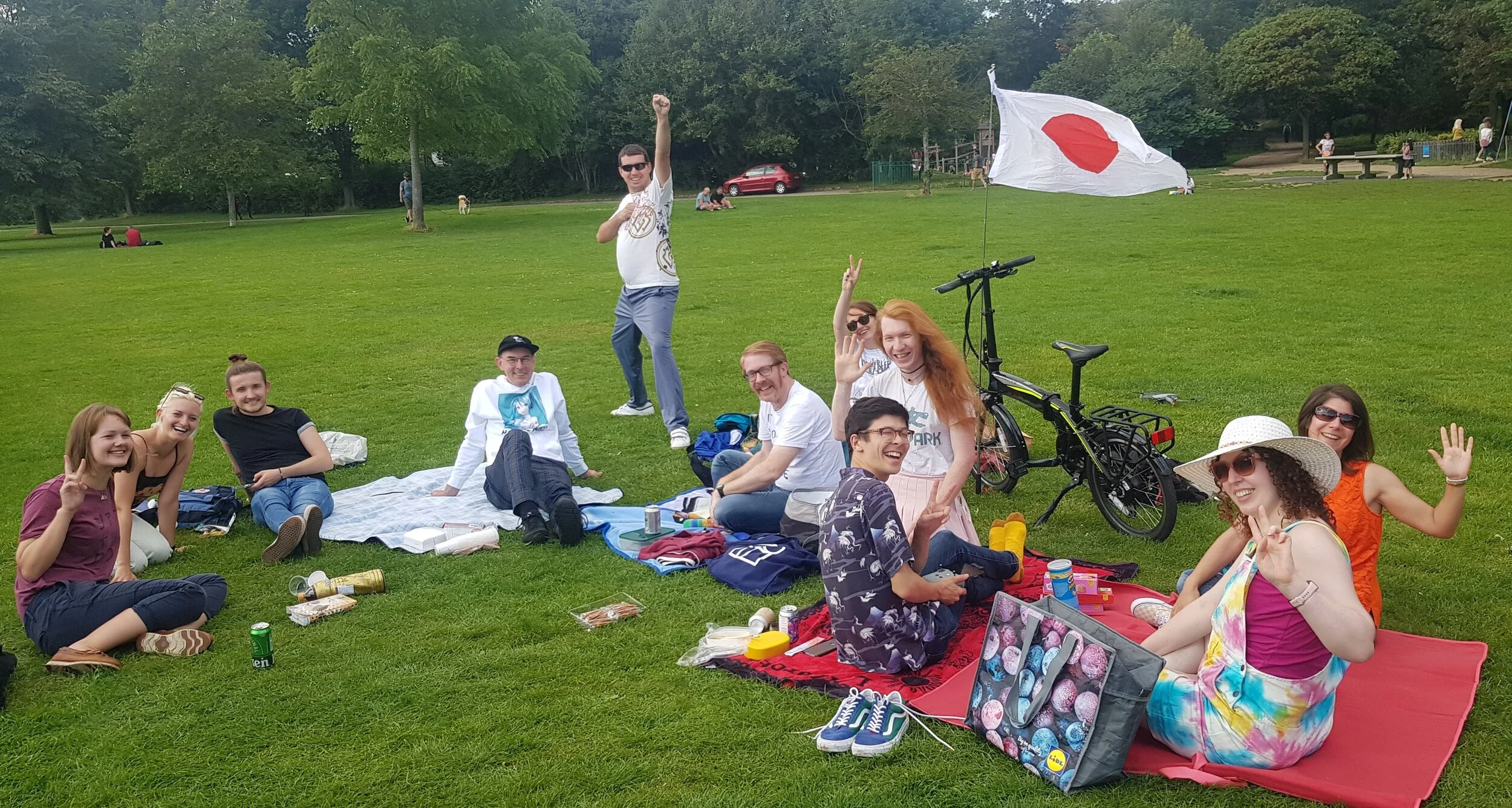
Thank you to everyone (including those not pictured) who came to our student picnic at the weekend!
We had fun meeting up outdoors, drinking tea, eating Japanese snacks and talking about Japan-related (and non-Japan-related) things.
It was so good to see students in person after such a long time!
Although all my teaching is online now, I still plan to run occasional social events in Brighton for students. I’m looking forward to seeing you all again soon.

More Ways of Counting in Japanese with "Ippon Demo Ninjin"
My student shared the funny song "Ippon Demo Ninjin" with us recently.
It's pretty pun-tastic, and very catchy.
It's also a good way to learn and practice some more counters (little words we put on the end of numbers in Japanese, depending on what's being counted).
My student shared the funny song "Ippon Demo Ninjin" with us recently.
It's pretty pun-tastic, and very catchy.
It's also a good way to learn and practice some more counters (little words we put on the end of numbers in Japanese, depending on what's being counted).
(Part 1)
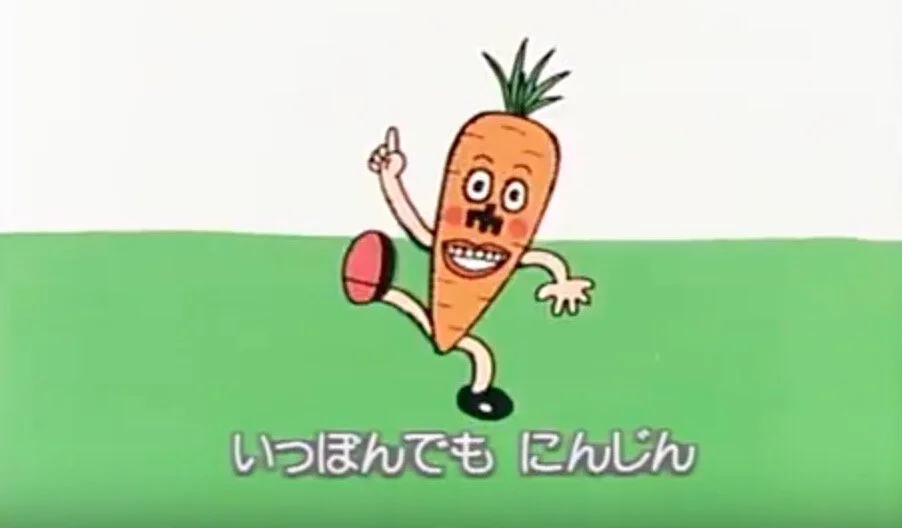
1! いっぽん でも にんじん Ichi! Ippon demo ninjin
2! にそく でも サンダル Ni! Nisoku demo sandaru
3! さんそう でも ヨット San! Sansou demo yotto
4! よつぶ でも ごましお Yon! Yotsubu demo gomashio
5! ごだい でも ロケット Go! Godai demo roketto
6! ろくわ でも しちめんちょう Roku! Rokuwa demo shichimencho
7! しちひき でも はち Shichi! Shichihiki demo hachi
8! はっとう でも くじら Hachi! Hattou demo kujira
9! きゅうはい でも ジュース Kyuu! Kyuuhai demo juusu
10! じゅっこ でも いちご Juu! Jukko demo ichigo
いちご、 にんじん、 サンダル、 ヨット、 ごましお、 ロケット、しちめんちょう 、はち、くじら、ジュース
Ichigo, ninjin, sandaru, yotto, gomashio, roketto, shichimencho, hachi, kujira, juusu
Strawberry, carrot, sandal, yacht, sesame and salt, rocket, turkey, bee, whale, juice
(Dance break)
(Repeat Part 1)
いっぽん、 にそく、 さんそう、 よつぶ、 ごだい、ろくわ、しちひき、はっとう、きゅうはい、 じゅっこ!
Ippon, nisoku, sansou, yotsubu, godai, rokuwa, shikihiki, hattou, kyuuhai, jukko!
One long thin thing, two shoes, three boats, four small round things, five vehicles, six birds, seven small animals, eight large animals, nine cups, ten small things!
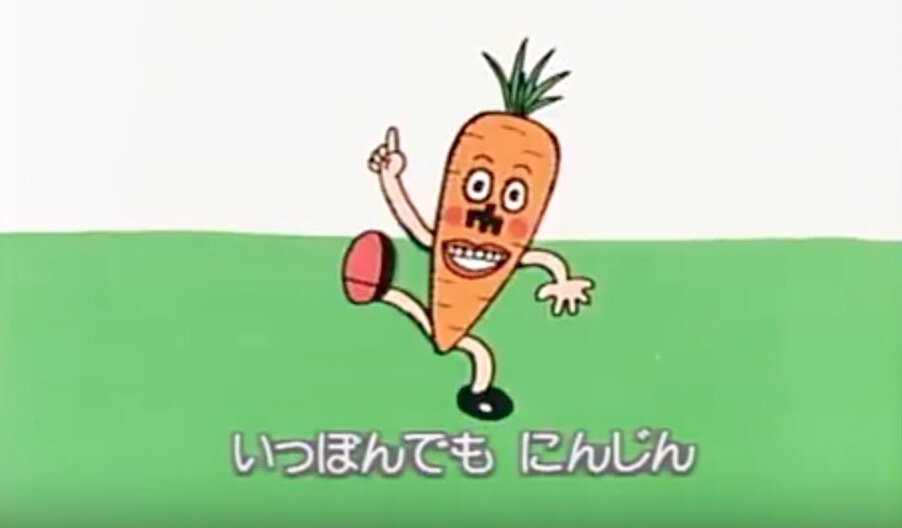
The beginning of ninjin (carrot) sounds like "ni" (two) but there's only one carrot.
And the beginning of sandaru (sandles) sounds like "san" (three) but...there are only two sandals!
We could translate いっぽん でも にんじん Ippon demo ninjin, therefore, as:
"It's only one, but it's a carrot."
or
"Even if there's only one, a carrot is ninjin."
(Trust me, it sounds better in Japanese.)
Anyway, listen again and try and sing along.
I haven't translated the whole thing for you, just bits. See if you can work the rest of it out!
First published Nov 2017. Updated August 2021.













Like many people in the UK, I studied French in school. I liked French. I thought it was really fun to speak another language, to talk with people, and to try and listen to what was going on in a new country. (Still do!)
When I was 14 we went on a school exchange to the city of Reims, in northeastern France. I was paired with a boy, which I’m sure some 14-year-olds would find very exciting but which I found unbearably awkward. He was very sweet and we completely ignored each other.
That was nearly 20 years ago, and I didn’t learn or use any more French until, at some point in lockdown, I decided on a whim to take some one-to-one lessons with online teachers. Here are some things I learned about French, about language learning, and about myself.