
Welcome to the Step Up Japanese blog archive!
Although I’m not currently adding new posts to the blog, you’ll find plenty of Japanese learning tips, study advice, and resources to explore here.
Browse the blog index to view a complete list of posts.
For the latest news, course updates, and Japanese learning tips from Step Up Japanese, sign up for my newsletter.
Search this blog:

Even More Japanese Loanwords From Languages That Aren't English
Last time I talked about Japanese loanwords - words that Japanese has “borrowed” from other languages - which come from languages other than English.
But there are also some tricky loanwords that look and sound like they came from English - but they didn’t!

Last time I talked about Japanese loanwords - words that Japanese has “borrowed” from other languages - which come from languages other than English.
But there are also some tricky loanwords that look and sound like they came from English - but they didn’t!
Challenge time!
Don’t be fooled. These loanwords look and sound a bit like they came from English - but they didn’t! Can you guess what languages these loanwords come from?
(Hint: not English!)
Koohii コーヒー coffee
Zero ゼロ zero
Pompu ポンプ pump
Botan ボタン button
Koppu コップ cup
Sarada サラダ salad
Kokku コック cook
Scroll down for the answers…!

The Answers:
Did you guess what non-English languages these loanwords come from?
Koohii コーヒー coffee - Portuguese
Zero ゼロ zero - French
Pompu ポンプ pump - Dutch; Flemish
Botan ボタン button - Portuguese
Koppu コップ cup - Dutch; Flemish
Sarada サラダ salad - Portuguese
Kokku コック cook - Dutch; Flemish
Students often ask why there are so many Portuguese and Dutch loanwords in Japanese. Words from these two languages have been used as loanwords in Japanese since the 16th and 17th centuries, when both countries established trade with Japan.
So, just because that katakana word you’ve learned looks like English, doesn’t mean it came from English!
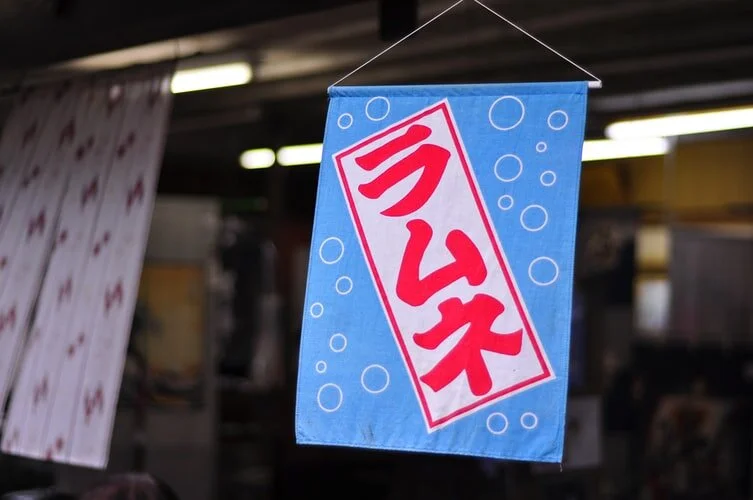
Japanese Loanwords From Languages That Aren't English
Modern Japanese contains a lot of loan words - words that Japanese has “borrowed” from other languages. These words are typically written in the katakana “alphabet”.
Many of these words come from English - but not all.
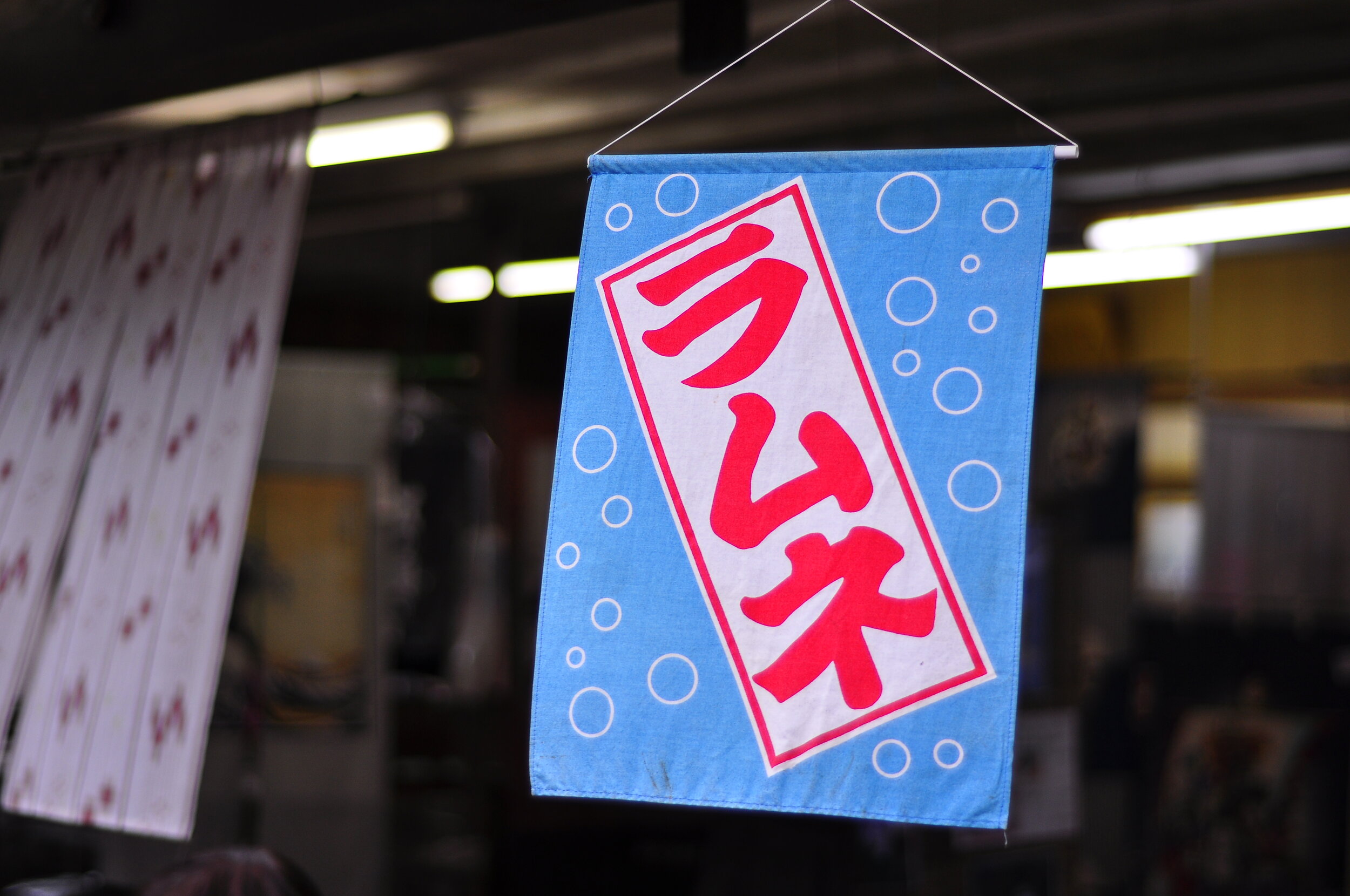
Modern Japanese contains a lot of loan words - words that Japanese has “borrowed” from other languages. These words are typically written in the katakana “alphabet”.
Many of these words come from English - but not all.
So if you’ve been wondering what happened to the “t” sound at the end of the Japanese word resutoran (レストラン, restaurant), it was never there in the first place - because that loanword didn’t come from English. It came from French.
And my students sometimes ask me why the Japanese word for salad is sarada (サラダ), not “sarado”. That’s because sarada comes not from the Engish word “salad”, but from the Portuguese “salada”.
It’s good to know which loanwords didn’t come from English - and it's interesting to know what languages they come from - so you can remember how to pronounce them correctly.
Hopefully this will help you remember that it’s resutoran (not resutoranto!)

Quiz time!
How many of these Japanese loanwords do you know? Can you guess the meaning of any?
Rentogen レントケン
Piero ピエロ
Arubaito アルバイト
Piiman ピーマン
Ruu ルー
Esute エステ
Ikura イクラ
Noruma ノルマ
Karuta カルタ
Sukoppu スコップ
Igirisu イギリス
⇩ HINT: Japan believes in calling a スコップ a スコップ

The Answers:
Rentogen レントケン X-ray (from German)
Piero ピエロ clown (French)
Arubaito アルバイト part time job (German)
Piiman ピーマン peppers [the vegetable] (French)
Run ルー roux sauce [or, more commonly, a block of Japanese curry mix used to make curry sauce] (French)
Esute エステ aesthetic salon i.e. beauty salon (French)
Ikura イクラ salmon roe (Russian)
Noruma ノルマ quota (Russian)
Karuta カルタ Japanese playing cards (Portuguese)
Sukoppu スコップ spade (Dutch; Flemish)
Igirisu イギリス the U.K. (Portuguese)
Pan パン bread (Portuguese)
So, next time you see a katakana word you don't recognise, don't despair - it might not have originated from a language you speak!
First published May 2016
Updated 9th Jan 2020

The Five Best Books for Learning Kanji
When I started teaching Japanese, I thought that beginner classes would be a kanji-free zone. I thought we'd be totally focused on speaking as much as possible, and reading and writing would be a homework-only activity for my students.
But, two things happened:
1) Students sometimes need help in class with reading and writing; and
2) It turns out lots of students are really interested in the Japanese writing system.
Which makes sense to me, as the writing system is kind of what got me interested in Japanese in the first place, too!
Anyway, I have a lot of kanji books. And today, I'd like to share some of them with you! So here are my top five kanji books, for beginners up to advanced.
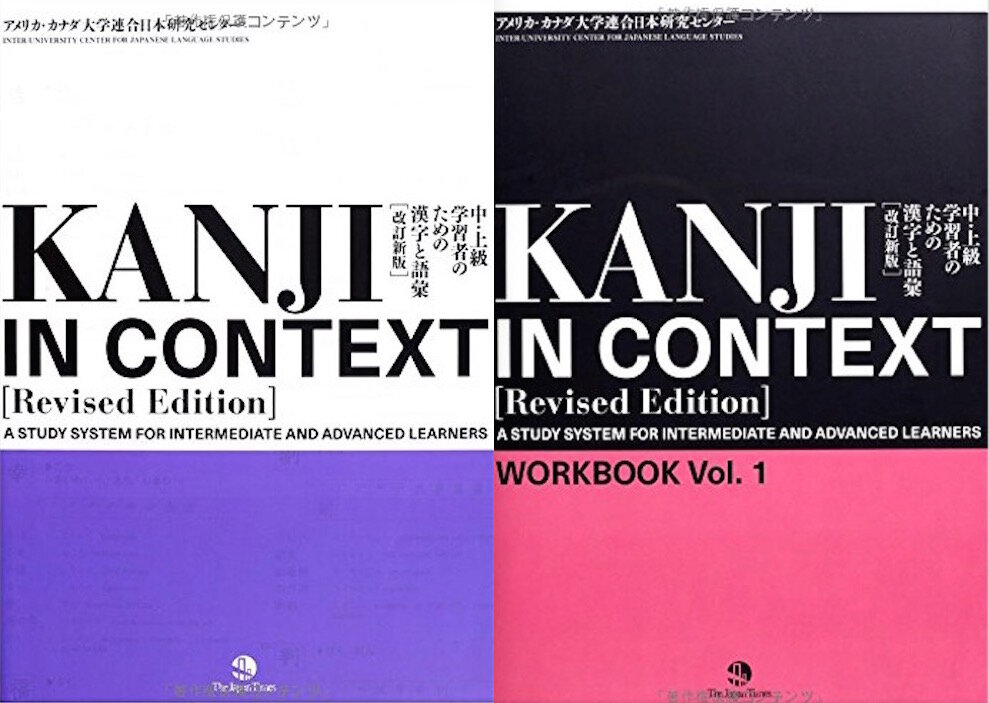
When I started teaching Japanese, I thought that beginner classes would be a kanji-free zone. I thought we'd be totally focused on speaking as much as possible, and reading and writing would be a homework-only activity for my students.
But, two things happened:
1) Students sometimes need help in class with reading and writing; and
2) It turns out lots of students are really interested in the Japanese writing system.
Which makes sense to me, as the writing system is kind of what got me interested in Japanese in the first place, too!
Anyway, I have a lot of kanji books. And today, I'd like to share some of them with you!
So here are my top five kanji books, for beginners up to advanced.
Links with an asterisk* are affiliate links, which means I may earn a small commission, at no extra cost to you, when you click through and buy the book. Thanks for your support!
1) Kanji Pict-o-Graphix*

If you’re a visual learner, or you enjoy storytelling, you may have learned hiragana and katakana using mnemonics.
But did you know that for a lot of people, mnemonic devices can be a great start to learn kanji, too?
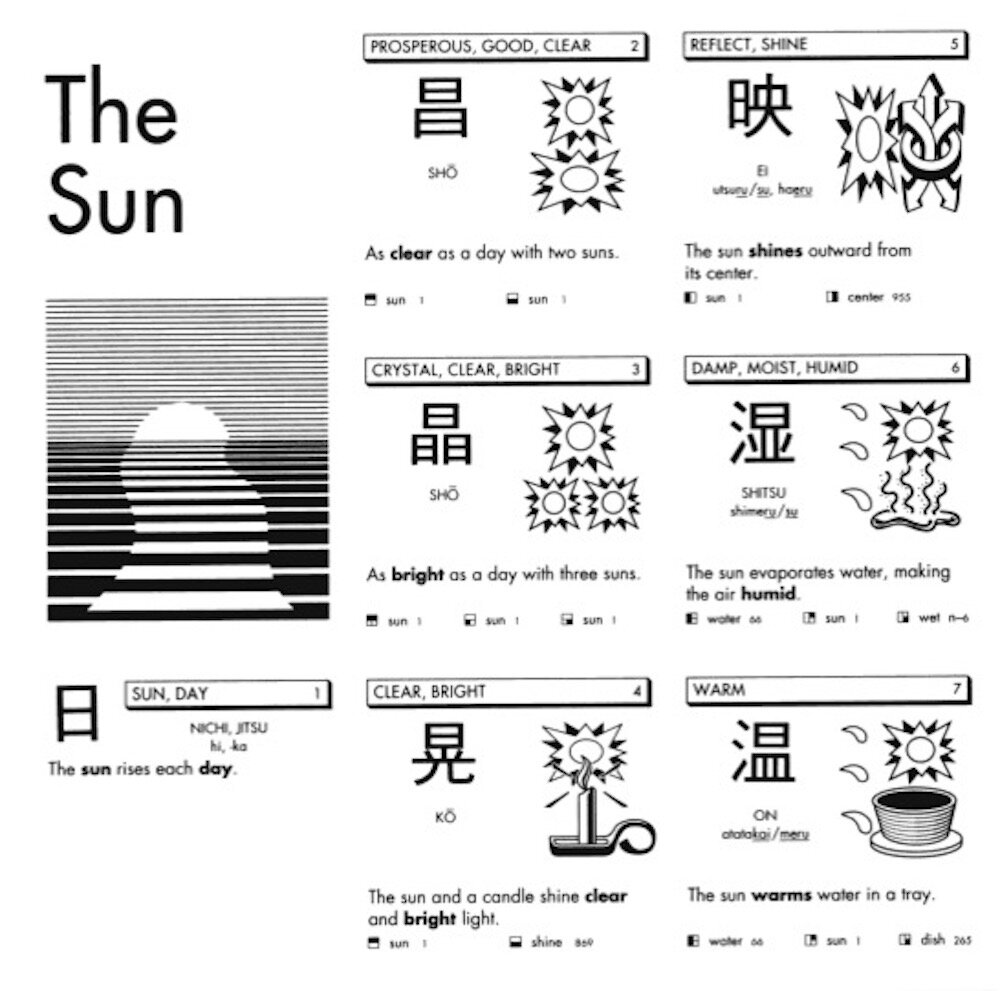
Kanji Pict-o-Graphix* gives you visual hints for remembering common kanji characters.
The book is arranged thematically, so you have a whole page of kanji with one component (like this page of characters containing the kanji for "sun" 日:
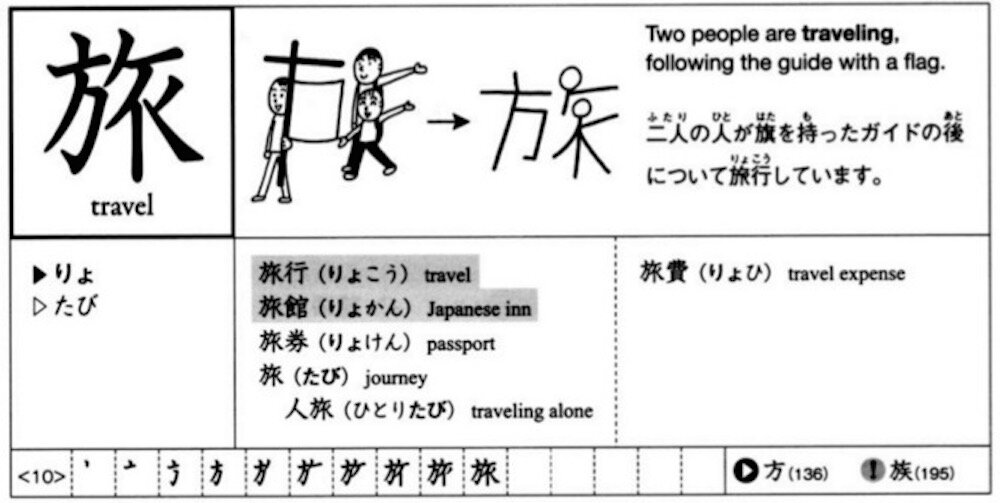
Like Kanji Pict-o-Graphix, Kanji Look and Learn* combines visual mnemonics with stories. But whereas Kanji Pict-o-Graphix feels like a fun coffee-table book, this is more of a serious study tool.
As well as stories to help you recognise the shape of kanji characters, you'll also find readings and example vocabulary. If you've ever used the Genki textbooks, you'll notice that the layout of this is similar to the kanji sections at the back of those books - that's because this is an extension to the series called 'Genki Plus'.
There's a Kanji Look and Learn Workbook*, too, which offers practice exercises alongside the main book. I used the Kanji Look and Learn series on my short course Japanese Kanji for Beginners last year, and they were really popular with students.
3) Basic Kanji Book*
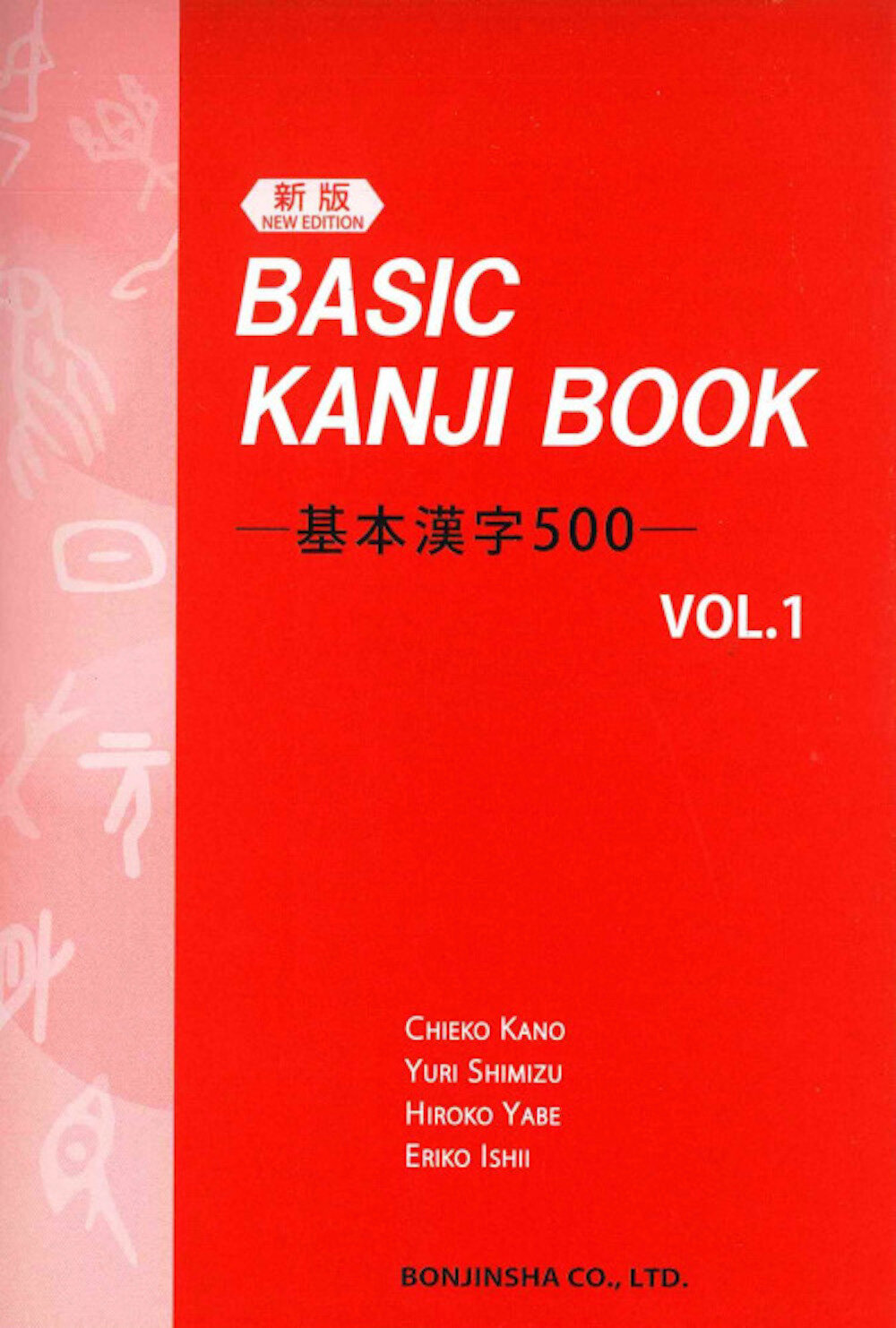
No bells and whistles here - the Basic Kanji Book* is a comprehensive guide to 500 kanji, arranged by theme. There's plenty of reading practice and quizzes throughout.
It's not going to hold your hand for you and you'll need a dictionary (or a good teacher), but if you're serious about getting out of the beginner stages, this is the book for you.
4) Remembering the Kanji*
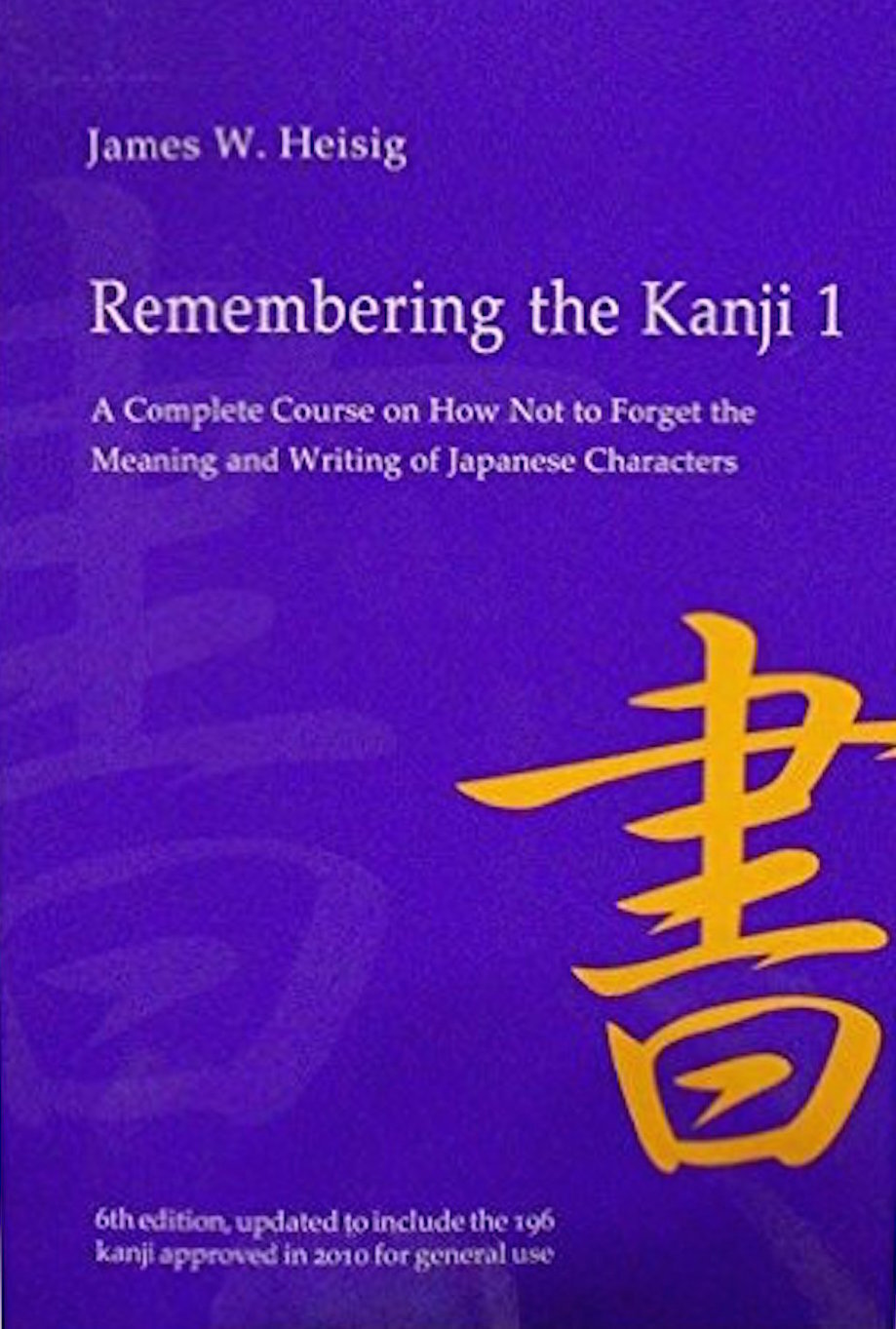
People who've tried the system suggested by James W. Heisig in his Remembering the Kanji series fall into two camps: they either love it, or they think it's totally stupid. This is the first book in the series, and its full title is Remembering the Kanji 1: A Complete Course on How Not To Forget the Meaning and Writing of Japanese Characters*.
You won't find a single drawing or pictographic in Heisig's book. Instead he requires the reader to use their imaginative memory to memorise each character. And - here's the controversial bit - he argues that before learning any kanji readings, you should first learn their meanings using an English keyword.
It's not for everyone...but if you think it might be for you, read the first chapter (and its illuminating introduction) for free here.
5) Kanji in Context*
When I was studying for the JLPT (Japanese Language Proficiency Test) N1, I came up with a picture in my mind of the kanji practice book I wanted.
I wanted to be given (in hiragana) a vocabulary word I should know, and be tested on my ability to write the kanji from memory.
A couple of years later, I discovered that the book of my dreams already existed. It's called Kanji in Context*, and instead of teaching you kanji in isolation, it presents them in example sentences and phrases - in (you guessed it) context. There’s a fantastic accompanying workbook* too.
So there you have it - my top five kanji books from beginner to advanced! I'd love to know what you think - how do you like to study kanji? And what did I miss?
First published 1 April 2016
Updated 8 January 2020















Like many people in the UK, I studied French in school. I liked French. I thought it was really fun to speak another language, to talk with people, and to try and listen to what was going on in a new country. (Still do!)
When I was 14 we went on a school exchange to the city of Reims, in northeastern France. I was paired with a boy, which I’m sure some 14-year-olds would find very exciting but which I found unbearably awkward. He was very sweet and we completely ignored each other.
That was nearly 20 years ago, and I didn’t learn or use any more French until, at some point in lockdown, I decided on a whim to take some one-to-one lessons with online teachers. Here are some things I learned about French, about language learning, and about myself.