Welcome to the Step Up Japanese blog archive!
Although I’m not currently adding new posts to the blog, you’ll find plenty of Japanese learning tips, study advice, and resources to explore here.
Browse the blog index to view a complete list of posts.
For the latest news, course updates, and Japanese learning tips from Step Up Japanese, sign up for my newsletter.
Search this blog:

Why Does Everybody Forget Katakana?
I'll let you into a secret. I used to hate katakana.
Students of Japanese tend to start with its two phonetic alphabets. We start with hiragana, the loopy, flowing letters that make up all the sounds of Japanese.
Then we move on to katakana - all the same sounds, but in angular blocky font.
Hiragana seems fairly straightforward, I think. And when you start learning Japanese everything you read is written in hiragana, so by reading you constantly reinforce and remember.
Katakana? Not so much.

I'll let you into a secret. I used to hate katakana.
Students of Japanese tend to start with its two phonetic alphabets. We start with hiragana, the loopy, flowing letters that make up all the sounds of Japanese.
Then we move on to katakana - all the same sounds, but in angular blocky font.
Hiragana seems fairly straightforward, I think. And when you start learning Japanese everything you read is written in hiragana, so by reading you constantly reinforce and remember.
Katakana? Not so much.
The katakana "alphabet" is used extensively on signs in Japan - if you're looking for カラオケ (karaoke) or ラーメン (ramen noodles) you'll need katakana.

But if you're outside Japan, then beyond the letters in foreign names, you probably don't get a lot of exposure to katakana.
I think that's why a lot of beginning students really struggle to remember katakana.
Here are a couple of suggestions:
1) Use mnemonics
I learned katakana using mnemonics. For example, I still think katakana ウ (u) and ワ (wa) look super similar - I remember that ウ has a dash on the top, just like hiragana う (u) .
2) Practice, practice, practice
I'm not a huge fan of having you simply copy letters over and over again, but there is something to be said for "writing things out". By writing letters down, you activate muscle memory, which helps you remember. So get writing katakana!
3) Start learning kanji
It might feel like running before you can walk, but starting to read and write kanji (Chinese characters) before your katakana is completely perfect can be a good option.
Kanji textbooks have the Chinese readings of the characters in katakana, so learning kanji is also really good katakana practice.
And maybe, just maybe, you'll turn into a katakana lover?
Updated 23rd Oct 2020

Three Favourite Japanese Jokes
The worst job interview I ever had started with the interviewer asking me to tell him a joke.
I sat there flustered for a while before mumbling something about a man walking into a bar. The interviewer rolled his eyes.
I didn't get the job.
Sitting in a smokey cafe after the interview I remembered The Michael Jackson Joke which is probably the best beginner-Japanese joke of all time. I should've told him that one! Although he probably would have rolled his eyes at that too...
Help launch something new! Join our pilot round and be among the first to master Hiragana with our course.
👉 Join the Hiragana course as a beta tester!
The worst job interview I ever had started with the interviewer asking me to tell him a joke.
I sat there flustered for a while before mumbling something about a man walking into a bar. The interviewer rolled his eyes.
I didn't get the job.
Sitting in a smokey cafe after the interview I remembered The Michael Jackson Joke which is probably the best beginner-Japanese joke of all time. I should've told him that one! Although he probably would have rolled his eyes at that too...
They say explaining a joke is like dissecting a frog - you understand it better but the frog dies in the process. So with that in mind, here are my three favourite, brilliant, terrible Japanese jokes.
The Michael Jackson Joke
「マイケルジャクソンの好きな色は何ですか。」
「青」
Maikeru Jakkuson no sukina iro wa nan desu ka.
Ao!
"What's Michael Jackson's favourite colour?"
"Blue."
You have to really commit to the punchline for this one. You can even tell the question in English and the punchline in Japanese, as long as the person you're speaking to knows the Japanese word ao.
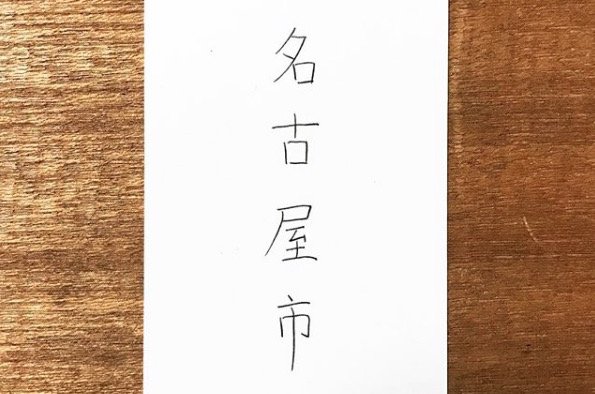
I once told The Michael Jackson Joke to a friend while standing at a traffic light in Nagoya and a stranger in front of us burst out laughing. True story.
↓ (Skip to 1:05)
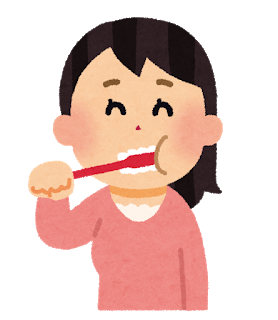
2. The Hawaiian Dentist Joke
「どうしてハワイ人は歯医者に行かないの? 」
「歯はいいから!」
Doushite Hawaii jin wa haisha ni ikanai no?
Ha wa ii kara.
"Why don't Hawaiians go to the dentist?"
"Because their teeth (=ha) are good (=ii)"
My friend Kendal sent me this one last week. ありがとうケンダル!
3. The Panda Joke
パンダの好きな餌は?
パンだ。
Panda no sukina esa wa?
Pan da.
"What's a panda's favourite food?"
"Bread (=pan)"
Pandas and puns are probably two of my favourite things. This joke has both.
What's your favourite Japanese joke? Have you ever told a joke in a job interview? Let me know in the comments!
First published 10 Feb 2017
Updated 31 March 2020












Like many people in the UK, I studied French in school. I liked French. I thought it was really fun to speak another language, to talk with people, and to try and listen to what was going on in a new country. (Still do!)
When I was 14 we went on a school exchange to the city of Reims, in northeastern France. I was paired with a boy, which I’m sure some 14-year-olds would find very exciting but which I found unbearably awkward. He was very sweet and we completely ignored each other.
That was nearly 20 years ago, and I didn’t learn or use any more French until, at some point in lockdown, I decided on a whim to take some one-to-one lessons with online teachers. Here are some things I learned about French, about language learning, and about myself.