
Welcome to the Step Up Japanese blog archive!
Although I’m not currently adding new posts to the blog, you’ll find plenty of Japanese learning tips, study advice, and resources to explore here.
Browse the blog index to view a complete list of posts.
For the latest news, course updates, and Japanese learning tips from Step Up Japanese, sign up for my newsletter.
Search this blog:

Tadoku - Let's Read! Course Introduction Video (and transcript)
Tadoku (多読), also called Extensive Reading, is the practice of learning a foreign language by reading lots of easy books. It's a really fun way to explore the Japanese language, without feeling pressure to understand every word.
This footage is from the 2019 Tadoku Summer Course at Step Up Japanese in Brighton, UK. In summer 2020, we also held our first Online Tadoku course.
Thanks to Daniel Sheen for making this video!
Watch the video, or scroll down to read a transcript. Click "CC" to turn on the subtitles 👍
Tadoku (多読), also called Extensive Reading, is the practice of learning a foreign language by reading lots of easy books. It's a really fun way to explore the Japanese language, without feeling pressure to understand every word.
This footage is from the 2019 Tadoku Summer Course at Step Up Japanese in Brighton, UK. In summer 2020, we also held our first Online Tadoku course.
Thanks to Daniel Sheen for making this video!
Watch the video, or scroll down to read a transcript. Click "CC" to turn on the subtitles 👍
What is Tadoku?
David: Tadoku is the practice of reading lots and lots of books, with the focus being on skipping things you don’t understand.
Fran: I think that lack of pressure’s really important, isn’t it? Skipping things, and… it doesn’t matter if you don’t understand everything.
Let’s take a look inside a Tadoku class at Step Up Japanese (filmed in 2019):
Fran: What did you read today? How was it? What was your favourite part? What was your least favourite part?
Snippets from students’ conversations about books:
A: I work in a publishing company – we make books – and this is from my publishing company.
B: Oh really?
A: And that one, yeah.
C: She’s actually a ghost! Oh no! And he’s really scared.
What do you like about Tadoku?
Sara: It’s quite nice just to kind of come back from work and just sit and you’re getting your practice in but it doesn't feel quite so much like practice, because you are focusing on the story, and I quite like the whole rules of the whole thing, which is like, you know, don’t sit there looking words up, just try and work it out from the context of it all, but yeah, I do actually sit and enjoy little stories more, that way.
David: I enjoy Tadoku, as it gives me the opportunity to read Japanese, without the pressure of understanding every single word.
Fran: I really like that experience as well, like you’re reading a book and then like a couple pages on you’re like “Oh, that’s what that word means!” – you didn’t need to look it up.
Sara: It’s like a little gold star for yourself as well, like: “Oh, I did know that!”
Would you recommend Step Up Japanese?
David: I would recommend Step Up Japanese to friends and family, and have. I really enjoy classes, I really enjoy the teacher, I really enjoy all of the students as well, it’s just like a really friendly bunch, and I’d like for more people to be part of the Step Up Japanese family.

Games in Japanese - Course Introduction Video (and transcript)
On Games in Japanese (日本語でゲーム), we practise communicating in Japanese by playing games!
This footage is from the 2019 Games in Japanese Summer Course at Step Up Japanese in Brighton, UK. In summer 2020, we also held our first Online Games in Japanese course.
Thanks to Daniel Sheen for making this video!
Watch the video, or scroll down to read a transcript.
On Games in Japanese (日本語でゲーム), we practise communicating in Japanese by playing games!
This footage is from the 2019 Games in Japanese Summer Course at Step Up Japanese in Brighton, UK. In summer 2020, we also held our first Online Games in Japanese course.
Thanks to Daniel Sheen for making this video!
Watch the video, or scroll down to read a transcript. Click "CC" to turn on the subtitles 👍
What is Games in Japanese?
David: In 日本語でゲーム (Games in Japanese), we play a variety of games, only ever using the Japanese language.
Showing students how to play:
Fran: どれですか。(Which one is it?)
Fran: そうですね。木が同じです。(That’s right! KI [tree] is the same)
Fran: 3,2,1、はい。(3, 2, 1, go!)
Fran: あ!あ!ハサミ!(Ah! “Scissors!”)
Fran: 私は取ります。(So, I take the card)
Sara: You’ve got all the numbers, the names out on the floor, and it’s the reading and trying to get to it before everyone else, which is quite funny.
N: クエスチョン、はてなマーク (“question mark”)
What do you like about “Games in Japanese”?
David: I find it difficult to play games in only Japanese, but I really relish the challenge to speak only Japanese. It really makes me have to think in a way that maybe I wouldn't have the opportunity to do if I wasn't taking the course.
David: サングラス (“sunglasses”) (Laughter)
Sara: It’s very good vocab practice. I think it’s more, the games we have, it’s a lot more sort of random words so I feel like you’re a lot faster with it, so you tend to do a bit less thinking about the words that you want, you just kind of go like “that word, quick!”
Fran: はい (OK, let’s go)
A:ピエロ (“clown”)
Sara: So you’re trying to beat everyone else to it, so it's a bit more, a bit more silly.
Fran: 音楽 (“music”)…音楽 (“music”) (Laughter)
A: クモ (“spider”)
Sara: ドラゴン (“dragon”)
B: 花 (“flower”)
Sara: I quite like that game, it was funny.
Would you recommend Step Up Japanese?
Sara: I think Step Up Japanese is really good way to go, it’s really good practice, it’s a really relaxed atmosphere, and Fran’s such a good teacher. I’ll go home and I’m like, right, “I’m gonna do this”, I feel motivated to keep going at the weekends.

2019 忘年会 (bo-nen-kai) End-of-Year Party!
December in Japan is bounenkai season, when workplaces and social groups gather for end-of-year parties.
忘年会 (bounenkai, end-of-year party) is one of my favourite Japanese words.
忘 means “forget”, 年 means “year”, and 会 in this context means “party”, so a bounenkai is a “forget-the-year party”. Isn’t that great?
We have a bounenkai at Step Up Japanese too! About half the time I forget it’s a bounenkai and call it a “Christmas Party”, but I think that’s ok.
December in Japan is bounenkai season, when workplaces and social groups gather for end-of-year parties.
忘年会 (bounenkai, end-of-year party) is one of my favourite Japanese words.
忘 means “forget”, 年 means “year”, and 会 in this context means “party”, so a bounenkai is a “forget-the-year party”. Isn’t that great?
We have a bounenkai at Step Up Japanese too! About half the time I forget it’s a bounenkai and call it a “Christmas Party”, but I think that’s ok.

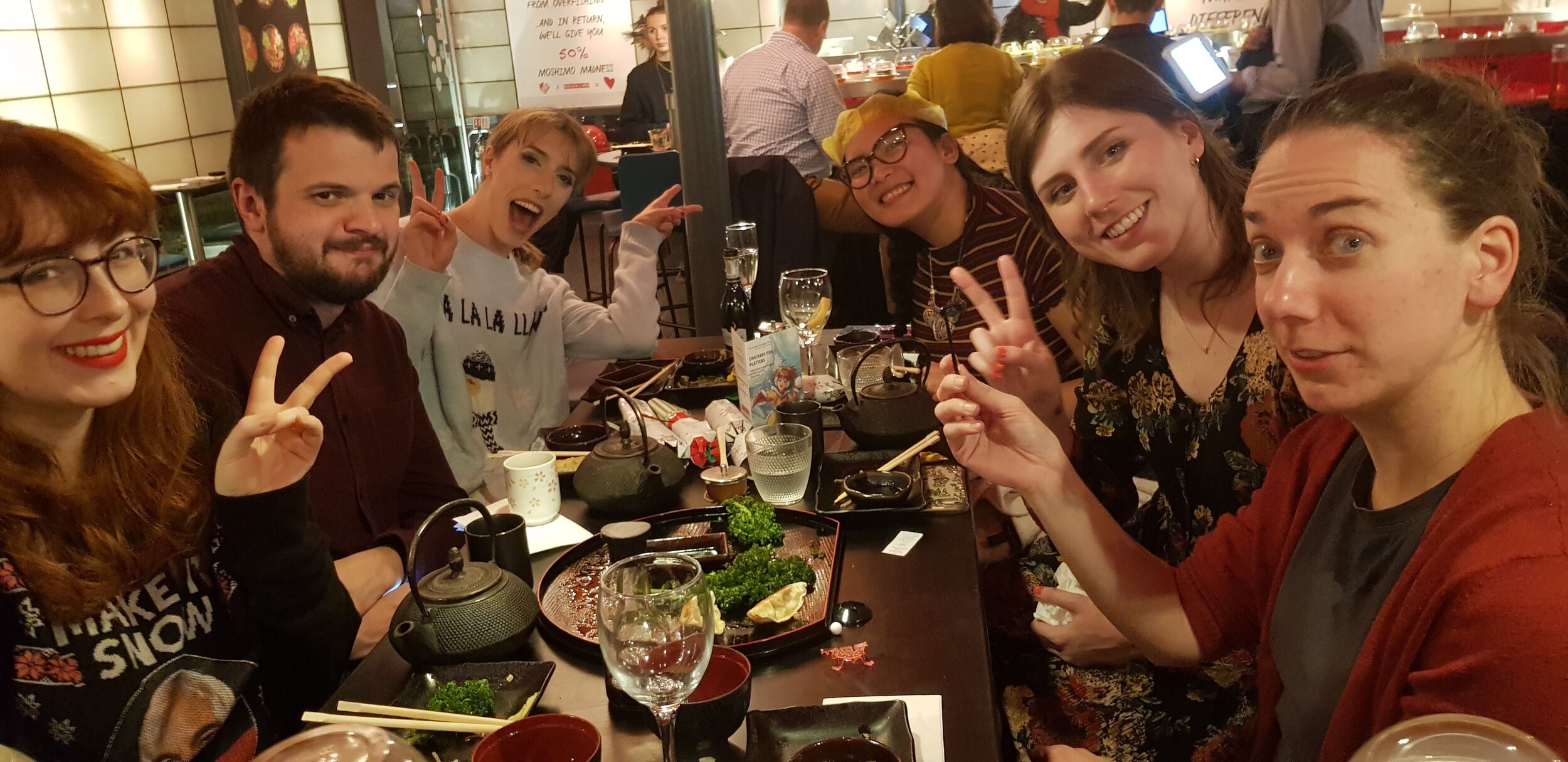

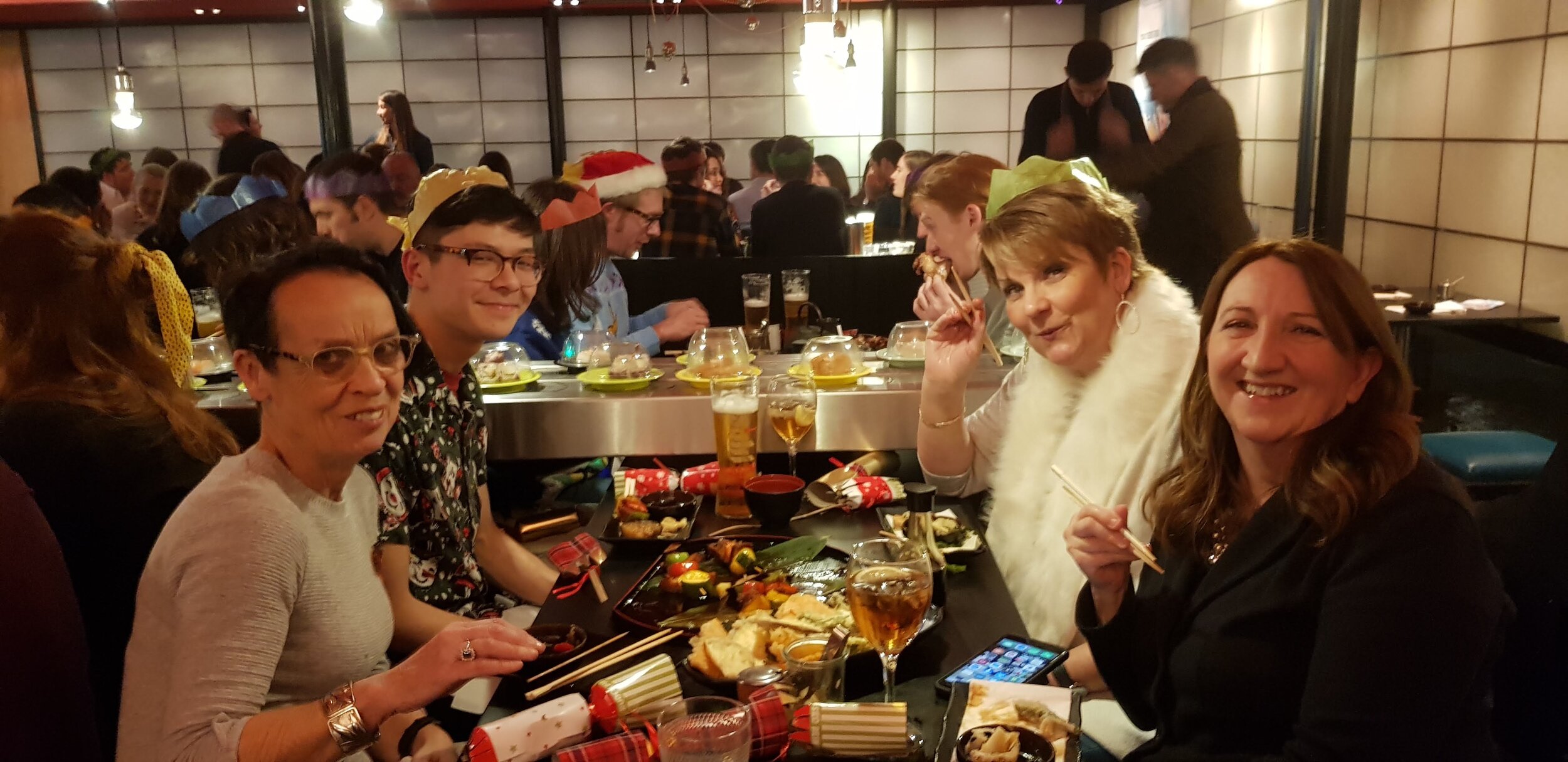




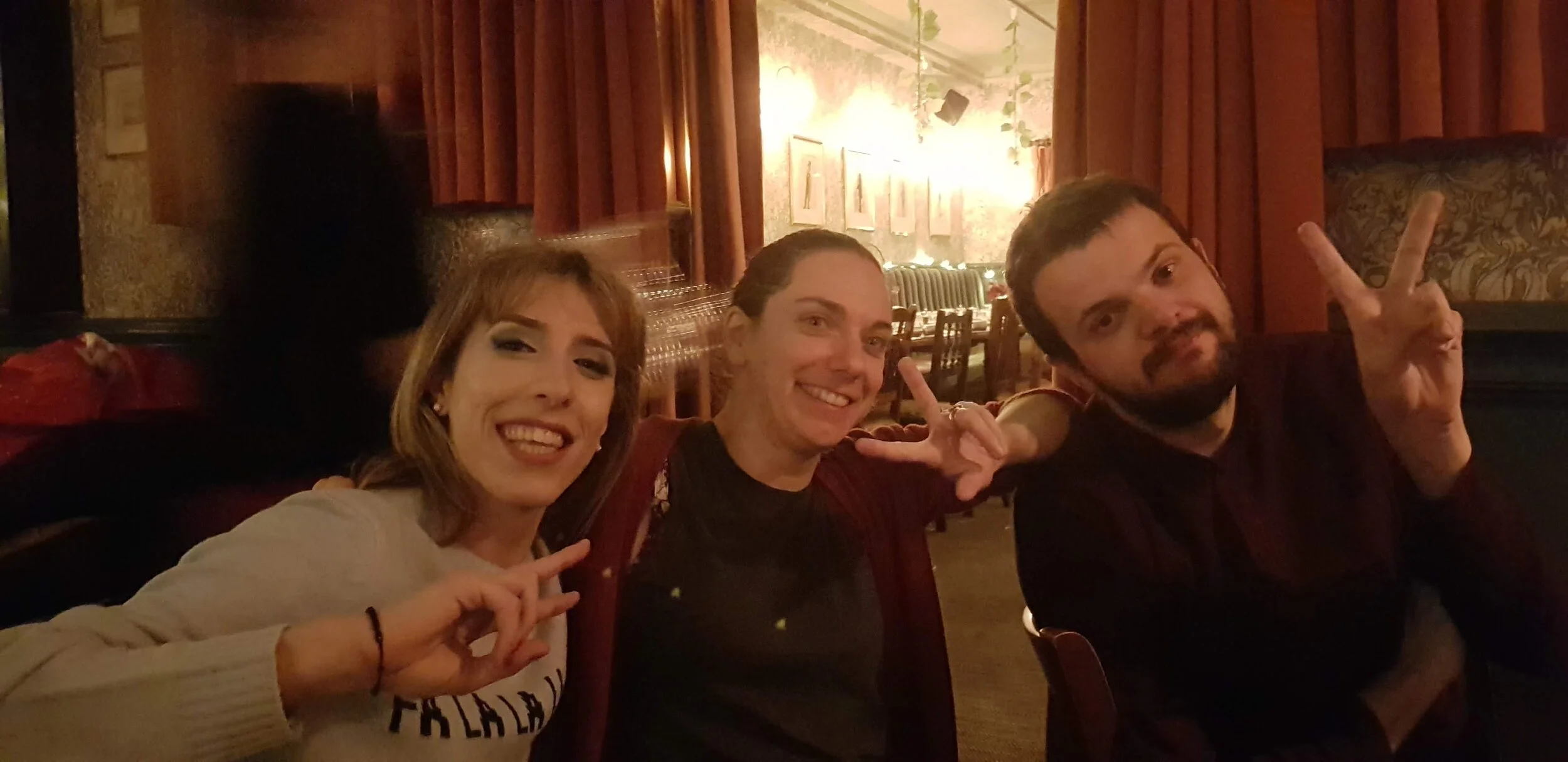


I hope 2019 brought you some things to remember, not just things to forget!

What's it like to be a Step Up Japanese student? Student Interview - David
David has recently completed the STEP 3 course. We talked to him about what it's like to be a Step Up Japanese student, what the lessons are like, and his favourite things about the Japanese language.
And he tells us about using his Japanese to help some lost property in Japan find its owner!
Watch the video, or scroll down to read a transcript:
David has recently completed the STEP 3 course. We talked to him about what it's like to be a Step Up Japanese student, what the lessons are like, and his favourite things about the Japanese language.
And he tells us about using his Japanese to help some lost property in Japan find its owner!
Watch the video, or scroll down to read a transcript:
Why did you start learning Japanese?
[It was] after going to Japan for the first time. It was an interesting trip, and it made me realise that I wanted to be more involved in Japan, and Japanese culture and language.
I started at Step Up Japanese midway through what was then called the Beginner course [now STEP 1], and have carried on through STEP 3.
What are the classes like at Step Up Japanese?
We play a variety of games, only ever using the Japanese language. I find it difficult to play games only in Japanese, but I really relish the chance to speak only Japanese. It really makes me have to think in a way that maybe I wouldn't have the opportunity to, if I wasn’t taking the course.
I find the grammar of the Japanese language to be quite interesting. I enjoy learning the rules, and all the exceptions to the rules.
How do you practise Japanese outside of class?
I enjoy Tadoku, as it gives me the opportunity to understand Japanese without the pressure of understanding every single word. Tadoku is the practice of reading lots and lots of books, with the focus being on skipping things you don’t understand.
Have you gone to any Step Up Japanese events?
During my time as a Step Up Japanese student, I’ve taken part in quite a few events. I really enjoy when we get together, and do karaoke, barbecues, and various other Japan-related things. And I also enjoy…ending up down the pub afterwards :-)
How have you actively used your Japanese?
When I went back to Japan, after starting lessons, I found that I could make pleasantries with people.
And there was an occasion when I was on a train and found some lost property. I had to take it to someone who worked at the train station and explain what train I’d just gotten off, and where it had come from, and where the train was headed. I had to look up some of the words, but being able to piece together a sentence and explain to this man what was going on, it felt really good.
Ok, let’s talk in Japanese!
日本について何が好きですか。
(What do you like about Japan?)
日本はとても面白い国です。日本のゲームが大好きです。
(Japan is a very interesting country. I love Japanese games.)
好きなゲームは何ですか。
(What games do you like?)
太鼓の達人が好きなゲームです。とても楽しいです。
( I like Taiko no Tatsujin [the Japanese drumming arcade game]. It’s really fun.
日本語の文法は面白いです。日本に行って、とても楽しかったです。
(I find Japanese grammar interesting. And when I went to Japan, it was really fun).
Would you recommend Step Up Japanese?
I would recommend Step Up Japanese to friends and family – and have.
I really enjoy classes, I really enjoy the teacher, [and] all of the students as well. It’s just a really friendly bunch, and I’d like for more people to be part of the Step Up Japanese family.
Huge thanks to fellow Step Up Japanese student Daniel Sheen for making this video!














Like many people in the UK, I studied French in school. I liked French. I thought it was really fun to speak another language, to talk with people, and to try and listen to what was going on in a new country. (Still do!)
When I was 14 we went on a school exchange to the city of Reims, in northeastern France. I was paired with a boy, which I’m sure some 14-year-olds would find very exciting but which I found unbearably awkward. He was very sweet and we completely ignored each other.
That was nearly 20 years ago, and I didn’t learn or use any more French until, at some point in lockdown, I decided on a whim to take some one-to-one lessons with online teachers. Here are some things I learned about French, about language learning, and about myself.