
Welcome to the Step Up Japanese blog archive!
Although I’m not currently adding new posts to the blog, you’ll find plenty of Japanese learning tips, study advice, and resources to explore here.
Browse the blog index to view a complete list of posts.
For the latest news, course updates, and Japanese learning tips from Step Up Japanese, sign up for my newsletter.
Search this blog:

A Year of Monthly Japanese Learning Challenges
How do you keep practising Japanese, even when it doesn’t seem relevant? How do you stay motivated, when your life and your motivations change?
At the beginning of 2019, I decided to set myself a series of monthly Japanese study challenges. I’d do one every other month, and blog about it.
In January, I tried to speak Japanese every day for a month. This was probably the hardest challenge, from a logistical perspective. I don’t live in Japan, and we don’t speak Japanese at home (much). At the time, I was also working another job three days a week, where I wasn’t using Japanese at all. So speaking Japanese every day was, quite literally, a challenge.

How do you keep practising Japanese, even when it doesn’t seem relevant? How do you stay motivated, when your life and your motivations change?
At the beginning of 2019, I decided to set myself a series of monthly Japanese study challenges. I’d do one every other month, and blog about it.
In January, I tried to speak Japanese every day for a month. This was probably the hardest challenge, from a logistical perspective. I don’t live in Japan, and we don’t speak Japanese at home (much).
At the time, I was also working another job three days a week, where I wasn’t using Japanese at all. So speaking Japanese every day was, quite literally, a challenge.
But this was a great start to the year and probably one of my favourite things I’ve done using Japanese. Plus, I got to eat katsu curry at cafe an-an in Portslade and chalk it up as Japanese practice:
I Tried to Speak Japanese Every Day for a Month (Without Being in Japan)

In March, I tried shadowing every day.
What is shadowing? Most people are familiar with “listen and repeat” in language learning contexts. You listen to a conversation line-by-line and repeat each sentence after the recording.
Shadowing is different from simple “listen and repeat” in that you start speaking while the person on the audio is still talking. The goal is to be able to produce the dialogue with perfect pronunciation, as close to the recorded audio as possible.
I really enjoyed this challenge, and I also discovered that you can practise shadowing (quietly) in hotel rooms, waiting rooms, and even on the bus.
What is Shadowing and Can it Improve Your Spoken Japanese? I Tried Shadowing Every Day for a Month

In May, I read Japanese books every day. This was really fun, too, and not so hard once I got into a routine. If you get in the habit of taking a book with you everywhere you go, reading every day is relatively easy:
How to Read More in Japanese – I Tried Reading in Japanese Every Day for a Month

In July, I decided to play Japanese video games every day for a month, because who says challenges have to be challenging?
I played Japanese video games for about 20 minutes a day for a month, and here’s what I learned: six reasons to play video games in a foreign language.
This is not a “how to” post. I’m not going to tell you how to “learn Japanese in a week just by playing video games” or to claim this is a “quick route to fluency” (it’s not, namely because there is no quick route to fluency, just an endless and potentially very enjoyable road trip).
Instead, I’m just going to share some reflections on the very fun experience that was playing Japanese video games every day.
How to Practise Japanese by Playing Video Games Every Day

(IMAGE SOURCE: NINTENDO)
In September, I tried to watch Japanese TV every day. This is where the monthly challenges really started to come unstuck. September was a busy month, and life got in the way.
I also discovered that when a challenge isn’t very challenging, I don’t personally find it very motivating!
One fantastic thing that came out of this experience, however, was the idea for my new course Learn Japanese with Netflix! … but then covid-19 happened, which meant the Netflix course only ran for a few weeks. I hope to run it, or a similar course, again in the future.
Watching Japanese TV Every Day for a Month (Or, What to Do When Things Don't Go To Plan)

After that I took a two month break, and then in December, I got well and truly back on the horse, and spent a month practising handwriting kanji from memory every day.
I really enjoyed the routine of practising kanji again. I find kanji practice surprisingly relaxing - and I mentioned this to some students, who also said they find kanji writing practice relaxing, even meditative. Little and often is probably key.
"How Did You Learn Kanji?"

What next?
The process of setting bi-monthly goals was a stimulating and enjoyable experience, and I might repeat it another year, but I’m not doing monthly challenges in 2020.
We’re a few months into 2020, and due to covid-19, this year is already shaping up to be significantly more challenging than 2019.
2020 has already proved to be a year of radical change, for students at Step Up Japanese as well as for people all over the world. In March 2020 I moved all lessons online - another new challenge, but an enjoyable one.
I hope you stay healthy and safe throughout 2020, and that if Japanese study is a part of your life at the moment, that you enjoy it and have fun. And if life gets in the way sometimes….that’s okay too.

"Two beers, please!"
I don't speak Portuguese. But here's what I learned last week on holiday in Lisbon …

I don't speak Portuguese. But here's what I learned last week on holiday in Lisbon:
how to say "two beers, please"
it's olá, not hola.
a "thank you" with a smile is worth three "thank you"s with no smile
i need to add "this please" to my Survival Japanese course as a central key phrase.
learning words in a new language is a lot easier when you can read the words already (hurray for the roman alphabet!)
you can delete social media apps for a week and put the out-of-office on, and the world will not end
sometimes a very short blog post is fine
New Year's Resolutions - 2018
明けましておめでとうございます! (Akemashite omedetou gozaimasu!) Happy New Year!
Did you make any New Year's Resolutions this year?
January is a really good time to think about goals for the year ahead. Apart from anything else, it's cold! And it's nice to be inside making plans.
Here are my New Year's Resolutions for 2018…

明けましておめでとうございます! (Akemashite omedetou gozaimasu!) Happy New Year!
Did you make any New Year's Resolutions this year?
January is a really good time to think about goals for the year ahead. Apart from anything else, it's cold! And it's nice to be inside making plans.
Here are my New Year's Resolutions for 2018:
1) blog once a week
This one is easy (I hope!) and a continuation of last year.
In 2017 I aimed to publish a blog post a week. I actually did 26, which is one a fortnight.
That's not bad, but I definitely want to beat that in 2018.

2) play more games
In class, I mean. I want to work on making classes more fun, and one easy way to do that is more games.
My lovely students playing fukuwarai ("Lucky Laugh") game ↓

When we laugh together, we learn together.
(Cheesy but true).
3) read every day
This is a personal one. Last year I tried to read more Japanese fiction, and kind of failed.
I did find, though, that once I actually start reading I'm ok. It's the getting started that's the tricky part.
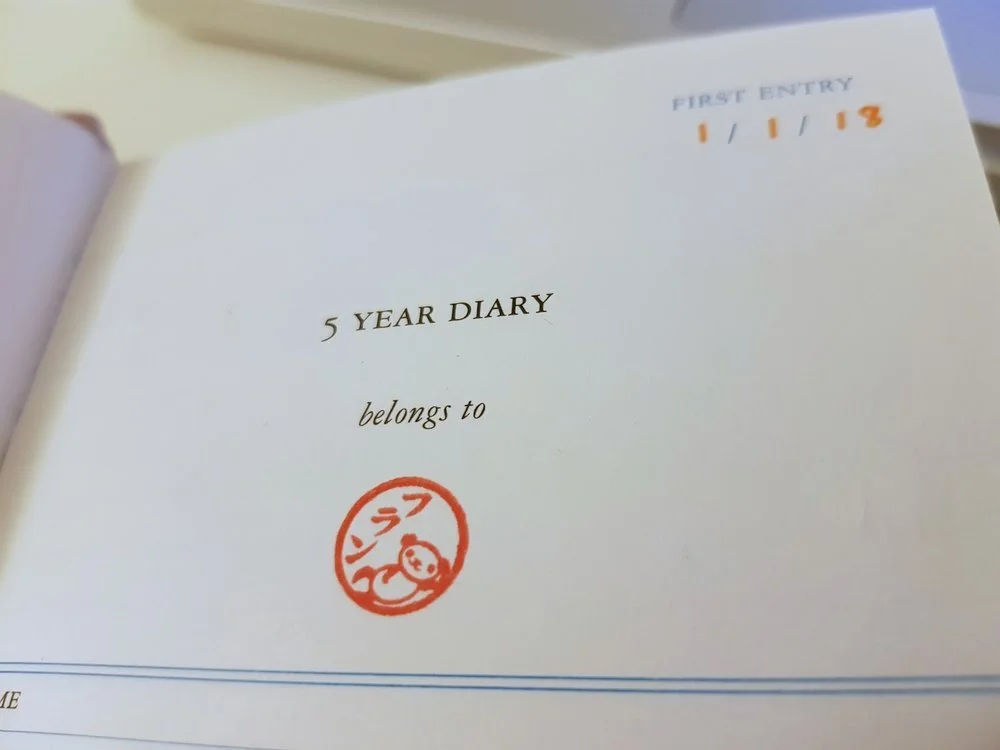
This year, I'm going to read some Japanese fiction every day, and keep a note in my 5-year diary when I've done it.
(16 days in, this is going pretty well.)

4) go to more teaching events
This year, I'm planning to go to more Japanese teaching and education-related events in London.
I went to a couple recently - a Japanese grammar teaching workshop at SOAS, and a bunch of seminars at the Language Show London.
I found it super helpful to reflect on my teaching practice and discuss ideas with other teachers and linguists.

I definitely want to go to more events like this in 2018.
...and it's a good excuse to go to London for the day too.
5) track these goals
Waiting until the end of the year to see how your goals are going doesn't really work.
In 2017, I actually completely forgot about one of my resolutions (to watch more drama in class). I'm going to avoid that this time by pinning them above my desk.

I'd love to know what New Year's Resolutions you made. Let me know in the comments!

New Year's Resolutions 2017 - 新年の抱負
明けましておめでとうございます! Happy New Year!
新年の抱負はありますか。 Have you made any New Year's Resolutions?
My good friend Karli of designosaur (the brilliant people who make all those dinosaur necklaces I wear to class) writes a new year's post every year, and I always find it super inspiring. I don't always make resolutions, but this year I have loads and I'd like to share some of them with you!
明けましておめでとうございます!
Happy New Year!
新年の抱負はありますか。
Have you made any New Year's Resolutions?
My good friend Karli of designosaur (the brilliant people who make all those dinosaur necklaces I wear to class) writes a new year's post every year, and I always find it super inspiring. I don't always make resolutions, but this year I have loads and I'd like to share some of them with you!
1. blog more
This one should be easy. I like writing this blog, but it's always bottom of my to-do list! Karli's suggestion was to make a regular schedule and stick to it, so I'll try that.
2. finish some books
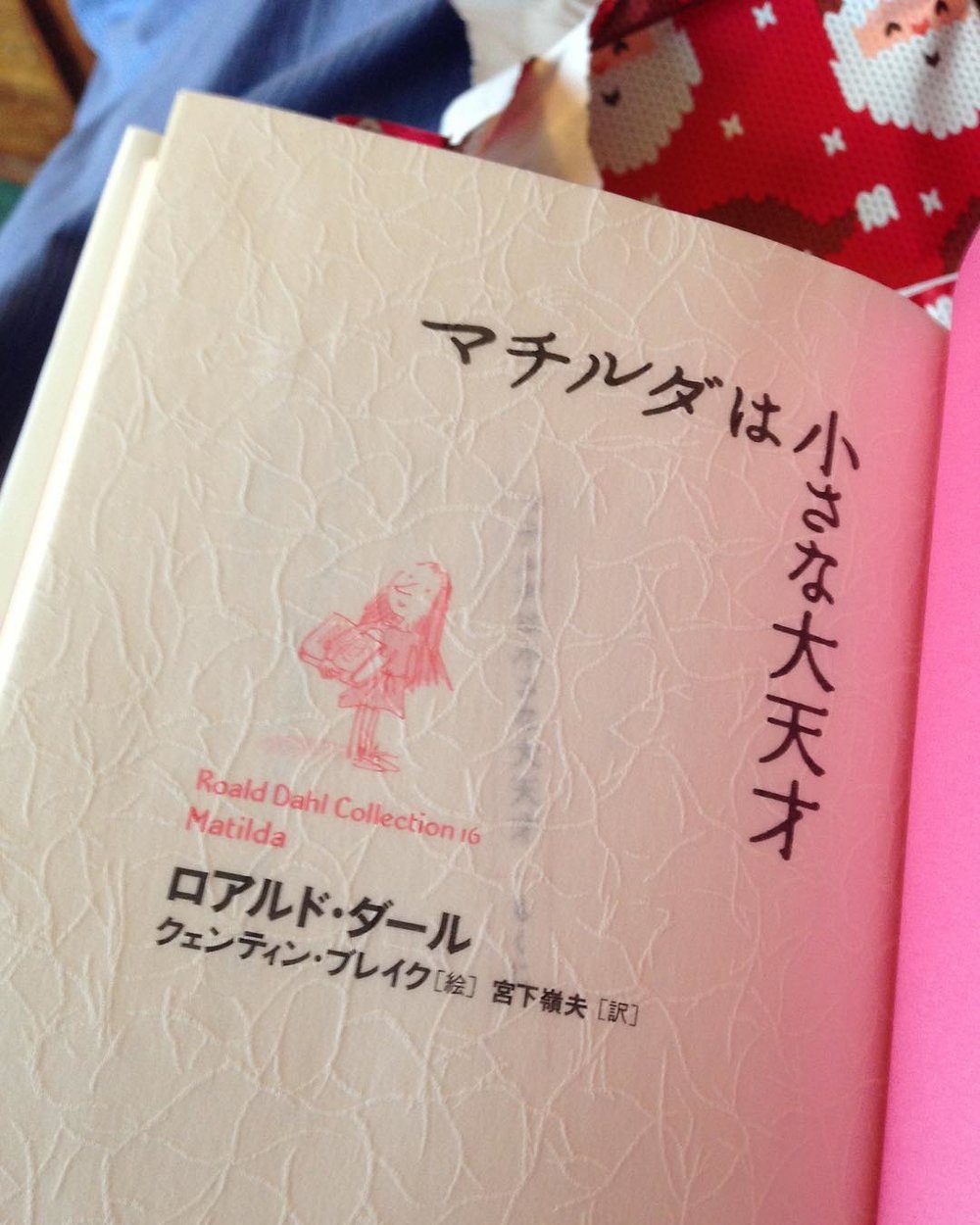
I often tell people that I read a lot of Japanese books, but actually what I do is start reading a lot of Japanese books. Then find a new one, get distracted and start the new one. That's good for variety, but not very satisfying. I'm going to try and read one book at a time (currently reading マチルダは小さな大天才) and not start any new books until I finish!
3. watch more drama...with my students
I love J-drama and it's a great way to listen to everyday spoken Japanese - especially if the programme is centred around a family or group of friends. This year I'm hoping to use some drama clips in class. I haven't quite worked out the details yet but I think it'll be a lot of fun.
I'm currently watching Beautiful Rain (ビューティフルレイン) which is adorable and very tear-jerky. Have you seen it?
4. have more parties
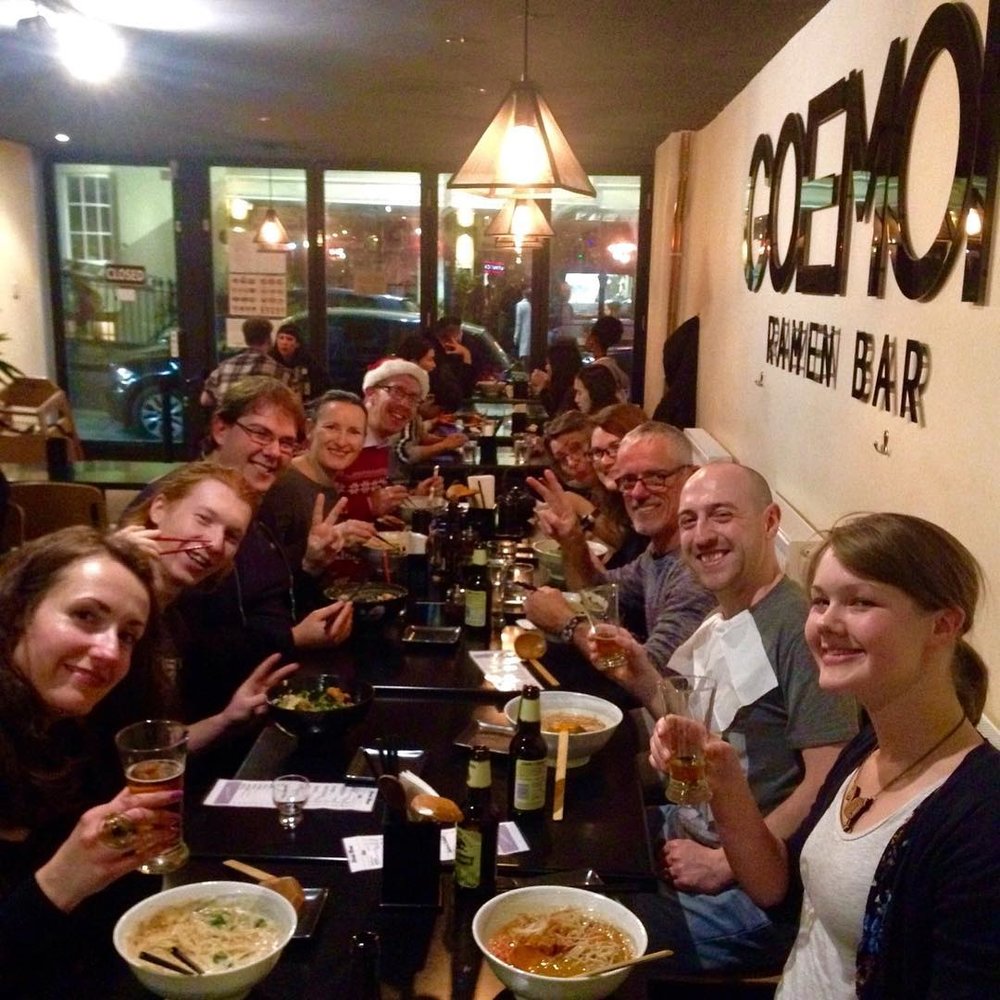
We had a great time at the first annual Step Up Japanese Christmas Party, and one of my goals for 2017 is to have more school events like this. I've got a little list in mind, but if you have a suggestion please let me know!
5. be reflective
Some days I skip home from class because everything went swimmingly. Other times I'm left thinking how I could have explained something better / given you more chances to speak Japanese / had a good answer to your question on the spot instead of telling you I'll look it up.
My point is, it's good to be reflective - and not just because you won't get knocked off your bike. I really, really want to keep improving and bring you bigger and better things in 2017!
Have you made any New Year's resolutions? I'd love to know what yours are! 今年もよろしくお願いします〜














Like many people in the UK, I studied French in school. I liked French. I thought it was really fun to speak another language, to talk with people, and to try and listen to what was going on in a new country. (Still do!)
When I was 14 we went on a school exchange to the city of Reims, in northeastern France. I was paired with a boy, which I’m sure some 14-year-olds would find very exciting but which I found unbearably awkward. He was very sweet and we completely ignored each other.
That was nearly 20 years ago, and I didn’t learn or use any more French until, at some point in lockdown, I decided on a whim to take some one-to-one lessons with online teachers. Here are some things I learned about French, about language learning, and about myself.