
Welcome to the Step Up Japanese blog archive!
Although I’m not currently adding new posts to the blog, you’ll find plenty of Japanese learning tips, study advice, and resources to explore here.
Browse the blog index to view a complete list of posts.
For the latest news, course updates, and Japanese learning tips from Step Up Japanese, sign up for my newsletter.
Search this blog:

The One Million Meanings of Yoroshiku
So, you’ve learned different ways to say "Nice to meet you!" in Japanese. One way to say “nice to meet you” is “yoroshiku onegai shimasu”.
But yoroshiku onegai shimasu isn't just for the first time you meet someone. It has a whole host of different uses.
Let's look at the main different meanings of this magical, multipurpose Japanese word.
1. Yoroshiku means "Please!"…

So, you’ve learned different ways to say "Nice to meet you!" in Japanese. One way to say “nice to meet you” is “yoroshiku onegai shimasu”.
But yoroshiku onegai shimasu isn't just for the first time you meet someone. It has a whole host of different uses.
Let's look at the main different meanings of this magical, multipurpose Japanese word.
1. Yoroshiku means "Please!"
Yoroshiku, as we learned before, can be used when meeting new people, and means "please be kind to me", or "please look favourably upon me":
初めまして。フランです。よろしくお願いします。
"Hajimemashite. Furan desu. Yoroshiku onegaishimasu."
Nice to meet you. I'm Fran. Please look favourably upon me!
2. Yoroshiku means "Thank you!"
As well as please, yoroshiku can mean thank you. Specifically, it can often mean “thank you in advance”. Said when giving someone work to do:
とじまり、よろしくね。
Tojimari, yoroshiku ne.
"I'll leave you to lock up. Thanks."
娘をよろしくお願いします。
Musume o yoroshiku onegaishimasu.
"Thanks in advance for taking care of my daughter."
Shop “Yoroshiku ne” T-shirts:

3. Yoroshiku means "Hi!"
This is one of my favourites. Yoroshiku can mean "regards", like "send my regards to so-and-so", or "say hi to so-and-so", or even "send my love to so-and-so":
お父さんによろしくお伝えください。
O-tou-san ni yoroshiku o tsutae kudasai.
Please send my best regards to your father.
お姉さんによろしくね。
O-nee-san ni yoroshiku ne.
Say hi to your sister for me.
What's your favourite use of yoroshiku? Did I miss any out? Let me know...yoroshiku ne!

Tuesdays, 12:00pm (UK time) | Online Group Course
Starts 15th Sept 2026 | 36 weeks
Who this course is for
This course is for true beginners or early beginners who already know a little Japanese (e.g. ~10-20 hiragana characters) and want to build a solid foundation.
If you are starting completely from zero, I recommend a few 1:1 lessons before joining.
You will already be able to:
Recognise a small number of hiragana characters (or are beginning to learn them)
Feel comfortable learning slowly and step-by-step
In this course you will learn to:
Introduce yourself and ask simple questions
Talk about family, friends, likes and dislikes
Order food and drinks in a restaurant
Ask and answer simple questions about places you are staying
Talk about where people and things are located
Build confidence reading hiragana and begin katakana
Start recognising a small number of common kanji
The focus is on practical, everyday Japanese for absolute communication basics.
Course details
Duration: 36 weeks (3 x 12-week terms)
Day/time: Tuesdays, 12pm (UK time), 55-minute lessons
Textbook: Irodori: Japanese for Life in Japan - Starter (starting from Lesson 3, free online)
Not sure if this is right for you?
Book a free 30-minute Zoom consultation or email me for advice.
Get my newsletter:
Updated 10th August 2021

"Does Japanese Have Plurals?"
After the excitement of our first school Summer Barbecue, I spent the day in bed watching one of my favourite films in Japanese.
It wasn’t a Japanese film though. I watched Hot Fuzz (or to give its Japanese title ホット・ファズ -俺たちスーパーポリスメン "Hot Fuzz: We Are The Super-Policemen!")
Watching British comedies dubbed into Japanese might not be the "purest" way to listen to Japanese. But if you enjoy it, it's definitely worth doing. Dubbed films are easy to watch, too, assuming you've seen the film before and know the plot already.
Anyway, there's a little scene in the Hotto Fazzu dub that's a nice example of Japanese plurals in action, so I thought I'd share it with you.

After the excitement of our first school Summer Barbecue (back in 2017), I spent the day in bed watching one of my favourite films in Japanese.
It wasn’t a Japanese film though. I watched Hot Fuzz (or to give its Japanese title ホット・ファズ -俺たちスーパーポリスメン "Hot Fuzz: We Are The Super-Policemen!")
Watching British comedies dubbed into Japanese might not be the "purest" way to listen to Japanese. But if you enjoy it, it's definitely worth doing. Dubbed films are easy to watch, too, assuming you've seen the film before and know the plot already.
Anyway, there's a little scene in the Hotto Fazzu dub that's a nice example of Japanese plurals in action, so I thought I'd share it with you.
Angel and Danny are in the corner shop, and the shopkeeper asks them:
殺人犯たち捕まらないの?
satsujinhan tachi tsukamaranai no?
"No luck catching them killers then?"
"Killers" is translated as 殺人犯たち satsujinhan-tachi. You take the word 殺人犯 satsujinhan (murderer) and add the suffix たち (tachi) - which makes it plural.
See? Japanese does have plurals! ... when it needs them.

Danny doesn't notice the shopkeeper's slip-up (she knows more than she's letting on), and replies:
人しかいないんだけど。
hitori shika inai n da kedo.
"It's just the one killer actually."

PC Angel, of course, mulls over the shopkeeper's words, and realises their significance: there's more than one killer on the loose.
It's a turning point of the movie, and it rests on a plural. Yay!
You can use たち like this when you need to indicate plurality:
私たち watashi-tachi we, us (plural)
あなたたち anata-tachi you (plural)
ジョンたち jon-tachi John and his mates
It's not that common, but it does exist. Keep an eye out for it! You never know, you might just solve a murder case.

First published 8th Sept 2017
Updated 11th Dec 2020

How to Read The Japanese News (Or Any Japanese Website!) with Rikaichan
When I first moved back to Brighton from Japan I had a lot of time on my hands. I also didn't have a job, so I was desperate for free Japanese reading material.
So I started borrowing Japanese books from the library.
This plan was not exactly a success. It turns out reading Twilight in Japanese is only slightly more entertaining than reading it in English.
But we are really lucky to live in a world where, if you have internet access, you can read just about anything you want in Japanese online. And the news is a great place to start.

When I first moved back to the UK from Japan I had a lot of time on my hands. I also didn't have a job, so I was desperate for free Japanese reading material.
So I started borrowing Japanese books from the library.
This plan was not exactly a success. It turns out reading Twilight in Japanese is only slightly more entertaining than reading it in English.
But we are really lucky to live in a world where, if you have internet access, you can read just about anything you want in Japanese online. And the news is a great place to start.
If you can't read fluently yet, looking at a page of Japanese text can be intimidating. You don't know the meaning of the word, or even how to sound it out.
You need a dictionary - a really smart free one like Rikaichan. Rikaichan is a browser add-on that works as a pop-up dictionary. I used it every day for years, and I love it. Let's take a look at how it works, and start reading the news!
How Rikaichan works

Here we are on the website of the Asahi Shimbun, one of Japan's largest national newspapers.
I hover the cursor over the word 音楽. Rikaichan's little blue pop up tells me the reading of the word (おんがく ongaku) and what it means - "music".
Rikaichan also shows us the dictionary entries for individual kanji (Chinese characters).
Here, it's showing 音, the first character in the word 音楽, and telling us that 音 means "sound".
Learn where words begin and end
Standard written Japanese doesn't have spaces between words so if you're looking at unfamiliar words, it can be hard to know where each word starts and finishes.
Rikaichan is pretty smart at doing that bit for you.
Here, in the below example, it knows that 九州 (Kyushu island) is one word, and 豪雨 (torrential rain) is the next, separate word.

How to get it
So that's what Rikaichan does. Here's how to get started with it!
1) Get the right browser
Rikaichan and its "little brother" Rikaikun are for the web browsers Firefox and Chrome. If you're not using one of those, you'll need to download the browser first.
It's worth it. I used Firefox religiously for years just so I could use Rikaichan to get my morning news.
As far as I know the add-on doesn't work on mobile, unfortunately. (There's a similar-looking app called Wakaru for iOS - if you've used it, let me know what you think.)
2) Install Rikaichan or Rikaikun
Which one do you need? Rikaichan and Rikaikun are the same add-on, but for Firefox and Chrome. So, download and install Rikaichan from the Mozilla add ons page, or Rikaikun from the Chrome Web Store.

3) Download a dictionary
Rikaichan needs a dictionary to pull readings and meanings from, so after you've installed the add-on, you'll be prompted to install at least one dictionary file. If English is your first language, you want the "Japanese - English" dictionary.
I recommend installing the "Japanese Names" dictionary too, so that Rikaichan can identify common names when they pop up. That way, it'll know that 中田 is Nakada, a common Japanese surname, and doesn't just mean "middle of the ricefield".
4) Turn Rikaichan on
You probably won't want Rikaichan on all the time. Sometimes you'll want to read without a dictionary, and sometimes you won't be reading Japanese. You can turn it off and on when you like. Turn Rikaichan on, and let's give it a go.
Read everything!
Years ago when I started using Rikaichan, I set myself a challenge to read one headline with it every day.
Next, I made myself read three headlines per day. Then five. Then the first paragraph of an article. Eventually I was reading entire news articles, and using the dictionary less and less.
These days I get the Asahi Shimbun news straight to my inbox, because I don't need to look up words often enough to use Rikaichan any more.
But it was a completely invaluable part of my language learning journey. And it's definitely more interesting than reading Twilight in Japanese.
Updated 23rd Oct 2020

What's the Difference Between Mina and Minna (And Why Does It Matter Anyway?)
If you watch Japanese TV or anime (or are paying attention in class) you've probably come across the Japanese word mina-san (皆さん) meaning "everybody".
But what's the difference between mina and minna? What's mina-sama all about? And ... does it actually matter?

Mina-san, konnichiwa! (皆さん、こんにちは ) Hello everybody!
If you watch Japanese TV or anime (or are paying attention in class) you've probably come across the Japanese word mina-san (皆さん) meaning "everybody".
But what's the difference between mina and minna? What's mina-sama all about? And ... does it actually matter?
1.皆さん Mina-san
Mina means "everybody", and it's commonly used with "-san" (the honorific suffix you put on the end of people's names to be polite).
Mina-san is often used when addressing a group of people, especially when they don't know either other too well or the situation calls for a slightly more formal greeting.
I find myself using mina-san in class a lot, which makes sense - I’m addressing a group of people.
As you might expect, Japanese YouTubers say “mina-san konnichiwa” a lot too ("hi guys!")

These example sentences from jisho.org should give you a good idea of the kinds of situation when mina-san is used:

2.みんな Minna
Also common is minna, which is just a spoken form of mina. Minna is more casual than mina.
Examples from jisho show us that people also use minna when they talk about everyone, as well as when addressing groups:

3. Beware! It’s not みんなさん minna-san
You can't mix them up and use minna-san though. That's incorrect.
Probably no one will mind or notice in a casual situation, but if you're trying to be polite, stick with mina-san. Or you can even go more polite with...
4. 皆様 Mina-sama
In more formal situations, the -san suffix is switched up to the more polite/formal -sama.
Mina-sama functions a lot like "ladies and gentlemen", or “esteemed guests”, and is used in writing, and in announcements:

Why does this matter?
Well really, which word you use is going to depend on the situation.
Mina-sama is super formal and it would sound weird if you use it with your friends. Likewise, minna is pretty casual and might not be appropriate in a business setting.
A lot of gaining fluency in a language is about choosing the right word for the right situation. The more examples you can read, and the more you can expose yourself to the Japanese language, the more these distinctions will start to make sense.
Mina-san, if you'd like to learn more Japanese with me, click here to check out my new online Japanese language courses!
First published 9th June 2017
Updated 7th April 2020



Even More Japanese Loanwords From Languages That Aren't English
Last time I talked about Japanese loanwords - words that Japanese has “borrowed” from other languages - which come from languages other than English.
But there are also some tricky loanwords that look and sound like they came from English - but they didn’t!

Last time I talked about Japanese loanwords - words that Japanese has “borrowed” from other languages - which come from languages other than English.
But there are also some tricky loanwords that look and sound like they came from English - but they didn’t!
Challenge time!
Don’t be fooled. These loanwords look and sound a bit like they came from English - but they didn’t! Can you guess what languages these loanwords come from?
(Hint: not English!)
Koohii コーヒー coffee
Zero ゼロ zero
Pompu ポンプ pump
Botan ボタン button
Koppu コップ cup
Sarada サラダ salad
Kokku コック cook
Scroll down for the answers…!

The Answers:
Did you guess what non-English languages these loanwords come from?
Koohii コーヒー coffee - Portuguese
Zero ゼロ zero - French
Pompu ポンプ pump - Dutch; Flemish
Botan ボタン button - Portuguese
Koppu コップ cup - Dutch; Flemish
Sarada サラダ salad - Portuguese
Kokku コック cook - Dutch; Flemish
Students often ask why there are so many Portuguese and Dutch loanwords in Japanese. Words from these two languages have been used as loanwords in Japanese since the 16th and 17th centuries, when both countries established trade with Japan.
So, just because that katakana word you’ve learned looks like English, doesn’t mean it came from English!
Japanese Loanwords From Languages That Aren't English
Modern Japanese contains a lot of loan words - words that Japanese has “borrowed” from other languages. These words are typically written in the katakana “alphabet”.
Many of these words come from English - but not all.
Modern Japanese contains a lot of loan words - words that Japanese has “borrowed” from other languages. These words are typically written in the katakana “alphabet”.
Many of these words come from English - but not all.
So if you’ve been wondering what happened to the “t” sound at the end of the Japanese word resutoran (レストラン, restaurant), it was never there in the first place - because that loanword didn’t come from English. It came from French.
And my students sometimes ask me why the Japanese word for salad is sarada (サラダ), not “sarado”. That’s because sarada comes not from the Engish word “salad”, but from the Portuguese “salada”.
It’s good to know which loanwords didn’t come from English - and it's interesting to know what languages they come from - so you can remember how to pronounce them correctly.
Hopefully this will help you remember that it’s resutoran (not resutoranto!)

Quiz time!
How many of these Japanese loanwords do you know? Can you guess the meaning of any?
Rentogen レントケン
Piero ピエロ
Arubaito アルバイト
Piiman ピーマン
Ruu ルー
Esute エステ
Ikura イクラ
Noruma ノルマ
Karuta カルタ
Sukoppu スコップ
Igirisu イギリス
⇩ HINT: Japan believes in calling a スコップ a スコップ

The Answers:
Rentogen レントケン X-ray (from German)
Piero ピエロ clown (French)
Arubaito アルバイト part time job (German)
Piiman ピーマン peppers [the vegetable] (French)
Run ルー roux sauce [or, more commonly, a block of Japanese curry mix used to make curry sauce] (French)
Esute エステ aesthetic salon i.e. beauty salon (French)
Ikura イクラ salmon roe (Russian)
Noruma ノルマ quota (Russian)
Karuta カルタ Japanese playing cards (Portuguese)
Sukoppu スコップ spade (Dutch; Flemish)
Igirisu イギリス the U.K. (Portuguese)
Pan パン bread (Portuguese)
So, next time you see a katakana word you don't recognise, don't despair - it might not have originated from a language you speak!
First published May 2016
Updated 9th Jan 2020
What’s the difference between sensei and kyōshi?
The word "sensei" is pretty well-known even among people who don't speak Japanese, but did you know that you shouldn't use sensei about yourself?
Here's what the textbook has to say:
"Use 'kyōshi' for yourself and the respectful 'sensei' for another person."
That's a pretty good starting point. But there's a bit more to it than that.
Japanese has (at least) two words for "teacher".
The word "sensei" is pretty well-known even among people who don't speak Japanese, but did you know that you shouldn't use sensei about yourself?
Here's what the textbook has to say:
"Use 'kyōshi' for yourself and the respectful 'sensei' for another person."
That's a pretty good starting point. But there's a bit more to it than that.
1. Kyōshi = school teacher
Kyōshi means the academic kind of teacher, someone who teaches in a school:
(私は)高校の教師です。
(watashi wa) kōkō no kyōshi desu.
I'm a high school teacher.

Images: Irasutoya
2. Sensei is a title
Sensei, however, is a respectful title, and should be used when talking about other people:
彼は中学校の先生です。
kare wa chūgakkō no sensei desu.
He's a junior high school teacher.
Watashi wa sensei desu is best avoided.
3. Sensei = master
Sensei can also be used more generally for a person who teaches something.
People who teach flower arranging or martial arts, for example, are sensei:
お花の先生
ohana no sensei
flower-arranging teacher
空手の先生
karate no sensei
karate teacher
茶道の先生
sadō no sensei
teacher of tea ceremony
If you're talking about yourself, however, you still shouldn't go around calling yourself sensei.
You can use the verb 教える oshieru (to teach) instead:
(私は)お花を教えてます。
(watashi wa) ohana wo oshiete imasu.
I teach flower arranging.
Certain types of professionals such as doctors or lawyers are also sensei (but again, not kyōshi).
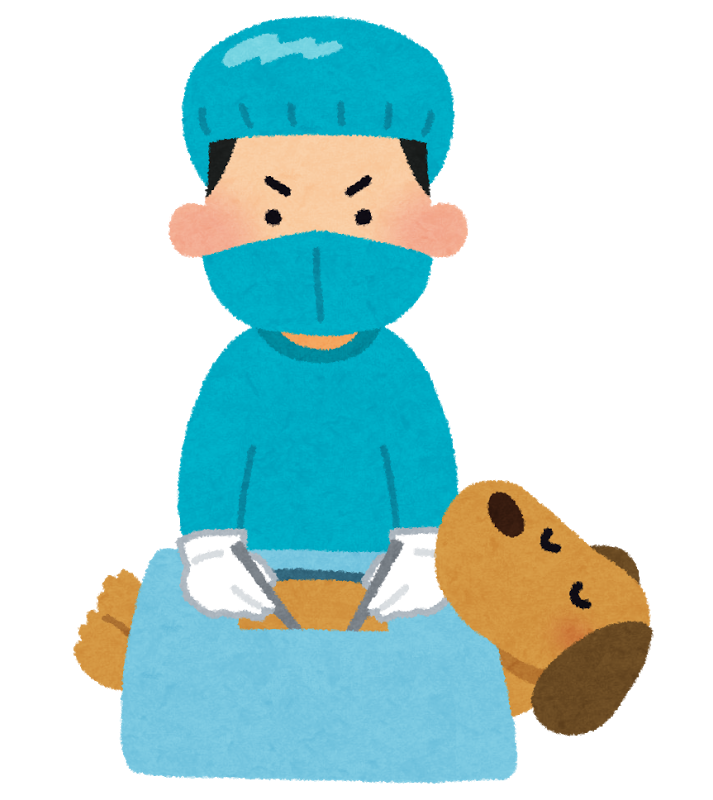
4. "Sensei!"
Sensei is attached after teachers' names instead of san:
山本先生
Yamamoto Sensei
= Mr/Ms Yamamoto; “Yamamoto teacher”
It's pretty common to drop the name, too, and just call your teacher sensei:
先生、おはようございます!
Sensei, ohayō gozaimasu!
“Good morning, teacher”
So to summarise:
Use '“kyōshi” for yourself and the respectful “sensei” for another person.
“Sensei“ is not just for teachers, but also for masters of other skills, and for doctors
Affix “sensei” to your teacher’s name to show respect













Want to buy Japanese lessons for a friend or relative? Send a gift card