
Welcome to the Step Up Japanese blog archive!
Although I’m not currently adding new posts to the blog, you’ll find plenty of Japanese learning tips, study advice, and resources to explore here.
Browse the blog index to view a complete list of posts.
For the latest news, course updates, and Japanese learning tips from Step Up Japanese, sign up for my newsletter.
Search this blog:

The Magic of Tadoku: “Extensive reading” in Japanese
This is the English version of an article I wrote last year which is now published in a Japanese book! 日本語多読 上 ~広がり深化する多読 (Nihongo Tadoku Jou: Hirogaru Shinka Suru Tadoku) is an introduction to Japanese extensive reading that incorporates new practices, research, and knowledge.
How I discovered Tadoku
Ever since a short trip to Japan when I was 19, I’ve been obsessed with the Japanese language. After university I moved to Japan, where I worked in Nagoya city for four years. On returning to the UK in 2014, I started teaching Japanese in Brighton at my school, Step Up Japanese…
This is the English version of an article I wrote last year which is now published in a Japanese book! 日本語多読 上 ~広がり深化する多読 (Nihongo Tadoku Jou: Hirogari Shinka Suru Tadoku) is an introduction to Japanese extensive reading that incorporates new practices, research, and knowledge.
How I discovered Tadoku
Ever since a short trip to Japan when I was 19, I’ve been obsessed with the Japanese language. After university I moved to Japan, where I worked in Nagoya city for four years. On returning to the UK in 2014, I started teaching Japanese in Brighton at my school, Step Up Japanese.
At Step Up Japanese, I teach group classes from beginner to intermediate level. Sometimes I have Japanese volunteers who come and help me out, but usually I teach all the classes myself.
My students are all adults, who typically come once a week for a 90-minute class. They’re often learning Japanese in order to travel to Japan, or as a hobby. Most students have English as their first language, and for many of them, studying Japanese is the first time they will have encountered a language that uses a different writing system to the Latin alphabet.
Learning to read and write Japanese is not easy. And since my students only have one class a week, some find it difficult to memorise hiragana and katakana (the two basic “alphabets” of the Japanese writing system). At the intermediate stage, too, I knew that my students wanted to read books and manga in Japanese, but I noticed that they often struggled to find level-appropriate reading material.
I could see that students at all levels would benefit from more reading practice, so in 2018 I decided to start a new course devoted to reading.
Up until that point, I’d mostly assigned reading practice as homework – conventional “reading comprehension” tasks. My students would often say that this kind of homework was difficult. I was using materials from the workbooks that accompany the textbooks used in class, but the exercises were often more challenging than the textbook material we’d studied in class. Students could only read these texts if they used a dictionary. And even where they could understand the exercises, they didn’t seem to find them particularly interesting.
In higher level classes, we’d tried other things such as reading yonkoma manga (four-panel comic strips) together, but students usually found this difficult too. Students enjoyed the yonkoma manga class, but I’d end up translating into English so they could understand.
I had started to wonder if there might be another way. There were so many interesting books and manga that my students would enjoy, yet here they were, reading uninspiring comprehension texts. I looked online, and that’s when I discovered the Tadoku study method.
Tadoku, sometimes called extensive reading, is the practice of learning a language by reading lots of books. In Tadoku, you read materials that are slightly below your current study level. You’re encouraged to skip words and phrases you don’t understand, and the focus is on reading for pleasure.
I thought this could be great to try out with my students, so I ordered some graded readers from NPO Tadoku.
I was a bit nervous about starting a Tadoku course. What would I, as the teacher, do while students were reading – just sit there? If students wanted to practise solo reading, they could just do that at home, couldn’t they? Who was going to sign up for a reading course where you read silently on your own...?
Seeking reassurance, I bought NPO Tadoku’s book, Nihongo kyoushi no tame no tadoku jugyou nyuumon (“An Introduction to Tadoku for Teachers of Japanese”), which had lots of useful case studies and practical advice. I was particularly encouraged to read that all you need to start a Tadoku group is a few basic components: level-appropriate books, a place to read, and a teacher (or “supporter”).
The Tadoku books arrived from Japan, and they seemed a good level for my students. But I was still apprehensive – would my adult students really want to read ‘The Three Little Pigs’ in Japanese?
I flipped through the book, and was surprised – it was so fun! The writing flowed beautifully, and the pictures were cute too. Before I knew it, I was reading the book aloud to myself.
2018: Trying out Tadoku
My Tadoku courses are short – six sessions of 55 minutes each. In each session, the first 45 minutes is devoted to solo reading, and the final 10 minutes are for “book talk”, when students chat in small groups about what they’ve read (mostly in English, but sometimes in Japanese).
All I had prepared for that first course was the set of graded readers from NPO Tadoku, and some free Tadoku books I’d printed from online. However, in the very first session I realised I was going to need more books! I actually didn’t think my students could read so fast in Japanese. Pleasantly surprised, I ordered more graded readers from Japan.
A reading revolution...?
I started learning Japanese in 2007, but it was 2012 before I read a whole book in the language.
When I started to study Japanese, I dreamed of one day being able to read Haruki Murakami’s ‘Norwegian Wood’ in the original Japanese. I did try and read manga and novels quite early on, but they were too difficult and I’d soon give up. There were so many words I didn’t know, and I’d look each word up in the dictionary, so the process was slow and a bit painful.
(Now, I love reading Japanese novels. But it frustrates me that it took so long to get to this point, and that it wasn’t always an enjoyable process…)
That summer in 2018, halfway through the Tadoku course, I went to Lisbon on holiday. I drank beer on the beach and read ‘Convenience Store Woman’ in the original Japanese.
This time, I didn’t use a dictionary at all. I just tried to read according to Tadoku principles, skipping over unfamiliar words and phrases – and it was a lot of fun. I finished the book much more quickly than I expected, and because I wasn’t using a dictionary, I was able to truly lose myself in the story.
I’d never experienced this with a Japanese book before. I realised that my concept of what it means to “read Japanese” had changed completely.
So Tadoku has been revolutionary for my students - but it had a huge impact on me too.
If only I’d known about Tadoku in 2007 – I could have read a lot of fun books in those first five years!
2019: Adding manga and picture books to the mix
The feedback from students was great, so in 2019 I held another 6-week summer course, and about half of the students were returnees who had attended the previous year.
As well as the graded readers, I added in some more easy-ish manga as well as some picture books. Children’s picture books with simple Japanese, like Tarō Gomi’s Dareka ga imasu (“Somebody’s There”) and Katsu Kiuchi’s Yasai no onaka (“Inside Vegetables”) were popular with my students, especially the beginners.
2020: Trying online Tadoku
Due to the covid-19 pandemic, in March 2020 I moved all my teaching online, and so the 2020 Tadoku course moved online too. As before, it was six sessions, with a maximum of 12 students, and it sold out quickly.
(Also, because this course was online for the first time and all the materials we used were free online resources, I offered this course at half price.)
At the start of each Zoom session, I’d show students some new books and resources, and then I’d put them each into their own individual breakout rooms for the reading session. I’d visit each student in turn, checking they were okay, talking to them about what they were reading, and making suggestions where appropriate.
As before, the last 10 minutes was devoted to “book talk”, where students talk in pairs or threes. This year, I also suggested that students keep a reading log of what they’d read and what they thought of it.
My impression is that more students listened to the audio files that accompany the graded readers, probably because these materials were easier to access when attending an online course. I also showed them some YouTube videos of kids’ books being read aloud, which proved popular too.
Students’ responses to Tadoku
Tadoku is probably the most popular course I run at Step Up Japanese.
Sara has been a student of mine for several years. I interviewed her about Tadoku in Summer 2019, when she was at Upper Beginner level, and reading Level 0 and 1 Tadoku books. Here’s what she had to say:
“It’s just reading, really, in my case the simplest books there are, but they’re actually really cute little stories. And it’s quite nice to come back from work and just sit there, and you’re getting your practice in but it doesn't feel quite so much like practice, because you’re focusing on the story.”
We asked Sara what she’d read that day, and to tell us what happens in the story:
“The country mouse went to the town mouse’s house, and found out how scary everything was, because there’s people and cats, and all the rest of it. It took me to nearly the end of the book and suddenly I realised I did actually recognise the kanji for ‘town’, and then I figured out what the two words in front of ‘mouse’ were.”
From this comment, we can see that Sara was able to follow the story, a Japanese translation of ‘The Town Mouse and the Country Mouse’, well. She skipped over words and phrases she didn’t understand, and then afterwards, she was able to realise what the word machi ( “town”) meant.
David has attended Tadoku courses at Step Up Japanese three summers in a row, and when I interviewed him in 2019 he was reading at around Level 2:
“I enjoy Tadoku, as it gives me the opportunity to read Japanese, without the pressure of trying to understand every single word.”
Of course, not all the feedback is positive all the time! Some students feel that it’s simply impossible to read without using a dictionary, and some aren’t interested in reading children’s books.
Because we are in the UK, some students don’t come into any contact with any Japanese outside of our lessons. For some of these beginner students, who are still learning hiragana and katakana, even at Level 0 there are some Tadoku books which are too difficult. In the classroom, I’d be able to recommend kids’ picture books to those students, or suggest easier books within the Level 0 framework. Online, I guided them towards YouTube videos of kids’ books being read aloud.
After our first session of the 2020 Online Tadoku course, I got this email from another student. He’d read the book Tamago (“Eggs”) once in the Tadoku session, and then read it again after the session because he enjoyed it so much:
Translation:
“Tamago (‘Eggs’)
I first read Tamago in Tadoku class. Today I read it again. I like books about food, so Tamago was fun. I learned some new words.”
This student usually emails me in English, and this is the first reasonably long email he’s sent me in Japanese.
There are some grammar mistakes in his Japanese message, but it’s clear exactly what he wants to say. But why, after the first Tadoku session, did he think to email me in Japanese?
He read a fun book, enjoyed it, and felt confident to write an email in Japanese. That’s amazing, isn’t it? And some of this confidence must have come from Tadoku.
What’s next?
Building on the 2020 Online Tadoku course, I’d love to run Tadoku courses not only as summer courses, but also as short courses at other times of the year too.
I’ve run a “Learn Japanese with Netflix” course before, where students watched Japanese drama and reality TV shows together, but we haven’t tried “solo watching” yet. I’d really like to try out a Ta-kan (“watch-a-lot”) course with my students too! Maybe next year...
- Fran Wrigley, Step Up Japanese, Brighton, UK
- More about Step Up Japanese: www.stepupjapanese.com
- Watch a video report (in English/Japanese with subtitles) about Tadoku at Step Up Japanese: https://www.youtube.com/watch?v=Abn6vzQNmT0
- Follow Fran on:
Twitter twitter.com/stepupjapanese
Instagram instagram.com/stepupjapanese
Facebook facebook.com/stepupjapanese
"How Did You Learn Kanji?"
I had a friend in 2011 who also lived in Japan and was also learning Japanese. Like me, he hoped to be fluent one day. I told him that I was going to learn all 2136 common-use kanji by making up a mnemonic story for each one. He laughed at me, of course. I don’t blame him.
But this slightly convoluted method is the thing that took my Japanese kanji knowledge from beginner to advanced.
So here is the story of how I studied kanji, some suggestions for kanji practice, plus some advice from another friend who took a totally different approach to me. I hope you’ll find it useful!

I had a friend in 2011 who also lived in Japan and was also learning Japanese. Like me, he hoped to be fluent one day. I told him that I was going to learn all 2136 common-use kanji by making up a mnemonic story for each one. He laughed at me, of course. I don’t blame him.
But this slightly convoluted method is the thing that took my Japanese kanji knowledge from beginner to advanced.
So here is the story of how I studied kanji, some suggestions for kanji practice, plus some advice from another friend who took a totally different approach to me. I hope you’ll find it useful!
Learning kanji takes time
Written Japanese uses a mix of three “alphabets” - hiragana, katakana, and kanji (Chinese characters).
Individual hiragana and katakana characters indicate sound only - the hiragana character あ makes the sound “a”, but it doesn’t have any meaning by itself. (Just like how the letter “B” doesn’t have any meaning by itself - it’s just a sound).
Kanji, on the other hand, indicate meaning as well as sound. For example, the kanji 木 means “tree”; 重 means “heavy”.
To read Japanese fluently, a student must be able to understand at least 2000 kanji. There is even an official list of the 2136 kanji that all Japanese children learn by the end of secondary school, called the jōyō kanji (常用漢字, meaning “regular-use kanji”).
The task of learning at least 2000 kanji is a major undertaking - even for Japanese people. That’s why students in Japan continue learning the jōyō kanji right up until the end of high school. And traditional methods of learning kanji tend to focus on rote memorisation, which is very inefficient.
The Heisig Method
When I got serious about learning kanji, in 2010, I did a bit of googling and stumbled across people talking about “the Heisig method”. This is the kanji study method introduced by James W. Heisig in his popular (and somewhat controversial) book ‘Remembering the Kanji I: A complete course on how not to forget the meaning and writing of Japanese characters’.*
The Heisig approach can be summed up as follows:
1) Learn the meaning of kanji
2) Learn the meaning of radicals
3) Memorise how to write kanji by making up descriptive mnemonic stories
You’ll note that reading kanji (how to pronounce them) does not feature on this list.
1) Learn the meaning of kanji
Heisig argues that before learning the readings of any kanji characters, it is more efficient to first learn the meanings. To this end, he gives each kanji an English keyword. For example, the kanji character 行 means “go”, so Heisig gives it the English keyword “going”.
By learning the meanings of kanji, the learner can guess at unfamiliar words.
I got to show off this ability years later in Okinawa, when my good friend Karli and I were looking at some artefact:
“What’s it made of?” she asked.
“I think it’s ivory.”
“Fran, why the hell do you know the Japanese word for ‘ivory’?”
“I don’t,” I said, pointing at the sign which had the word 象牙 on it. “But this one (象) "means ‘elephant’, and this one (牙) means ‘tusk’.”
2) Learn radicals
Heisig also puts a lot of focus on learning radicals - small parts which make up kanji. (He calls them “primitive elements”, but radicals is a more commonly-used term).
Radicals are the building blocks of kanji, and by learning to identify these constituent parts, you can “unpick” new and unfamiliar characters. Knowledge of radicals is also very helpful for looking up kanji in a dictionary.
For example, the kanji 明 (meaning “bright”) is made up of the two smaller parts 日 (“sun“) and 月 (“moon”). If the SUN and the MOON appeared in the sky together, that’d be pretty BRIGHT, right?
3) Make mnemonics
Using these radicals, Heisig argues that by making vivid and memorable stories, you can remember even complex kanji easily.
A common and simple example of a kanji mnemonic is 男, the character for “man”. The top half of this kanji is 田 “rice field“, and the bottom half is 力, “power”. So here’s the image: A MAN is someone who uses POWER in the RICE FIELD.
(If you’re not great at making up mnemonics, you can do what I did and copy other people’s funny stories from the Kanji Koohii website).
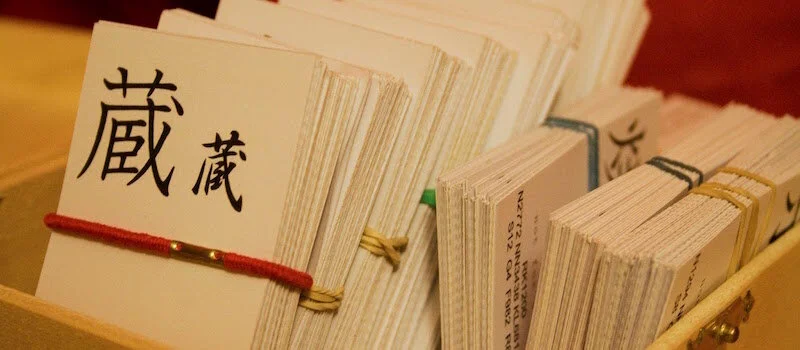
4) Practice writing by hand - from memory
Heisig says that in order to learn to read and recognise kanji characters, you should practise writing them. But rather than just copying them out endlessly, you need to use the power of active recall. He tells the student to use flashcards to test yourself on your ability to write the character from memory.
So for instance, on the front of the flashcard you have the word “man”, and then you recall the story ("oh yes, the POWER 力 in the RICE FIELD 田”) and write the kanji out from memory: 男.
The controversial part is the suggestion that you should do all of this work - make up 2000+ mnemonic stories, and learn to handwrite each kanji from memory - before learning how to read (i.e. pronounce) any of the kanji.
In practice, most students will be studying Japanese at the same time. (Who’s using the Heisig method to learn kanji, but not also learning the Japanese language? Nobody, I reckon.)
Combining the Heisig method with Anki
Heisig’s book was first published in 1977, so he suggests using paper flashcards. But the method really comes into its own when you use it with a flashcard app. I’l talk about Anki here because it’s the app I used.
Anki is a flashcard app that uses the principle of spaced repetition to make practising with flashcards as efficient as possible. Put simply, spaced repetition means the app decides when you need to see a flashcard next, based on how recently you got it right.
I used Anki for years, both for vocabulary practice and for kanji writing practice. It’s actually the reason I got a smartphone, in 2011.
You can make your own flashcard decks (a “deck” is what Anki calls a set of cards) with Anki, or you can download decks that other people have made. I used a deck that someone else made, but I edited it a bit.
On the front of the each card, I had the Heisig keyword. In this case, Heisig’s keyword is “eat”. This is a good keyword, as the kanji 食 means “eating” or “foodstuff”, and 食べる (taberu) is a verb meaning “to eat”. So, the idea is that you see the word “eat” and have to remember how to write the kanji:

How this works in practice
I probably practised writing kanji like this every day for about 15 minutes, for about a year and a half in 2010-2011. Essentially, that’s how I learned to write Japanese.
And by learning the meanings of kanji, suddenly all those signs and labels all around me (I was living in Japan by this time) started to have meaning.
Outside my flat there was a sign with the word 歩行者 on it. I knew that 歩 meant “walk”, 行 meant “go”, and 者 meant “person”. That’s how I learned that 歩行者 means “pedestrian”. I didn’t know how to read it aloud, but I knew what it meant.
The school that I worked at was an eikaiwa gakkou, an English conversation school. On the front of the school was the word 英会話. I knew that 英 could mean “English”, 会 meant “meet”, and 話 meant “talk”. I also knew that the character 英 could be read as ei, because it was in the word 英語 (eigo, the English language). And that 話 could be read as wa, because it was at the end of 電話 (denwa, telephone). So from this I could guess that 英会話 was ei-something-wa… and I knew the word eikaiwa (English conversation), so I asked my boss if 英会話 was “eikaiwa” - yes.
I was vegetarian when I first moved to Japan, so I spent some time scouring packages in supermarkets to work out whether I could eat things or not. I knew that the radical 月 could mean “meat” or “flesh”, and I knew that 豕 meant “pig”, so I could guess that 豚 was probably “pork” or “pig”. I didn’t know the word for pig, or the word for pork. But I could guess that I probably didn’t want to eat something with 豚 in it.
In other words, the Heisig method works - when combined with other Japanese study.
(Incidentally, I don’t “teach” Heisig because it’s a bit weird, and not for everyone. But I don’t teach kanji through rote memorisation either. I use an integrated approach - I want students to learn the meaning of individual kanji, and the readings of whole words, and to learn kanji in context as much as possible. But I still think that Heisig is a great self-study method, and if you’re interested, you should check out his book*).
Post-Heisig
As my Japanese got better, I no longer associated the kanji with English keywords. When I saw the kanji 食 I’d think of the meaning - something to do with eating or food - but not necessarily Heisig’s keyword. So later, on the front of each card, I added an example word containing the kanji, which is written in hiragana. In this case, the word is たべる (taberu; to eat), and to test myself, I have to write out the word 食べる (i.e., not just the individual kanji):

I also have the stroke order on the back of the card, so that I can check straight away if the stroke order I wrote out is correct or not. I added these by screenshotting the stroke order diagram in takoboto, the dictionary app I use on my phone.
(I used to be a bit lazy about stroke order, but since I started teaching Japanese I have spent some time correcting my bad habits).
The stroke order diagram is good for checking that you’re handwriting the kanji in the correct way, too. A common mistake learners make is copying typeface fonts, but many kanji look quite different when handwritten to how they look in type.
In December 2019, I decided to dust off this (very neglected) Anki deck and do some handwriting practice, every day for a month. For twenty minutes every day, I’d go through flashcards and test myself on whether I could handwrite the kanji.
I really enjoyed the routine of practising kanji again. I find kanji practice surprisingly relaxing. I mentioned this to some students, and they (well some of them anyway!) said they find kanji writing practice relaxing, even meditative. Little and often is probably key.
Find something you enjoy, and do it every day forever
Years later, I was out for dinner with an American friend in Japan. We were looking at the kanji-filled handwritten menu, and I realised that his Japanese reading was really quick - much faster than mine. “How did you learn to read kanji?” I asked him.
“Er, I dunno. Just, reading books I guess? For, like, years.”
It probably doesn’t matter too much how you study kanji. To be honest, I’m not sure that the Heisig method is better than any other. It worked for me, but if you put the time in, there are other methods of learning kanji that might work just as well.
The key thing is to find something that works for you, and spend a little time on it every day. And if your friends laugh at you, try and ignore them! One day they might be asking you how you did it.
Related posts
Links
Links with an asterisk* are affiliate links, which means I may earn a small commission, at no extra cost to you, when you click through and buy the book. Thanks for your support!

ブライトンの日本語教室で手伝ってくれる素晴らしいボランティアの皆さん
ブライトン近郊に住んでいる日本人から「ステップアップジャパニーズでボランティアできますか?」というメールを時々いただきます。
こういうメールをいただいて、私は毎回とても嬉しく思います。近くに住んでいる日本人が私の日本語教室を見つけて、しかも手伝いに行きたいと思ってくださることは、とてもありがたいと思います。
今年度、日本人のボランティアは授業に手伝いに来てくださっただけではなく、イベントやワークショップも一緒に開くことができました。
イギリスのボランティア・ウィーク(Volunteers’ Week)をご存知ですか。
(英語版はこちら Click here to read this article in English)
ブライトン近郊に住んでいる日本人から「ステップアップジャパニーズでボランティアできますか?」というメールを時々いただきます。
こういうメールをいただいて、私は毎回とても嬉しく思います。近くに住んでいる日本人が私の日本語教室を見つけて、しかも手伝いに行きたいと思ってくださることは、とてもありがたいと思います。
今年度、日本人のボランティアは授業に手伝いに来てくださっただけではなく、イベントやワークショップも一緒に開くことができました。
イギリスのボランティア・ウィーク(Volunteers’ Week)をご存知ですか。毎年6月1日〜7日に行われる感謝のキャンペーンです。手伝ってくださるボランティアの皆さんに感謝を込めて「ありがとう」とお伝えする一週間です。
それでは、2019〜20年のボランティアの皆さんへ大きな「ありがとう!」をお伝えしたいと思います。
サマープログラムに手伝いに来てくださったありあさんへ。
生徒たちと一緒にゲームをしながら、「ホットドッグ」の正しい発音を教えてくださってありがとうございます。

STEP 1(初級)とSTEP 2(初級2) の生徒さんと優しく話して、自信を持たせてくださった真里さんへ。

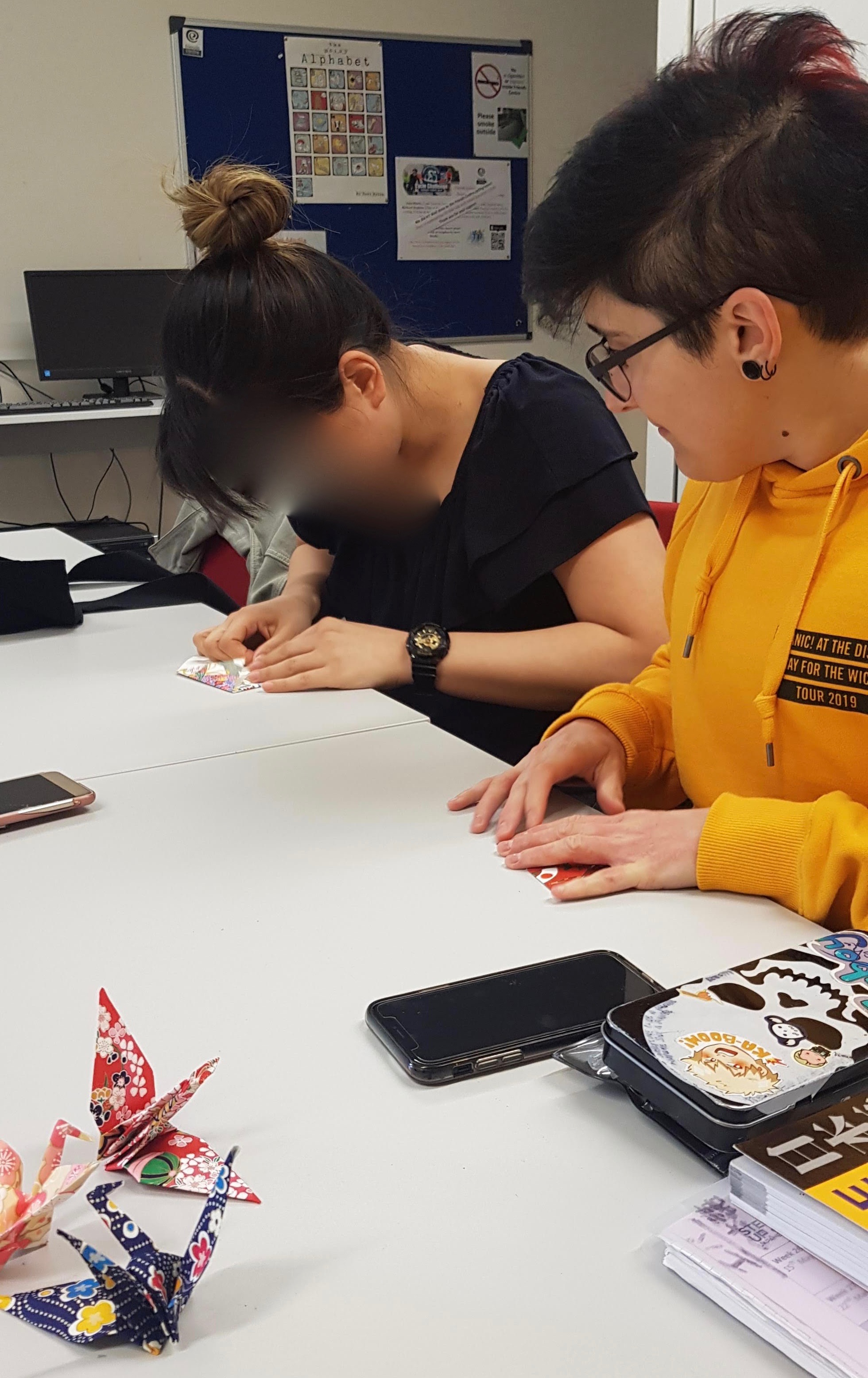
そして先月、素晴らしい折り紙のワークショップを一緒に開いてくださったさやさんへ。
皆さん、ありがとうございました!



A Japan Pub Quiz!
I wrote a little bit about my Japanese volunteers who come to help out at class and with events and workshops.
But I’m also helped enormously at Step Up Japanese by my students, who organise events, give me great ideas, and share helpful feedback on how to make class better.
I wrote a little bit about my Japanese volunteers who come to help out at class and with events and workshops.
But I’m also helped enormously at Step Up Japanese by my students, who organise events, give me great ideas, and share helpful feedback on how to make class better.
Huge thanks to STEP 4 student Sheen-san for organising this fantastic Japan-themed quiz for us last week. And thank you all for coming!
またしましょうね。Let’s do it again sometime!





Our Fantastic Volunteers
Sometimes, Japanese people write and ask if they can volunteer at Step Up Japanese.
I’m always very happy that Japanese people in Brighton and Hove have found my school and want to visit and help out.
This year, a number of Japanese volunteers have helped out in class and with events and workshops.
This Volunteers Week, I’d like to say a big thank you to my 2018-19 volunteers!
(Click here to read this article in Japanese 日本語版はこちら)
Sometimes, Japanese people contact me and ask if they can volunteer at Step Up Japanese.
I’m always very happy that Japanese people in Brighton and Hove have found my school and want to visit and help out.
This year, a number of Japanese volunteers have helped out in class and with events and workshops.
This Volunteers Week, I’d like to say a big thank you to my 2018-19 volunteers!
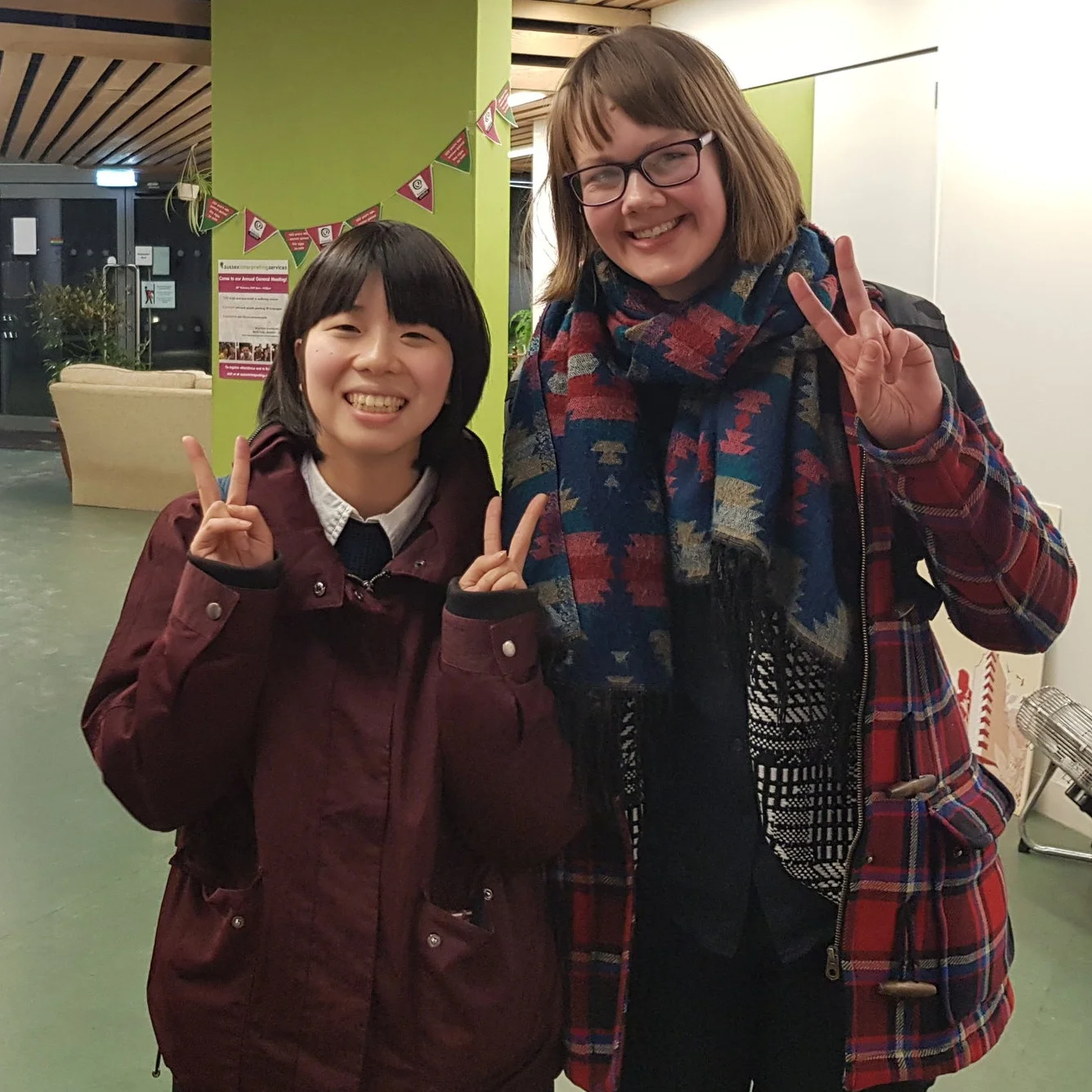
Aria-san, who came to help out with Summer Programmes in 2018. Thank you for playing games with my students and teaching them how to say ホットドッグ (hotto doggu; hot dog):
Mari-san, for chatting with STEP 1 and STEP 2 students and encouraging them to speak with confidence:
And Saya-san, for teaching us incredible origami!
I Tried to Speak Japanese Every Day for a Month (Without Being in Japan)
Many people believe you need to live abroad to get speaking practice in a foreign language, but this isn’t true.
Similarly, people often assume that if you in Japan, like I did, you’ll pick up the language easily. But that’s not necessarily true either.
If you speak English, it’s possible - indeed easy - to live in another country for years and not become fluent in the language.
I didn't make any year-long New Years’ Resolutions this year. Instead, I decided to set myself some monthly language-related challenges. I’ll decide them as the year goes on, and I’ll probably do one every other month.
In January, I decided to speak Japanese every day for a month.
Many people believe you need to live abroad to get speaking practice in a foreign language, but this isn’t true.
Similarly, people often assume that if you live in Japan, like I did, you’ll pick up the language easily. But that’s not necessarily true either.
If you speak English, it’s possible - indeed easy - to live in another country for years and not become fluent in the language.
I didn't make any year-long New Years’ Resolutions this year. Instead, I decided to set myself some monthly language-related challenges. I’ll decide them as the year goes on, and I’ll probably do one every other month.
In January, I decided to speak Japanese every day for a month.
For context: I live in the UK, I don’t speak Japanese at home, and although I work as a Japanese teacher, I don’t currently teach Japanese every day. So this was going to take some effort.
When I lived in Japan, I was using Japanese every day. My Japanese reading and writing is significantly better now than it was then (I have five years’ more practice under my belt). But I don’t speak Japanese every day like I used to. So I decided to try!
I set myself the following, slightly arbitrary, rules:
1) Speak in Japanese for a minimum of 15 minutes a day (ideally more)
2) Texting doesn't count
3) Talking to yourself doesn't count either*
*Incidentally, I am a big fan of talking to yourself as a method of practicing a language. But I decided it wouldn’t count for this challenge.
Day 1
Every year on January 1st the Brighton Japan Club has a New Year’s swim in the sea. A great opportunity to practice different words for “ohmygodit’sfreezing” .
I don't swim this year, just go along afterwards for a post-swim lunch and some Japanese- and English-language chat in a café.
Tip number 1: Find people to speak with. You can’t practice speaking by yourself. Could you join a group class or a social club?

Photo from last year’s New Year’s Day Swim (2018). Photo by Tom Orsman
Day 2
I get up an hour early and have a 30 minute italki lesson on Skype before work. Italki is a website and app where you can find online language teachers.
I plan to start teaching on Skype in 2019, possibly using italki, so I take the opportunity to ask the teacher all about italki and how she finds it. The teacher is friendly and I have fun talking with her. I’ve never met her before – I just found her on italki.
Day 3
I go to the weekly Japanese-English Language Exchange with Brighton Japan Club. It’s a good way to meet Japanese people, and people interested in Japan. There’s usually a good mix of old and new faces, which keeps things fresh.
Day 4
I have dinner with a Japanese friend I met last month at the end-of-year party of the Brighton & Hove Japanese Club (a similarly named but different group to the Brighton Japan Club). We go to Goemon, arguably Brighton’s best ramen bar. We talk in Japanese all night.
Day 5
I go to 書き初め kakizome (first calligraphy of the year) at Brighton Japan Club. I don't speak much Japanese at this event and on the way home I wonder if it ‘counts’… I have a lot of fun though.

Day 6
I Skype with a friend in Japan, who I met when I lived in Nagoya. This was probably the most fun thing I did all week. I saw her last spring, so catching up over video chat, there is a lot to talk about.
I reflect that being able to talk with friends in Japanese is really important to me.
Tip number 2: make friends who speak the language you’re learning
Day 7
I have a 30 min italki “instant lesson” with teacher S. She used to live in Canada where she ran language exchange events. She’s thinking about studying abroad in the UK, so we chat about that. She talks quickly, and so do I, happily and unthinkingly.
Day 8
I go to Café an-an in Portslade for lunch. I chat briefly with the owner, Noriko, while eating katsu curry. I take home some 花びら餅 hanabira mochi (“flower-petal mochi”) sweets.
After lunch I have a video meeting scheduled with Jess from Nihongo Connection. We chat in Japanese for the first half of the call - Jess is British, so I wasn't expecting to talk with her in Japanese, but its fun. We make plans to meet up the following month in Edinburgh.
Day 9
Skype lesson with Sugita-sensei. I met Sugita-sensei at Yamasa in Okazaki, where I studied on the Advanced Japanese Studies Program in 2014. Now, I consider myself lucky to call him a friend as well as 先輩 (senpai; senior colleague) and teacher. When I have time, I usually have a Skype lesson with him once a week. We read fiction and news articles, and sometimes I write stories or essays and we work together to correct them.
Day 10
I’m going to London for the day, to the video-games exhibition at the V&A and to see Macbeth. I have an italki lesson with teacher H in the morning. I ask her how I can improve my speaking. She says the goal “improve my speaking” is too broad, and I agree. She suggests I should think about what kind of speaking I want to get better at; and what I want to be able to talk about. Then, focus in on those topics, by reading about them. This seems like very good advice.
Tip number 3: find a good teacher
Day 11
I go out for dinner with a Japanese friend and a Spanish friend. We switch between speaking English and Japanese all night.
Day 12
I spend the day out with my boyfriend and some friends. My boyfriend can speak Japanese, but we don’t speak Japanese together, because - well, just because we don’t.
We get home at 11:45pm and I realise I haven’t spoken any Japanese yet today. Reluctantly, my boyfriend agrees to speak Japanese with me until midnight. We set a timer for 15 minutes and I pour him a beer.
Day 13
I go to Brighton Japan Club’s annual new-year mochi-making event. My favourite events are the ones involving food! I eat squishy rice cakes and chat with some new people.
Day 14
I have an italki lesson at 7am with a new teacher, T. This is the only italki lesson I had that wasn’t really for me. He suggests some resources that are way too low a level for me and a Japanese grammar website with picture explanations that I think are kind of unclear.
I take this as a useful lesson in how not to teach on Skype.
Day 15
Term starts today, which means I teach STEP 1 (beginner) and STEP 2 (upper beginner) Japanese classes on Tuesday nights. STEP 1 students are doing a quiz about which country well-known brands are from. STEP 2 students practice asking each other to do things, which is always fun.
On the way home I wonder if teaching beginner level classes counts as speaking practice for me. Probably not, but I decide to let it count for this experiment anyway. It’s still three hours of Japanese time.
Day 16
7am Skype class with Sugita-san. We read a section on “Friendship” from Tsurezuregusa (徒然草, Essays in Idleness), a collection of essays written by the Japanese monk Yoshida Kenkō in the 14th century, and talk about it.
Day 17
I teach two more Japanese classes, STEP 3 and STEP 4, at pre-intermediate and intermediate level.
My higher-level classes usually need a bit less structure than beginner classes. I still speak more slowly than natural speech, but I don't plan the wording of my instructions in the same way as I do with beginner classes. Especially in STEP 4, students like to chat and always have good questions, which they can ask in Japanese.
Tip number 4: ask questions!
Day 18
I’m going to my office job 9-5 today (no chance to speak Japanese there), and to a birthday party afterwards (no Japanese speakers). So I get up at 7am and have another italki lesson with M-sensei. We talk about Brexit…
Day 19
I go to a Heart Sutra writing workshop with the Brighton Japan Club. The workshop is in Japanese with English interpretation. I have fun listening along to both.

Day 20
I Skype with another Japanese friend in Japan. She had a baby recently, so a lot has changed for her. She fills me on her new life. After our conversation, I walk around all day with a huge smile on my face.
Day 21
Another italki lesson with M-sensei. She is an ex TV announcer, so I ask a bunch of questions about pitch accent. (Briefly: Japanese has high-low tones, and pronouncing a word with the wrong pitch accent pattern makes you sound unnatural).
She says that my pitch is mostly good but I make occasional pitch and stress mistakes which identify me as a non-native speaker.
Like many non-native speakers, I have never explicitly learned Japanese pitch accent, and I think this is probably something I should rectify. She has me read an article from NHK news, and corrects my pitch accent. It’s hard.
I also go to see a Japanese film with another of my students – 君の名は (kimi no na wa; ‘Your Name’). We see another former student of mine in the foyer and speak briefly in Japanese.
Day 22
I teach two beginner classes. STEP 1 students are practicing verbs like 行きます、来ます、帰ります (ikimasu, kimasu, kaerimasu; go / come / come back), so I have them read a short story about my trip to Disneyland last year.
I am reminded that reading helps with speaking. We need to be exposed to lots of language in order to eventually produce it.
STEP 2 students are learning about giving directions. Confession: I find teaching directions really hard. I used to practice this by playing video games (students shout out directions while one person is playing), but the flash game wont work on the classroom computer any more. I consider switching this up next year.
I think more about input/output. How useful is it for my students to learn to give directions in Japanese? Not very. How useful is it for them to understand verbal directions in Japanese? If they go to Japan, probably very useful.
Tip number 5: Read! There can be no meaningful output without input.
Day 23
I ask Sugita-san more about pitch accent. He is currently teaching on a course for people studying to become Japanese teachers in Okazaki, Japan. He says many Japanese people don’t explicitly understand pitch accent either.
My boyfriend shows me a video series on Japanese phonetics by Dogen, the Japanese teacher and YouTuber. I go on an internet deep dive into pitch accent. Maybe that will be my next challenge…?
Day 24
I teach two Japanese lessons. In STEP 3 (lower-intermediate) we cover short forms in casual speech. I love teaching this because it’s so ridiculously useful and common in everyday speech. It’s not in the textbook we use at all, so I made my own materials.
Day 25
I go to the pub again with my Spanish friend and Japanese friend. Japanese friend is going back to Japan the following day. He has also, excitingly, just become a father. Lots to talk about. As before, we probably talk about half in English and half in Japanese.
Day 26
I go to an 生け花 ikebana (flower arranging) workshop with the Brighton Japan Club. The workshop is in English, but I chat with the organisers in Japanese a bit.

I have to rush off as I am going to see the film 万引き家族 (Manbiki Kazoku; Shoplifters) with my student in Eastbourne. I love hanging out wth my adult students outside of class, and I’m always super pleased when they invite me to spend time with them, especially when it’s Japan-related!
Tip number 6: find fun things to do related to the language you’re learning
Day 27
I go to Kantenya, the Japanese supermarket, and buy sashimi-grade tuna to make まぐろたたき丼 (maguro tataki don; chopped tuna rice bowl). I ask the staff how long it will take to defrost the tuna. She explains you can just take it out the freezer, or there is a proper technique that’s should make it taste better. She produces a handout that shows how to do it! They have the handout in Japanese and in English. I take the Japanese one. We talk about the Manbiki Kazoku film too.
Day 28
I have a 30 minute italki lesson with N-sensei. We talk about her plans to study abroad in the UK and my time in Japan. It’s fun, but I don’t really learn anything.
I reflect that just talking is not very good practice for me personally. I think I need to talk about difficult topics and be corrected quite closely.
Italki makes a distinction between “community tutors” (unqualified) and “professional teachers”. N-sensei is a community tutor, and mostly does “free talk”. On reflection, this is not really what I need from a paid class.
Day 29
Before my group classes, I teach a private lesson in a cafe. We go over some grammar points my student has questions about, but mostly I just try and get her to speak Japanese, without using English.
Most students need more speaking practice. The experience of being totally lost in language, and not understanding most of what’s going on is something we may not have felt since childhood. As such, it can be really scary.
I believe it’s a feeling you need to get used to if you’re going to make progress. I tell my student I want her to be a little bit outside her comfort zone - not so far that it’s terrifying, but just enough that she’s pushing herself and learning new things.
Day 30
Skype lesson with Sugita-san. We read ネギを刻む (negi o kizamu; literally “Chopping Leeks”) a short story by 江國香織 (Kaori Ekuni). One of my favourite things about my lessons with Sugita-sensei is that he introduces me to stories and essays I wouldn’t necessarily find by myself.
Day 31
A Japanese volunteer, Aria, comes to class with me. My students ask her questions and talk with her in Japanese. We also make 四コマ漫画 (yon-koma manga), manga comic strips with four panels. Aria helps out a lot and my students enjoy speaking with her.
I get requests from local Japanese people to come and volunteer at class fairly frequently. I’m grateful for their help, and it’s good for my students to practice speaking in this way.
Speaking in Japanese every day for a month - my conclusions
1) Find a good teacher
You need a teacher who fits your needs. If you just want speaking practice, find someone who will “just talk” with you. If you want to be corrected, ask your teacher to correct you more. Chatting with friends is good, but your friends aren’t language teachers (probably)
2) Make friends
The absolute best things I did this month – not just in this challenge, but the most fun things I did this month overall – was talk with my friends in Japan.
I was reminded too that being able to talk with friends in Japanese is really important to me.
3) Connect offline as well as online
If you live in a country where Japanese isn’t widely spoken, you might need to go online to find people to talk with. But I did get a bit bored of having so many Skype lessons, especially as I started to feel I wasn’t getting much out of it.
Plus, italki is kind of expensive to take lessons so often. I plan to start teaching online late this year, so I told myself that taking Skype lessons was research…
Speaking to people offline was way more fun for me.
4) Be open to surprises!
Japanese popped up in some unexpected places this month. I knew that Jess runs a Japanese speaking club, but she’s English so I wasn't expecting us to talk in Japanese so much. That was a lot of fun.
5) Find work using your languages
I get to use Japanese in my work, because I teach Japanese. Arguably it’s not really speaking practice for me, but my students always ask me good questions and help me see things about the Japanese language from a new perspective.
If you want to get serious about having more chance to use your Japanese, consider looking for a job or a voluntary position where you can use it. Could you work in a Japanese restaurant, or for a Japanese travel agency?
And finally…
At an advanced level, speaking a lot is actually not a great way to get better at speaking.
One of the italki teachers told me: “You don't need speaking practice, because you can already speak. If you read more, you’l be become able to talk more fluently about complex topics.”
This fits with what I know about input-based methods of learning languages – essentially, that these two things happen in this order:
1. You get input — you read and listen to sentences in some language. If you understand these sentences, they are stored in your brain. More specifically, they are stored in the part of your brain responsible for language.
2. When you want to say or write something in that language (when you want to produce output), your brain can look for a sentence that you have heard or read before — a sentence that matches the meaning you want to express. Then, it imitates the sentence (produces the same sentence or a similar one) and you say your “own” sentence in the language. This process is unconscious: the brain does it automatically.
(quote from Antimoon)
There can be no good quality output (speaking the language; writing it well) without massive amounts of input (listening to and reading the language).
But if you’re a beginner or intermediate learner, you’re probably not getting enough speaking practice.
Speaking Japanese every day was really fun. As you can see, it didn’t quite have the result I was hoping for, but I definitely learned a lot. Why not give it a go?
Tuesdays, 12:00pm (UK time) | Online Group Course
Starts 15th Sept 2026 | 36 weeks
Who this course is for
This course is for true beginners or early beginners who already know a little Japanese (e.g. ~10-20 hiragana characters) and want to build a solid foundation.
If you are starting completely from zero, I recommend a few 1:1 lessons before joining.
You will already be able to:
Recognise a small number of hiragana characters (or are beginning to learn them)
Feel comfortable learning slowly and step-by-step
In this course you will learn to:
Introduce yourself and ask simple questions
Talk about family, friends, likes and dislikes
Order food and drinks in a restaurant
Ask and answer simple questions about places you are staying
Talk about where people and things are located
Build confidence reading hiragana and begin katakana
Start recognising a small number of common kanji
The focus is on practical, everyday Japanese for absolute communication basics.
Course details
Duration: 36 weeks (3 x 12-week terms)
Day/time: Tuesdays, 12pm (UK time), 55-minute lessons
Textbook: Irodori: Japanese for Life in Japan - Starter (starting from Lesson 3, free online)
Not sure if this is right for you?
Book a free 30-minute Zoom consultation or email me for advice.

Why Don't Japanese Questions Have Question Marks?
Often, questions written in Japanese end in a full stop, not a question mark. But why?

Often, questions written in Japanese end in a full stop, not a question mark. But why?
When not to use a question mark
If a question ends in the question marker ka (か), it doesn't need a question mark, because the 'ka' tells us that this is a question:
今何時ですか。
Ima nanji desu ka.
What time is it?
That doesn't mean you can't use a question mark with か. People do it, especially in casual contexts. You just don't need to (and you shouldn't in formal writing).
Here's a question with か and a question mark, from the McDonald’s Japan website:

ハンバーガーは長い間放置しても腐らないと聞きました。本当ですか?
Hambaagaa wa nagai aida houchi shitemo kusaranai to kikimashita. Hontou desu ka?
I heard you can leave a hamburger for a long time and it won't go bad. Is that true?
Adding a question mark after か here makes 本当ですか? sound a bit more casual, friendly and questioning.

When to use a question mark
In questions without ka, question marks are pretty common:
明日は?
Ashita wa?
How about tomorrow?
お仕事は?
O-shigoto wa?
What's your job?
学校に行った?
Gakkou ni itta?
You went to school?
Without a question mark, these short written statements wouldn't obviously be questions.

That's all from me for today. So... any questions?
First published December 11, 2015
Updated December 13, 2018














Want to buy Japanese lessons for a friend or relative? Send a gift card