
Welcome to the Step Up Japanese blog archive!
Although I’m not currently adding new posts to the blog, you’ll find plenty of Japanese learning tips, study advice, and resources to explore here.
Browse the blog index to view a complete list of posts.
For the latest news, course updates, and Japanese learning tips from Step Up Japanese, sign up for my newsletter.
Search this blog:

The One Million Meanings of Yoroshiku
So, you’ve learned different ways to say "Nice to meet you!" in Japanese. One way to say “nice to meet you” is “yoroshiku onegai shimasu”.
But yoroshiku onegai shimasu isn't just for the first time you meet someone. It has a whole host of different uses.
Let's look at the main different meanings of this magical, multipurpose Japanese word.
1. Yoroshiku means "Please!"…

So, you’ve learned different ways to say "Nice to meet you!" in Japanese. One way to say “nice to meet you” is “yoroshiku onegai shimasu”.
But yoroshiku onegai shimasu isn't just for the first time you meet someone. It has a whole host of different uses.
Let's look at the main different meanings of this magical, multipurpose Japanese word.
1. Yoroshiku means "Please!"
Yoroshiku, as we learned before, can be used when meeting new people, and means "please be kind to me", or "please look favourably upon me":
初めまして。フランです。よろしくお願いします。
"Hajimemashite. Furan desu. Yoroshiku onegaishimasu."
Nice to meet you. I'm Fran. Please look favourably upon me!
2. Yoroshiku means "Thank you!"
As well as please, yoroshiku can mean thank you. Specifically, it can often mean “thank you in advance”. Said when giving someone work to do:
とじまり、よろしくね。
Tojimari, yoroshiku ne.
"I'll leave you to lock up. Thanks."
娘をよろしくお願いします。
Musume o yoroshiku onegaishimasu.
"Thanks in advance for taking care of my daughter."
Shop “Yoroshiku ne” T-shirts:

3. Yoroshiku means "Hi!"
This is one of my favourites. Yoroshiku can mean "regards", like "send my regards to so-and-so", or "say hi to so-and-so", or even "send my love to so-and-so":
お父さんによろしくお伝えください。
O-tou-san ni yoroshiku o tsutae kudasai.
Please send my best regards to your father.
お姉さんによろしくね。
O-nee-san ni yoroshiku ne.
Say hi to your sister for me.
What's your favourite use of yoroshiku? Did I miss any out? Let me know...yoroshiku ne!

Tuesdays, 12:00pm (UK time) | Online Group Course
Starts 15th Sept 2026 | 36 weeks
Who this course is for
This course is for true beginners or early beginners who already know a little Japanese (e.g. ~10-20 hiragana characters) and want to build a solid foundation.
If you are starting completely from zero, I recommend a few 1:1 lessons before joining.
You will already be able to:
Recognise a small number of hiragana characters (or are beginning to learn them)
Feel comfortable learning slowly and step-by-step
In this course you will learn to:
Introduce yourself and ask simple questions
Talk about family, friends, likes and dislikes
Order food and drinks in a restaurant
Ask and answer simple questions about places you are staying
Talk about where people and things are located
Build confidence reading hiragana and begin katakana
Start recognising a small number of common kanji
The focus is on practical, everyday Japanese for absolute communication basics.
Course details
Duration: 36 weeks (3 x 12-week terms)
Day/time: Tuesdays, 12pm (UK time), 55-minute lessons
Textbook: Irodori: Japanese for Life in Japan - Starter (starting from Lesson 3, free online)
Not sure if this is right for you?
Book a free 30-minute Zoom consultation or email me for advice.
Get my newsletter:
Updated 10th August 2021
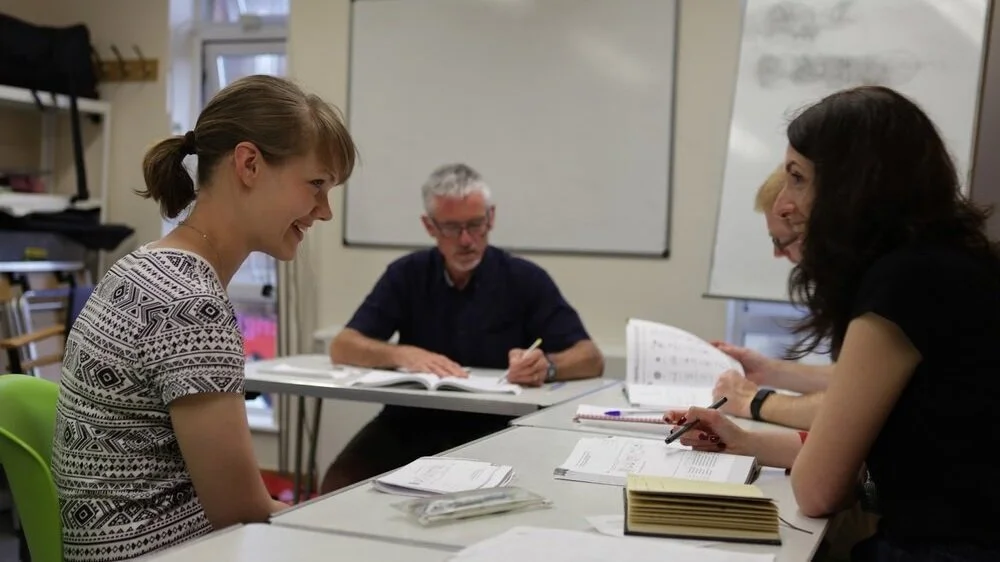
How Do I Know if a Group Language Class is For Me?
If you’re thinking about taking Japanese lessons, one of the first things you’ll have to decide is whether you want to join a group class, or take one-to-one lessons.
There are pros and cons to all methods of learning a language. Here, I’ll look at some of the key advantages of joining a group.
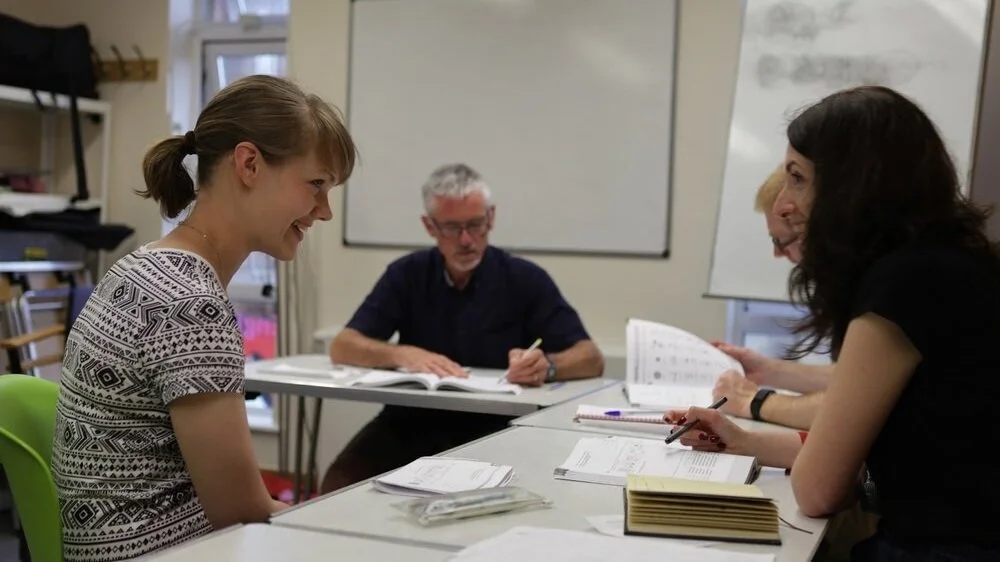
If you’re thinking about taking Japanese lessons, one of the first things you’ll have to decide is whether you want to join a group class, or take one-to-one lessons.
There are pros and cons to all methods of learning a language. Here, I’ll look at some of the key advantages of joining a group.
1) Meet other language learners
Classes give you access to a teacher, but a group class also provide you with an instant group of other people with the same interest as you.
You can speak in your target language together, go out for dinner and order in Japanese, and message each other asking "what was last week's homework again?"
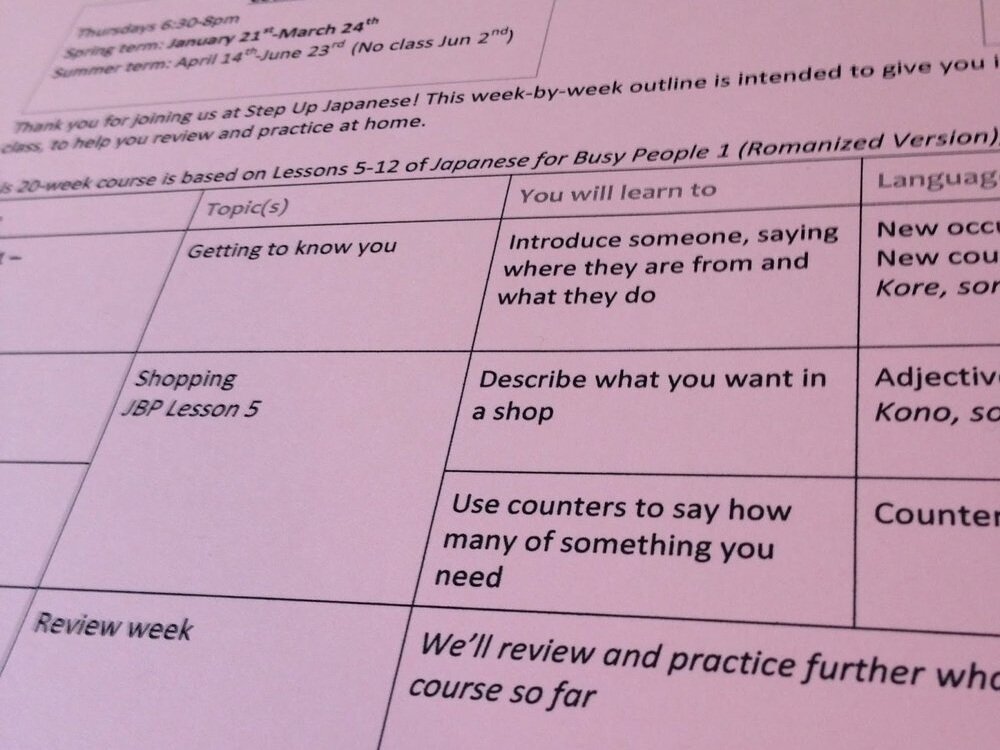
(Just kidding - thanks to the course outline I'll provide you with, you'll always know what this week's homework is.)
In a group class, students can support and help each other. It's obvious to me that my lovely students gain a lot from each others' support!
2) Keep a regular schedule
To gain any skill, you need to practice regularly. The great thing about having class on a regular day is it forces you to practice. Unlike exclusive self-study where you'll always have an excuse to procrastinate, weekly classes require you to be prepared for every class so you can get the most out of it.
Practice makes perfect, after all.
3) It's your class
You might feel like the only way to get a class tailored to your needs is to take one-to-one lessons. But a good group class - especially one for a small group of students - should be tailored to the students in it as much as a private lesson would be.
That's why I ask my students to give me regular feedback (informally, and through anonymous questionnaires) about how class is going and where you want it to go next.
It's your class, not mine, and we can focus on what you want to focus on.
That doesn't mean I'm going to do the hard work for you. If you want to get good at Japanese, you'll need to find ways of practicing and exposing yourself to the language as much as possible outside of class too.
But a group class can provide the basis of your knowledge, a structure to work with, and a group of friendly faces to answer your questions.
It also gives you a great excuse to go to that great Japanese restaurant again with your classmates.



First published June 2016; updated 9th January 2020.
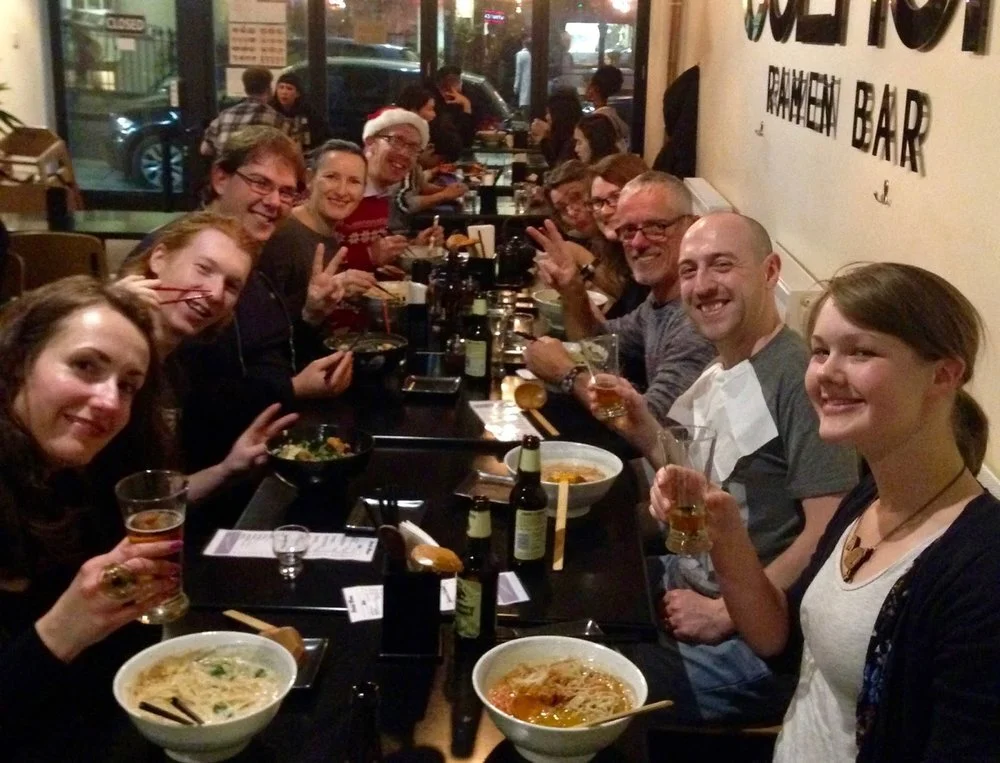
First Annual Step Up Japanese Christmas Party
We went to Goemon - arguably the home of Brighton's best ramen - at the end of term for a celebratory bowl of noodles. The inaugural Step Up Japanese Christmas party!
I wanted to introduce my students in different classes to each other, and to celebrate what you've all achieved in 2016.
Oh, and to eat ramen. I love ramen.
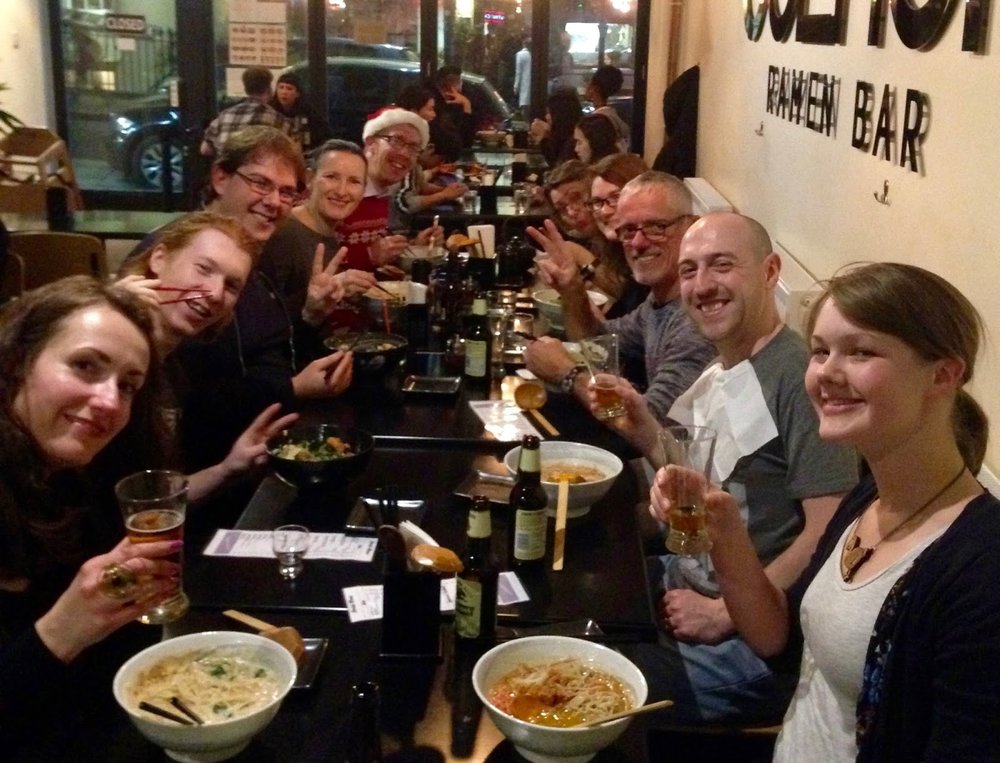
We went to Goemon - arguably the home of Brighton's best ramen - at the end of term for a celebratory bowl of noodles. The inaugural Step Up Japanese Christmas party!
I wanted to introduce my students in different classes to each other, and to celebrate what you've all achieved in 2016.
Oh, and to eat ramen. I love ramen.
I didn't take many photos (oops - too busy having a nice time!) but here they are:



↓ (I know it's blurry but I think it catches the mood! Do you know how to say "blurry" in Japanese?)

Not one to miss a "teachable moment", I also wanted to encourage everybody to order in Japanese.
So we practiced in class the week before. Ordering in restaurants is probably one of the most useful things you can learn how to do in another language.
Everyone ordered confidently, the staff were super helpful, and I was (am!) a very proud teacher.

Thanks SO MUCH for all your support over the last year! メリークリスマス!
















Want to buy Japanese lessons for a friend or relative? Send a gift card