

If you’re thinking about taking Japanese lessons, one of the first things you’ll have to decide is whether you want to join a group class, or take one-to-one lessons.
There are pros and cons to all methods of learning a language. Here, I’ll look at some of the key advantages of joining a group.
1) Meet other language learners
Classes give you access to a teacher, but a group class also provide you with an instant group of other people with the same interest as you.
You can speak in your target language together, go out for dinner and order in Japanese, and message each other asking "what was last week's homework again?"
(Just kidding - thanks to the course outline I'll provide you with, you'll always know what this week's homework is.)
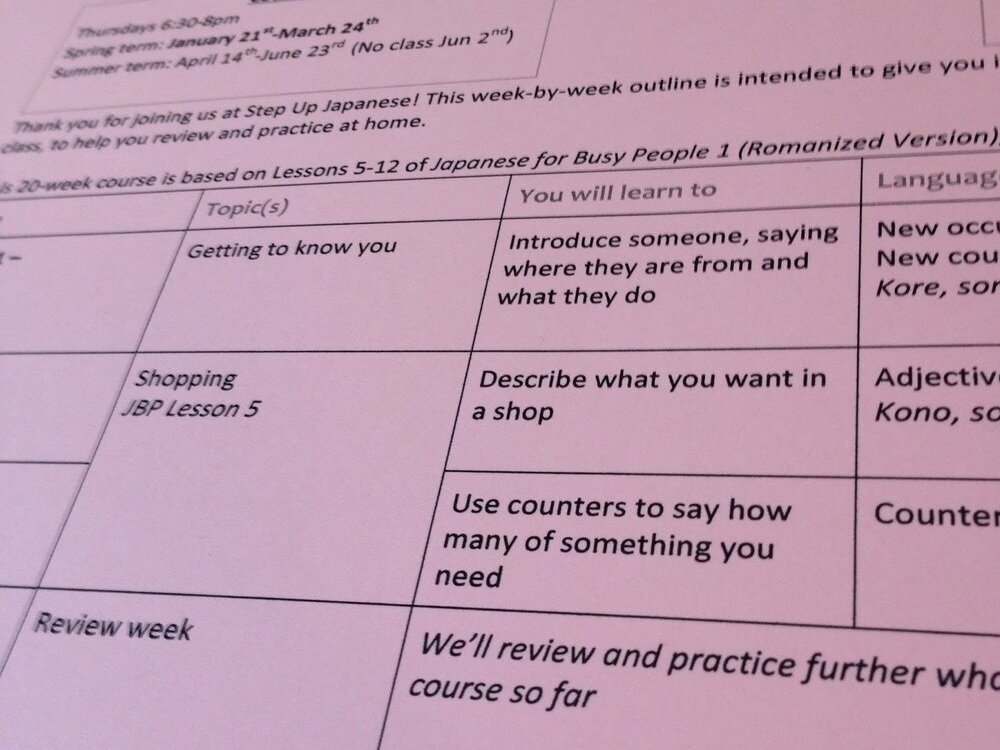
In a group class, students can support and help each other. It's obvious to me that my lovely students gain a lot from each others' support!
2) Keep a regular schedule
To gain any skill, you need to practice regularly. The great thing about having class on a regular day is it forces you to practice. Unlike exclusive self-study where you'll always have an excuse to procrastinate, weekly classes require you to be prepared for every class so you can get the most out of it.
Practice makes perfect, after all.
3) It's your class
You might feel like the only way to get a class tailored to your needs is to take one-to-one lessons. But a good group class - especially one for a small group of students - should be tailored to the students in it as much as a private lesson would be.
That's why I ask my students to give me regular feedback (informally, and through anonymous questionnaires) about how class is going and where you want it to go next.
It's your class, not mine, and we can focus on what you want to focus on.
That doesn't mean I'm going to do the hard work for you. If you want to get good at Japanese, you'll need to find ways of practicing and exposing yourself to the language as much as possible outside of class too.
But a group class can provide the basis of your knowledge, a structure to work with, and a group of friendly faces to answer your questions.
It also gives you a great excuse to go to that great Japanese restaurant again with your classmates.



First published June 2016; updated 9th January 2020.

Katakana can be tricky to learn, especially when so many characters look similar! But once you get the hang of it, you’ll start spotting katakana everywhere in Japanese, from food menus to shop signs.
Learn to Love Katakana is a 6-week online course to help you recognise, read and feel more confident with katakana.
We’ll cover:
Learning and remembering all 46 basic katakana characters
Spotting the differences between similar-looking characters
Reading words borrowed from English and other languages
Understanding long vowels and other katakana combinations
Practising reading real-world Japanese words
Who is it for?
This course is ideal for beginners who want to learn katakana in a friendly, supportive environment. Some knowledge of hiragana is helpful, but not essential.
Practical information
Six weekly online lessons via Zoom
Wednesdays at 12pm UK time
Starting Wednesday 3rd March 2027
Taught in English
If you have any questions about the course, get in touch and I’ll be happy to help.