Welcome to the Step Up Japanese blog archive!
Although I’m not currently adding new posts to the blog, you’ll find plenty of Japanese learning tips, study advice, and resources to explore here.
Browse the blog index to view a complete list of posts.
For the latest news, course updates, and Japanese learning tips from Step Up Japanese, sign up for my newsletter.
Search this blog:
Amazing Japanese Calligraphers on Instagram (Part 2) - Mitsuru Nagata
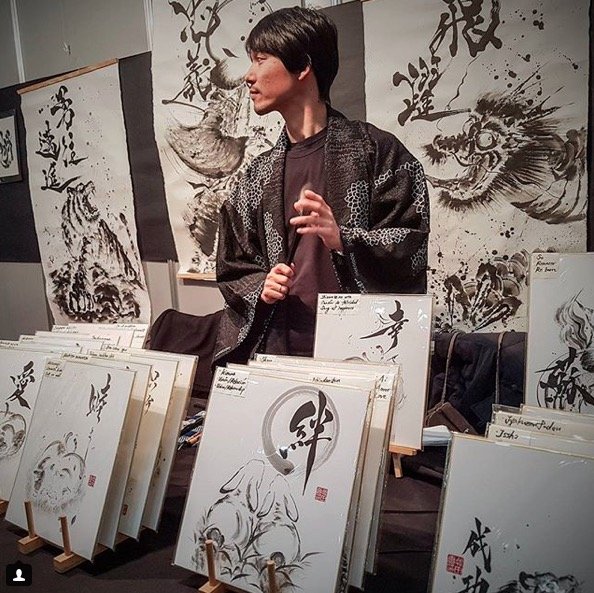
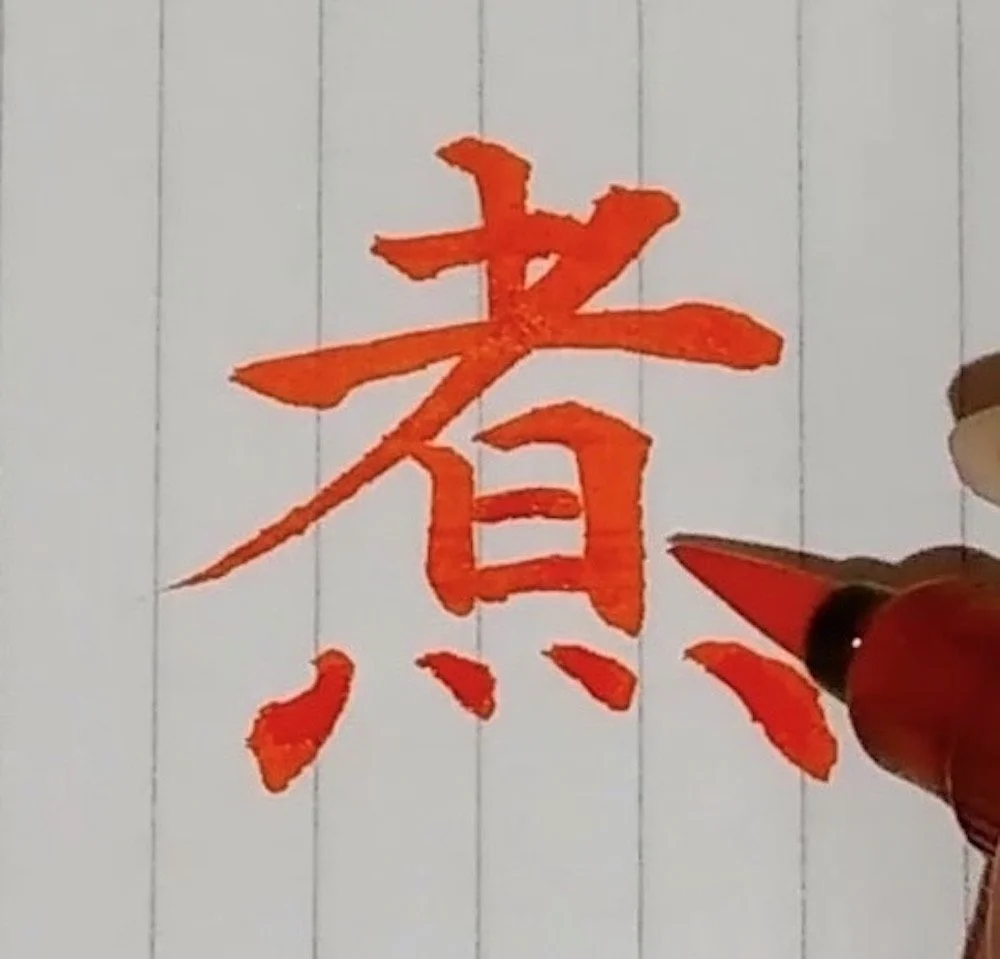
Mitsuru Nagata was born in Kyoto, and works extensively in Spain. His work combines elements of calligraphy with sumi-e (Japanese ink painting) techniques.
He performs at "live-painting" events, where he produces huge calligraphy paintings in front of a live audience.
These large-scale performances are often at festivals…

Mitsuru Nagata was born in Kyoto, and works extensively in Spain. His work combines elements of calligraphy with sumi-e (Japanese ink painting) techniques.
He performs at "live-painting" events, where he produces huge calligraphy paintings in front of a live audience.
These large-scale performances are often at festivals:
I love the simplicity of Nagata's work, like this stunning commission, with the traditional thatched roof home in the background:
おかえりなさい (o kaeri nasai) "Welcome home"
(Calligraphy is a good opportunity to get your eyes used to vertical writing, too!)
If hiragana's not your thing, there's plenty of complex kanji to get your teeth into too.
Like this new year's post, with a pug for the year of the dog (2018):
謹賀新年 (kinga shinnen) "Happy New Year"
I love the movement in these videos, and the combination of precision brushwork and watery ink.
This one's a promo for one of Nagata's live performances in Spain - a beckoning cat saying おいでね! (oide ne!) "Please come!"
Follow Mitsuru Nagata (@nagatayakyoto) on Instagram, or find out more on his website.
Read more in this series:
Amazing Japanese Calligraphers on Instagram (Part 1) - Emi Yogai 恵美・曄涯
Amazing Japanese Calligraphers on Instagram (part 1.5 bonus!) - Emi Yogai 恵美・曄涯
Amazing Japanese Calligraphers on Instagram (Part 3) - Isawo Murayama
Amazing Japanese Calligraphers on Instagram (Part 4) - Uchiyama Kenichi
First published 13th Feb 2018; updated 30th Nov 2021

How to Learn Hiragana and Katakana using Mnemonics
I finally got around to going through the mid-course feedback from my students and drawing up plans to incorporate some of what you asked for into the rest of the course. Several learners mentioned the importance of learning the kana early on.
Learning to read Japanese can be a daunting task. The Japanese language has three distinct "alphabets" (four if you count romaji!) and learning kanji is a task that takes years. You can learn the kana (hiragana and katakana) pretty quickly, though, if you use the most efficient way to memorise them - mnemonics.
Hi! This article was first published in April 2017. I updated it recently (April 2020) and fixed some broken links.
This week I finally got around to going through the mid-course feedback from my students and drawing up plans to incorporate some of what you asked for into the rest of the course.
Several learners mentioned the importance of learning the kana early on.
Learning to read Japanese can be a daunting task. The Japanese language has three distinct "alphabets" (four if you count romaji!) and learning kanji is a task that takes years.
You can learn the kana (hiragana and katakana) pretty quickly, though, if you use the most efficient way to memorise them - mnemonics.
Hiragana and Katakana are the "building blocks" of the Japanese written language. Students in my beginner Japanese classes mostly start with the romaji edition of 'Japanese For Busy People'*, because my priority is to get you speaking from day one, and to spend class time on speaking as much as possible. Reading and writing is mostly set as homework.
But if you want to learn to read Japanese, you definitely need to start by learning hiragana - the 46 characters that make up the first basic Japanese “alphabet”. But how to remember them?
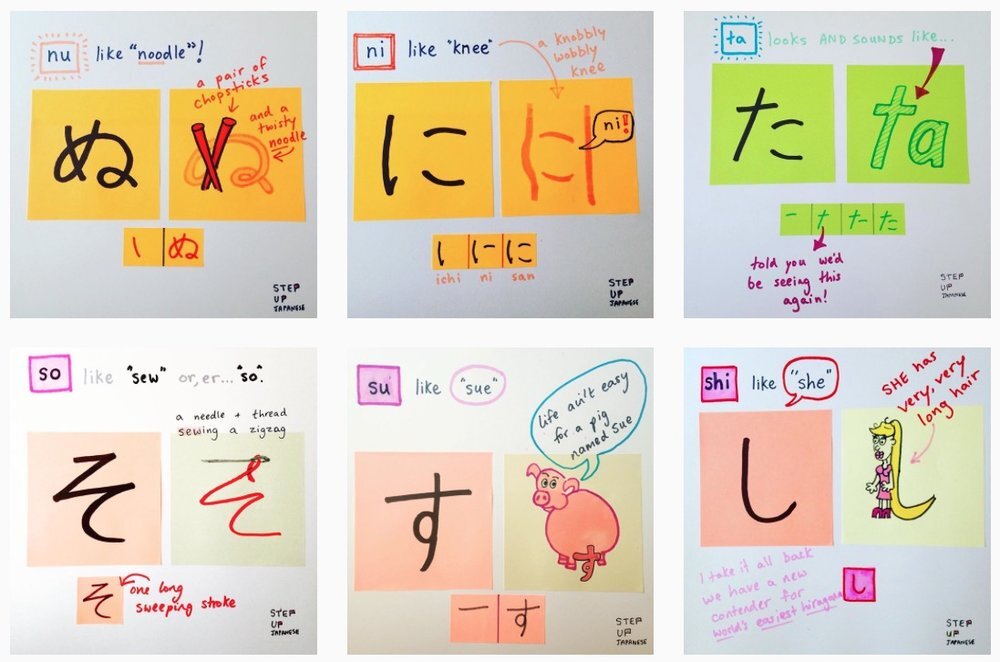
The best, quickest, most fun method is to associate each character with a picture that it (clearly or vaguely) looks like, ideally also using the sound of the letter.
Hiragana and katakana are pretty simple, so associating each character with a picture is super easy.
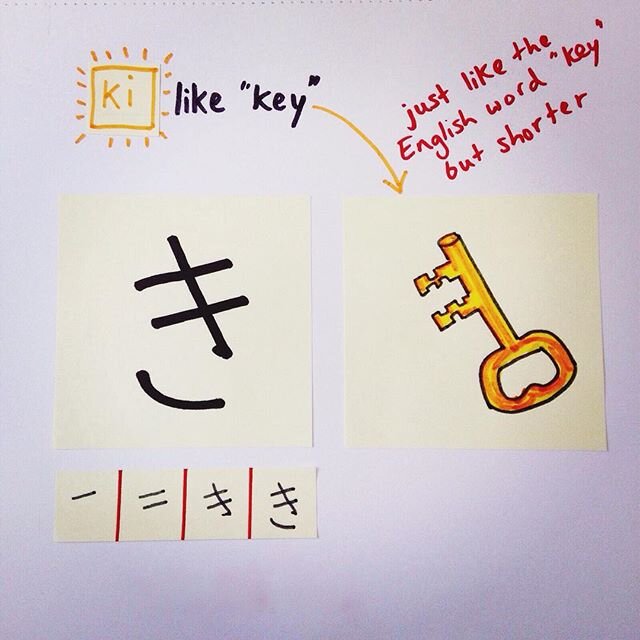
Here's hiragana き (ki), which we can imagine is a picture of a KEY. My image of akey is an old-fashioned one. Yours might be modern and spiky. Or it might have wings on it and be flying about getting chased by Harry Potter on a broomstick.
The point is to think of a strong visual image that makes the picture of the key stick in your mind:
Of course, you need to learn to read words and sentences too. So as well as learning each letter, you need to practice writing and reading. This where the mnemonic really sinks in.
Memorisation doesn't help you remember. What helps you remember is active recall.
Let me give you an example.
You're reading a sentence and come across the word きのこ (kinoko, mushroom). You're staring at the letter き - "which one was that again?" and struggle a little bit to remember it.
Then you remember - aha! it's the KEY! This is ki.
This process of active recall - pushing a little bit to remember something - is the process that cements the mnemonic in your mind.
For me, one of the great thing about using mnemonics to remember the kana is that when I explain the system to learners, they often tell me that's what they're doing anyway, even if they don't have a name for what they're doing:
"Oh yes, that's how I remember む too - it's a funny cow's face! MOO"
"No, む is a man saying MO-ve!"
I've also found - luckily for me - it doesn't matter seem to matter if the actual picture is rubbish. (You don't even have to draw them, I just did this to help my students out and to share the idea).

What's important is that the picture in your head is super clear.
...and once you finish hiragana, you can do the whole thing again for katakana (the second basic Japanese alphabet):

You can find the whole set of hiragana and katakana mnemonics on instagram with the hashtag #stepupkana - please check it out and let me know what you think.
I'd love to hear what mnemonics you use to help remember the kana - let me know in the comments or add your story to the instagram posts for that character.
*Links with an asterisk * are affiliate links, which means I may earn a small commission, at no extra cost to you, when you click through and buy the book. Thanks for your support!
First published April 2017
Updated 7th April 2020

Your First Ever Beginner Japanese Class
You've signed up, bought the textbook and are on your way to class. The day is here! It's your first ever Japanese lesson!
So, what are we going to do? What are you going to learn?
Your first class can be exciting, but also a bit daunting. I've taught lots of first-ever Japanese classes to beginners over the years. Here's what to expect from your first lesson at Step Up Japanese.

You've signed up, bought the textbook and are on your way to class. The day is here! It's your first ever Japanese lesson!
So, what are we going to do? What are you going to learn?
Your first class can be exciting, but also a bit daunting. I've taught lots of first-ever Japanese classes to beginners over the years. Here's what to expect from your first lesson at Step Up Japanese.
A brief introduction to the Japanese writing system
Lots of people are really interested in the Japanese writing system, and it's a bit complex. So I usually start with a quick rundown of the three "alphabets" used in Japanese.
The main reason I start with this is that it helps you with pronunciation.
Pronouncing words in a new language can be difficult. Especially when those words are as long as:
Hajimemashite. Yoroshiku onegaishimasu.
"Nice to meet you."
Understanding the sounds of Japanese from the start will help you pronounce words correctly.
Introduce yourself!
Next, we learn to introduce ourselves in Japanese:
"Nice to meet you!"
"My name is..."
"I'm from..."
"I'm a teacher / engineer / lawyer, etc."
You'll learn to say your job, of course - not just the generic ones in the textbook. This is important.
By this point, you've learned to introduce yourself politely. And to tell a Japanese-speaking person something about yourself. Awesome.
Time for a break, and a cup of ホットコーヒー (hot coffee) from the reception cafe.
Question time!
Next up, we learn some questions:
"What's your name?"
"Where are you from?"
"What's your job?"
We'll practice them over and over, until they're glued into your brain.
Depending on how much time we have, we might practice introducing each other:
"This is Agnes. She's from Poland. She's a structural engineer."
With lots and lots of practice, that's probably all we have time for. But look what you'll have learned in one lesson!
Hopefully, you'll go home with your head full of new phrases, ready to test out on the dog.

(Pictured: graduating Beginner class students, 2016-17)

Why Does The Japanese Language Have So Many Alphabets?
My students ask a lot of good questions. And one that sent us off on a bit of a tangent a few weeks ago was: “how old is Japanese writing?”
So, let’s take a whistle-stop tour of Japanese history with a very brief introduction to the Japanese writing system!
My students ask a lot of good questions. And one that sent us off on a bit of a tangent a few weeks ago was: “how old is Japanese writing?”
So, let’s take a whistle-stop tour of Japanese history with a very brief introduction to the Japanese writing system!
Until the 1st or 2nd century, Japan had no writing system. Then, sometime before 500AD, kanji - Chinese characters - made its way to Japan from China (probably via Korea).
These characters were originally used for their meaning only - they weren't used to write native Japanese words.
↓ And at that time, Japanese writing looked like this. Look, it looks like Chinese!

(Image Source - Nihon Shoki, Wikipedia)
But it was inconvenient not being able to write native Japanese words down, and so people began to use kanji to represent the phonetic sounds of Japanese words, not only the meaning. This is called manyougana and is the oldest native Japanese writing system.
For example, in manyougana the word asa (morning) was written 安佐 (that's a kanji for the “a” sound - 安 - and another for the “sa” sound - 佐). These characters indicate the sound of the word - “asa” - but not its meaning.
In modern Japanese we'd use 朝, the kanji that means "morning" for asa. This character shows its meaning AND its sound.
The problem was, manyougana used multiple kanji for each phonetic sound - over 900 characters for the 90 phonetic sounds in Japanese - so it was inefficient and time-consuming.
Gradually, people began to simplify kanji characters into simpler characters - that's where hiragana and katakana came from.
Katakana means "broken kana" or "fragmented characters". It was developed by monks in the 9th century who were annotating Chinese texts so that Japanese people could read them. So katakana was really an early form of shorthand.
Each katakana character comes from part of a kanji: for example, the top half of the kanji 呂 became katakana ロ (ro), and the left side of the kanji 加 became katakana カ (ka).
↓ Each katakana comes from part of a kanji.
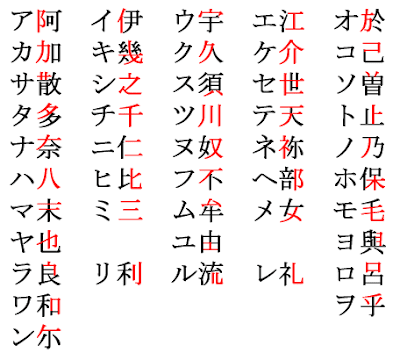
(Source - Katakana origins, Wikipedia)
Women in Japan, on the other hand, wrote in cursive script, which was gradually simplified into hiragana. That's why hiragana looks all loopy and squiggly. Like katakana, hiragana characters don't have meaning - they just indicate sound.
↓ How kanji (top) evolved into manyougana (middle in red), and then hiragana (bottom).

(Source - Hiragana evolution, Wikipedia)
Because it was simpler than kanji, hiragana was accessible for women who didn't have the same education level as men. The 11th-century classic The Tale of Genji was written almost entirely in hiragana, because it was written by a female author for a female audience.
Modern Japanese writing uses all three of these “alphabets” - hiragana, katakana, and kanji - often all mixed up in the same sentence.
What would 12th-century people in Japan think of my students, 900 years later, learning hiragana as they take their first steps into the Japanese language?
First published 28th Oct 2016
Updated 27th Jan 2020
Even More Japanese Loanwords From Languages That Aren't English
Last time I talked about Japanese loanwords - words that Japanese has “borrowed” from other languages - which come from languages other than English.
But there are also some tricky loanwords that look and sound like they came from English - but they didn’t!

Last time I talked about Japanese loanwords - words that Japanese has “borrowed” from other languages - which come from languages other than English.
But there are also some tricky loanwords that look and sound like they came from English - but they didn’t!
Challenge time!
Don’t be fooled. These loanwords look and sound a bit like they came from English - but they didn’t! Can you guess what languages these loanwords come from?
(Hint: not English!)
Koohii コーヒー coffee
Zero ゼロ zero
Pompu ポンプ pump
Botan ボタン button
Koppu コップ cup
Sarada サラダ salad
Kokku コック cook
Scroll down for the answers…!

The Answers:
Did you guess what non-English languages these loanwords come from?
Koohii コーヒー coffee - Portuguese
Zero ゼロ zero - French
Pompu ポンプ pump - Dutch; Flemish
Botan ボタン button - Portuguese
Koppu コップ cup - Dutch; Flemish
Sarada サラダ salad - Portuguese
Kokku コック cook - Dutch; Flemish
Students often ask why there are so many Portuguese and Dutch loanwords in Japanese. Words from these two languages have been used as loanwords in Japanese since the 16th and 17th centuries, when both countries established trade with Japan.
So, just because that katakana word you’ve learned looks like English, doesn’t mean it came from English!
Japanese Loanwords From Languages That Aren't English
Modern Japanese contains a lot of loan words - words that Japanese has “borrowed” from other languages. These words are typically written in the katakana “alphabet”.
Many of these words come from English - but not all.
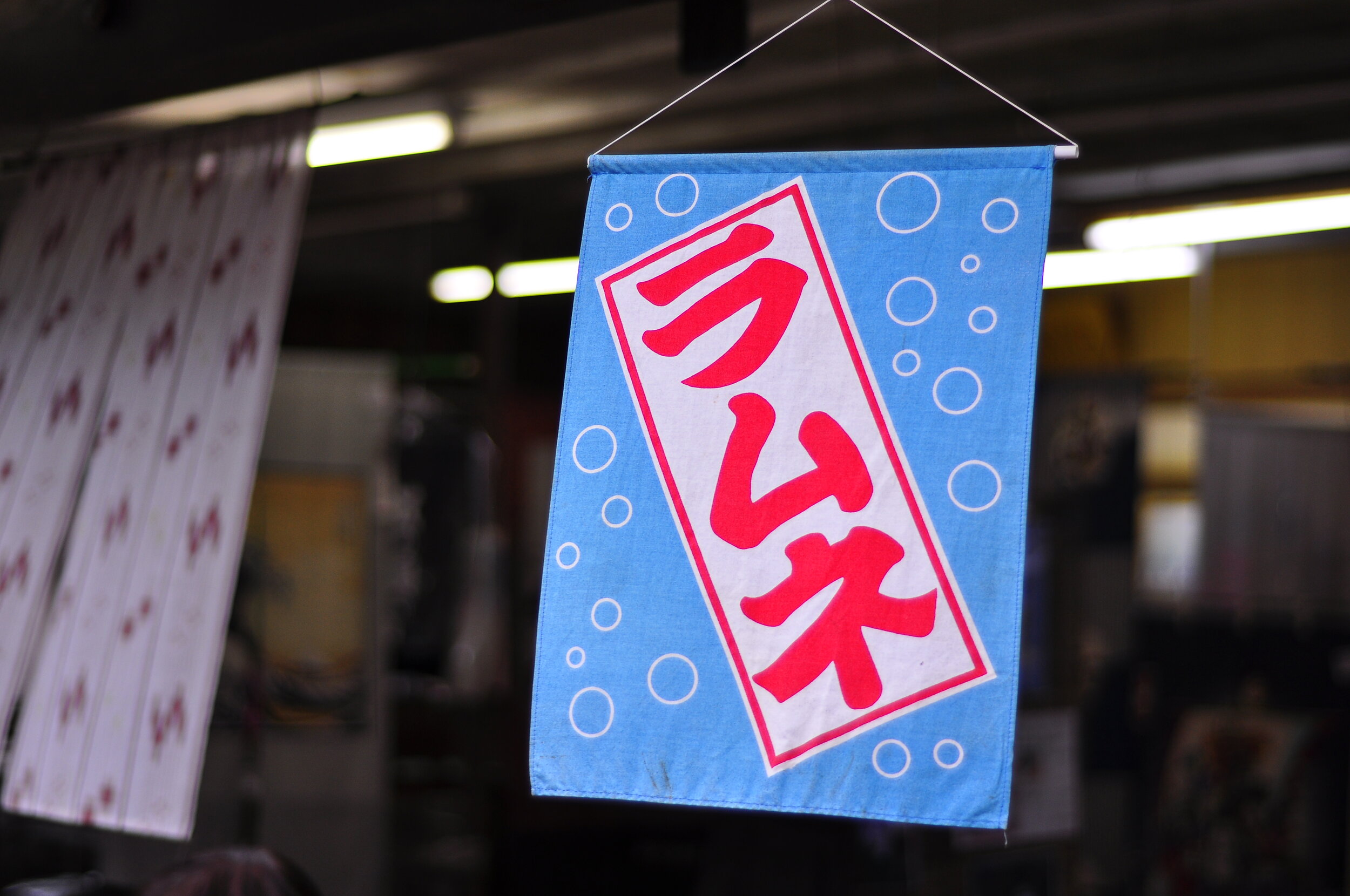
Modern Japanese contains a lot of loan words - words that Japanese has “borrowed” from other languages. These words are typically written in the katakana “alphabet”.
Many of these words come from English - but not all.
So if you’ve been wondering what happened to the “t” sound at the end of the Japanese word resutoran (レストラン, restaurant), it was never there in the first place - because that loanword didn’t come from English. It came from French.
And my students sometimes ask me why the Japanese word for salad is sarada (サラダ), not “sarado”. That’s because sarada comes not from the Engish word “salad”, but from the Portuguese “salada”.
It’s good to know which loanwords didn’t come from English - and it's interesting to know what languages they come from - so you can remember how to pronounce them correctly.
Hopefully this will help you remember that it’s resutoran (not resutoranto!)

Quiz time!
How many of these Japanese loanwords do you know? Can you guess the meaning of any?
Rentogen レントケン
Piero ピエロ
Arubaito アルバイト
Piiman ピーマン
Ruu ルー
Esute エステ
Ikura イクラ
Noruma ノルマ
Karuta カルタ
Sukoppu スコップ
Igirisu イギリス
⇩ HINT: Japan believes in calling a スコップ a スコップ

The Answers:
Rentogen レントケン X-ray (from German)
Piero ピエロ clown (French)
Arubaito アルバイト part time job (German)
Piiman ピーマン peppers [the vegetable] (French)
Run ルー roux sauce [or, more commonly, a block of Japanese curry mix used to make curry sauce] (French)
Esute エステ aesthetic salon i.e. beauty salon (French)
Ikura イクラ salmon roe (Russian)
Noruma ノルマ quota (Russian)
Karuta カルタ Japanese playing cards (Portuguese)
Sukoppu スコップ spade (Dutch; Flemish)
Igirisu イギリス the U.K. (Portuguese)
Pan パン bread (Portuguese)
So, next time you see a katakana word you don't recognise, don't despair - it might not have originated from a language you speak!
First published May 2016
Updated 9th Jan 2020

Is it Shinbun or Shimbun?
It’s both. And it’s neither.
Beginner students often ask whether “shinbun” or “shimbun” (the word for “newspaper” in Japanese) is correct.
You’ll see both spellings...and books about the Japanese language don’t seem to be able to agree either.
If you look at the two most popular Japanese beginner textbooks, Genki has “shinbun”, whereas Japanese for Busy People has “shimbun” and also “kombanwa”.
But why?

It’s both. And it’s neither.
Beginner students often ask whether “shinbun” or “shimbun” is the correct spelling of the word for “newspaper” in Japanese.
You’ll see both spellings… and books about the Japanese language don’t seem to be able to agree either.
If you look at the two most popular Japanese beginner textbooks, Genki has “shinbun”, whereas Japanese for Busy People has “shimbun” and also “kombanwa”.
But why?
Well, there are different ways of writing Japanese in romaji (roman letters i.e. the alphabet). All romaji is an approximation, and there are two different major systems, both used widely.
In elementary school, Japanese kids learn Kunrei, the government’s official romanization system. Kunrei is more consistent, but not particularly intuitive for non-Japanese speakers.
In the Kunrei system:
しょ is written as “syo”
こうこう is written as “kookoo”
But textbooks for people learning Japanese tend to use the Hepburn system, which is easier for non-native speakers. Modernised Hepburn writes しょ as “sho” and こうこう as “kōkō”.

"N or M?"
Under the older Hepburn system of romaji, a ん (n) before a "b" or "p" sound used to be written as m. This gave us romaji spellings like shimbun and sempai. (The Kunrei system, on the other hand, never used this rogue "m" at all).
When Modernised Hepburn was introduced in 1954, the "m" rule was dropped. Since 1954, both major systems have said that these words should be written as shinbun and senpai.
So shimbun-with-an-m hasn't been officially used since 1954...but it is still the preferred romanization of several major Japanese newspapers: Asahi Shimbun, Yomiuri Shimbun, Mainichi Shimbun.
So it seems like shimbun-with-an-m is still with us.

"So which is better?"
Arguably, “shimbun” is closer to the pronunciation of the word. There IS a sound change going on here – before a “p” or “b” sound in Japanese, the ん sounds more like “m” than “n”.
But "shinbun" is more consistent, and personally I prefer it - especially if you’re still learning kana.
There is no ‘m’ hiragana, and I don’t want you wasting your time looking for it on your kana chart.
"Which is more common?"
I don’t know. But it kind of doesn’t matter which one is more common: the Japanese way to write the word for newspaper isn't “shinbun” or “shimbun”. It’s not really even しんぶん. The Japanese word for newspaper is 新聞.
Which brings me neatly onto my next question...

“Why are you writing it in romaji anyway?"
Some people say that the shimbun/shinbun thing is a slightly pointless question. Everyone should just learn the kana, and then we wouldn't have this problem, right?
But romaji isn’t just read by people learning Japanese. Romanised stations and place names and even people's names are read by millions of people visiting Japan who don’t know Japanese.
And for people who don’t speak Japanese (especially English speakers), it's easier to guess the pronunciation of “shokuji” than “syokuzi”.
So, while the current system is a bit of a muddle, it's the best thing we've got. I think we can all agree on that.
(First published February 12, 2016. Updated June 21, 2019)














Want to buy Japanese lessons for a friend or relative? Send a gift card