
Welcome to the Step Up Japanese blog archive!
Although I’m not currently adding new posts to the blog, you’ll find plenty of Japanese learning tips, study advice, and resources to explore here.
Browse the blog index to view a complete list of posts.
For the latest news, course updates, and Japanese learning tips from Step Up Japanese, sign up for my newsletter.
Search this blog:
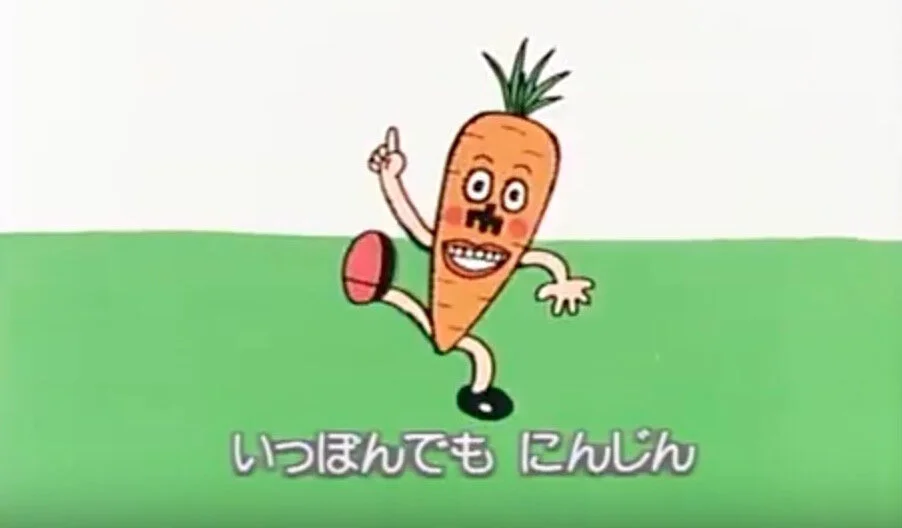
More Ways of Counting in Japanese with "Ippon Demo Ninjin"
My student shared the funny song "Ippon Demo Ninjin" with us recently.
It's pretty pun-tastic, and very catchy.
It's also a good way to learn and practice some more counters (little words we put on the end of numbers in Japanese, depending on what's being counted).
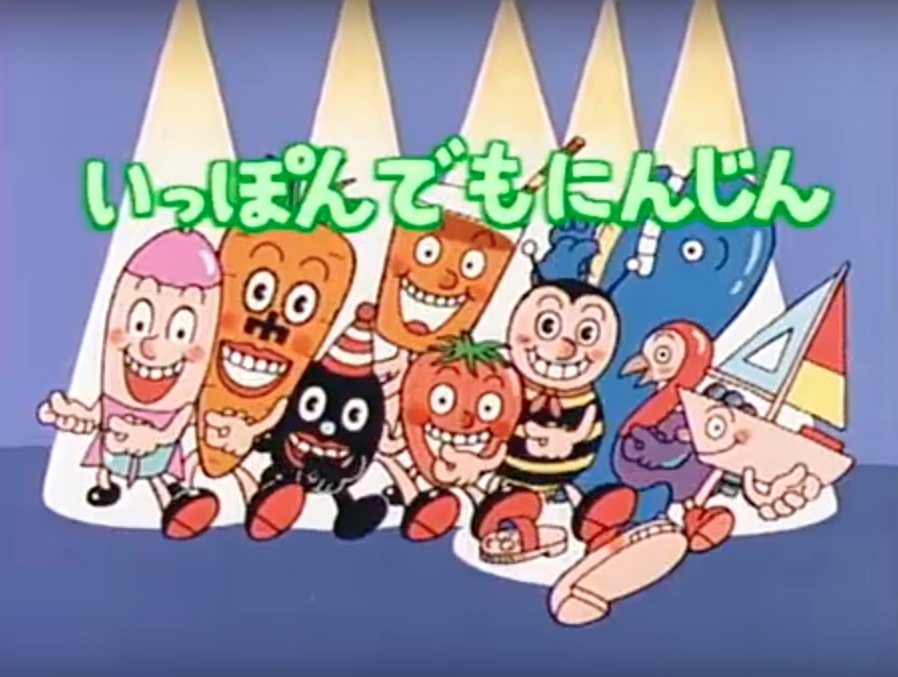
My student shared the funny song "Ippon Demo Ninjin" with us recently.
It's pretty pun-tastic, and very catchy.
It's also a good way to learn and practice some more counters (little words we put on the end of numbers in Japanese, depending on what's being counted).
(Part 1)
1! いっぽん でも にんじん Ichi! Ippon demo ninjin
2! にそく でも サンダル Ni! Nisoku demo sandaru
3! さんそう でも ヨット San! Sansou demo yotto
4! よつぶ でも ごましお Yon! Yotsubu demo gomashio
5! ごだい でも ロケット Go! Godai demo roketto
6! ろくわ でも しちめんちょう Roku! Rokuwa demo shichimencho
7! しちひき でも はち Shichi! Shichihiki demo hachi
8! はっとう でも くじら Hachi! Hattou demo kujira
9! きゅうはい でも ジュース Kyuu! Kyuuhai demo juusu
10! じゅっこ でも いちご Juu! Jukko demo ichigo
いちご、 にんじん、 サンダル、 ヨット、 ごましお、 ロケット、しちめんちょう 、はち、くじら、ジュース
Ichigo, ninjin, sandaru, yotto, gomashio, roketto, shichimencho, hachi, kujira, juusu
Strawberry, carrot, sandal, yacht, sesame and salt, rocket, turkey, bee, whale, juice
(Dance break)
(Repeat Part 1)
いっぽん、 にそく、 さんそう、 よつぶ、 ごだい、ろくわ、しちひき、はっとう、きゅうはい、 じゅっこ!
Ippon, nisoku, sansou, yotsubu, godai, rokuwa, shikihiki, hattou, kyuuhai, jukko!
One long thin thing, two shoes, three boats, four small round things, five vehicles, six birds, seven small animals, eight large animals, nine cups, ten small things!
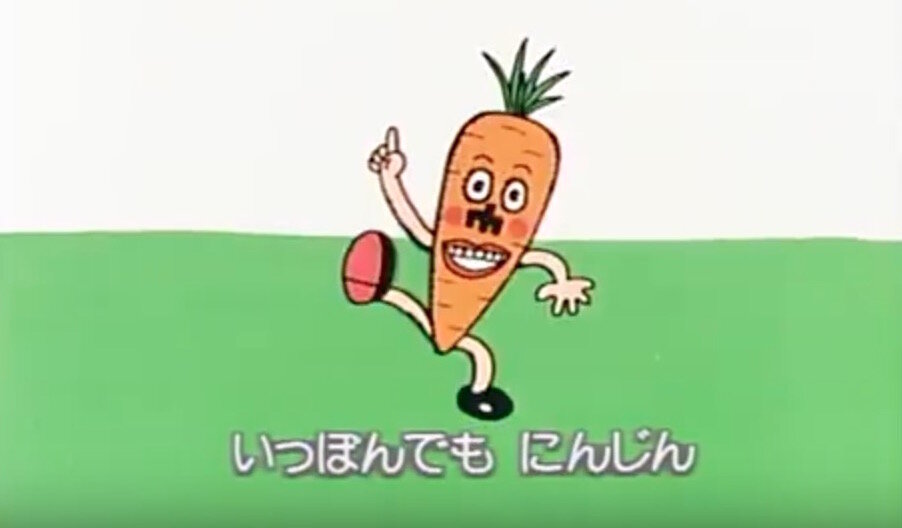
The beginning of ninjin (carrot) sounds like "ni" (two) but there's only one carrot.
And the beginning of sandaru (sandles) sounds like "san" (three) but...there are only two sandals!
We could translate いっぽん でも にんじん Ippon demo ninjin, therefore, as:
"It's only one, but it's a carrot."
or
"Even if there's only one, a carrot is ninjin."
(Trust me, it sounds better in Japanese.)
Anyway, listen again and try and sing along.
I haven't translated the whole thing for you, just bits. See if you can work the rest of it out!
First published Nov 2017. Updated August 2021.

"Does Japanese Have Plurals?"
After the excitement of our first school Summer Barbecue, I spent the day in bed watching one of my favourite films in Japanese.
It wasn’t a Japanese film though. I watched Hot Fuzz (or to give its Japanese title ホット・ファズ -俺たちスーパーポリスメン "Hot Fuzz: We Are The Super-Policemen!")
Watching British comedies dubbed into Japanese might not be the "purest" way to listen to Japanese. But if you enjoy it, it's definitely worth doing. Dubbed films are easy to watch, too, assuming you've seen the film before and know the plot already.
Anyway, there's a little scene in the Hotto Fazzu dub that's a nice example of Japanese plurals in action, so I thought I'd share it with you.

After the excitement of our first school Summer Barbecue (back in 2017), I spent the day in bed watching one of my favourite films in Japanese.
It wasn’t a Japanese film though. I watched Hot Fuzz (or to give its Japanese title ホット・ファズ -俺たちスーパーポリスメン "Hot Fuzz: We Are The Super-Policemen!")
Watching British comedies dubbed into Japanese might not be the "purest" way to listen to Japanese. But if you enjoy it, it's definitely worth doing. Dubbed films are easy to watch, too, assuming you've seen the film before and know the plot already.
Anyway, there's a little scene in the Hotto Fazzu dub that's a nice example of Japanese plurals in action, so I thought I'd share it with you.
Angel and Danny are in the corner shop, and the shopkeeper asks them:
殺人犯たち捕まらないの?
satsujinhan tachi tsukamaranai no?
"No luck catching them killers then?"
"Killers" is translated as 殺人犯たち satsujinhan-tachi. You take the word 殺人犯 satsujinhan (murderer) and add the suffix たち (tachi) - which makes it plural.
See? Japanese does have plurals! ... when it needs them.

Danny doesn't notice the shopkeeper's slip-up (she knows more than she's letting on), and replies:
人しかいないんだけど。
hitori shika inai n da kedo.
"It's just the one killer actually."

PC Angel, of course, mulls over the shopkeeper's words, and realises their significance: there's more than one killer on the loose.
It's a turning point of the movie, and it rests on a plural. Yay!
You can use たち like this when you need to indicate plurality:
私たち watashi-tachi we, us (plural)
あなたたち anata-tachi you (plural)
ジョンたち jon-tachi John and his mates
It's not that common, but it does exist. Keep an eye out for it! You never know, you might just solve a murder case.

First published 8th Sept 2017
Updated 11th Dec 2020

Why Don't Japanese Questions Have Question Marks?
Often, questions written in Japanese end in a full stop, not a question mark. But why?

Often, questions written in Japanese end in a full stop, not a question mark. But why?
When not to use a question mark
If a question ends in the question marker ka (か), it doesn't need a question mark, because the 'ka' tells us that this is a question:
今何時ですか。
Ima nanji desu ka.
What time is it?
That doesn't mean you can't use a question mark with か. People do it, especially in casual contexts. You just don't need to (and you shouldn't in formal writing).
Here's a question with か and a question mark, from the McDonald’s Japan website:

ハンバーガーは長い間放置しても腐らないと聞きました。本当ですか?
Hambaagaa wa nagai aida houchi shitemo kusaranai to kikimashita. Hontou desu ka?
I heard you can leave a hamburger for a long time and it won't go bad. Is that true?
Adding a question mark after か here makes 本当ですか? sound a bit more casual, friendly and questioning.

When to use a question mark
In questions without ka, question marks are pretty common:
明日は?
Ashita wa?
How about tomorrow?
お仕事は?
O-shigoto wa?
What's your job?
学校に行った?
Gakkou ni itta?
You went to school?
Without a question mark, these short written statements wouldn't obviously be questions.

That's all from me for today. So... any questions?
First published December 11, 2015
Updated December 13, 2018











Like many people in the UK, I studied French in school. I liked French. I thought it was really fun to speak another language, to talk with people, and to try and listen to what was going on in a new country. (Still do!)
When I was 14 we went on a school exchange to the city of Reims, in northeastern France. I was paired with a boy, which I’m sure some 14-year-olds would find very exciting but which I found unbearably awkward. He was very sweet and we completely ignored each other.
That was nearly 20 years ago, and I didn’t learn or use any more French until, at some point in lockdown, I decided on a whim to take some one-to-one lessons with online teachers. Here are some things I learned about French, about language learning, and about myself.