
Welcome to the Step Up Japanese blog archive!
Although I’m not currently adding new posts to the blog, you’ll find plenty of Japanese learning tips, study advice, and resources to explore here.
Browse the blog index to view a complete list of posts.
For the latest news, course updates, and Japanese learning tips from Step Up Japanese, sign up for my newsletter.
Search this blog:

Is it "douzo" or "dozo"?
"Wait, is it douzo? In the book it says dōzo..."
It's both. And it's neither!
In beginner classes I use often rōmaji (English letters) to write Japanese in class. This is to give you a head start in learning to speak.
Some people think you shouldn't use rōmaji at all, because it will give you bad pronunciation.
That might be true if you're studying by yourself…

"Wait, is it douzo? In the book it says dōzo..."
It's both. And it's neither!
In beginner classes I use often rōmaji (English letters) to write Japanese in class. This is to give you a head start in learning to speak.
Some people think you shouldn't use rōmaji at all, because it will give you bad pronunciation.
That might be true if you're studying by yourself.
But if you have a teacher to teach you how to pronounce Japanese words correctly, and correct your mistakes, you can learn Japanese correctly using rōmaji.
There are different systems for writing Japanese in the English alphabet. Depending on which system is being used, a word could be spelled differently.
どうぞ (do-u-zo) means "here you are" / "go ahead".
Some romanisation systems use a macron (that’s a horizontal bar over the letter) to write the long vowel sound: ā ī ū ē ō. Using the macron, the word would be written "dōzo".
Another method is to spell out the long vowel sound using double letters: aa, ii, uu, ei, ou. That gives us "douzo".
Both "dōzo" and "douzo" are correct.
Sometimes, the long vowel isn't written in: "dozo". Technically, this is wrong!
You might also see ee and oo used instead of ei and ou: "doozo".
Personally I think "doozo" is just asking for trouble. That's not how the word is spelled in Japanese (it's どうぞ do-u-zo).
Of course, the truly correct way to spell the word is to write it in Japanese characters: どうぞ.
But if you’re writing in rōmaji, both "dōzo" and "douzo" are fine too. Just don't forget the long vowel!

First published Nov 2017; updated Sept 2021

2021 Student Summer Picnic!
Thank you to everyone (including those not pictured) who came to our student picnic at the weekend!
We had fun meeting up outdoors, drinking tea, eating Japanese snacks and talking about Japan-related (and non-Japan-related) things.
It was so good to see students in person after such a long time!
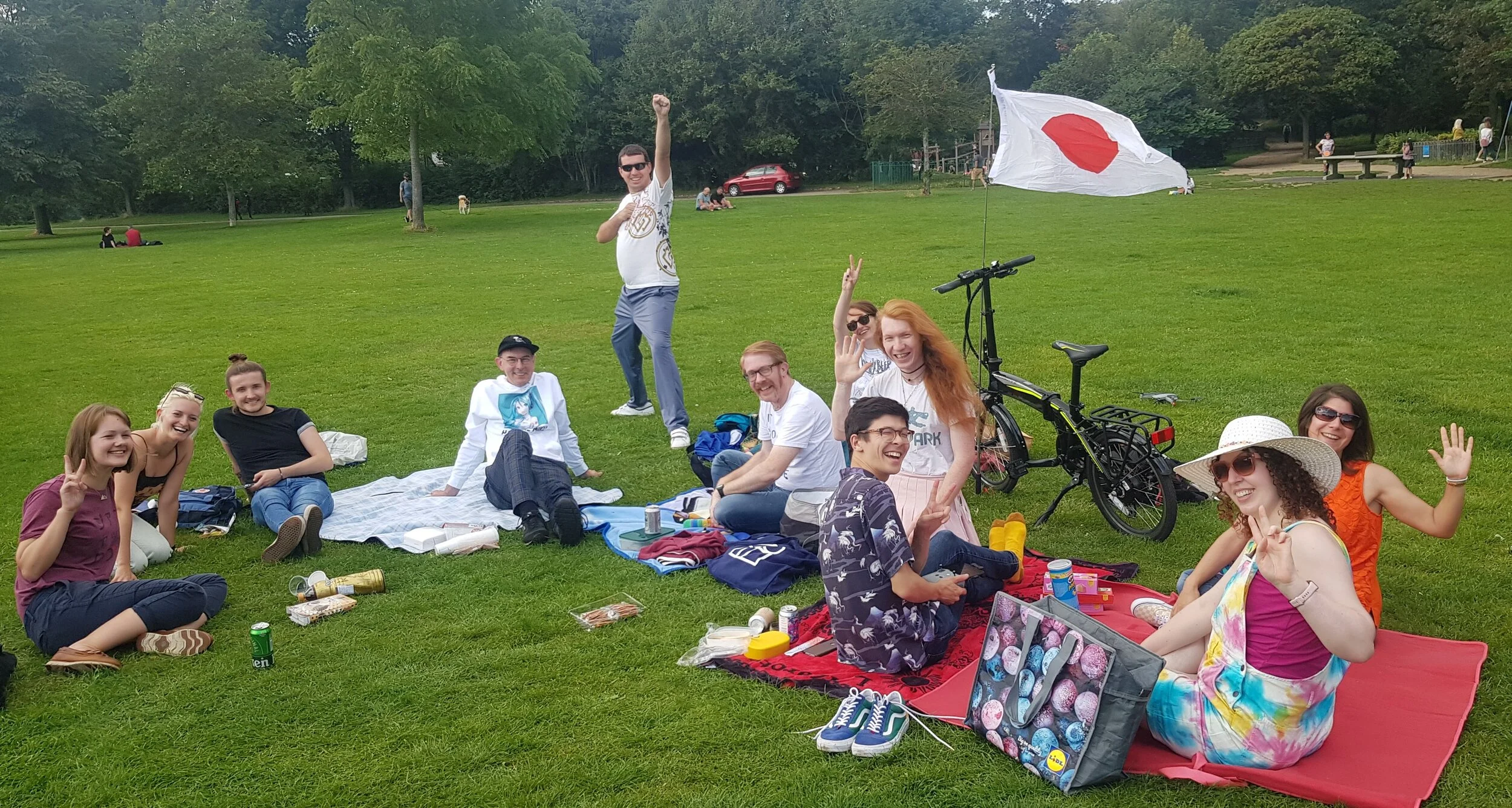
Thank you to everyone (including those not pictured) who came to our student picnic at the weekend!
We had fun meeting up outdoors, drinking tea, eating Japanese snacks and talking about Japan-related (and non-Japan-related) things.
It was so good to see students in person after such a long time!
Although all my teaching is online now, I still plan to run occasional social events in Brighton for students. I’m looking forward to seeing you all again soon.
More Ways of Counting in Japanese with "Ippon Demo Ninjin"
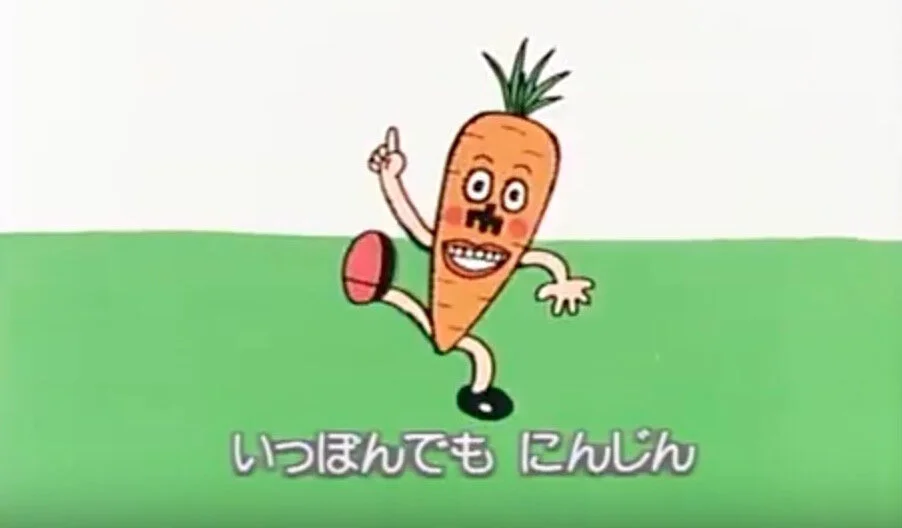
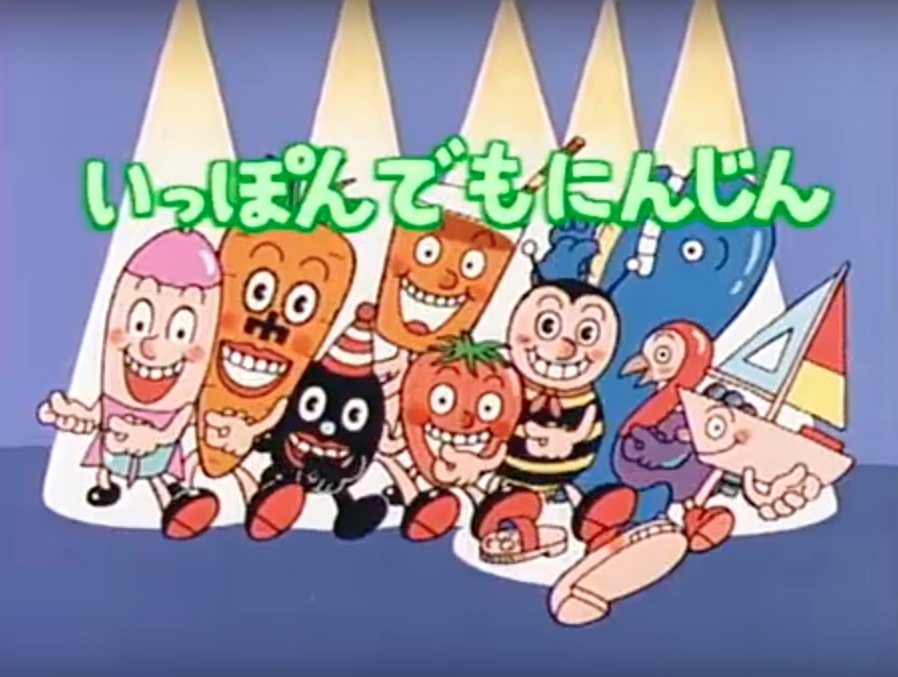
My student shared the funny song "Ippon Demo Ninjin" with us recently.
It's pretty pun-tastic, and very catchy.
It's also a good way to learn and practice some more counters (little words we put on the end of numbers in Japanese, depending on what's being counted).
My student shared the funny song "Ippon Demo Ninjin" with us recently.
It's pretty pun-tastic, and very catchy.
It's also a good way to learn and practice some more counters (little words we put on the end of numbers in Japanese, depending on what's being counted).
(Part 1)
1! いっぽん でも にんじん Ichi! Ippon demo ninjin
2! にそく でも サンダル Ni! Nisoku demo sandaru
3! さんそう でも ヨット San! Sansou demo yotto
4! よつぶ でも ごましお Yon! Yotsubu demo gomashio
5! ごだい でも ロケット Go! Godai demo roketto
6! ろくわ でも しちめんちょう Roku! Rokuwa demo shichimencho
7! しちひき でも はち Shichi! Shichihiki demo hachi
8! はっとう でも くじら Hachi! Hattou demo kujira
9! きゅうはい でも ジュース Kyuu! Kyuuhai demo juusu
10! じゅっこ でも いちご Juu! Jukko demo ichigo
いちご、 にんじん、 サンダル、 ヨット、 ごましお、 ロケット、しちめんちょう 、はち、くじら、ジュース
Ichigo, ninjin, sandaru, yotto, gomashio, roketto, shichimencho, hachi, kujira, juusu
Strawberry, carrot, sandal, yacht, sesame and salt, rocket, turkey, bee, whale, juice
(Dance break)
(Repeat Part 1)
いっぽん、 にそく、 さんそう、 よつぶ、 ごだい、ろくわ、しちひき、はっとう、きゅうはい、 じゅっこ!
Ippon, nisoku, sansou, yotsubu, godai, rokuwa, shikihiki, hattou, kyuuhai, jukko!
One long thin thing, two shoes, three boats, four small round things, five vehicles, six birds, seven small animals, eight large animals, nine cups, ten small things!
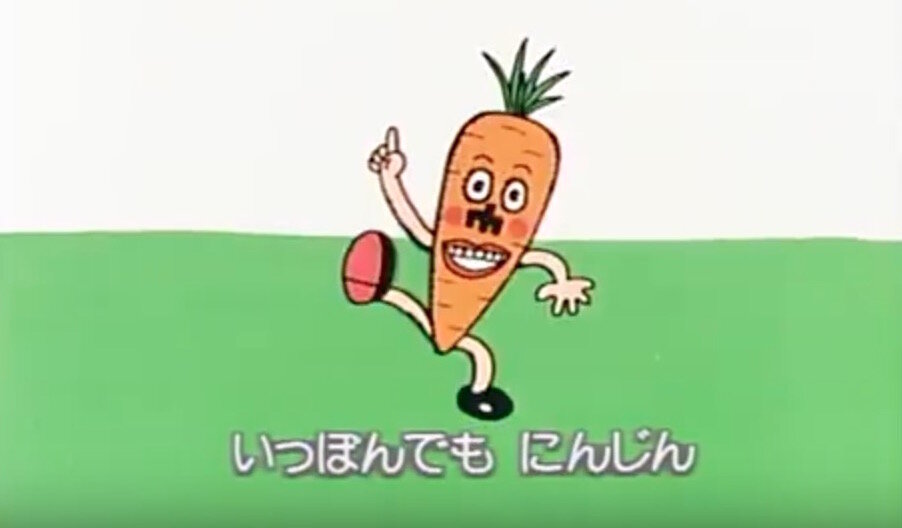
The beginning of ninjin (carrot) sounds like "ni" (two) but there's only one carrot.
And the beginning of sandaru (sandles) sounds like "san" (three) but...there are only two sandals!
We could translate いっぽん でも にんじん Ippon demo ninjin, therefore, as:
"It's only one, but it's a carrot."
or
"Even if there's only one, a carrot is ninjin."
(Trust me, it sounds better in Japanese.)
Anyway, listen again and try and sing along.
I haven't translated the whole thing for you, just bits. See if you can work the rest of it out!
First published Nov 2017. Updated August 2021.

What's The Difference Between Tabemono and Ryouri?
"Why does this homework say the Japanese word for food is ryouri? I thought you said the word for food was tabemono?"
I love it when students ask questions like this. It shows you’re really thinking about the language.
So, what’s the difference between ryouri and tabemono? Consider the following:
Potatoes are tabemono, but they're not ryouri.

"Why does this homework say the Japanese word for food is ryouri? I thought you said the word for food was tabemono?"
I love it when students ask questions like this. It shows you’re really thinking about the language.
So, what’s the difference between ryouri and tabemono? Consider the following:
Potatoes are tabemono, but they're not ryouri.
Fish and chips is tabemono AND ryouri.
Does that give you a clue?
食べ物 (tabemono)
Tabemono is food in quite a general sense. The unprepared ingredients in your fridge are tabemono. The food on your plate is also tabemono.
For example:
好きな食べ物は?
Suki-na tabemono wa?
What's your favourite food?
体に良い食べ物ベスト10!
Karada ni ii tabemono besuto 10!
Top ten foods that are good for you!
料理 (ryouri)
Ryouri, on the other hand, is cooking or cuisine. Specifically, it's food which has been cooked or otherwise prepared.
The food on your plate is ryouri, but the ingredients in your fridge are not ryouri yet.
Some more examples:
その店の料理は美味しかったです。
Sono mise no ryouri wa oishikatta desu.
The food at that restaurant was great.

Ryouri can be the cuisine of a whole country:
フランス料理が大好きです。
Furansu ryouri ga daisuki desu.
I love French food.
イギリス料理はまずいと言われます。
Igirisu ryouri wa mazui to iwaremasu.
It's said that British food is disgusting.
料理をする (ryouri o suru) means "to cook", too:
ロバートさんはあまり料理をしません。
Robaato san wa amari ryouri o shimasen.
Robert doesn't cook very often.
Question time!
Can you answer these questions?
1. 好きな食べ物は何ですか。
(すきな たべものは なんですか。)
2. よく料理をしますか。何を作りますか。
(よく りょうりを しますか。なにを つくりますか。)
Or, you could hop on over to Twitter and ask me a question. I love a good question 😊
Updated 10th August 2021

Games in Japanese - Course Introduction Video (and transcript)
On Games in Japanese (日本語でゲーム), we practise communicating in Japanese by playing games!
This footage is from the 2019 Games in Japanese Summer Course at Step Up Japanese in Brighton, UK. In summer 2020, we also held our first Online Games in Japanese course.
Thanks to Daniel Sheen for making this video!
Watch the video, or scroll down to read a transcript.
On Games in Japanese (日本語でゲーム), we practise communicating in Japanese by playing games!
This footage is from the 2019 Games in Japanese Summer Course at Step Up Japanese in Brighton, UK. In summer 2020, we also held our first Online Games in Japanese course.
Thanks to Daniel Sheen for making this video!
Watch the video, or scroll down to read a transcript. Click "CC" to turn on the subtitles 👍
What is Games in Japanese?
David: In 日本語でゲーム (Games in Japanese), we play a variety of games, only ever using the Japanese language.
Showing students how to play:
Fran: どれですか。(Which one is it?)
Fran: そうですね。木が同じです。(That’s right! KI [tree] is the same)
Fran: 3,2,1、はい。(3, 2, 1, go!)
Fran: あ!あ!ハサミ!(Ah! “Scissors!”)
Fran: 私は取ります。(So, I take the card)
Sara: You’ve got all the numbers, the names out on the floor, and it’s the reading and trying to get to it before everyone else, which is quite funny.
N: クエスチョン、はてなマーク (“question mark”)
What do you like about “Games in Japanese”?
David: I find it difficult to play games in only Japanese, but I really relish the challenge to speak only Japanese. It really makes me have to think in a way that maybe I wouldn't have the opportunity to do if I wasn't taking the course.
David: サングラス (“sunglasses”) (Laughter)
Sara: It’s very good vocab practice. I think it’s more, the games we have, it’s a lot more sort of random words so I feel like you’re a lot faster with it, so you tend to do a bit less thinking about the words that you want, you just kind of go like “that word, quick!”
Fran: はい (OK, let’s go)
A:ピエロ (“clown”)
Sara: So you’re trying to beat everyone else to it, so it's a bit more, a bit more silly.
Fran: 音楽 (“music”)…音楽 (“music”) (Laughter)
A: クモ (“spider”)
Sara: ドラゴン (“dragon”)
B: 花 (“flower”)
Sara: I quite like that game, it was funny.
Would you recommend Step Up Japanese?
Sara: I think Step Up Japanese is really good way to go, it’s really good practice, it’s a really relaxed atmosphere, and Fran’s such a good teacher. I’ll go home and I’m like, right, “I’m gonna do this”, I feel motivated to keep going at the weekends.

Why Does Everybody Forget Katakana?
I'll let you into a secret. I used to hate katakana.
Students of Japanese tend to start with its two phonetic alphabets. We start with hiragana, the loopy, flowing letters that make up all the sounds of Japanese.
Then we move on to katakana - all the same sounds, but in angular blocky font.
Hiragana seems fairly straightforward, I think. And when you start learning Japanese everything you read is written in hiragana, so by reading you constantly reinforce and remember.
Katakana? Not so much.

I'll let you into a secret. I used to hate katakana.
Students of Japanese tend to start with its two phonetic alphabets. We start with hiragana, the loopy, flowing letters that make up all the sounds of Japanese.
Then we move on to katakana - all the same sounds, but in angular blocky font.
Hiragana seems fairly straightforward, I think. And when you start learning Japanese everything you read is written in hiragana, so by reading you constantly reinforce and remember.
Katakana? Not so much.
The katakana "alphabet" is used extensively on signs in Japan - if you're looking for カラオケ (karaoke) or ラーメン (ramen noodles) you'll need katakana.

But if you're outside Japan, then beyond the letters in foreign names, you probably don't get a lot of exposure to katakana.
I think that's why a lot of beginning students really struggle to remember katakana.
Here are a couple of suggestions:
1) Use mnemonics
I learned katakana using mnemonics. For example, I still think katakana ウ (u) and ワ (wa) look super similar - I remember that ウ has a dash on the top, just like hiragana う (u) .
2) Practice, practice, practice
I'm not a huge fan of having you simply copy letters over and over again, but there is something to be said for "writing things out". By writing letters down, you activate muscle memory, which helps you remember. So get writing katakana!
3) Start learning kanji
It might feel like running before you can walk, but starting to read and write kanji (Chinese characters) before your katakana is completely perfect can be a good option.
Kanji textbooks have the Chinese readings of the characters in katakana, so learning kanji is also really good katakana practice.
And maybe, just maybe, you'll turn into a katakana lover?
Updated 23rd Oct 2020
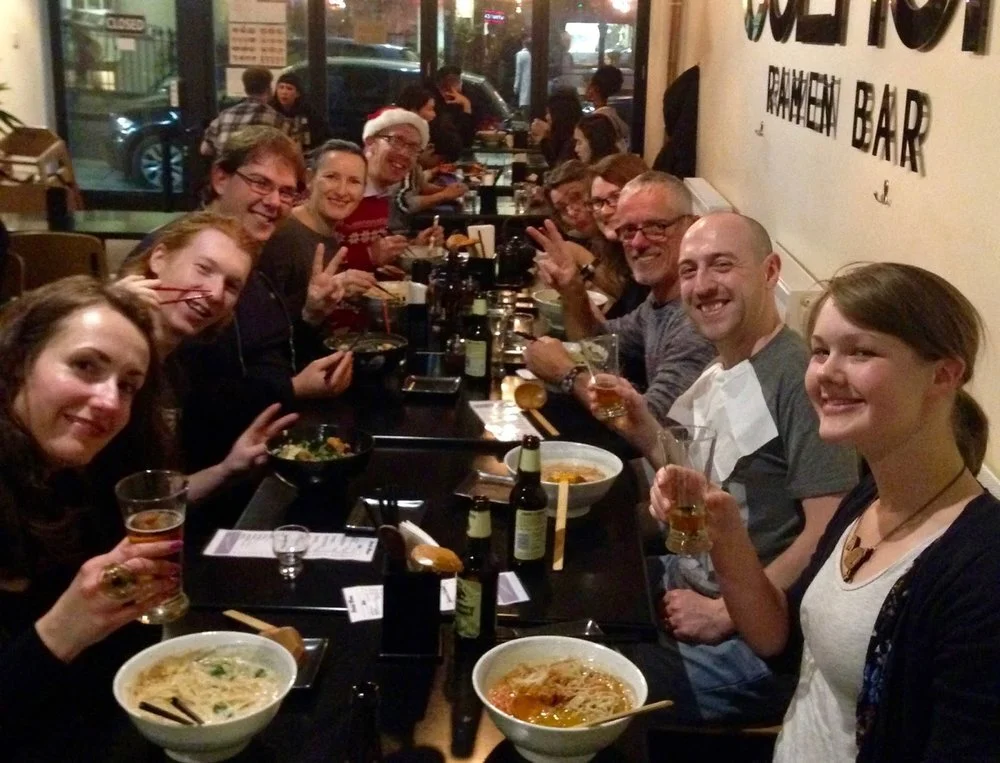
First Annual Step Up Japanese Christmas Party
We went to Goemon - arguably the home of Brighton's best ramen - at the end of term for a celebratory bowl of noodles. The inaugural Step Up Japanese Christmas party!
I wanted to introduce my students in different classes to each other, and to celebrate what you've all achieved in 2016.
Oh, and to eat ramen. I love ramen.
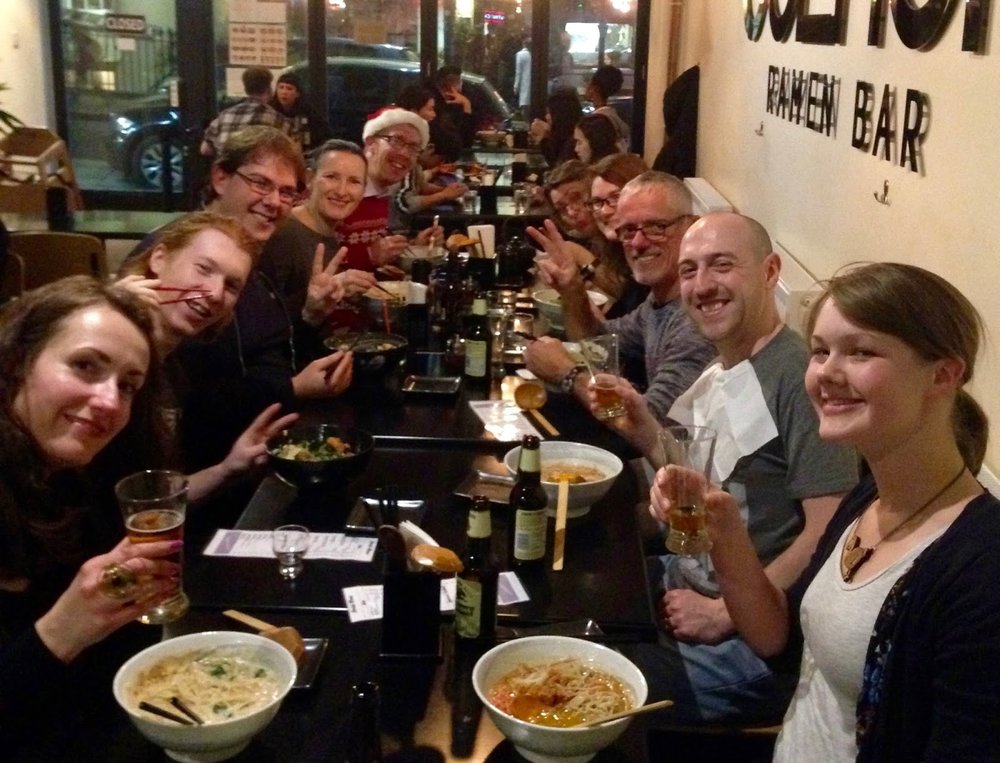
We went to Goemon - arguably the home of Brighton's best ramen - at the end of term for a celebratory bowl of noodles. The inaugural Step Up Japanese Christmas party!
I wanted to introduce my students in different classes to each other, and to celebrate what you've all achieved in 2016.
Oh, and to eat ramen. I love ramen.
I didn't take many photos (oops - too busy having a nice time!) but here they are:
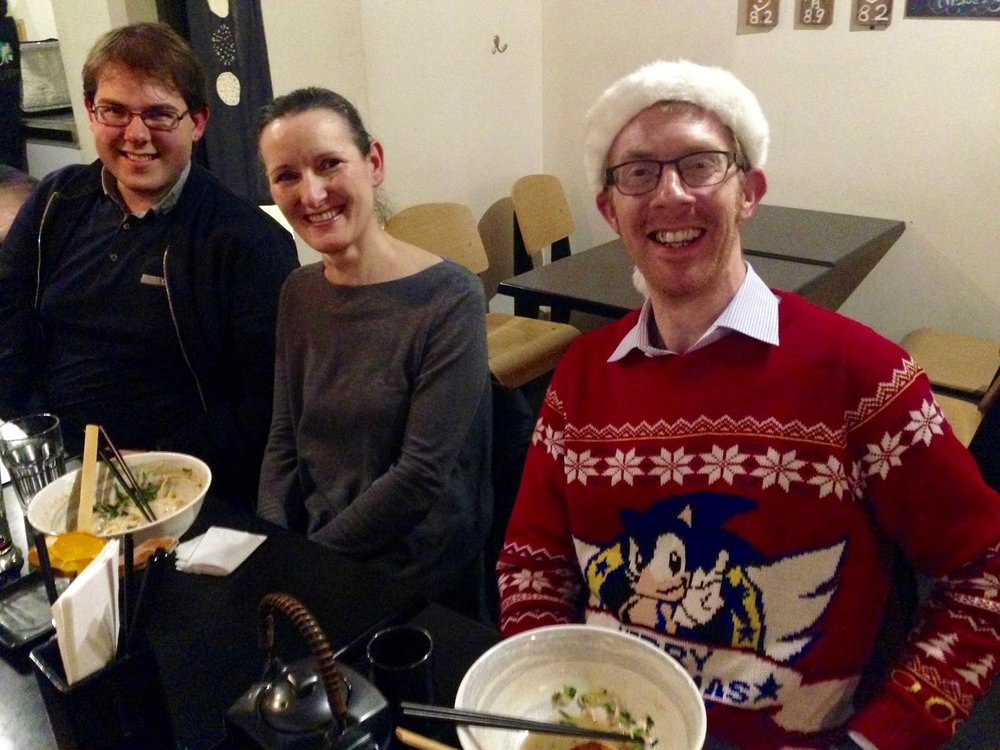
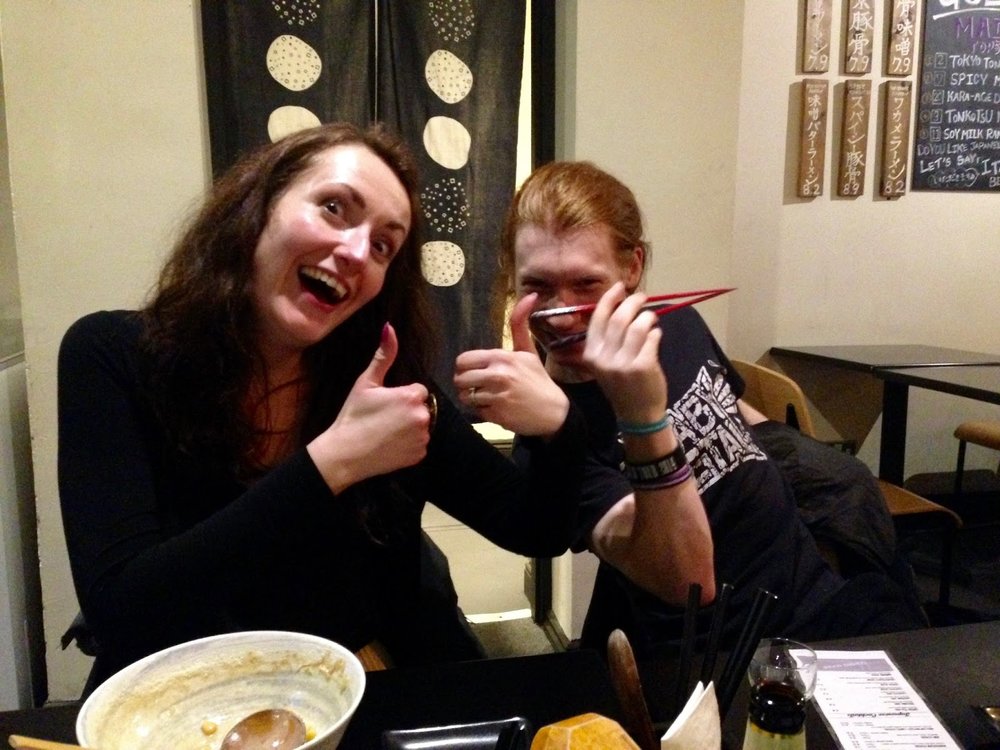

↓ (I know it's blurry but I think it catches the mood! Do you know how to say "blurry" in Japanese?)

Not one to miss a "teachable moment", I also wanted to encourage everybody to order in Japanese.
So we practiced in class the week before. Ordering in restaurants is probably one of the most useful things you can learn how to do in another language.
Everyone ordered confidently, the staff were super helpful, and I was (am!) a very proud teacher.

Thanks SO MUCH for all your support over the last year! メリークリスマス!










Like many people in the UK, I studied French in school. I liked French. I thought it was really fun to speak another language, to talk with people, and to try and listen to what was going on in a new country. (Still do!)
When I was 14 we went on a school exchange to the city of Reims, in northeastern France. I was paired with a boy, which I’m sure some 14-year-olds would find very exciting but which I found unbearably awkward. He was very sweet and we completely ignored each other.
That was nearly 20 years ago, and I didn’t learn or use any more French until, at some point in lockdown, I decided on a whim to take some one-to-one lessons with online teachers. Here are some things I learned about French, about language learning, and about myself.