
Welcome to the Step Up Japanese blog archive!
Although I’m not currently adding new posts to the blog, you’ll find plenty of Japanese learning tips, study advice, and resources to explore here.
Browse the blog index to view a complete list of posts.
For the latest news, course updates, and Japanese learning tips from Step Up Japanese, sign up for my newsletter.
Search this blog:

More Ways of Counting in Japanese with "Ippon Demo Ninjin"
My student shared the funny song "Ippon Demo Ninjin" with us recently.
It's pretty pun-tastic, and very catchy.
It's also a good way to learn and practice some more counters (little words we put on the end of numbers in Japanese, depending on what's being counted).
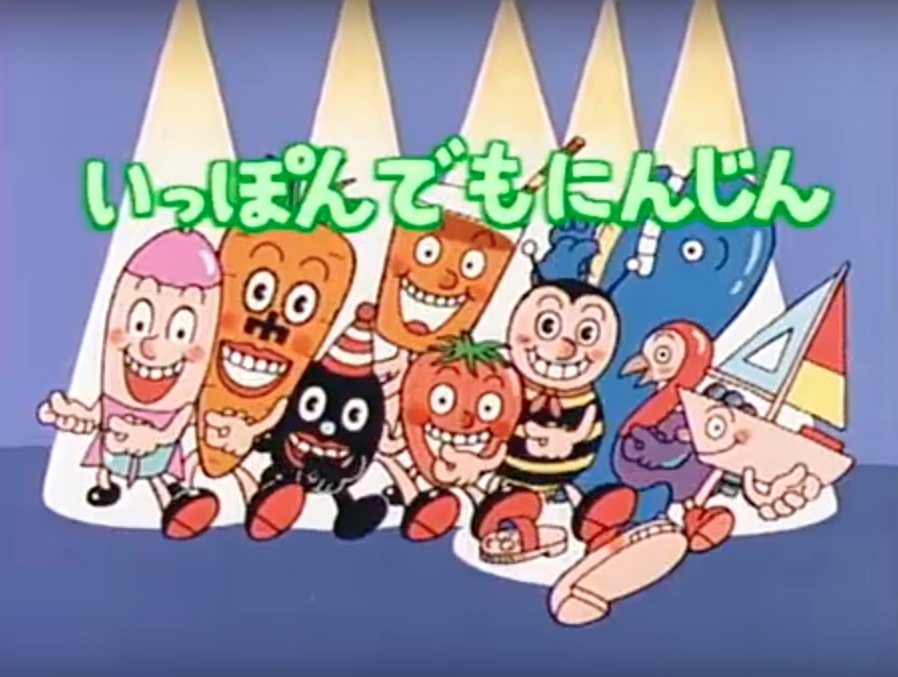
My student shared the funny song "Ippon Demo Ninjin" with us recently.
It's pretty pun-tastic, and very catchy.
It's also a good way to learn and practice some more counters (little words we put on the end of numbers in Japanese, depending on what's being counted).
(Part 1)
1! いっぽん でも にんじん Ichi! Ippon demo ninjin
2! にそく でも サンダル Ni! Nisoku demo sandaru
3! さんそう でも ヨット San! Sansou demo yotto
4! よつぶ でも ごましお Yon! Yotsubu demo gomashio
5! ごだい でも ロケット Go! Godai demo roketto
6! ろくわ でも しちめんちょう Roku! Rokuwa demo shichimencho
7! しちひき でも はち Shichi! Shichihiki demo hachi
8! はっとう でも くじら Hachi! Hattou demo kujira
9! きゅうはい でも ジュース Kyuu! Kyuuhai demo juusu
10! じゅっこ でも いちご Juu! Jukko demo ichigo
いちご、 にんじん、 サンダル、 ヨット、 ごましお、 ロケット、しちめんちょう 、はち、くじら、ジュース
Ichigo, ninjin, sandaru, yotto, gomashio, roketto, shichimencho, hachi, kujira, juusu
Strawberry, carrot, sandal, yacht, sesame and salt, rocket, turkey, bee, whale, juice
(Dance break)
(Repeat Part 1)
いっぽん、 にそく、 さんそう、 よつぶ、 ごだい、ろくわ、しちひき、はっとう、きゅうはい、 じゅっこ!
Ippon, nisoku, sansou, yotsubu, godai, rokuwa, shikihiki, hattou, kyuuhai, jukko!
One long thin thing, two shoes, three boats, four small round things, five vehicles, six birds, seven small animals, eight large animals, nine cups, ten small things!

The beginning of ninjin (carrot) sounds like "ni" (two) but there's only one carrot.
And the beginning of sandaru (sandles) sounds like "san" (three) but...there are only two sandals!
We could translate いっぽん でも にんじん Ippon demo ninjin, therefore, as:
"It's only one, but it's a carrot."
or
"Even if there's only one, a carrot is ninjin."
(Trust me, it sounds better in Japanese.)
Anyway, listen again and try and sing along.
I haven't translated the whole thing for you, just bits. See if you can work the rest of it out!
First published Nov 2017. Updated August 2021.

What's The Difference Between Tabemono and Ryouri?
"Why does this homework say the Japanese word for food is ryouri? I thought you said the word for food was tabemono?"
I love it when students ask questions like this. It shows you’re really thinking about the language.
So, what’s the difference between ryouri and tabemono? Consider the following:
Potatoes are tabemono, but they're not ryouri.

"Why does this homework say the Japanese word for food is ryouri? I thought you said the word for food was tabemono?"
I love it when students ask questions like this. It shows you’re really thinking about the language.
So, what’s the difference between ryouri and tabemono? Consider the following:
Potatoes are tabemono, but they're not ryouri.
Fish and chips is tabemono AND ryouri.
Does that give you a clue?
食べ物 (tabemono)
Tabemono is food in quite a general sense. The unprepared ingredients in your fridge are tabemono. The food on your plate is also tabemono.
For example:
好きな食べ物は?
Suki-na tabemono wa?
What's your favourite food?
体に良い食べ物ベスト10!
Karada ni ii tabemono besuto 10!
Top ten foods that are good for you!
料理 (ryouri)
Ryouri, on the other hand, is cooking or cuisine. Specifically, it's food which has been cooked or otherwise prepared.
The food on your plate is ryouri, but the ingredients in your fridge are not ryouri yet.
Some more examples:
その店の料理は美味しかったです。
Sono mise no ryouri wa oishikatta desu.
The food at that restaurant was great.

Ryouri can be the cuisine of a whole country:
フランス料理が大好きです。
Furansu ryouri ga daisuki desu.
I love French food.
イギリス料理はまずいと言われます。
Igirisu ryouri wa mazui to iwaremasu.
It's said that British food is disgusting.
料理をする (ryouri o suru) means "to cook", too:
ロバートさんはあまり料理をしません。
Robaato san wa amari ryouri o shimasen.
Robert doesn't cook very often.
Question time!
Can you answer these questions?
1. 好きな食べ物は何ですか。
(すきな たべものは なんですか。)
2. よく料理をしますか。何を作りますか。
(よく りょうりを しますか。なにを つくりますか。)
Or, you could hop on over to Twitter and ask me a question. I love a good question 😊
Updated 10th August 2021

Umbrellas Lost And Found - The Hundred Yen Shop
Did you know Japan has the most umbrellas per person, of any country in the world? For every person in Japan, there are 3.3 umbrellas.
At least three of them are mine, left outside shops and restaurants…
In 2011, I had just moved to Japan and I moved into my new flat on the outskirts of Nagoya city. At the weekends I'd head to Daiso, the 100-yen shop, to buy bits and pieces for my new flat.
One day, I left my umbrella in the stand outside the 100-yen shop. It was quite a nice umbrella - a neat little folding one, and it had been a present from my brother, so I went back to the shop the next day.
My little blue umbrella wasn't in the rack, so I asked at the till.

Did you know Japan has the most umbrellas per person, of any country in the world? For every person in Japan, there are 3.3 umbrellas.
At least three of them are mine, left outside shops and restaurants…
In 2011, I had just moved to Japan and I moved into my new flat on the outskirts of Nagoya city. At the weekends I'd head to Daiso, the 100-yen shop, to buy bits and pieces for my new flat.
One day, I left my umbrella in the stand outside the 100-yen shop. It was quite a nice umbrella - a neat little folding one, and it had been a present from my brother, so I went back to the shop the next day.
My little blue umbrella wasn't in the rack, so I asked at the till.
My Japanese was quite limited then, but I knew how to say 傘を忘れました (kasa o wasuremashita, "I left my umbrella").
The shop assistant looked a bit bemused, but wanted to help me, so she asked me what the umbrella looked like.
I told her the umbrella was 小さい (chiisai, “small”). I gestured to show it was very small.
She asked me:
ああ、折りたたみですか。
Aa, oritatami desu ka?
Oh, is it "oritatami"?
I didn't know what "oritatami" meant, and I didn't have a dictionary with me (it was 2011, and I didn’t own a smartphone), so I repeated that it was small.
The shop assistant bustled about, murmuring:
"Oritatami, oritatami, oritatami..."
She went off to look somewhere else, and then came back and apologised profusely. My umbrella was gone.
I walked home. It started to rain.
At home, I pulled out my romaji dictionary. And that was the day I learned that “oritatami” means "folding", as in, a folding umbrella.
! I'll never forget that word, I thought.
I lost my little umbrella, but I gained a new word in my vocabulary. You need a lot more than 3.3 words per person, after all!

How to Read The Japanese News (Or Any Japanese Website!) with Rikaichan
When I first moved back to Brighton from Japan I had a lot of time on my hands. I also didn't have a job, so I was desperate for free Japanese reading material.
So I started borrowing Japanese books from the library.
This plan was not exactly a success. It turns out reading Twilight in Japanese is only slightly more entertaining than reading it in English.
But we are really lucky to live in a world where, if you have internet access, you can read just about anything you want in Japanese online. And the news is a great place to start.

When I first moved back to the UK from Japan I had a lot of time on my hands. I also didn't have a job, so I was desperate for free Japanese reading material.
So I started borrowing Japanese books from the library.
This plan was not exactly a success. It turns out reading Twilight in Japanese is only slightly more entertaining than reading it in English.
But we are really lucky to live in a world where, if you have internet access, you can read just about anything you want in Japanese online. And the news is a great place to start.
If you can't read fluently yet, looking at a page of Japanese text can be intimidating. You don't know the meaning of the word, or even how to sound it out.
You need a dictionary - a really smart free one like Rikaichan. Rikaichan is a browser add-on that works as a pop-up dictionary. I used it every day for years, and I love it. Let's take a look at how it works, and start reading the news!
How Rikaichan works

Here we are on the website of the Asahi Shimbun, one of Japan's largest national newspapers.
I hover the cursor over the word 音楽. Rikaichan's little blue pop up tells me the reading of the word (おんがく ongaku) and what it means - "music".
Rikaichan also shows us the dictionary entries for individual kanji (Chinese characters).
Here, it's showing 音, the first character in the word 音楽, and telling us that 音 means "sound".
Learn where words begin and end
Standard written Japanese doesn't have spaces between words so if you're looking at unfamiliar words, it can be hard to know where each word starts and finishes.
Rikaichan is pretty smart at doing that bit for you.
Here, in the below example, it knows that 九州 (Kyushu island) is one word, and 豪雨 (torrential rain) is the next, separate word.

How to get it
So that's what Rikaichan does. Here's how to get started with it!
1) Get the right browser
Rikaichan and its "little brother" Rikaikun are for the web browsers Firefox and Chrome. If you're not using one of those, you'll need to download the browser first.
It's worth it. I used Firefox religiously for years just so I could use Rikaichan to get my morning news.
As far as I know the add-on doesn't work on mobile, unfortunately. (There's a similar-looking app called Wakaru for iOS - if you've used it, let me know what you think.)
2) Install Rikaichan or Rikaikun
Which one do you need? Rikaichan and Rikaikun are the same add-on, but for Firefox and Chrome. So, download and install Rikaichan from the Mozilla add ons page, or Rikaikun from the Chrome Web Store.

3) Download a dictionary
Rikaichan needs a dictionary to pull readings and meanings from, so after you've installed the add-on, you'll be prompted to install at least one dictionary file. If English is your first language, you want the "Japanese - English" dictionary.
I recommend installing the "Japanese Names" dictionary too, so that Rikaichan can identify common names when they pop up. That way, it'll know that 中田 is Nakada, a common Japanese surname, and doesn't just mean "middle of the ricefield".
4) Turn Rikaichan on
You probably won't want Rikaichan on all the time. Sometimes you'll want to read without a dictionary, and sometimes you won't be reading Japanese. You can turn it off and on when you like. Turn Rikaichan on, and let's give it a go.
Read everything!
Years ago when I started using Rikaichan, I set myself a challenge to read one headline with it every day.
Next, I made myself read three headlines per day. Then five. Then the first paragraph of an article. Eventually I was reading entire news articles, and using the dictionary less and less.
These days I get the Asahi Shimbun news straight to my inbox, because I don't need to look up words often enough to use Rikaichan any more.
But it was a completely invaluable part of my language learning journey. And it's definitely more interesting than reading Twilight in Japanese.
Updated 23rd Oct 2020

Even More Japanese Loanwords From Languages That Aren't English
Last time I talked about Japanese loanwords - words that Japanese has “borrowed” from other languages - which come from languages other than English.
But there are also some tricky loanwords that look and sound like they came from English - but they didn’t!

Last time I talked about Japanese loanwords - words that Japanese has “borrowed” from other languages - which come from languages other than English.
But there are also some tricky loanwords that look and sound like they came from English - but they didn’t!
Challenge time!
Don’t be fooled. These loanwords look and sound a bit like they came from English - but they didn’t! Can you guess what languages these loanwords come from?
(Hint: not English!)
Koohii コーヒー coffee
Zero ゼロ zero
Pompu ポンプ pump
Botan ボタン button
Koppu コップ cup
Sarada サラダ salad
Kokku コック cook
Scroll down for the answers…!

The Answers:
Did you guess what non-English languages these loanwords come from?
Koohii コーヒー coffee - Portuguese
Zero ゼロ zero - French
Pompu ポンプ pump - Dutch; Flemish
Botan ボタン button - Portuguese
Koppu コップ cup - Dutch; Flemish
Sarada サラダ salad - Portuguese
Kokku コック cook - Dutch; Flemish
Students often ask why there are so many Portuguese and Dutch loanwords in Japanese. Words from these two languages have been used as loanwords in Japanese since the 16th and 17th centuries, when both countries established trade with Japan.
So, just because that katakana word you’ve learned looks like English, doesn’t mean it came from English!
What’s the difference between sensei and kyōshi?
The word "sensei" is pretty well-known even among people who don't speak Japanese, but did you know that you shouldn't use sensei about yourself?
Here's what the textbook has to say:
"Use 'kyōshi' for yourself and the respectful 'sensei' for another person."
That's a pretty good starting point. But there's a bit more to it than that.
Japanese has (at least) two words for "teacher".
The word "sensei" is pretty well-known even among people who don't speak Japanese, but did you know that you shouldn't use sensei about yourself?
Here's what the textbook has to say:
"Use 'kyōshi' for yourself and the respectful 'sensei' for another person."
That's a pretty good starting point. But there's a bit more to it than that.
1. Kyōshi = school teacher
Kyōshi means the academic kind of teacher, someone who teaches in a school:
(私は)高校の教師です。
(watashi wa) kōkō no kyōshi desu.
I'm a high school teacher.

Images: Irasutoya
2. Sensei is a title
Sensei, however, is a respectful title, and should be used when talking about other people:
彼は中学校の先生です。
kare wa chūgakkō no sensei desu.
He's a junior high school teacher.
Watashi wa sensei desu is best avoided.
3. Sensei = master
Sensei can also be used more generally for a person who teaches something.
People who teach flower arranging or martial arts, for example, are sensei:
お花の先生
ohana no sensei
flower-arranging teacher
空手の先生
karate no sensei
karate teacher
茶道の先生
sadō no sensei
teacher of tea ceremony
If you're talking about yourself, however, you still shouldn't go around calling yourself sensei.
You can use the verb 教える oshieru (to teach) instead:
(私は)お花を教えてます。
(watashi wa) ohana wo oshiete imasu.
I teach flower arranging.
Certain types of professionals such as doctors or lawyers are also sensei (but again, not kyōshi).
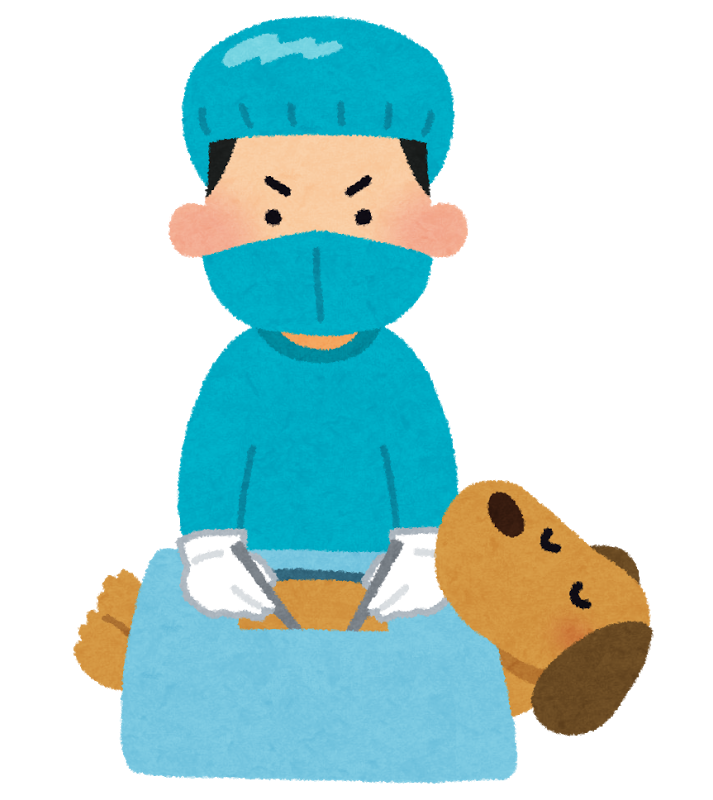
4. "Sensei!"
Sensei is attached after teachers' names instead of san:
山本先生
Yamamoto Sensei
= Mr/Ms Yamamoto; “Yamamoto teacher”
It's pretty common to drop the name, too, and just call your teacher sensei:
先生、おはようございます!
Sensei, ohayō gozaimasu!
“Good morning, teacher”
So to summarise:
Use '“kyōshi” for yourself and the respectful “sensei” for another person.
“Sensei“ is not just for teachers, but also for masters of other skills, and for doctors
Affix “sensei” to your teacher’s name to show respect











Like many people in the UK, I studied French in school. I liked French. I thought it was really fun to speak another language, to talk with people, and to try and listen to what was going on in a new country. (Still do!)
When I was 14 we went on a school exchange to the city of Reims, in northeastern France. I was paired with a boy, which I’m sure some 14-year-olds would find very exciting but which I found unbearably awkward. He was very sweet and we completely ignored each other.
That was nearly 20 years ago, and I didn’t learn or use any more French until, at some point in lockdown, I decided on a whim to take some one-to-one lessons with online teachers. Here are some things I learned about French, about language learning, and about myself.