
Welcome to the Step Up Japanese blog archive!
Although I’m not currently adding new posts to the blog, you’ll find plenty of Japanese learning tips, study advice, and resources to explore here.
Browse the blog index to view a complete list of posts.
For the latest news, course updates, and Japanese learning tips from Step Up Japanese, sign up for my newsletter.
Search this blog:
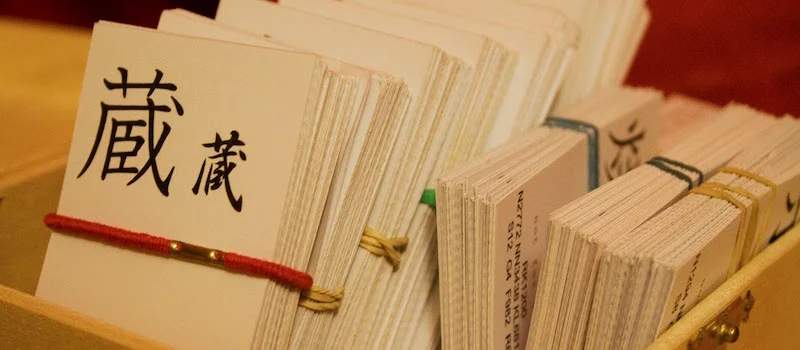
How to Use Anki to Not Forget Vocabulary
Lots of you probably use flashcards already. Why not use really, really clever ones?
Imagine you're studying Japanese vocabulary with a set of flashcards. You go through the cards one by one, putting them into a "pass" pile if you remembered them, and a "fail" pile if you didn't.
When you finish, you work through the "fail" pile again. You get about half of them right.
The next day, you go through all the cards again. It takes ages, and it's boring - you did all these yesterday…

You want to use flashcards. Why not use really, really clever ones?
Imagine you're studying Japanese vocabulary with a set of paper flashcards. You go through the cards one by one, putting them into a "pass" pile if you remembered them, and a "fail" pile if you didn't.
When you finish, you work through the "fail" pile again. You get about half of them right.
The next day, you go through all the cards again. It takes ages, and it's boring - you did all these yesterday.
Or maybe you start with the "fail" pile. But this card pile is smaller, so when the cards come up, you just remember the fact that you failed them yesterday!
This approach is okay, if you’re enjoying yourself. (Anything is okay, as long as you're having fun. This is my basic approach to language learning).
But you can make flashcards much more efficient - and stop wasting your time - with a spaced repetition system like Anki.
The power of active recall
When you use flashcards to test yourself, you're engaging in active recall - you're pushing your brain to remember something. This is the most effective way to commit things to memory.
You know that feeling when you're struggling to remember a word, and then finally get to it? That's active recall.
At that moment, you've just cemented the correct meaning of the word in your mind. And you'll remember it much quicker next time.
What is Anki?
Anki is a spaced repetition system (SRS) - a system for remembering things. It's free for PC / Mac, and Android. The iPhone app is not free (it’s £23.99), so I'd try it out on a computer first and see if you like it.
(Then again, it might be the best £23.99 you ever spend...)
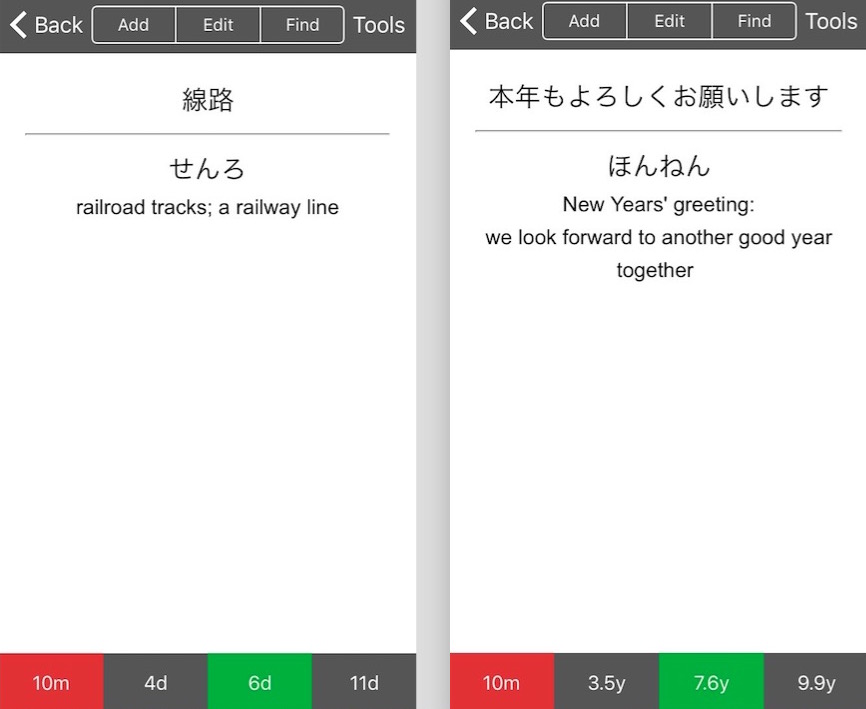
Anki shows you digital flashcards and tests you. It then spaces out the cards into the future, depending on how difficult you found them.
If you don't remember a word, Anki shows you it again in 10 minutes.
If you said it's easy, it might show you in three days. If in three days it's still easy, it waits seven days before it tests you on that word again.
If you keep getting it right, the interval increases exponentially, until Anki knows it'll be years before you forget that word. When you get it wrong, Anki knows you need to practice that word again soon.
So Anki sorts the “piles” of flashcards for you, testing you on material just as it thinks you're about to forget it.
I told you it was clever.
What to study?
Anki has shared decks that you can download - sets of flashcards made by other users.
If you're studying for the JLPT, there are loads of decks for that. And whatever Japanese textbook you're using, there'll be an Anki deck for it.
You probably don’t want to memorise every word in your textbook - maybe you don't think you need the word for "municipal hospital", or you want to focus on certain areas. Just delete the cards you don't need.
Or you can make your own decks by adding your own material. That's probably the best approach.
Maybe you want to memorise verb conjugations (masu form to -te form; -nai form, etc). Or maybe you just can't remember the difference between ウ and ワ. Stick it in your Anki deck, and forget about forgetting things.

What not to study
A word of caution - don't try and memorise things you don't understand yet.
For example, let's say in your textbook there's a chart giving the -nai forms of common verbs. You could put those in your anki deck and memorise them, I guess.
But it's no use if you don't know what the -nai form is and how it's used. Learn what it is - practice it, speak it, own it - and use spaced repetition to help you remember.
A useful companion
I tried to use Anki to re-learn some French last year (my high school French class was a long time ago).
I downloaded a beginner French deck, and I'd sit on the train testing myself on vocabulary. It helped a bit, but I didn't magically learn to speak French! That's basically because I never tried to produce any French in that time. I didn't speak with anyone or write down anything in French...
To master a language, you need to speak out loud, and listen a lot.Spaced repetition is a brilliant tool and a companion to learning. But it's not everything... you need to actually practice too.
I'd love to know how you're getting on with Anki. Do you love it or hate it? Tweet me a screenshot of your cards, or let me know in the comments.
First published May 08, 2017
Updated October 09, 2018

Say yes!
A couple of months ago I was invited to speak online at a new event all about languages. My first thought was, heck no! That sounds utterly terrifying.
My second thought was, what would Karli Dendy do?
Karli co-runs designosaur and YEAH laser here in Brighton. We've been friends since uni, when we watched enormous amounts of bad TV, and went to every nightclub in the city in one year.

A couple of months ago I was invited to speak online at a new event all about languages. My first thought was, heck no! That sounds utterly terrifying.
My second thought was, what would Karli Dendy do?
Karli co-runs designosaur and YEAH laser here in Brighton. We've been friends since uni,when we watched enormous amounts of bad TV, and went to every nightclub in the city in one year.
Now that we are grown-ups (apparently), I proofread her copy, and she gives me great business advice.
Anyway, I knew what Karli would say. Say yes.
"I know the new mantra is to learn to say no to things, but I'm very much still in the say YES to everything phase, check your inbox every five minutes and reply to every strange direct message you get."
- Karli on the designosaur blog
Isn't that awesome advice?
I've seen what amazing exciting opportunities Karli, and her boyfriend and business partner Jacques Keogh, have had by saying yes to things.
So I said yes.
And I did it! And it was great!
My talk was titled "The Classroom is Not Dead", and I spoke about my experiences setting up an offline language school, in an increasingly online world.
This was the first ever Women in Language event, put together by Kerstin Cable, Lindsay Williams, and Shannon Kennedy. There were 25 speakers - all women - and the online event ran from International Women's Day on March 8th to (UK) Mother's Day on March 11th.
The talks were divided up into four categories: Starting Language, Mastering Language, Living With Language, and Working With Language (that's me!)
I really enjoyed all the sessions I watched. There was a great mix of practical language learning advice, and more academic perspectives.
I missed a lot, but the talks are available online to ticket holders, so I can play catch-up over the next few weeks.
Speaking online was a new experience for me, but it was a lot of fun. I got some great questions in the Q&A too - about my experiences as a non-native teacher, and how to find a language class near you.
I also got to "meet" a bunch of new people online, and find other language teachers and learner to share experiences with.
And to think I wanted to say "heck no". It's a good thing I didn't.
So...what are you going to say yes to next?
Top photo: Lindsay Does Languages
More links: Women in Language homepage / designosaur / YEAH laser

Three Reasons Why Language Learning is Just Like Skateboarding
I bought a skateboard. And not just so I can start calling myself "the skateboarding Japanese teacher".
I've wanted to learn to skate for a long time. I'm turning 30 this year and I thought I should probably get on with it.
You know that Chinese proverb, "The best time to plant a tree was 20 years ago. The second best time is now"?
Well, I should probably have started skateboarding 20 years ago, because it turns out skateboarding is really hard. I didn't start when I was nine though, so now will have to do.

I bought a skateboard. And not just so I can start calling myself "the skateboarding Japanese teacher".
I've wanted to learn to skate for a long time. I'm turning 30 this year and I thought I should probably get on with it.
You know that Chinese proverb, "The best time to plant a tree was 20 years ago. The second best time is now"?
Well, I should probably have started skateboarding 20 years ago, because it turns out skateboarding is really hard. I didn't start when I was nine though, so now will have to do.
I'm not very good yet. In fact, I'm very bad.
I know I can do it though. It's just like learning Japanese! (Hear me out, ok...?)
1. You need to fall over a lot
You're going to fall off a skateboard, and make mistakes, and mess things up. It's going to hurt.
Sound familiar? Learning to speak a language is a process of making constant mistakes, and gradually getting better. If you don't make any mistakes when you're speaking a foreign language, you're not learning anything.
The only way to learn how to be good at something, is to first be very bad at it.
(I tell myself this constantly as I wobble around town on my little skateboard).
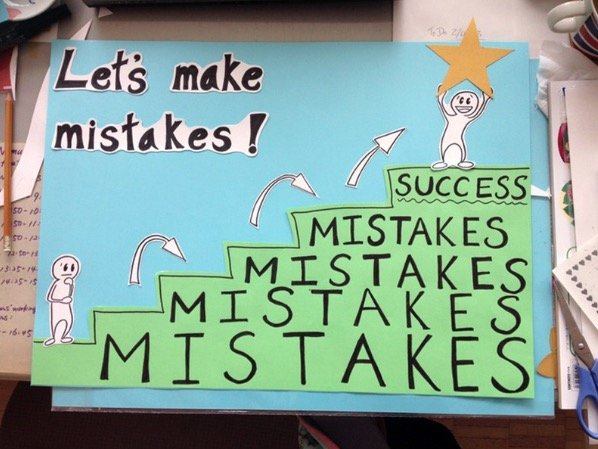
Image source: Verity Lane / Tofugu
2. It takes discipline
Learning any new skill takes considerable time and effort. You have to practice, even when you don't feel like it or when something else seems more appealing.
In a way, it's easy to be motivated, i.e. to want to do something. It's much more difficult to be disciplined - to do something even when you don't want to.
Taking your skateboard out on Saturday, even when it looks a bit windy, and you're not any good yet, and there are builders on the corner of the street who might laugh at you - that's discipline.
Studying a little bit of Japanese every day, even when you just feel like watching TV instead - that's discipline too.
Nothing that's worth doing can be learned overnight. (Unfortunately.)
3. You might feel silly
One of my students wrote this on his class feedback form last year:
"...while I feel terrible and clumsy while doing it, the speaking practice afforded by the class is something that is very difficult to get anywhere else."
I was a bit taken aback by this, because he doesn't sound terrible or clumsy when he speaks Japanese.
But a lot of people feel this way about doing something new, especially in front of other people. I certainly do.
Making mistakes can make us feel embarrassed or awkward.
(As a teacher, there's an added dynamic: I don't want my students to feel uncomfortable. But I do want to stretch them, and help them to push out of their comfort zone. It's a difficult balance, sometimes.)
I feel like very silly on my skateboard. Sometimes you've just got to push through it, I think, and focus on the goal.
"Think how good you'll feel when you can casually skateboard to work",
I tell myself. For me, it's the same feeling as:
"Think how good you'll feel when you can read a whole book in Japanese. Or have a ten-minute conversation. Or 30 minutes. Or a whole day!"
What do you think?
New Year's Resolutions - 2018
明けましておめでとうございます! (Akemashite omedetou gozaimasu!) Happy New Year!
Did you make any New Year's Resolutions this year?
January is a really good time to think about goals for the year ahead. Apart from anything else, it's cold! And it's nice to be inside making plans.
Here are my New Year's Resolutions for 2018…

明けましておめでとうございます! (Akemashite omedetou gozaimasu!) Happy New Year!
Did you make any New Year's Resolutions this year?
January is a really good time to think about goals for the year ahead. Apart from anything else, it's cold! And it's nice to be inside making plans.
Here are my New Year's Resolutions for 2018:
1) blog once a week
This one is easy (I hope!) and a continuation of last year.
In 2017 I aimed to publish a blog post a week. I actually did 26, which is one a fortnight.
That's not bad, but I definitely want to beat that in 2018.

2) play more games
In class, I mean. I want to work on making classes more fun, and one easy way to do that is more games.
My lovely students playing fukuwarai ("Lucky Laugh") game ↓

When we laugh together, we learn together.
(Cheesy but true).
3) read every day
This is a personal one. Last year I tried to read more Japanese fiction, and kind of failed.
I did find, though, that once I actually start reading I'm ok. It's the getting started that's the tricky part.
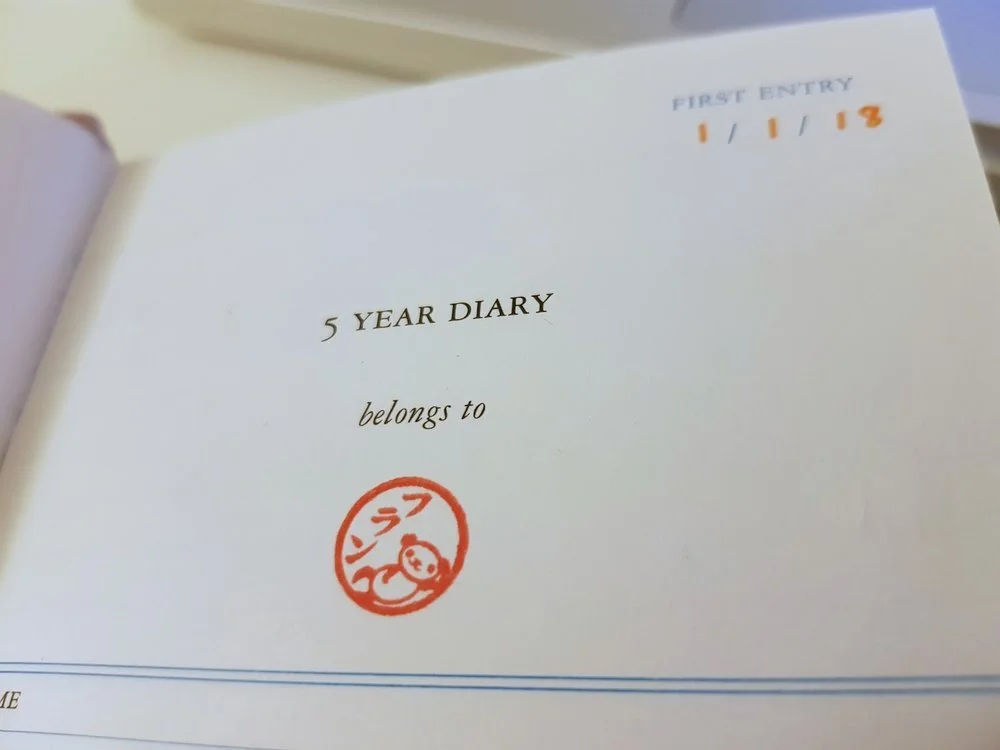
This year, I'm going to read some Japanese fiction every day, and keep a note in my 5-year diary when I've done it.
(16 days in, this is going pretty well.)

4) go to more teaching events
This year, I'm planning to go to more Japanese teaching and education-related events in London.
I went to a couple recently - a Japanese grammar teaching workshop at SOAS, and a bunch of seminars at the Language Show London.
I found it super helpful to reflect on my teaching practice and discuss ideas with other teachers and linguists.

I definitely want to go to more events like this in 2018.
...and it's a good excuse to go to London for the day too.
5) track these goals
Waiting until the end of the year to see how your goals are going doesn't really work.
In 2017, I actually completely forgot about one of my resolutions (to watch more drama in class). I'm going to avoid that this time by pinning them above my desk.

I'd love to know what New Year's Resolutions you made. Let me know in the comments!














Like many people in the UK, I studied French in school. I liked French. I thought it was really fun to speak another language, to talk with people, and to try and listen to what was going on in a new country. (Still do!)
When I was 14 we went on a school exchange to the city of Reims, in northeastern France. I was paired with a boy, which I’m sure some 14-year-olds would find very exciting but which I found unbearably awkward. He was very sweet and we completely ignored each other.
That was nearly 20 years ago, and I didn’t learn or use any more French until, at some point in lockdown, I decided on a whim to take some one-to-one lessons with online teachers. Here are some things I learned about French, about language learning, and about myself.