
Welcome to the Step Up Japanese blog archive!
Although I’m not currently adding new posts to the blog, you’ll find plenty of Japanese learning tips, study advice, and resources to explore here.
Browse the blog index to view a complete list of posts.
For the latest news, course updates, and Japanese learning tips from Step Up Japanese, sign up for my newsletter.
Search this blog:

Useful Apps to Download Before Your Trip To Japan (2019 Update)
If you just love missing your bus because you waited in the wrong place, overpaying for things because you can't remember the exchange rate, or wandering around for hours looking for a wi-fi spot in vain - stop reading now, because this one's not for you.
I'd like to share with you five super-useful apps to download before you travel to Japan!
Whatever you've got planned in Japan, these apps should get you well-prepared.

If you just love missing your bus because you waited in the wrong place, overpaying for things because you can't remember the exchange rate, or wandering around for hours looking for a wi-fi spot in vain - stop reading now, because this one's not for you.
I'd like to share with you some super-useful apps to download before you travel to Japan!
Whatever you've got planned in Japan, these apps should get you well-prepared.
1) Norikae Annai - in English!

Norikae Annai is Japan's most-downloaded travel app. It's easier to navigate than Hyperdia, much more nicely designed and more user-friendly. The catch used to be that it was only available in Japanese. But now it’s available in an English version too, called Norikae Annai - Japan Transit Planner.
Norikae Annai - Japan Transit Planner: App Store | Google Play
2) Tokyo Subway Navigation

I LOVE the Tokyo Subway Navigation app, because as well as transfer information it also has a fully offline, pinch-and-zoom map of - you guessed it - Tokyo's metro system.
Good for getting to grips with (what often seems like) the world's most complex underground rail system!
Tokyo Subway Navigation: App Store | Google Play
3) Apps for Free Wi-Fi

Even if you don't want to be connected all the time, you'll probably want wifi at some point on your travels. Japan Travel by Navitime is an app with an offline map showing free wifi spots. It also has free downloadable offline maps of all the major cities in Japan.
Japan Connected-free Wi-Fi, similarly, has an offline map showing free wifi.
(Or you could just do what I do on holiday and stand outside McDonalds pretending to wait for someone while actually using the free internet. That's cool too, right?)
Japan Travel by Navitime: App Store | Google Play
Japan Connected-free Wi-Fi: App Store | Google Play
4) XE Currency

Not Japan-specific, but definitely useful.
Until the exchange rate hits a nice easy number like 100 yen to the pound, you'll probably want a currency converter so you can figure out how far your spending money's going to go. And the XE converter works offline, too.
XE Currency: App Store | Google Play
So that's what's in my "essential Japan travel apps" folder! What's in yours? Let me know in the comments.
First published March 2016; updated 15 October, 2019
Watching Japanese TV Every Day for a Month (Or, What to Do When Things Don't Go To Plan)
In my second year of university, when I should have been revising for my Japanese exam, I borrowed the Studio Ghibli film Princess Mononoke (もののけ姫 Mononoke-hime) from a friend and watched that instead.
It was way too fast for me, and I didn’t understand anything. I think I literally caught about two words. It definitely didn’t help with my exam. If anything it just left me feeling a bit discouraged.
I should have watched Mononoke with subtitles. Or, probably, I should have watched something easier.
I gave up on watching Japanese films for a while after that. But later on, I discovered Japanese TV, and found it a fun and interesting way to develop my listening skills. As one of my monthly challenges this year, I decided to watch Japanese TV every day for a month.
I thought this would be easy – I already watch quite a lot of Japanese TV. But just like my exam “revision”, it didn’t exactly go to plan…

In my second year of university, when I should have been revising for my Japanese exam, I borrowed the Studio Ghibli film Princess Mononoke (もののけ姫 Mononoke-hime) from a friend and watched that instead. It was way too fast for me, and I didn’t understand anything. I think I literally caught about two words.
It definitely didn’t help with my exam. If anything it just left me feeling a bit discouraged. I should have watched Mononoke with subtitles. Or, probably, I should have watched something easier.
I gave up on watching Japanese films for a while after that. But later on, I discovered Japanese TV, and found it a fun and interesting way to develop my listening skills.
As one of my monthly challenges this year, I decided to watch Japanese TV every day for a month. I thought this would be easy – I already watch quite a lot of Japanese TV.
But just like my exam “revision”, it didn’t exactly go to plan…
Week One – A Promising Start
I spent the first week of September helping my brother move house. I had the week off work, I wasn’t doing any lesson prep or teaching, and I had good chunks of time to myself each day. It was easy to watch an episode or two of Japanese TV every day.
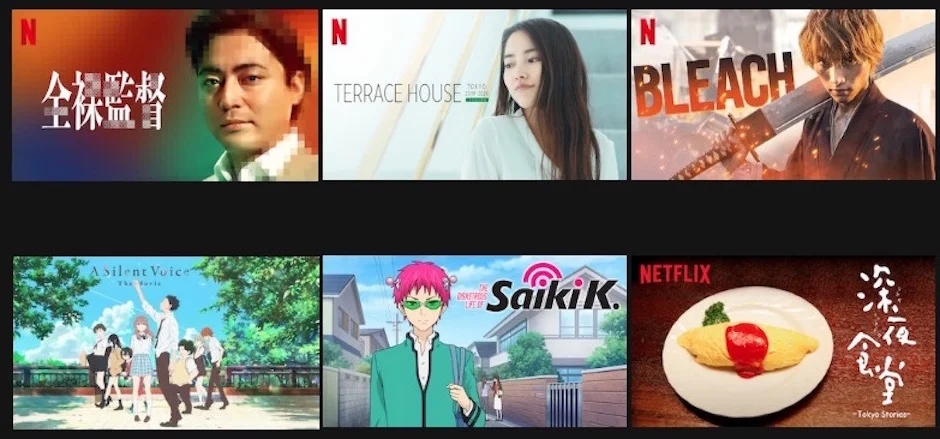
I watched The Naked Director (全裸監督 zenra kantoku), a Netflix series about the life of Japanese adult video director Toru Muranishi. These episodes are 45 minutes, so I’d watch one a day, or half an episode a day if I was short on time.
Tip: Don’t feel obliged to watch whole episodes. Half an episode is better than nothing.
Watching Japanese TV every day was going to be easy, I thought.
Week Two – Branching Out
Back home in Brighton, the following week, I watched some of Atelier (アンダーウェア andāwea, meaning Underwear), another drama series. Atelier is about a young woman, Tokita-san, who works for a high-class lingerie shop in Tokyo’s Ginza district. It’s a gentle, chocolate-boxy show about Tokita’s relationship with her intimidating boss.
I started watching Atelier when it came out in 2015, got bored and came back it this month. I watched about six episodes again this time, and then got bored again.
One of the great things about Netflix, of course, is that it has a wide range of shows, so you can jump about and find something you like. You don’t have to commit to watching in the same way that you would if you were buying a TV series or paying to rent it from a DVD shop (remember those? I do.)
Tip: If you get bored, stop watching and try something else!
I moved on to Netflix’s Terrace House (テラスハウス, terasu hausu).
(Interestingly, テラス (terasu) is the Japanese word for a balcony, so the “terrace house” of the title is a fancy modern house with a balcony, not a UK “terraced house”, which is a house built as part of a row of houses.)
Terrace House is a housemate-format reality TV show. Unlike other house-based shows, though, it’s slow-moving and meditative. There are no “evil” tasks or conflict-inducing rule changes.
The housemates are allowed to come and go as they please. They go to work. Not much really happens. No one is voted out, and mostly they seem to sit around talking about what to have for dinner.
It’s delightful, and from my students I know it’s pretty popular among learners of Japanese.
The format of Terrace House is great for comprehension, too. You watch the intro, which previews the action and shows you what’s going to happen. Then the action happens. Then the studio cast discuss what’s happened. Then we preview what’s coming up on the next episode. This is great for comprehension, because key points are repeated.
It’s a bit like this sketch:
Of course, reality TV is great listening practice for natural speech. It’s how real people speak, in fairly real situations. If you find natural speech fast or difficult to follow, try watching with subtitles.
Tip: turn the subtitles on. It’s not cheating to watch with subtitles! If you’re at intermediate level or above, try watching with Japanese subtitles.
I also watched a beautiful film, 聲の形 (koe no katachi, A Silent Voice), which was recommended to me by several of my students. It’s an animated teen drama, following the relationship between a deaf girl and a hearing boy, and exploring themes of bullying, disability and redemption.
If you liked Makoto Shinkai’s Your Name (君の名は, kimi no na wa), you should definitely watch A Silent Voice:
Things were going well!
Week Three – Forgetting
I went vegetarian when I was ten. A few months later, my friend’s sister decided she was going to be vegetarian too. But then the next week, out for a meal, she forgot and ordered spaghetti bolognese. Once her meal came, she remembered that she was supposed to be vegetarian and was quite upset.
I found this totally baffling. How could she forget something so important? How could someone forget that spaghetti bolognese isn’t vegetarian? Why didn’t her parents question it when she ordered? None of this made sense to me.
I was similarly surprised, in the middle of the third week of September, to remember that I was supposed to be watching Japanese TV every day. I hadn’t watched any Japanese TV for four whole days. Not only that, I even hadn’t noticed I hadn’t done it. I just completely forgot.
I’m usually a pretty organised and disciplined person, so this was an unpleasant surprise. September is a busy month for me, as my new courses start, and this year was particularly busy, as I had other things going on too.
But what to do now?
When you realise you’ve “failed” at a challenge you've set yourself, you basically have two choices.
Option one is to give up. There was no way for me to turn back time and achieve what I set out to do – to watch Japanese TV every day in September. So, I figured, I could just quit, and take it easy for the rest of the month.
Option one was pretty tempting, especially when I started to think about why I had managed to forget that I was supposed to be doing this challenge.
I think the key problem was that watching Japanese TV is not really a challenge for me. I don’t mean that it’s not difficult – obviously I don’t understand everything. Or that I have nothing to learn – I do.
But I already watch TV most days, and I watch quite a bit of Japanese-language TV, so watching Japanese TV every day was not enough of a change in habit. I did it for half the month, and then I forgot I was supposed to be doing it.
The other monthly challenges I’ve done have been harder, and yet I managed them. Speaking Japanese without being in Japan required planning, effort, early mornings and occasional bribery. Reading Japanese books every day, I needed to have a book on me at all times. Even playing Japanese video games every day required me to work out when I was going to squeeze 20 or 30 minutes out of each day.
But watching Japanese TV when I get home from work just feels a bit too similar to watching English-language TV when I get home from work.
Tip: don’t make your goals too easy, or you may find that they’re not motivating.
Option Two was to keep going, and see how it went. I figured that even if I didn't clock up the hours I was hoping for, it would probably still be more Japanese TV than I would have watched otherwise.
I decided to keep going.
Week Four - Taking a Detour
At the weekend, I watched five episodes of Terrace House (2.5 on Saturday, 2.5 on Sunday. See, the half episodes do add up).
I also watched another Japanese film, Tokyo Sonata:
Japanese TV started to crop up everywhere. A colleague asked if I was into Kore-eda films. The new term started, and I overheard my new beginner students talking about Terrace House. My STEP 2 students swapped recommendations for easy Japanese shows to watch. I went for a walk with a friend, and she told me she’d been exploring the Japanese side of Netflix.
As for me? I might watch Princess Mononoke again some day, now that I can understand it.
It’s good to make a plan for your language learning, but it’s ok if the plan doesn’t work out. Taking a detour can be more interesting anyway.

Learning Japanese is Easier Than You Think
People LOVE to say that Japanese is difficult. Like all languages it has its challenges - but it also has some key things that make it easy peasy…

People LOVE to say that Japanese is difficult. Like all languages it has its challenges - but it also has some key things that make it easy peasy.
1. Pronunciation
The Japanese phonetic system is pretty simple - much simpler than many other languages. Each hiragana character has one - and only one - sound. For example, ら / ラ / ra always sounds the same, no matter what word it’s in:
ラ ム ネ
ra mu ne
ど ら え も ん
do ra e mo n
Compare that to English, where “meat” and “bread” have the same letters “ea” in the middle, but with totally different pronunciation.
And, unlike Mandarin or Cantonese, there are no tones* in Japanese! Hurray!
*Japanese does have pitch accent. Put simply, all syllables in Japanese are either high-pitched or low-pitched. But this is much simpler than tones in Chinese languages. If you’d like to learn more about Japanese pitch accent, I really recommend the Japanese Phonetics by Dogen series on YouTube.

2. Loanwords
Japanese has thousands of words borrowed from other languages - and most of these modern loanwords come from English. How do you say "ice cream” in Japanese? AISU KURIIMU. Tennis? TENISU. Smartphone? SUMAATOFON.
So there’s a whole bank of Japanese words that you already know. Well done you.
↓ Words like "biiru"

3. Straightforward grammar
Japanese word-order has a certain Yoda-like quality at times:
わたしはコーヒーを飲んでいます
watashi wa koohii wo nonde imasu
I, coffee am drinking
BUT making simple questions in Japanese is dead easy. You take your sentence:
日本に行きます
nihon ni ikimasu
I go to Japan
and stick the magical question word “ka” on the end:
日本に行きますか
nihon ni ikimasu ka
Will you go to Japan?
No need to change the word order. Just add か.
Let’s try that again!
これはたこやきです
kore wa takoyaki desu
This is takoyaki.
これはたこやきですか
kore wa takoyaki desu ka
Is this takoyaki?
Making simple Japanese questions - as easy as adding “ka”.

4. Particles
Particles are short Japanese words that connect parts of a sentence together. They turn a sentence like “I study home evening” into one that sounds like “I study at home in the evening”.
But I’m going to let you in on a secret.
If you don’t know what particle to use, 90 percent of the time you can get away with not using one at all.
People will still know what you mean - and Japanese people drop particles in speech half the time anyway.
That’s not to say you shouldn’t learn how to use particles (it’s good to know the difference between いぬがたべる “the dog eats” and いぬをたべる “I eat my dog”). But remember: you will still be understood without them.

5. No articles…and no plurals!
Japanese doesn’t have equivalents to the English “a” or “the”. There’s no need to say “where is THE book?” in Japanese. You can just say:
ほんはどこ?
hon wa doko?
Where is book?
AND there are no plural forms.
りんごがあります
ringo ga arimasu
I have an apple / some apples
See? The Japanese language. Easier than you thought.
What do you find easy (or difficult) about learning Japanese? Let me know in the comments!
First published November 20, 2015
Updated September 17, 2019

Say Good Morning to the Room - The Importance of Aisatsu (Greetings) in Japan
By the entrance to the conference room, there was a flip chart with a message: “Please sign in here, and then go through the door and say good morning to the room”.
“OHAYO GOZAIMAAASU!” I yelled. (GOOD MORNING!)
We had practiced this yesterday. “In Japanese workplaces,” they told us, “you must greet the room enthusiastically when entering.”
As I took my seat, I noticed that some trainees had been given a piece of card by staff as they entered.

By the entrance to the conference room, there was a flip chart with a message: “Please sign in here, and then go through the door and say good morning to the room”.
“OHAYO GOZAIMAAASU!” I yelled. (GOOD MORNING!)
We had practiced this yesterday. “In Japanese workplaces,” they told us, “you must greet the room enthusiastically when entering.”
As I took my seat, I noticed that some trainees had been given a piece of card by staff as they entered.
A member of staff took to the podium. “Well done everybody on your amazing greetings this morning. You sounded so energetic and loud!
“Those of you who’ve been given a card, your greetings were not quite as genki (energetic) as they could have been. Have a think about that.”
I was at a week’s training for my new job as Assistant Language Teacher (ALT) in Nagoya.
I wasn’t sure about the method of handing out cards to let some people know their greetings weren’t up to regulation enthusiasm standards. But I got the message - greetings are important.
Fast-forward three months, and I was teaching in Junior High school. Every morning, I’d take my shoes off in the entryway to the school and change into my indoor slippers. I’d slide open the door to the staffroom, and greet the room: “OHAYO GOZAIMAAASU!”
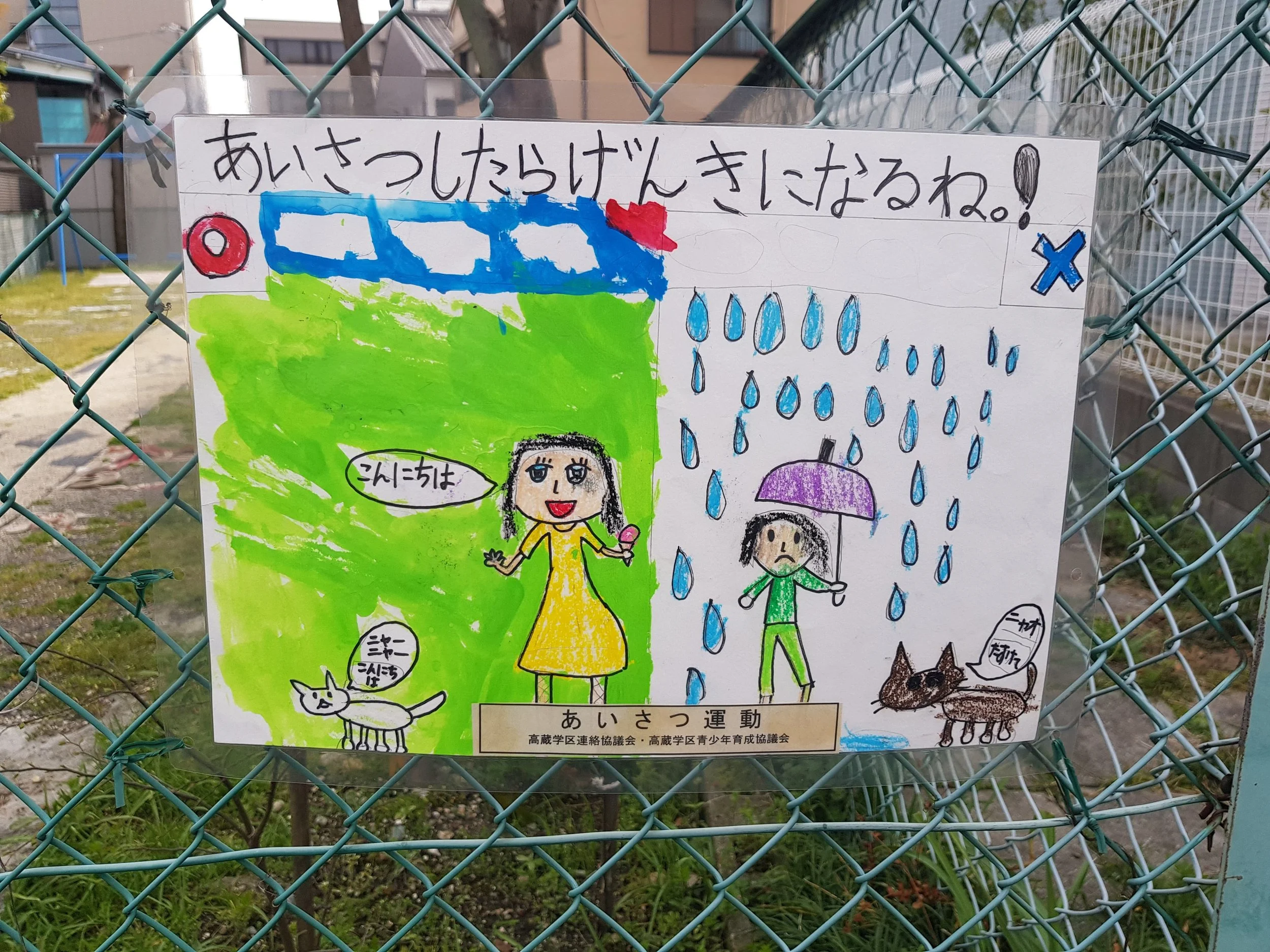
“Ohayo gozaimasu!” other teachers would say back, at varying volumes and with varying degrees of enthusiasm. Good morning!
A few minutes later, the vice principal passed by my desk:
フラン先生は、挨拶がいつも元気ですね。
Fran-sensei wa, aisatsu ga itsumo genki desu ne.
(“Your morning greetings are always so cheerful!”)
そうですか。ありがとうございます。
Sou desu ka. Arigatou gozaimasu.
(“Is that so? Thank you.”)
I smiled all day.

2019 Summer Party!
Thank you so much for coming to our 2019 student summer party this year! We had a sunny, relaxing day on Brighton beach and even went for a paddle in the water.
I hope you enjoy these sunny photos of this happy day!
Thank you so much for coming to our 2019 student summer party this year! We had a sunny, relaxing day on Brighton beach and even went for a paddle in the water.
I hope you enjoy these sunny photos of this happy day!





How to Practise Japanese by Playing Video Games Every Day
Earlier this year, I was telling a friend about the various monthly challenges I set myself to practise Japanese.
“What are you going to do in July?”
“I might try writing every day, like a diary or something? Or I might watch Japanese TV every day…”
“Fran, watching TV every day doesn't really sound like a challenge.”
“…or I might play video games every day.”
“That definitely doesn't sound like a ‘challenge’ to me.”
“…all the more reason to do it, right?”
Who says challenges have to be challenging? I played Japanese video games for about 20 minutes a day for a month. Here’s what I learned: six reasons to play video games in a foreign language.

Earlier this year, I was telling a friend about the various monthly challenges I set myself to practise Japanese.
“What are you going to do in July?”
“I might try writing every day, like a diary or something? Or I might watch Japanese TV every day…”
“Fran, watching TV every day doesn't really sound like a challenge.”
“…or I might play video games every day.”
“That definitely doesn't sound like a ‘challenge’ to me.”
“…all the more reason to do it, right?”
Who says challenges have to be challenging? I played Japanese video games for about 20 minutes a day for a month. Here’s what I learned: six reasons to play video games in a foreign language.
This is not really a “how to” post. I’m not going to tell you how to “learn Japanese in a week just by playing video games” or to claim this is a “quick route to fluency” (it’s not, namely because there is no quick route to fluency, just an endless and potentially very enjoyable road trip).
Instead, I’m just going to share some reflections on the very fun experience that was playing Japanese video games every day.
In July, I played the second and third Gyakuten Saiban (逆転裁判) games. (I’ve played games one and two before, a few years ago.)
The English title for the series is Ace Attorney. I mostly use the Japanese names here, because I play the games in Japanese, and I don’t know the English names.
I also played some bits of Life is Strange, another story-based game. Life is Strange isn’t a Japanese game, but as with a lot of video games, you can just switch the language to Japanese. But mostly I played a lot of Gyakuten Saiban, so I’ll talk about that here.
What is Gyakuten Saiban (Ace Attorney)?
Gyakuten Saiban is a Japanese visual novel adventure game based in and around courtrooms. In the games I played, you play as Naruhodō Ryūichi (his name in the English-language version is Phoenix Wright), a defence attorney who fights for justice for his clients.
Put simply, the aim is to win all the cases by shouting “objection!” at appropriate points, finding contradictions in evidence, and therefore ensuring your defendant is found “not guilty”.
What kind of language level is it?
The Gyakuten Saiban games are suitable for students of Japanese at the advanced level. If you’ve played the game in English before and have intermediate level Japanese, you could probably give it a good go.
If you’re a beginner, this one’s not for you. Try tabikaeru (旅かえる, ‘Travel Frog’) instead.
Practicalities
I started playing on Nintendo DS, but switched to playing the iOS port, on an old iPhone 5.
I played the game every day for at least 20 minutes, by putting the phone in my bag and playing it when I was waiting somewhere, on a bus, or having lunch. Probably, if I’d tried to play the DS every day, I would have forgotten and left it at home.
I don’t really like phone games, but the iPhone has no connectivity. So it functions as a little hand-held, and without the distraction of phone notifications going off.
Six Great Things About Playing Japanese Visual Novel Games
1) Vocabulary you would not otherwise encounter
Just off the top of my head, here is a short and incomplete list of words I have learned from playing Gyakuten Saiban:
検事 けんじ public prosecutor
異議 いぎ objection
刑事 けいじ police detective
拘置所 こうちしょ prison
裁判所 さいばんしょ court
裁判官 さいばんかん judge
矛盾 むじゅん contradiction, inconsistency
逆転 ぎゃくてん turn-around, reversal
This is not useful vocabulary for my day-to-day life (unless I have a run-in with the Japanese judicial system anytime soon).
But it’s precisely because this vocabulary is not particularly common, that I hadn’t encountered it before.
Just like books, video games introduce you to new and interesting vocabulary you might not encounter in everyday life.
And sometimes, understanding that vocabulary will be entirely necessary in order to progress in the game…

2) Solving riddles
The great thing about Gyakuten Saiban, from a language-learning perspective, is that the gameplay mostly revolves around finding contradictions in evidence.
For example, a witness on the stand says they saw the victim being stabbed in the chest. But the autopsy result shows that the victim was stabbed in the back!
In order to move on in the game, you have to find this contradiction and present the evidence in order to show that the witness is lying.
You don’t need to understand everything that’s going on at all times, but you do need to understand (in this example) the words for “chest”, “back”, “cause of death” etc.
In this way, playing a text-based video game in Japanese is a little like taking a test (a really fun one). The game is testing your understanding of what’s going on. If you don't understand, you can’t go any further.

3) A non-boring way to learn vocabulary
Video games are a great way to learn new vocabulary in a fairly natural way.
Let’s look at another example from Gyakuten Saiban. You’re examining a crime scene. You select an item in the scene, and the game tells you what that item is called. If the item is useful, you’ll probably see it again, and its name will be mentioned again and again, cementing the word in your mind.
If it’s not a useful item in the game, you might not see it again, but that’s ok too. We’re here to play the game, not to memorise a boring list of useless vocabulary.

And if the word is one that the writers think may be unfamiliar to the player, there’s usually a younger character around to help out…
4) The younger assistant role
Naruhodo, the main character, has an assistant and friend named Mayoi (Maya, in the English version).
Shu Takumi, creator of the games, explained the presence of Mayoi as follows:
“I thought that, rather than investigating alone, it would be more fun for the player to have someone with them from whom they could get advice.”
(Source)
Mayoi is a great character – a good friend to Naruhodo, and a really fun sidekick character. Their interactions are one of my favourite things about the games. She’s also young and sometimes naïve, which means she serves an important practical purpose.
She asks Naruhodo how names and difficult kanji are read. And when new or difficult concepts come up, Mayoi is there to ask what things mean and to require explanation. This is super helpful.

5) Video games are basically books
Gyakuten Saiban is a visual novel game. There’s really quite a lot of reading required.
But the text is accompanied by visual explanations – pictures and animated sequences, so I think it’s easier to understand than a conventional novel.
And compared to most books, it’s very dialogue-heavy. Almost all of the text is dialogue. That’s good, because dialogue is how people speak.
You can learn a lot by reading narrative stories, but you won’t learn how people speak unless you’re exposed to a lot of dialogue and conversation.
6) You don’t have to understand everything
This game is very pun-heavy. Honestly, I don’t get all the puns. But that’s ok. When you learn a foreign language, you need to be prepared to not understand everything. I probably wouldn't get all the puns in English either.
As Katie Harris from Joy of Languages puts it:
“Tolerate ambiguity. When you’re listening in a foreign language, you’re going to spend a lot of time not getting stuff – that’s normal. If you have a tendency to get frustrated when you don’t understand things, you’re going to make life unnecessarily difficult for yourself. Accept ambiguity as a natural part of language learning and you’ll be able to remain calm and keep moving forward.”
(from Improve Your Listening in a Foreign Language - The Ultimate Guide)
Katie’s talking about listening, but I think we could confidently swap out “reading” here and the idea definitely still applies. Not understanding everything you read and see is totally normal.
…and if you get really stuck, there’s always the walkthrough.
There’s another word I learned:
攻略 こうりゃく walkthrough
I really might watch TV every day in September, though. Who says challenges have to be challenging…?
(Top image source: Nintendo)

How to Read More in Japanese – I Tried Reading in Japanese Every Day for a Month
Every new year for about four years in a row, I have resolved to “read more”.
…and every year on about January 8th, I realise I have forgotten, and give up.
Have you heard of the S.M.A.R.T. acronym for setting “good goals"? SMART goals are objectives that are Specific, Measurable, Achievable, Relevant and Timely.
Looking at the SMART criteria, it’s fairy obvious that “read more” is not a good goal…

Every new year for about four years in a row, I have resolved to “read more”.
…and every year on about January 8th, I realise I have forgotten, and give up.
Have you heard of the S.M.A.R.T. acronym for setting “good goals"? SMART goals are objectives that are Specific, Measurable, Achievable, Relevant and Timely.
Looking at the SMART criteria, it’s fairly obvious that “read more” is not a good goal, because it’s not remotely specific or measurable. Let’s say you resolve to read every day. How much reading do you have to do for it to count?
With this in mind, I decided to spend a month reading in Japanese every day. I’d read for 20 minutes every day in May, and track my progress on instagram stories.
Tip 1: Look at your reading goals. Are they Specific, Measurable, Achievable, Relevant and Timely? If not, they might need tweaking.
I chose 20 minutes because as well as being specific and measurable, I thought it was achievable – perhaps not do-able every day forever, for me, but certainly every day for a month.
Reading more in Japanese is a super-relevant goal for me, as I want to practice Japanese, and also just have fun reading.
And it was timely, as I’m running my Tadoku reading course again this summer and wanted to make sure I was practising what I preach with regards to extensive reading.
I decided to read according to Tadoku principles. Tadoku (多読) literally means “read-a-lot” and is a method of reading easy, fun books to learn a foreign language. It’s sometimes called “extensive reading”.
The four golden rules of Tadoku (from NPO Tadoku Supporters) are:
Four Golden Rules:
1. Start from scratch.
Read easy books you can enjoy without translating. That way, you will understand better and so you will read more.
2. Don’t use your dictionary
Don’t use your dictionary when you come across words you don’t know. Guess the meaning from the pictures and/or the story.
3. Skip over difficult words, phrases and passages.
If guessing doesn’t work, skip over that word, phrase or passage and go on reading. You can often enjoy the book without understanding every small detail.
4. When the going gets tough, quit the book and pick up another.
The going gets tough when the book is not suitable for your level or your interest. Simply throw the book away and start reading something else.
I decided to read at lunchtime on days when that fits my schedule, or the evenings when I’m not teaching.
Tip 2: Decide in advance what the best times are for you to read. Is the morning best for you, or the evening? If you want to squeeze 10 or 20 minutes of activity into your day, you might need to plan it in a bit.
I started by reading a manga that had been sitting on my shelf unread for (ahem) three years - Cooking Papa (クッキングパパ) . It’s a seinen manga (青年漫画, books primarily marketed towards young adult men), and I was reasonably sure it would be easy for me.
Tip 3: Read easy books. That way, you will understand better, and so you will read more.
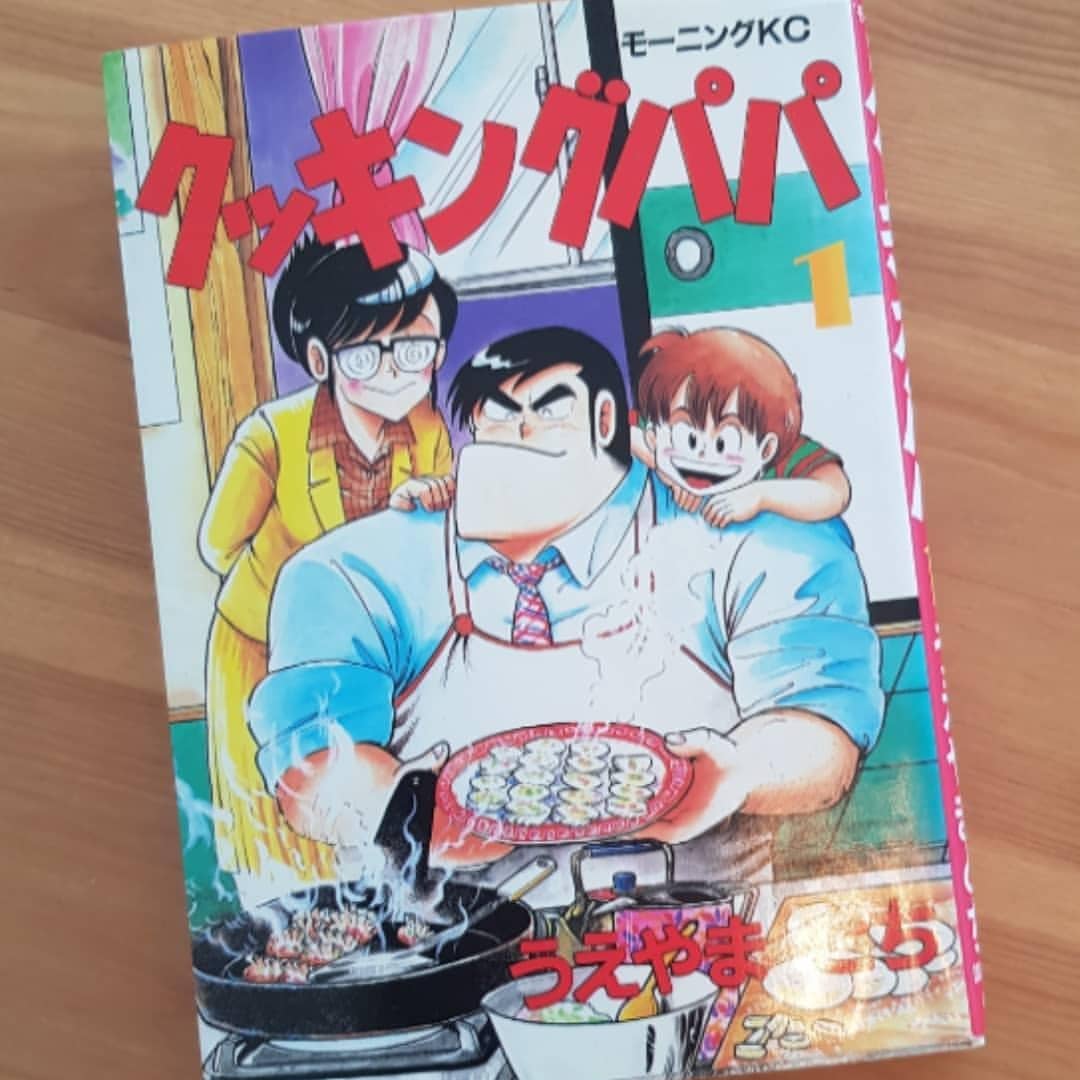
Cooking Papa is a 1985 manga about a Japanese salaryman who is a talented home cook. I had a lot of fun reading this book, and it was a really easy way into reading every day. It did make me very hungry though…

There were some words I didn’t know in the recipe section, but remembering Tadoku Rule 2 (don’t use your dictionary!) I skipped over them and kept reading.
Tip 4: Don't use your dictionary when you come across words you don’t know. Guess the meaning from pictures or from context.
Next up I decided to finish a book I started last summer, 日本語教師のための多読授業入門 (nihongo kyoushi no tame no tadoku jugyou nyuumon, “An Introduction to Tadoku Instruction for Teachers of Japanese”).

It’s all about how to do Tadoku, and I read it using Tadoku principles. META.
At the end of the book I discovered an amazing resource - a list of picture books and manga for tadoku students, ordered by difficulty. This was incredibly useful, and I used the list to order some new books for my students. I’m so pleased I finished this book!
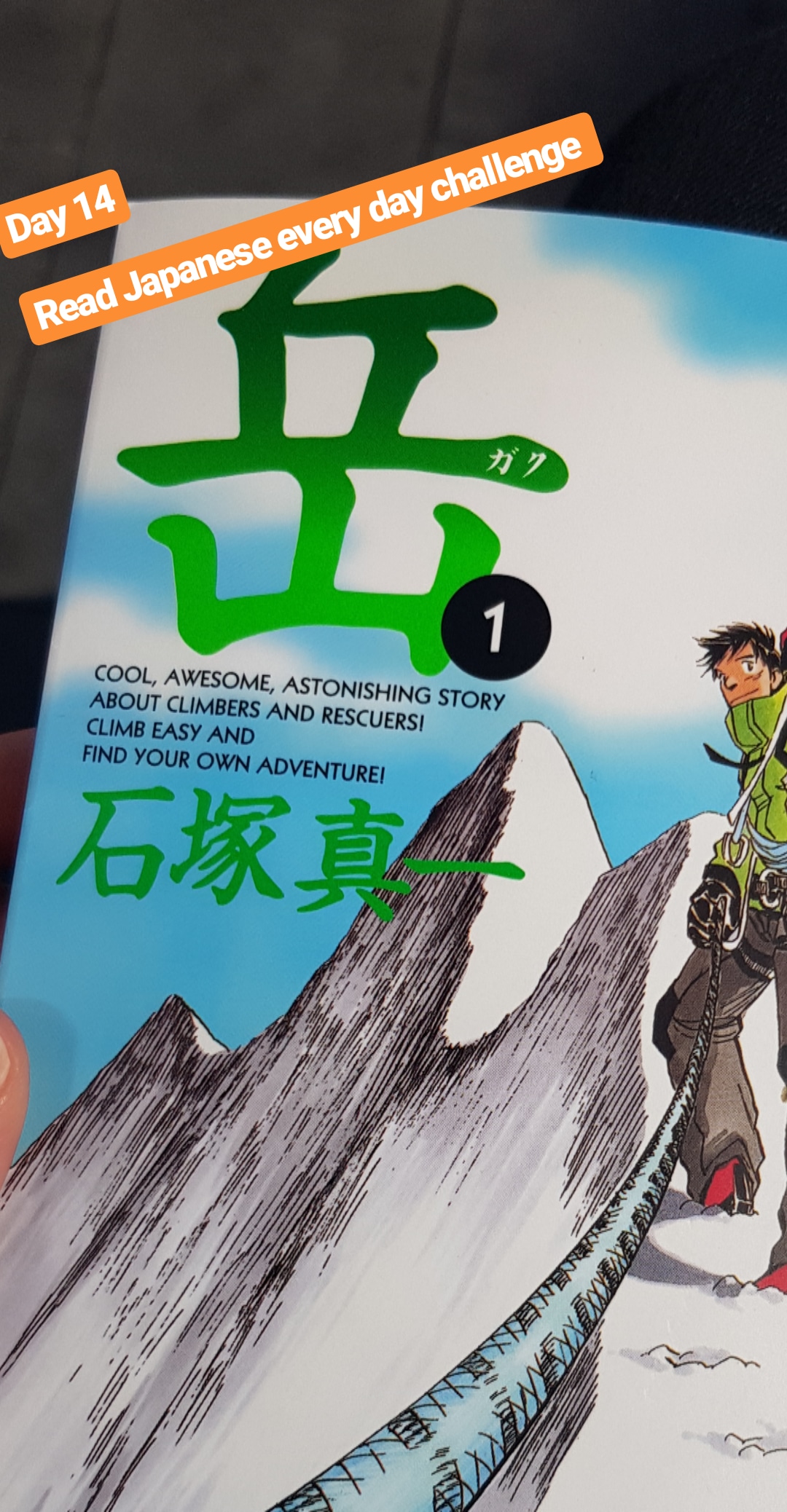
Next up I switched back to fiction, with Gaku (岳, literally “peak”), another seinen manga, all about a mountain rescue team. I really enjoyed this book, and was pleased to have polished off another manga that had been sitting on my bookshelf unread for a while.
Tip 5: Consider switching between fiction and non-fiction to broaden your reading and keep things interesting.
After Gaku, I decided to read some long-form fiction, by attempting to finish the first Harry Potter book in Japanese.
Technically, I have been reading this book for about eight years, principally because I only ever read it on planes for some reason, but more importantly because I started reading it when it was too hard for me. Big mistake.
When I first started “reading” Harry Potter and the Philosopher’s Stone in Japanese, back in 2011, I had never read a book in Japanese before. It was really hard, and I looked up a lot of words as I went along.
I remember that words like マント manto, cloak, and 杖 tsue, wand, weren’t in my beginner dictionary, so it was a very frustrating experience.
I can see that looking up a large number of words slowed me down a lot.
I can also see now that the book was just too hard for me then. If I’d read easy books instead, I probably could have read hundreds of books in that time, but instead I laboured through Philosopher’s Stone, taking it on trains and planes with me and forcing myself to read one or two pages every year or so.

Anyway, I started reading it again this month, and I finished it!
(That means it took me eight years or so to read the first three-quarters of the book, and 7 days to read the rest of it.)
….that doesn’t mean I understood every word though.
Tip 6: Skip over difficult words, phrases and passages. If guessing doesn’t work, skip over that word, phrase or passage and go on reading. You can often enjoy the book without understanding every small detail.
Words I tend not to know in Harry Potter are usually adverbs describing how something is said.
Take a look at these (made-up) examples:
“We could be killed, or worse, expelled!” said Hermione somethingly.
“Ah, shut up, Dursley, yeh great prune.” Hagrid somethinged.
“The truth," Dumbledore said somethingly, "is a beautiful and terrible thing.”
I bet you can more or less guess what the ‘something’s are in those sentences, right? If a book is the right level for you, you can confidently skip over words you don’t know and still understand from context what is going on.
I enjoyed the book, and I was very happy to have finally finished it.
Tip 7: read translations of stories you’ve already read. Because you know the story, it’s easier to follow.
On Day 27 of the month, I started Norwegian Wood (ノルウェイの森 Noruwei no Mori).
Time for another confession: this book is actually a really big part of the reason I started learning Japanese. When I was at university, I was pretty big into Haruki Murakami, and I decided I was going to read his books in Japanese one day.
I’ve read Norwegian Wood in English, but I couldn’t read the book when I bought it in 2011, the year I moved to Japan. I tried, much in the same way as I tried with Harry Potter. I looked up words and stuck post-its on the pages, but the book was too hard then for me to enjoy reading. So it sat on the shelf until this month, when I decided to give it another go.
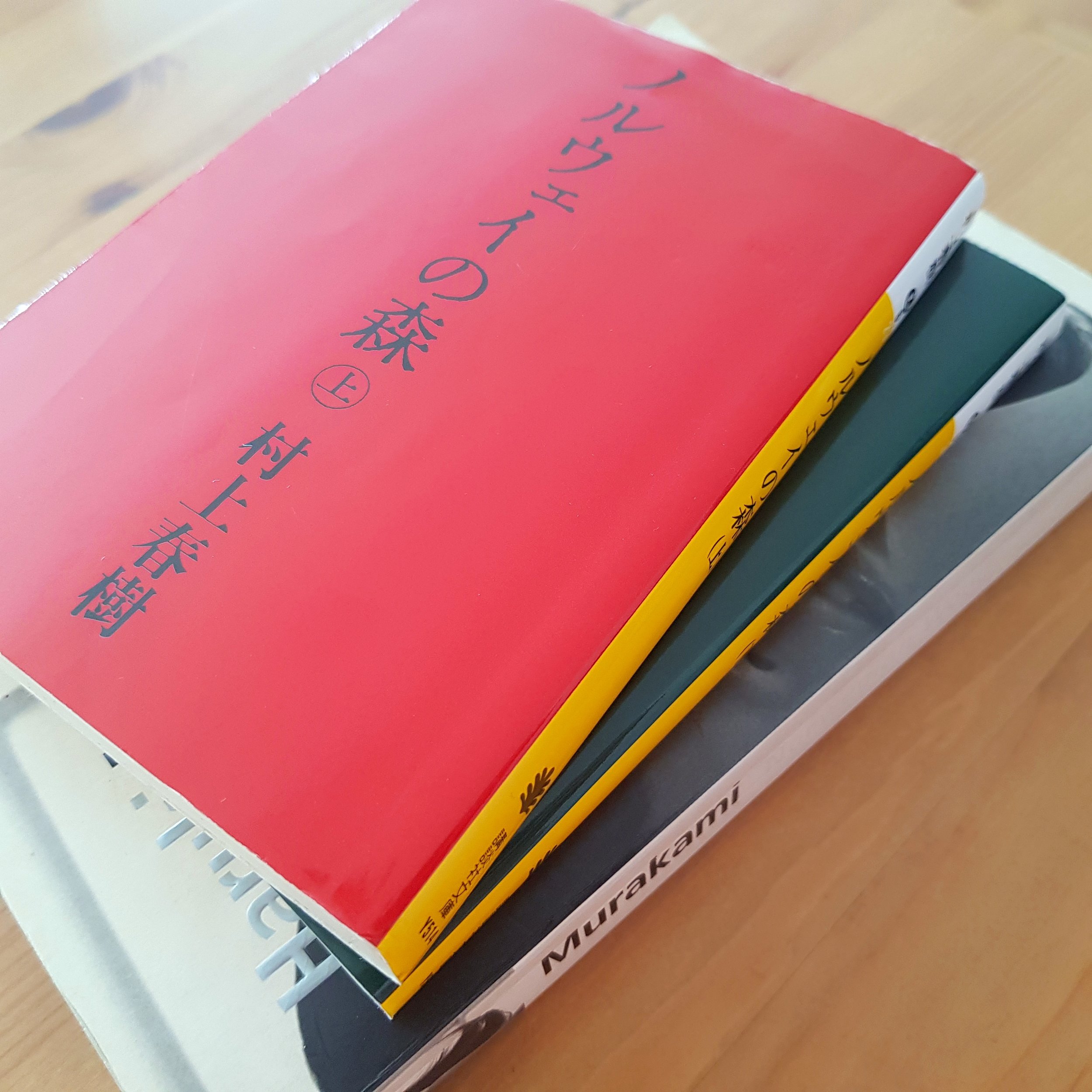
Norwegian Wood is a good level for me to be reading now, but I didn’t get very far through before it was the last day of my month-long challenge. I did like the book, and I thought I’d keep reading it after the month was over, but I didn’t. So inadvertently, I practiced rule four of tadoku:
Tip 8: When you’re not interested in a book any more, stop reading it, and start reading something else.
On last year’s Tadoku course, my students found this the most difficult rule to follow. But from the Introduction to Tadoku book, I’d learned that having the courage to stop reading a book, without feeling guilty, is one of the most powerful lessons we can learn from extensive reading.
So Norwegian Wood is back on my shelf, still unfinished. Maybe I’ll read it another time. Or maybe I’ll just read something else?














Like many people in the UK, I studied French in school. I liked French. I thought it was really fun to speak another language, to talk with people, and to try and listen to what was going on in a new country. (Still do!)
When I was 14 we went on a school exchange to the city of Reims, in northeastern France. I was paired with a boy, which I’m sure some 14-year-olds would find very exciting but which I found unbearably awkward. He was very sweet and we completely ignored each other.
That was nearly 20 years ago, and I didn’t learn or use any more French until, at some point in lockdown, I decided on a whim to take some one-to-one lessons with online teachers. Here are some things I learned about French, about language learning, and about myself.